
 Pin it
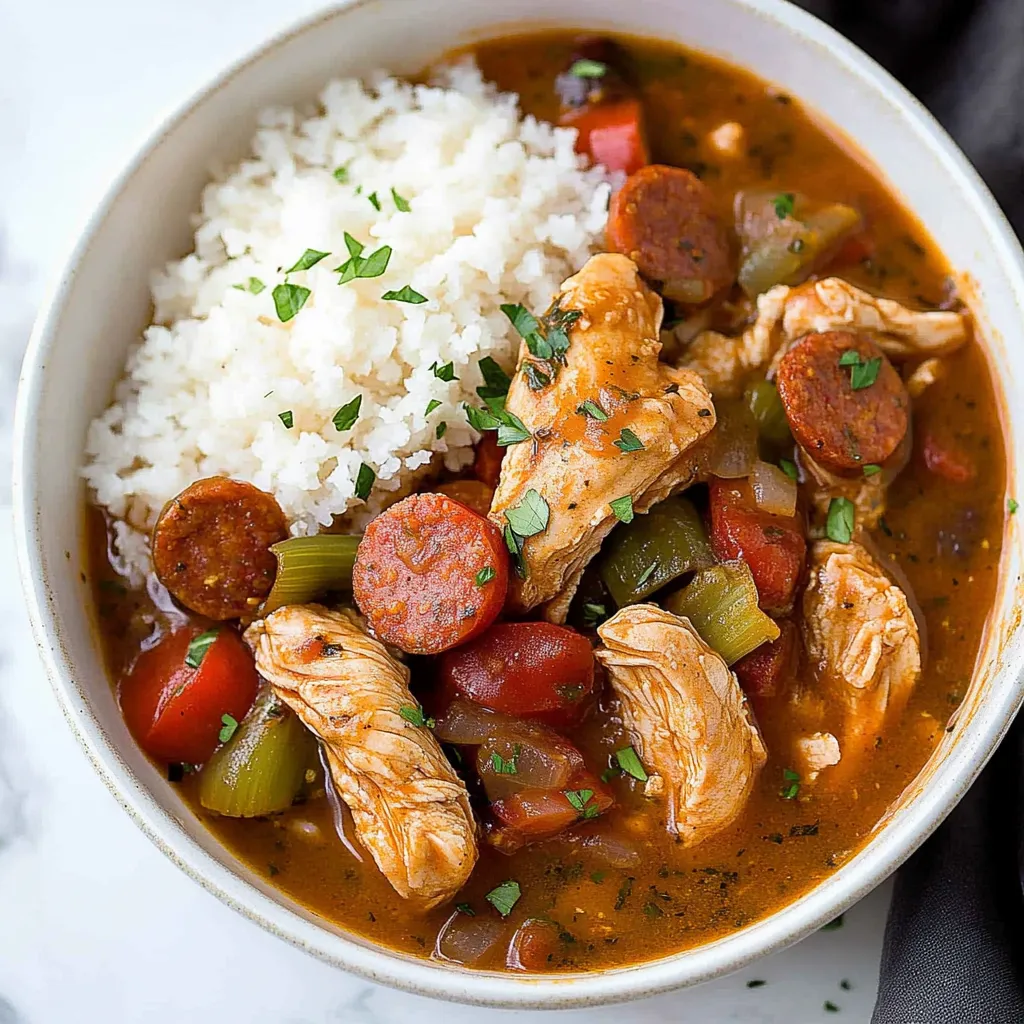
This chicken and andouille sausage gumbo brings authentic New Orleans flavor to your kitchen through patient technique and traditional ingredients that create the deeply complex, richly satisfying dish Louisiana is famous for. Smoky andouille sausage mingles with tender chicken in a dark roux-thickened broth loaded with the holy trinity of bell peppers, celery, and onion, while okra adds both thickening power and subtle sweetness. The process takes time—from making your own chicken broth to carefully cooking the roux to that perfect deep chocolate color—but each step builds layers of flavor that make this taste genuinely authentic rather than like a quick weeknight approximation. Serve it over fluffy white rice with a sprinkle of green onions and watch it disappear as people go back for seconds and thirds of this incredibly satisfying Louisiana classic.
I fell in love with gumbo during a trip to New Orleans where I ate my way through the city, ordering it at every restaurant from famous establishments to tiny neighborhood spots. Each version was different, but the best ones all shared that deeply flavored, patient-cooking quality that shortcuts can't replicate. When I got home, I was determined to recreate those flavors and spent weeks testing this recipe until I got it right. The first time I nailed the dark roux without burning it and tasted how that toasted, nutty complexity transformed the whole dish, I understood why traditional gumbo takes the time it does. Now I make this for special gatherings and cold weather weekends when I want something that requires attention but rewards you with incredibly satisfying results. My family requests it specifically, and friends who've traveled to Louisiana tell me it tastes as authentic as what they had there, which is the highest compliment I could receive.
Ingredients and What Makes Them Essential
- Boneless, skinless chicken breasts or thighs (2 pounds): This provides the base for your homemade broth and the tender chicken pieces that go into the finished gumbo. Using boneless cuts makes the process faster and easier since you don't have to deal with bones, though bone-in chicken (about 2⅓ pounds to account for bone weight) creates richer, more flavorful stock if you have extra time. Thighs have more flavor and stay moister than breasts, though either works well. The gentle poaching method ensures the chicken stays tender and juicy rather than becoming dry and stringy.
- Andouille sausage (1 pound, sliced): This smoky, spicy Cajun pork sausage is absolutely essential to authentic gumbo flavor and cannot be successfully substituted with mild sausage without dramatically changing the character of the dish. Andouille contains garlic, onion, cayenne, black and white pepper, paprika, and other seasonings that infuse the entire pot with complex, smoky heat. Look for it in the refrigerated sausage section—brands like Aidells or Comeaux's are excellent. Slice it into thick rounds about half an inch thick so each piece is substantial and provides good texture. If you absolutely cannot find andouille, kielbasa or spicy Italian sausage can substitute, though you'll need to add more cayenne to compensate for the milder heat.
- Fresh or frozen okra (2 cups, sliced): Okra is traditional in many gumbo recipes and serves dual purposes—it releases mucilage when cooked, which acts as a natural thickener, and it contributes subtle grassy sweetness that balances the rich, savory flavors. Fresh okra is available in summer and should be firm and bright green without brown spots. Frozen okra works perfectly well year-round and is often more convenient. Slice the okra into rounds about half an inch thick. Some people dislike okra's characteristic slippery texture, but cooking it separately before adding it to the gumbo helps minimize that quality.
- Unsalted butter (½ cup) and all-purpose flour (½ cup): These equal parts create the roux—the foundation of gumbo that provides thickening power and deep, toasted flavor. Unsalted butter gives you control over salt levels, and all-purpose flour has the right protein content for creating smooth roux without graininess. The roux must cook for a full 15 minutes over medium heat with constant stirring to develop that characteristic dark chocolate color and nutty, toasted flavor. This is the most critical step in making gumbo—rushing it produces pale roux with raw flour taste, while neglecting it results in burnt, bitter roux that ruins the entire pot.
- Red and green bell peppers (1 of each, diced): These colorful peppers form part of the Cajun holy trinity and contribute sweet, vegetal flavor along with visual appeal. The combination of red and green provides both sweetness from the ripe red pepper and slight bitterness from the green. Dice them into small, uniform pieces about half an inch so they soften completely during cooking without turning to mush. Fresh peppers are essential here—don't substitute with jarred roasted peppers, which have different texture and flavor.
- Celery (2 stalks, diced): Celery is the third component of the holy trinity and adds aromatic, slightly peppery flavor with pleasant crunch that softens during cooking. The mild flavor supports the other vegetables without dominating. Dice the celery into pieces similar in size to the peppers so everything cooks evenly. Don't skip the celery even if you're not a fan raw—cooked celery becomes mellow and contributes essential aromatic complexity.
- Yellow onion (1 large, diced): Onion provides the aromatic base and sweet-savory depth that forms the foundation of the flavor profile. Yellow onions have the right balance of sweetness and sharpness that mellows beautifully during the extended cooking time. Dice the onion into small pieces that will soften and practically melt into the gumbo. White onions can substitute, though sweet onions like Vidalia would be too mild.
- Garlic (4 to 5 cloves, minced): Fresh garlic brings pungent, aromatic complexity that's essential to Creole cooking and adds earthy depth. Mince it finely so it distributes evenly without leaving big chunks. The garlic cooks with the vegetables until softened and fragrant, losing its raw bite and contributing mellow garlicky flavor throughout. Don't substitute with garlic powder, which cannot replicate the flavor fresh garlic provides.
- Diced canned tomatoes (14.5-ounce can): Tomatoes add acidity that balances the rich roux and smoky sausage while contributing bright, tangy flavor and chunky texture. The tomatoes break down slightly during cooking, releasing their juices into the broth. Some Louisiana cooks omit tomatoes based on regional preferences—Creole-style gumbo typically includes them while Cajun-style often doesn't—so they're somewhat optional if you have strong feelings. Fire-roasted canned tomatoes add extra depth if you can find them.
- Dried thyme (1 teaspoon): Thyme provides earthy, slightly minty flavor that's traditional in Creole cooking and adds herbal complexity. Dried thyme is more concentrated than fresh and holds up better during long cooking without losing flavor. The thyme infuses into the broth as it simmers, creating background herbal notes that make the gumbo taste more complex and layered.
- Dried basil (1 teaspoon): Basil adds sweet, slightly peppery herbal notes that complement the other seasonings without being as recognizable as fresh basil would be. Like the thyme, dried basil provides concentrated flavor that withstands long cooking. Together, the thyme and basil create the characteristic herb profile of Creole dishes.
- Bay leaves (2): Bay leaves contribute subtle peppery, herbal complexity and savory depth that develops during the long simmering time. They're not meant to be eaten—you'll remove them before serving. Don't skip them even though their contribution is subtle; they add background complexity that would be missed if omitted. Turkish bay leaves are more common and work perfectly.
- Cayenne pepper (½ to 1 teaspoon): Cayenne provides the signature heat that defines Cajun and Creole cooking, creating that characteristic warm burn that builds gradually rather than hitting you immediately. Start with half a teaspoon if you're sensitive to heat, or use the full teaspoon if you enjoy spicy food. The andouille sausage also contributes heat, so the total spiciness comes from multiple sources. You can always add hot sauce at the table for people who want more heat.
- Gumbo filé powder (1 to 2 tablespoons): This traditional thickener made from dried, ground sassafras leaves adds characteristic earthy, slightly eucalyptus-like flavor with hints of root beer and thyme. Filé powder thickens the gumbo when stirred in at the very end with the heat off—adding it while the pot is still hot can make it stringy and unpleasant. Zatarain's is the most widely available brand and works excellently. The filé is somewhat optional but highly recommended for authentic flavor and texture.
Step-by-Step Instructions
- Make homemade chicken broth:
- Place your chicken breasts or thighs in a medium pot and cover them completely with 2 quarts (8 cups) of cold water. Bring the water to a boil over high heat, which takes about 10 to 15 minutes, then immediately reduce the heat to maintain a gentle simmer where you see small bubbles occasionally breaking the surface but not a rolling boil. This slow, gentle cooking method allows the chicken to cook through evenly while staying incredibly tender and juicy, and it extracts flavor into the water to create flavorful broth. Cook for 20 to 25 minutes until the chicken reaches an internal temperature of 165°F when tested with an instant-read thermometer. Don't overcook or the chicken will become dry and stringy. Use a slotted spoon or tongs to carefully remove the cooked chicken from the pot, transferring it to a plate to cool. Strain the broth through a fine-mesh strainer into a large bowl or another pot, discarding any foam or bits. You should have about 6 cups of flavorful chicken broth. Set it aside—you'll use 4 cups in the gumbo and can save the rest for another use.
- Shred the chicken:
- Once the poached chicken has cooled enough to handle comfortably—about 10 to 15 minutes—use your hands or two forks to shred it into bite-sized pieces. Try to keep the pieces relatively uniform in size, roughly the size of a bite or two. The chicken will be very tender and should shred easily without requiring much force. Transfer the shredded chicken to a bowl, cover it to prevent drying out, and set aside. You'll add this back to the gumbo near the end of cooking so it doesn't overcook and dry out.
- Cook the okra separately:
- In a medium pot, combine the sliced okra with about 2 cups of water. Bring to a boil over high heat, then reduce to a simmer. Cook the okra for 7 to 9 minutes until tender when pierced with a fork but not falling apart or mushy. This separate cooking step allows the okra to release some of its mucilage into the cooking water, which you'll discard, minimizing the slippery texture some people find unpleasant while still retaining the okra's thickening properties for the gumbo. Drain the cooked okra thoroughly in a colander and set aside. You'll add it to the gumbo later along with the sausage.
- Make the dark roux carefully:
- This is the most critical step in the entire recipe and requires your full attention—don't walk away or multitask during this process. In a large Dutch oven or heavy-bottomed pot, melt the butter over medium heat until completely liquid and foaming slightly. Add the flour all at once and immediately begin whisking vigorously to combine them into a smooth paste. Continue cooking over medium heat, stirring constantly with a wooden spoon or whisk, scraping the bottom and corners of the pot to prevent scorching. The roux will go through several color stages—first pale tan, then beige, then light brown, and eventually deep chocolate brown. This transformation takes about 15 minutes of patient, constant stirring. You want deep, rich brown the color of milk chocolate, not blonde roux and definitely not burnt. The roux will smell nutty and toasted when it's ready. If you see black specks or smell anything burning, you've gone too far and need to start over since burnt roux tastes bitter and ruins everything. This step cannot be rushed—proper dark roux is what gives gumbo its signature flavor.
- Sauté the holy trinity vegetables:
- Once your roux reaches that perfect deep brown color, immediately add all the diced onion, bell peppers, celery, and minced garlic to the pot. The vegetables will release moisture that stops the roux from cooking further and prevents burning—you'll hear a dramatic sizzle when they hit the hot roux. Stir everything together thoroughly to coat the vegetables in the roux. Continue cooking over medium heat, stirring frequently, for about 10 minutes until all the vegetables are tender and softened. The onions should be translucent, the peppers soft, and the celery no longer crunchy. As they cook, the vegetables release their natural sugars and moisture, creating a flavorful base that balances the rich roux.
- Add sausage, okra, and tomatoes:
- Stir in the sliced andouille sausage, cooked drained okra, and the entire can of diced tomatoes with their juices. Mix everything together well so the ingredients distribute evenly throughout the roux and vegetables. Cook for about 10 minutes, stirring occasionally, allowing the sausage to release its oils and spices into the pot. The tomatoes will break down slightly and their acidity will start balancing the richness. The pot should smell incredibly aromatic at this point—smoky, savory, and complex with all those flavors beginning to meld.
- Season with herbs and spices:
- Add the bay leaves, dried thyme, dried basil, cayenne pepper, and generous amounts of salt and black pepper—start with about 1 teaspoon of salt and ½ teaspoon of black pepper, knowing you'll adjust later. Stir everything together thoroughly to distribute the seasonings evenly. Let the spices bloom in the hot mixture for about a minute, stirring constantly, which activates their flavors and makes them more aromatic. The cayenne will start releasing its heat throughout the pot, and the herbs will become fragrant.
- Simmer with broth:
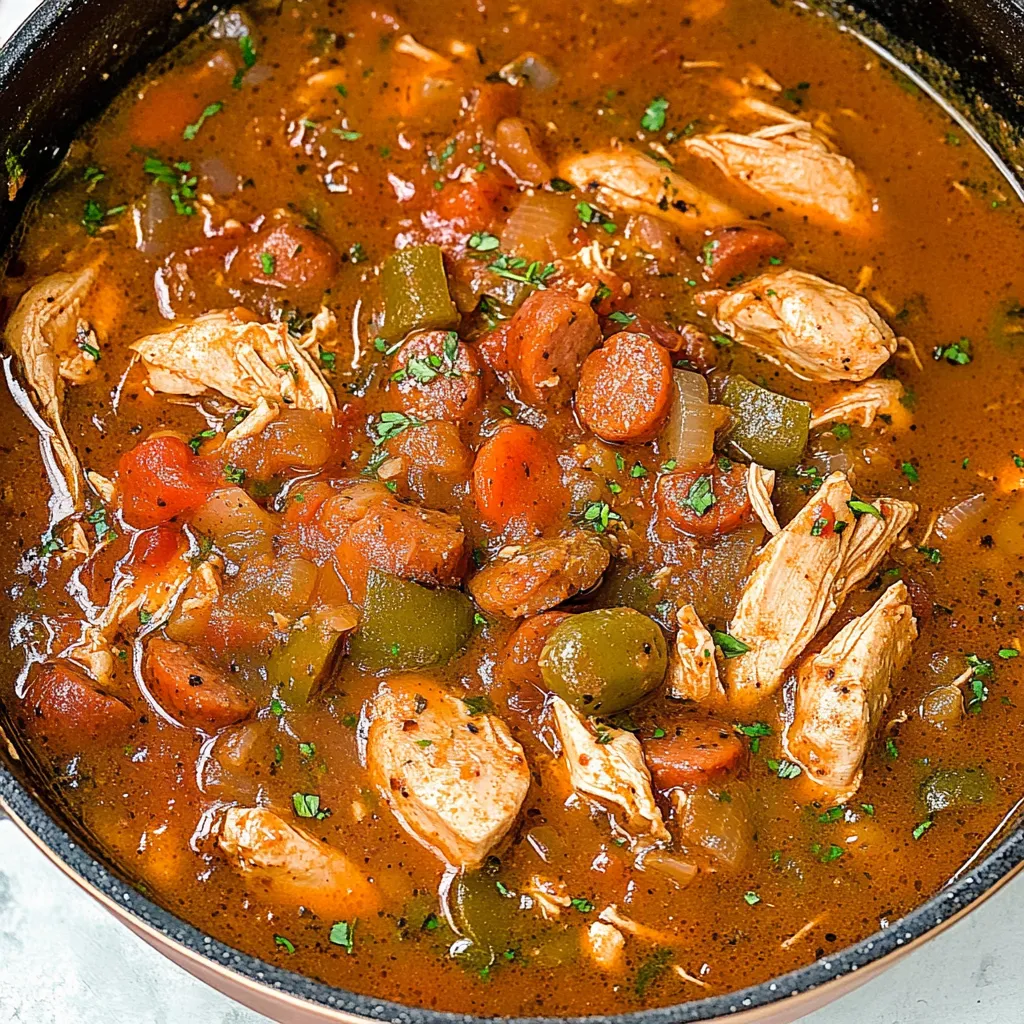
- Pour in 4 cups of your reserved chicken broth, stirring well to incorporate it with all the other ingredients. The liquid should come up to nearly cover everything—add a bit more broth if needed to reach a soup-like consistency. Bring the mixture to a boil over medium-high heat, then immediately reduce the heat to maintain a gentle simmer. Loosely cover the pot with a lid—you want some steam to escape so the gumbo doesn't become too watery. Simmer for 30 minutes, stirring occasionally to prevent anything from sticking to the bottom and to ensure even cooking. During this time, the flavors will deepen and meld together, the liquid will reduce slightly and thicken from the roux and okra, and the vegetables will become very soft and start breaking down into the broth.
- Add chicken and final simmer:
- After the gumbo has simmered for 30 minutes, stir in all the shredded chicken. Continue simmering uncovered for an additional 15 minutes to heat the chicken through and allow it to absorb some of the flavorful broth. Stir occasionally to make sure nothing sticks and the chicken distributes evenly. The gumbo should be thick and stewlike at this point—not soupy but not so thick you can stand a spoon in it. If it seems too thick, add a bit more broth. If it's too thin, let it simmer uncovered for longer to reduce.
- Finish with filé powder:
- Turn off the heat completely and let the gumbo rest for a minute or two so it's no longer actively bubbling. Sprinkle the gumbo filé powder over the surface and stir it in gently but thoroughly. The filé will thicken the gumbo slightly and add that characteristic earthy, root beer-like flavor. Do not reheat the gumbo after adding filé or it can become stringy and unpleasant—add it right before serving and keep the heat off. Taste the gumbo and adjust the seasoning with more salt, pepper, or cayenne as needed. Remove and discard the bay leaves. Let the gumbo rest off the heat for 5 to 10 minutes before serving, which allows everything to settle and the flavors to harmonize.
- Serve traditionally:
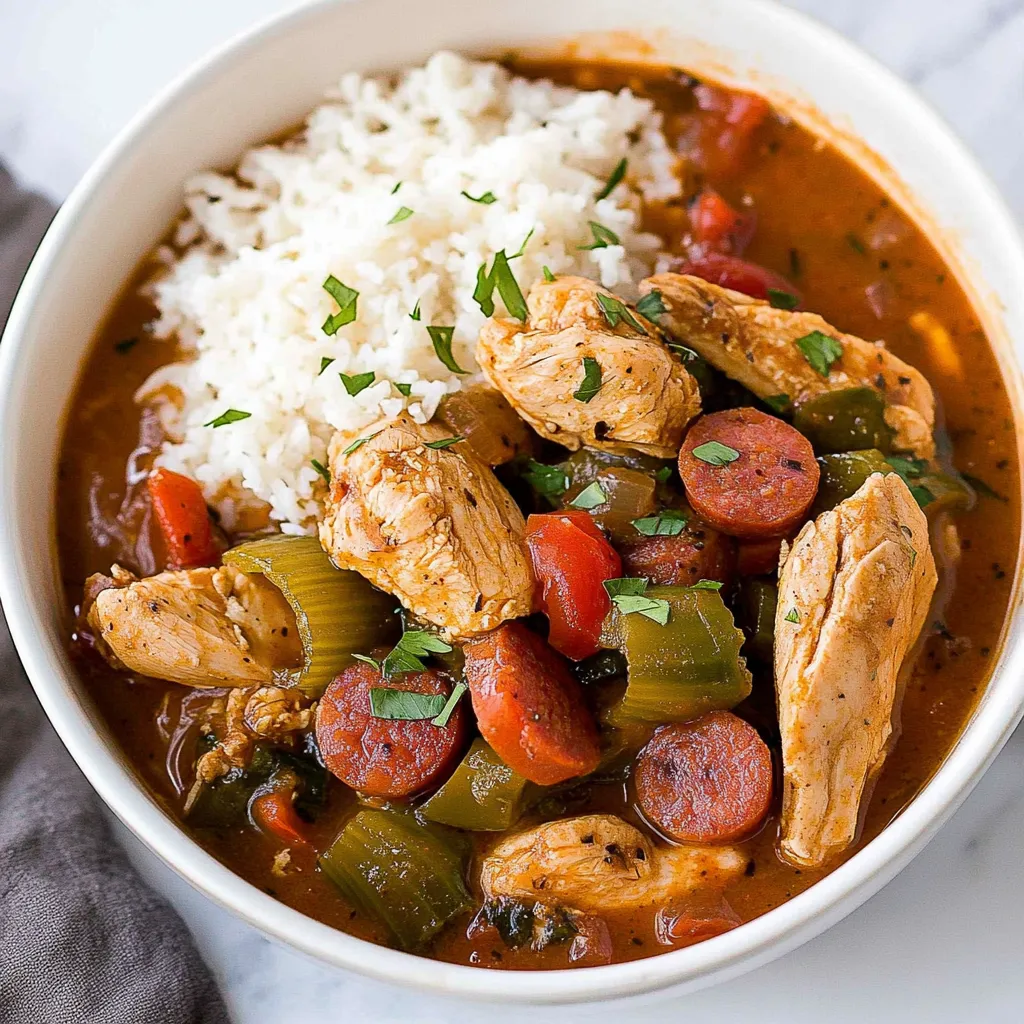
- Ladle the hot gumbo into deep bowls over a generous scoop of cooked white rice—the rice should be fluffy and plain, acting as a neutral base that soaks up all that incredible sauce. Garnish each bowl with sliced green onions for mild onion flavor, fresh color, and textural contrast. Some people like to serve hot sauce on the side for those who want extra heat. The gumbo should be thick enough that the rice doesn't get lost, with each spoonful containing a variety of chicken, sausage, okra, and vegetables in that rich, deeply flavored broth.
 Pin it
The technique that transformed my gumbo from decent to genuinely excellent was learning to cook the roux to proper deep brown without fear of burning it. My early attempts were too timid—I'd stop at medium brown because I was terrified of ruining it, and the resulting gumbo tasted okay but lacked that characteristic deep, complex flavor. Once I learned to recognize the nutty toasted smell and trust that dark chocolate color was right, and understood that constant stirring prevents burning even at that color, my gumbo improved dramatically. The difference between medium brown roux and properly dark roux is the difference between gumbo that tastes homemade in a mediocre way versus gumbo that tastes authentically Louisiana. Now I'm patient with that 15-minute roux-cooking process, stirring constantly while watching the color deepen, and I can confidently take it to the edge of too dark without crossing into burnt territory. That properly cooked dark roux is what makes people taste my gumbo and ask if I'm from Louisiana, which is the ultimate compliment.
Understanding Roux Fundamentals
Roux is one of the foundational techniques in classical French cooking that was adopted and transformed by Louisiana cooks into the distinctive dark roux that defines Creole and Cajun cuisine. Understanding what happens during roux-making helps you execute it properly and troubleshoot if problems arise. When you cook flour and fat together, several chemical changes occur. Initially, the starch granules in the flour absorb the fat and swell. As cooking continues, the starches begin breaking down (dextrinization) and browning (Maillard reaction), developing increasingly complex flavors and darker colors.
The color of roux directly correlates to both its flavor and its thickening power. Blonde roux, cooked for just a few minutes until pale tan, has maximum thickening ability but mild flavor—this is what you'd use for white sauces like béchamel. As roux cooks longer and darkens, it develops nutty, toasted flavors that become increasingly pronounced, but it simultaneously loses thickening power because the starches break down. Dark roux like what's used in gumbo has been cooked so long that it's lost significant thickening ability compared to blonde roux, which is why gumbo relies on multiple thickeners (roux, okra, and filé) working together rather than just the roux alone.
The constant stirring during roux-making serves multiple crucial purposes. It ensures even heat distribution so the flour browns uniformly rather than burning in spots while staying raw elsewhere. It prevents the roux from scorching on the bottom of the pot, which would create bitter, burnt flavors that ruin everything. And it allows you to monitor the color development closely so you can stop cooking at exactly the right moment. The transition from perfect dark brown to burnt happens quickly in the final stages, so vigilant attention is essential. Using a heavy-bottomed pot helps tremendously because it distributes heat evenly and prevents hot spots that cause scorching.
Creole vs. Cajun Distinctions
While people often use "Creole" and "Cajun" interchangeably when discussing Louisiana food, they actually represent distinct culinary traditions with different historical origins and flavor profiles. Understanding these differences helps you appreciate the variations you might encounter in gumbo recipes. Creole cooking developed in New Orleans among the descendants of French and Spanish colonists, incorporating influences from African, Caribbean, and Native American cuisines. Creole dishes tend to be more refined and complex, often including tomatoes, and use sophisticated European techniques.
Cajun cooking comes from the Acadians who settled in rural southwestern Louisiana after being expelled from Canada. Their cuisine is more rustic and robust, developed from making do with available ingredients in isolated areas. Cajun dishes typically omit tomatoes and focus on bold, straightforward flavors with less refinement than Creole cooking. In terms of gumbo specifically, Creole versions usually include tomatoes and may use seafood prominently, while Cajun gumbos typically skip tomatoes and focus on poultry and sausage with darker roux.
These distinctions aren't rigid rules, and modern Louisiana cooking freely blends elements from both traditions. Many families have their own gumbo recipes passed down through generations that incorporate whatever elements they prefer, creating endless regional and personal variations. The important thing is understanding that there's no single "correct" gumbo—the dish is defined more by technique (the holy trinity, roux, careful layering of flavors) than by specific ingredients, which is why you'll find such diversity even among authentic Louisiana cooks.
Multiple Thickening Techniques
Gumbo's characteristic texture—thicker than soup but thinner than stew, coating a spoon but still pourable—comes from using multiple thickening agents working in combination. Each thickener contributes differently to both texture and flavor. The dark roux provides some thickening despite having lost much of its power during the long cooking, and more importantly, it contributes that deep, nutty, toasted flavor that's essential to gumbo's character. The roux creates emulsion between the fat and liquid, giving the broth body and rich mouthfeel.
Okra releases mucilage when cut and cooked—a clear, slightly viscous substance that acts as a natural thickener while adding subtle grassy sweetness. Some people find the texture off-putting, which is why this recipe cooks the okra separately first to minimize sliminess while retaining its beneficial properties. The mucilage contains soluble fiber that creates smooth, silky texture in the finished gumbo. Pre-cooking the okra allows it to release some mucilage into water that gets discarded, so what goes into the gumbo provides thickening without excessive slipperiness.
Filé powder, added at the very end with the heat off, provides final thickening and distinctive flavor. Made from ground dried sassafras leaves, filé has been used by Native Americans for centuries and was incorporated into Louisiana cooking. It adds earthy, slightly medicinal flavor reminiscent of root beer or eucalyptus that's characteristic of traditional gumbo. The thickening happens almost immediately when stirred in, and the filé must not be reheated or it becomes stringy and unpleasant. Some cooks prefer to serve filé at the table for people to add to their own bowls rather than stirring it into the pot.
 Pin it
This chicken and andouille gumbo has become my signature dish for cold weather gatherings and special occasions when I want to serve something that feels celebratory and impressive without being fussy or pretentious. The patient cooking process is meditative rather than stressful once you understand the techniques, and there's something deeply satisfying about building complex flavors through proper method rather than relying on shortcuts. I love that this makes enough to feed a crowd or provide generous leftovers that improve after a day, and the fact that it freezes beautifully means I sometimes make double batches to have portions ready for easy future dinners. The combination of smoky sausage, tender chicken, and those perfectly cooked vegetables in rich, deeply flavored broth over fluffy rice creates the kind of complete satisfaction that makes you understand why Louisiana cuisine is so beloved and why people travel specifically to eat dishes like this. Once you taste how proper dark roux and careful technique create flavors that simply cannot be replicated with shortcuts, you'll understand why this recipe has become something I make regularly despite the time investment, and why learning to make authentic gumbo is a cooking skill worth developing.
Frequently Asked Questions
- → Can I make gumbo without okra?
- Yes, you can skip the okra if you prefer. The filé powder will still help thicken the gumbo, or you can add a bit more roux for thickness.
- → What can I use instead of andouille sausage?
- Try smoked sausage, kielbasa, or chorizo. The key is using something with a good smoky flavor that holds up well during cooking.
- → How do I know when the roux is dark enough?
- Your roux should be a deep chocolate brown color, similar to milk chocolate. It usually takes about 15 minutes of constant stirring over medium heat.
- → Can I freeze leftover gumbo?
- Absolutely. Let it cool completely, then portion it into freezer-safe containers. It keeps well for up to 3 months and reheats beautifully on the stovetop.
- → Why can't I boil the gumbo after adding filé powder?
- Filé powder gets stringy and unpleasant when boiled. Always add it after turning off the heat and just stir it in gently for the best texture.
- → Do I have to serve gumbo over rice?
- Rice is traditional and soaks up all that wonderful broth, but you can also serve it with crusty bread or even potato salad on the side.