
 Pin it
Pozole is one of those traditional Mexican soups that typically requires hours of simmering pork shoulder with dried chiles and hominy until everything becomes fall-apart tender and the broth develops deep, complex flavors - the kind of dish you make on a lazy Sunday when you can babysit a pot all afternoon. This slow cooker version captures all that rich, savory, slightly smoky flavor by using homemade red enchilada sauce as the base, then lets the machine do all the work while you do literally anything else for several hours. The result is tender shredded chicken, plump hominy kernels, and a broth that tastes like you spent all day making it when you actually spent maybe fifteen minutes of hands-on time loading the slow cooker and shredding chicken. What makes this particularly appealing is how it solves the weeknight pozole problem - you can start it in the morning before work and come home to dinner, or make it for weekend gatherings where it stays warm and ready to serve while you actually enjoy your guests instead of standing in the kitchen.
I grew up eating my grandmother's pozole rojo made with pork that simmered for what felt like entire days, and while it was spectacular, I never made it myself because dedicating six hours to watching a pot felt impossible with a job and life. After learning that a slow cooker could handle the long cooking while I did other things, and that using homemade enchilada sauce instead of toasting and blending individual dried chiles saved steps without sacrificing flavor, pozole became something I actually make regularly instead of just nostalgically remembering. Now I make it constantly throughout fall and winter because it fills the house with amazing smells and feels like a warm hug in a bowl.
Ingredients and What Makes Them Essential
- Boneless Skinless Chicken Breasts (2 pounds, about 3-4 breasts): Chicken makes this lighter than traditional pork pozole while still providing substantial protein. Chicken breasts work well because they shred easily. You can substitute boneless skinless chicken thighs if you prefer richer, more flavorful dark meat that stays moister.
- Red Enchilada Sauce (3 cups, homemade strongly recommended): This is the heart and soul of the pozole, providing all that deep, complex chile flavor. Homemade enchilada sauce made from dried guajillo, ancho, and árbol chiles with tomatoes, garlic, and Mexican chocolate creates authentic taste. Store-bought enchilada sauce technically works but won't have nearly the same depth of flavor. Make a big batch and freeze what you don't use.
- Chicken Broth (4 cups, low-sodium): Broth provides the savory liquid base. Low-sodium lets you control salt levels. Use good quality broth or homemade stock if you have it.
- White Hominy (two 25-ounce cans, drained and rinsed): Hominy is dried corn kernels that have been treated with lime (calcium hydroxide) which removes the hull and makes them puff up. It's the defining ingredient that makes pozole pozole. White hominy is traditional, though yellow works too. Don't skip rinsing - the canning liquid can taste metallic.
- Shallot (1 large, minced) or Yellow Onion (½ cup, diced): Shallots add mild onion flavor with slight sweetness. Regular yellow onion works perfectly as a substitute.
- Garlic (4 cloves, minced): Fresh garlic provides pungent, aromatic depth. Don't substitute jarred garlic or powder which taste completely different.
- Chili Powder (2 teaspoons): Additional chili powder reinforces the chile flavor from the enchilada sauce. Use regular chili powder, not cayenne.
- Ground Cumin (1 teaspoon): Cumin adds earthy, warm notes that complement the chiles beautifully.
- Mexican Oregano (1 tablespoon, dried): Mexican oregano has a different flavor profile than Mediterranean oregano - more citrusy and less minty. It's traditional in pozole and worth seeking out in Latin markets or online. Regular oregano works in a pinch.
- Kosher Salt (1 teaspoon, plus more to taste): Salt enhances all the flavors. Start with 1 teaspoon and adjust after cooking based on your broth's saltiness.
For Serving (Traditional Toppings):
- Shredded Green Cabbage: Adds fresh crunch and mild flavor.
- Sliced Radishes: Provides peppery bite and crisp texture.
- Fresh Cilantro (chopped): Adds bright, herbal notes.
- Lime Wedges: Essential for acidic brightness.
- Diced White Onion: For sharp onion flavor.
- Dried Oregano: For sprinkling on top.
- Tostadas or Tortilla Chips: For crunch and scooping.
Step-by-Step Instructions
- Load the Slow Cooker:
- Place 2 pounds of chicken breasts in the bottom of your slow cooker. Add 3 cups of red enchilada sauce, 4 cups of chicken broth, 1 minced shallot (or ½ cup diced onion), 4 cloves of minced garlic, 2 teaspoons of chili powder, 1 teaspoon of cumin, and 1 teaspoon of salt. Stir everything together to combine and ensure the chicken is submerged in liquid. The chicken breasts don't need to be arranged in a single layer - they can overlap. Put the lid on the slow cooker.
- Cook:
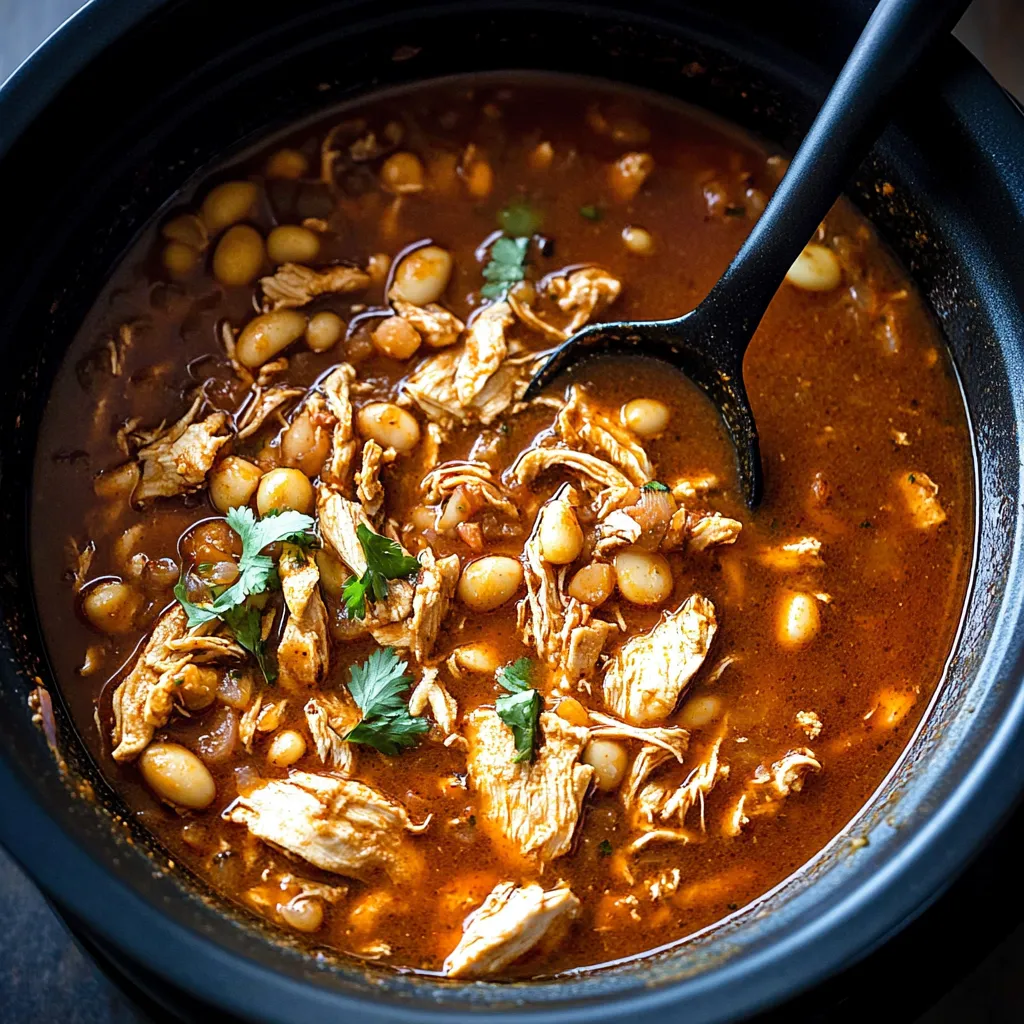
- Set the slow cooker to low and cook for 5½ hours, or set it to high and cook for 3½ hours. The chicken is done when it's completely cooked through and shreds easily with a fork. The exact timing may vary slightly depending on your slow cooker model and how thick your chicken breasts are. After the cooking time, the chicken should be very tender and the liquid should be hot and bubbly.
- Shred the Chicken:
- Carefully remove the chicken breasts from the slow cooker using tongs and place them on a cutting board or in a large bowl. Use two forks to shred the chicken into bite-sized pieces - hold one fork steady in the meat while using the other to pull it apart. The chicken should shred very easily. If it's tough or difficult to shred, it needs more cooking time.
- Add Hominy and Finish:
- Drain and rinse the two cans of hominy thoroughly under cold water to remove the canning liquid. Add the rinsed hominy to the slow cooker along with all the shredded chicken and 1 tablespoon of dried Mexican oregano. Stir everything together to combine. Put the lid back on and cook for another 30 minutes on the same setting (low or high) to heat the hominy through and allow flavors to meld. The hominy is already fully cooked from canning, so this step just heats it and infuses it with flavor.
- Taste and Adjust:
- After the final 30 minutes, taste the broth and adjust seasoning. Add more salt if needed - you may need another ½ to 1 teaspoon depending on how salty your broth and enchilada sauce were. If you want more heat, add a pinch of cayenne or a few dashes of hot sauce.
- Serve:
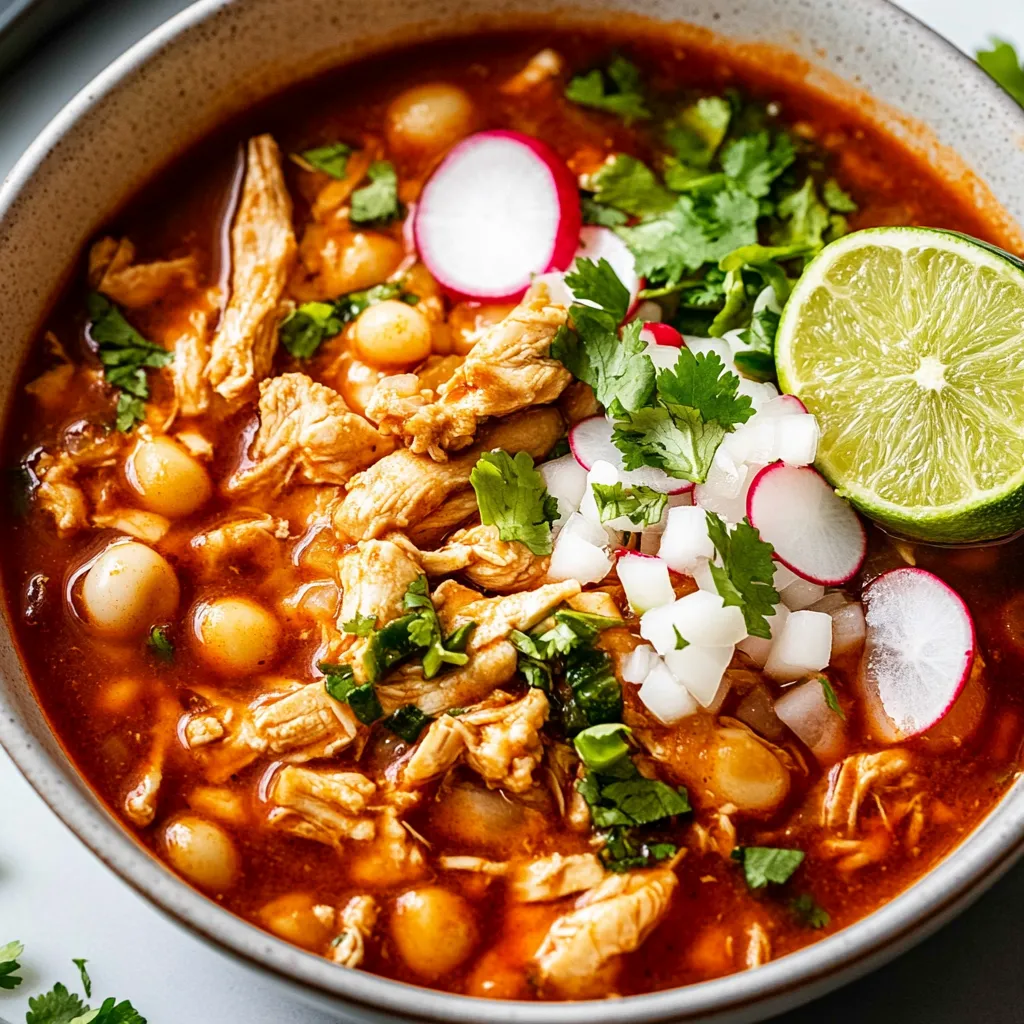
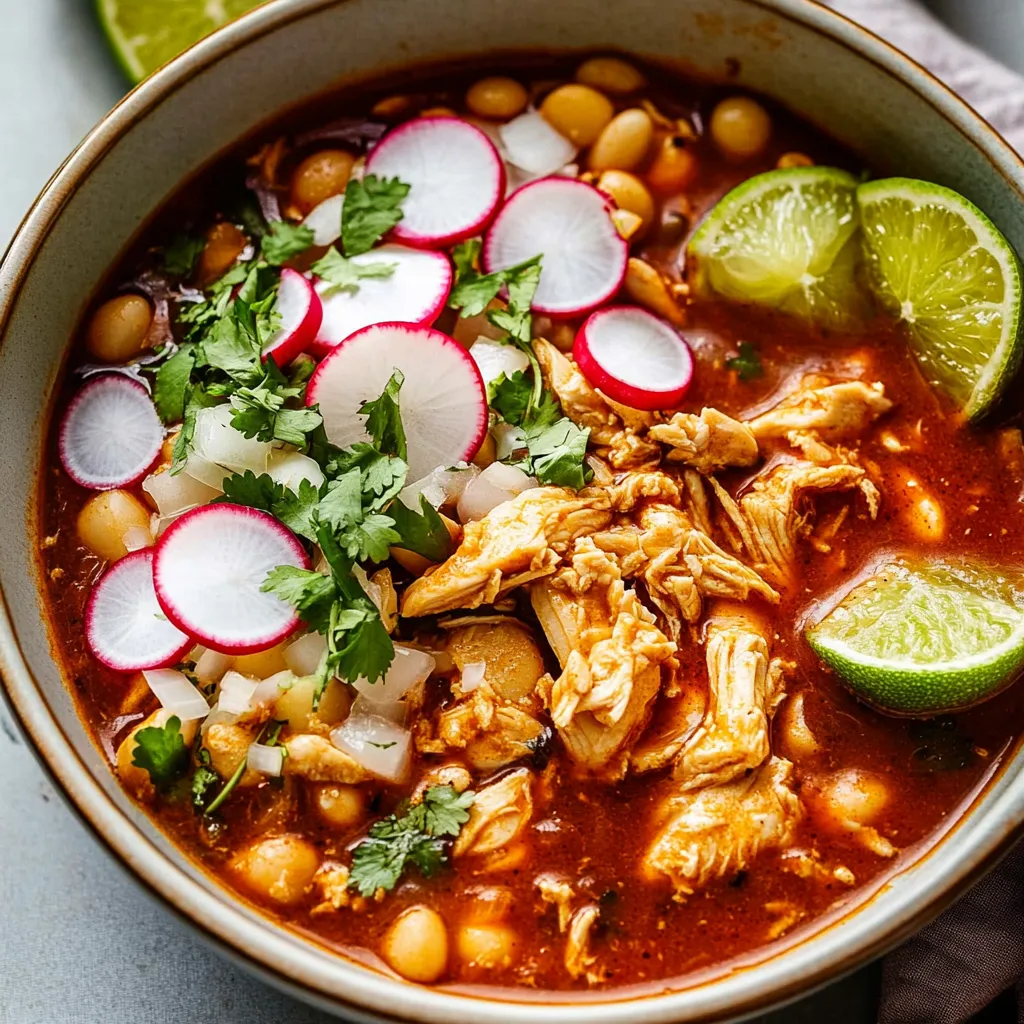
- Ladle the hot pozole into bowls. Set out all your toppings - shredded cabbage, sliced radishes, chopped cilantro, diced onion, lime wedges, extra oregano, and tostadas - and let everyone customize their own bowl. The traditional way is to pile toppings generously on top and squeeze lime juice over everything. Serve immediately while hot.
 Pin it
My husband who grew up in Texas eating authentic pozole from Mexican restaurants was extremely skeptical when I told him I was making it in a slow cooker with chicken instead of pork. He tasted it grudgingly, clearly expecting to be disappointed, then went back for a second bowl and admitted it was "actually really good, almost as good as the real thing." Coming from someone with strong pozole opinions, this felt like high praise. Now he requests it regularly and doesn't complain about the chicken substitution anymore.
Understanding Pozole and Its Cultural Significance
Pozole is a traditional Mexican soup that dates back to pre-Columbian times and has deep cultural significance, particularly for celebrations and holidays. The name comes from the Nahuatl word "pozolli" which means foamy - referring to how hominy creates foam when cooked. Traditional pozole comes in three main varieties: pozole rojo (red, made with dried red chiles), pozole verde (green, made with tomatillos and green chiles), and pozole blanco (white, with no chiles). Each region of Mexico has its own variation - Jalisco-style uses pork and is typically red, Guerrero-style can be red or green, Michoacán-style is often white. Pozole is commonly served for celebrations like Christmas, New Year's, Mexican Independence Day, and birthdays. The soup represents comfort, community, and tradition. While this slow cooker version with chicken isn't the most traditional preparation, it maintains the essential flavors while adapting to modern convenience.
The Importance of Homemade Enchilada Sauce
The enchilada sauce is what creates authentic pozole flavor, and the difference between homemade and store-bought is dramatic. Homemade red enchilada sauce starts with dried chiles - typically guajillo for fruity sweetness, ancho for depth, and árbol for heat. These are toasted briefly to wake up their flavors, then rehydrated and blended with tomatoes, garlic, onion, Mexican chocolate (which adds complexity, not sweetness), and spices. The result is a complex sauce with layers of earthy, smoky, slightly sweet, fruity flavors that store-bought versions can't match. Store-bought enchilada sauce is often made from chile powder rather than whole dried chiles, contains preservatives and stabilizers, and tastes flat and one-dimensional in comparison. Making enchilada sauce from scratch requires maybe twenty minutes and a blender. The recipe yields more than you need for one batch of pozole, but it freezes beautifully for months and can be used in countless other dishes.
What Makes Hominy Special
Hominy is dried corn that's been treated through a process called nixtamalization - soaking and cooking in an alkaline solution, traditionally limewater (calcium hydroxide). This process removes the hull and germ, makes the corn easier to digest, improves its nutritional value by making niacin available, and creates distinctive flavor and texture. Hominy kernels are much larger and softer than regular corn kernels, with a slightly earthy, mineral flavor and pleasantly chewy texture. They absorb the broth flavors during cooking while maintaining their integrity. Hominy is the defining ingredient that makes pozole pozole - without it, you just have chicken soup with toppings. White hominy is traditional and has milder flavor, while yellow hominy tastes slightly sweeter. Canned hominy is fully cooked and just needs to be heated through, while dried hominy requires overnight soaking and hours of cooking, which is why canned is recommended for convenience.
Why Slow Cooker Works So Well
Slow cookers are ideal for pozole because the long, gentle cooking at low temperatures creates the same tender results and developed flavors as traditional stovetop simmering but requires zero attention. The enclosed environment traps moisture and prevents evaporation, meaning the broth stays at consistent levels without needing liquid added. The gentle heat prevents chicken from overcooking and becoming dry or stringy - it stays moist and tender. The extended cooking time allows flavors to meld and develop complexity. The slow cooker can hold the finished pozole on the "warm" setting for hours, making it perfect for parties where people serve themselves throughout the evening. The hands-off nature means you can start it in the morning before work and come home to dinner ready, or start it mid-afternoon for evening serving. This transforms pozole from a weekend-only project into something viable for busy weeknights.
The Role of Traditional Toppings
The array of fresh toppings isn't just decoration - they're essential to balanced pozole. The soup itself is rich, heavy, and intensely flavored. The toppings provide necessary contrast through multiple dimensions. Shredded cabbage adds fresh crunch and mild flavor that balances richness. Radishes provide peppery bite and crisp texture. Cilantro contributes bright, herbal notes. Lime juice adds essential acidity that cuts through fat and makes everything taste brighter. Diced onion provides sharp, pungent flavor. Dried oregano reinforces the herbal notes. Tostadas or chips add textural crunch and serve as edible spoons. The contrast between hot, rich soup and cool, fresh, crunchy toppings is what makes each bite interesting rather than monotonous. Serving pozole without toppings would be like serving pizza without cheese - technically possible but fundamentally wrong.
Storage, Reheating, and Make-Ahead
Pozole stores beautifully and actually improves after a day as flavors meld. Let the soup cool to room temperature, then transfer to airtight containers and refrigerate for up to 5 days. The hominy will continue absorbing broth and may thicken the soup - add a splash of water or broth when reheating to thin to desired consistency. To reheat, warm in a pot on the stovetop over medium heat, stirring occasionally, until heated through. Or microwave individual portions, stirring halfway through. For freezing, cool completely and freeze in portions in freezer-safe containers for up to 3 months. The texture of hominy changes slightly after freezing - it becomes a bit softer - but is still good. Thaw overnight in the refrigerator before reheating. For make-ahead convenience, you can prepare the pozole through shredding the chicken and adding hominy, then refrigerate. Reheat and add fresh toppings when ready to serve. The toppings should always be prepared fresh right before serving - don't store them in the soup or they'll lose their textural appeal.
Variations and Customization Ideas
While this chicken version is excellent, you can create variations based on preference or tradition. For traditional pork pozole, use 2 pounds of pork shoulder cut into large chunks, increase cooking time to 6-7 hours on low or 4-5 hours on high until pork is fall-apart tender. For beef pozole, use 2 pounds of beef chuck roast cut into chunks, same longer cooking time. For pozole verde, substitute green enchilada sauce made from tomatillos, jalapeños, and cilantro for the red sauce. For spicier pozole, add extra dried árbol chiles to your enchilada sauce or stir in hot sauce at the end. For vegetarian pozole, omit meat, add more vegetables like zucchini and bell peppers, and use vegetable broth. For different hominy, try yellow instead of white for slightly sweeter flavor. Each variation maintains the essential character while creating different flavor profiles.
Troubleshooting Common Problems
When pozole doesn't turn out right, there's usually a fixable cause. If the broth tastes flat and bland, you used store-bought enchilada sauce or underseasoned - make homemade sauce and add more salt. If the chicken is dry and stringy, you overcooked it - reduce cooking time or switch to thighs which are more forgiving. If the soup is too thin and watery, you added too much broth - simmer uncovered for 30 minutes to reduce and concentrate. If it's too thick, add more broth or water to thin to desired consistency. If the hominy tastes metallic, you didn't rinse it - always rinse thoroughly. If there's not enough heat, add cayenne or hot sauce - enchilada sauce heat varies. If flavors are one-dimensional, you skipped the homemade sauce - there's no shortcut to complex flavor. Most issues relate to sauce quality, cooking time, or seasoning levels.
 Pin it
After making pozole countless times over the past several years using various methods, the slow cooker version has become my standard because it delivers authentic flavor without requiring me to babysit a pot all afternoon or dedicate my entire Sunday to cooking. I appreciate how making a big batch of enchilada sauce once and freezing it in portions means I can make pozole anytime without starting from scratch. The ability to load the slow cooker in the morning and come home to dinner ready removes all the barriers that previously kept this as a special occasion food. Knowing the simple secret that homemade enchilada sauce is what creates restaurant-quality flavor makes something that seemed complicated feel completely achievable. This represents exactly what weeknight cooking should be - traditional flavors through understanding proper technique, practical enough to make regularly, genuinely better than shortcuts once you know the difference, and satisfying enough that a bowl makes everything feel right even on the hardest days.
Frequently Asked Questions
- → Can I use chicken thighs instead of breasts?
- Yes, boneless chicken thighs work great in this recipe. They stay really moist and add extra flavor to the broth.
- → What is hominy?
- Hominy is dried corn kernels that have been treated with lime. It has a unique chewy texture and mild flavor. You can find canned hominy in the Mexican food aisle.
- → Do I have to make my own enchilada sauce?
- Not required, but homemade tastes much better. Store-bought will work if you're short on time, just pick a good quality brand.
- → How long does leftover pozole last?
- It keeps in the fridge for up to a week in a sealed container. You can also freeze it for up to 3 months.
- → Can I make this on the stovetop instead?
- Sure. Simmer everything together in a large pot for about 90 minutes until the chicken is tender, then shred and add the hominy for another 30 minutes.
- → What toppings are traditional for pozole?
- Shredded cabbage, sliced radishes, fresh cilantro, diced onion, lime wedges, and dried oregano are the classic toppings. Let everyone customize their own bowl.