
 Pin it
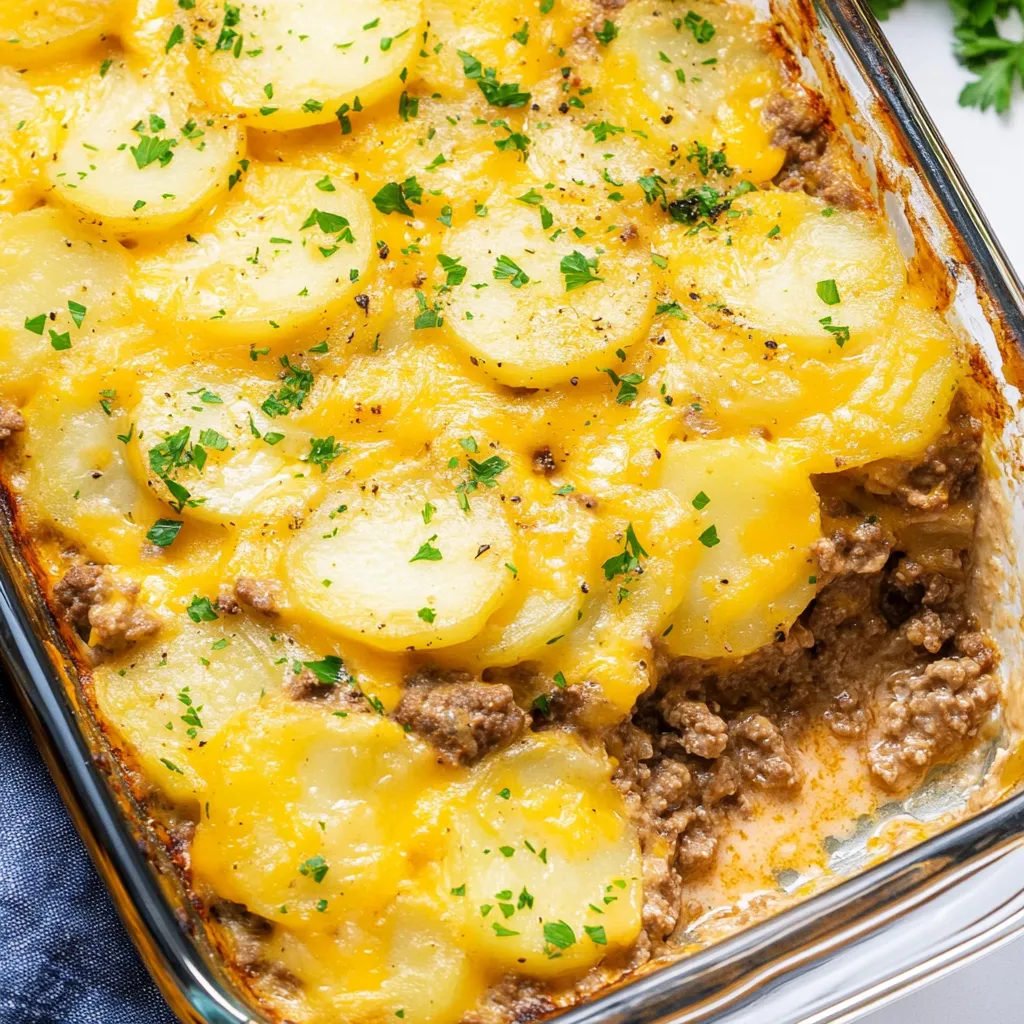
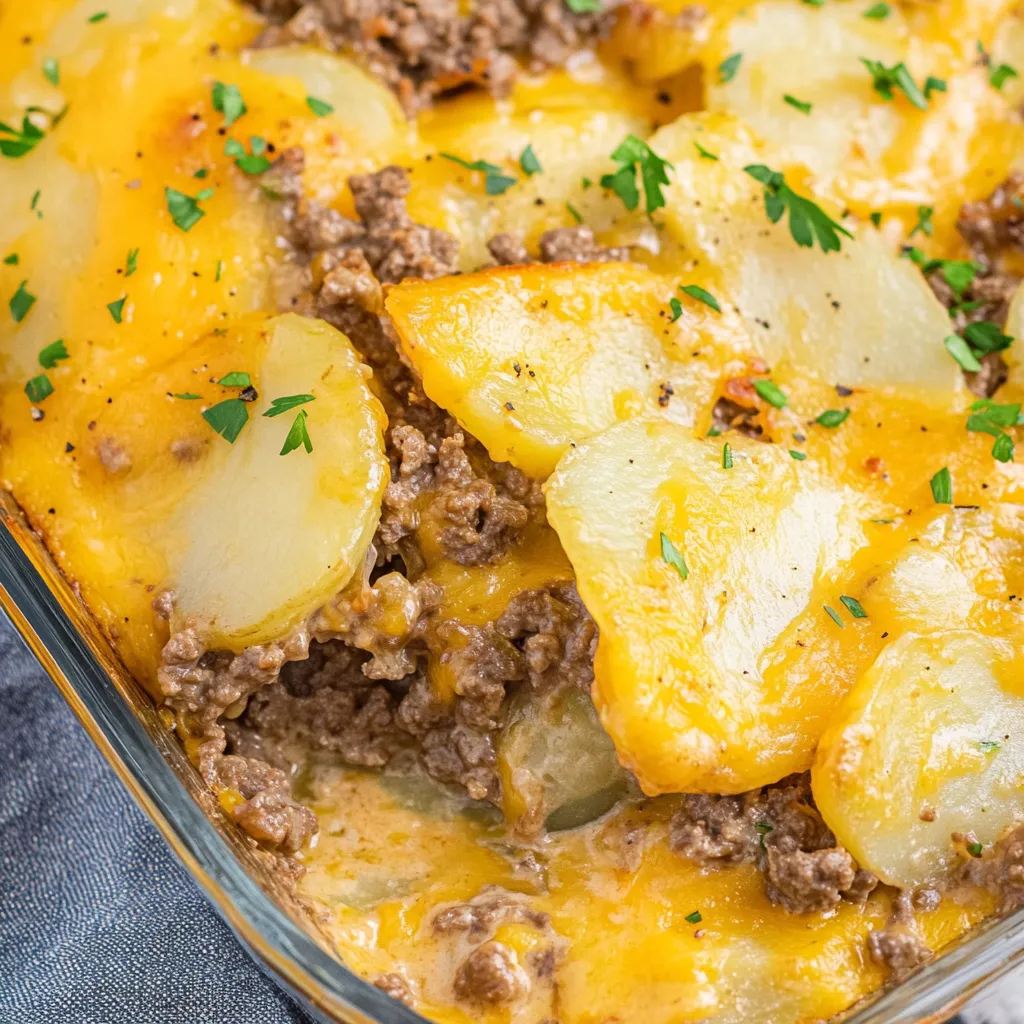
This hamburger potato casserole is the kind of dinner that makes everyone put down their phones and come to the table without being asked twice. Thin-sliced potatoes layer with seasoned ground beef and get smothered in a rich, creamy sauce that bubbles and browns in the oven until everything melds together into pure comfort. The cheese melts into every crevice, the potatoes turn tender and absorb all that savory flavor, and you end up with a dish that's hearty enough to satisfy the hungriest family members. It's straightforward cooking at its best—no complicated techniques or hard-to-find ingredients, just simple food that tastes like home.
I started making this casserole years ago when I needed something that would stretch a pound of ground beef to feed six people, and it's been in regular rotation ever since. The first time I served it, I wasn't sure how it would go over because it seemed almost too simple, but my family devoured it and immediately asked when I'd make it again. Now it's my go-to recipe when I need something reliable that I know will make everyone happy. I've probably made this casserole at least fifty times, and it never disappoints—even on nights when I'm tired and just going through the motions, it still comes out delicious.
Ingredients and What Makes Them Essential
- Ground beef (1½ pounds): This provides the protein and hearty, meaty flavor that makes the casserole satisfying enough to be a complete meal. Ground chuck with 80/20 fat content works best because it has enough fat to keep the meat moist and flavorful without being greasy. Leaner ground beef like 90/10 works too but can be slightly drier, while fattier blends might require draining more liquid. Choose beef that's bright red without any gray or brown patches, and check that the package feels cold and hasn't been sitting out. Ground turkey or chicken can substitute if you prefer poultry, though they'll give you a milder flavor.
- White potatoes (2½ to 3 pounds): Regular russet potatoes or Yukon golds both work beautifully here since they hold their shape during baking and have the right starchy texture that becomes creamy when cooked. Look for potatoes that are firm without any soft spots, green tinges, or extensive sprouting. Medium to large potatoes are easier to slice uniformly than tiny ones. The starch in potatoes thickens the sauce slightly as everything bakes together, contributing to that cohesive, almost custardy texture.
- Yellow onion (1 medium): Onion adds sweetness and depth to the ground beef layer, mellowing as it cooks and providing aromatic background flavor. Pick an onion that feels heavy and firm with dry, papery skin and no soft spots or sprouting. Yellow onions are perfect here because they're not as sharp as white onions or as sweet as Vidalia, giving you balanced flavor that complements rather than dominates.
- Garlic (2 to 3 cloves): Fresh garlic brings aromatic punch to the meat mixture without being overwhelming. Choose garlic heads with tight, firm cloves and avoid any with green sprouts pushing through, which indicates age and can taste bitter. Mincing the garlic finely helps it distribute evenly throughout the beef so every bite has that subtle garlicky note.
- Cream of mushroom soup (1 can, 10.5 ounces): This condensed soup is the base of your creamy sauce and provides instant savory depth without requiring you to make a roux or white sauce from scratch. The mushroom flavor pairs naturally with beef and potatoes, though cream of chicken or cream of celery work if you prefer different flavors or want to avoid mushrooms. Choose a name brand if possible since the consistency and flavor tend to be more reliable than store brands.
- Milk (½ cup): Adding milk thins out the thick condensed soup so it can flow between the potato layers and create that signature creamy texture. Whole milk gives you the richest result, but 2% or even skim milk work fine if that's what you have. The milk also helps stretch the sauce to cover the entire casserole adequately.
- Sour cream (½ cup): This adds tanginess and extra richness to the sauce, giving it more complexity than just soup and milk alone. Full-fat sour cream works best since low-fat versions can break and become watery when baked at high heat. Make sure your sour cream is fresh without any watery separation on top or off smells.
- Cheddar cheese (2 cups, shredded): Sharp cheddar provides bold, tangy flavor that cuts through the richness of the cream sauce and adds that irresistible melted cheese factor. Shred your own cheese from a block rather than buying pre-shredded if possible, since pre-shredded cheese has anti-caking agents that prevent it from melting as smoothly. Medium or mild cheddar work if you prefer less sharpness, and you could mix in some mozzarella for extra stretchiness.
- Smoked paprika (½ teaspoon): This adds a subtle smoky depth and warm color to the beef without making it spicy. Regular paprika can substitute, though you'll lose that hint of smokiness. The paprika also helps the meat develop a richer, more appealing color as it cooks.
- Olive oil (1 tablespoon): Using a little oil prevents the beef from sticking to the pan as it starts to cook and helps the onions soften properly. Any neutral cooking oil works, or you could use butter for extra richness.
Step-by-Step Instructions
- Prepare your oven and pan:
- Start by positioning your oven rack in the center position, which ensures even heat circulation around the casserole. Turn the oven to 375°F and let it preheat fully—this usually takes about 15 minutes, and you want the oven at the right temperature when the casserole goes in so everything cooks evenly. While the oven heats, get out a 9x13-inch baking dish, which is the standard size that holds all the layers perfectly. Spray the dish generously with cooking spray or rub it with butter, making sure to coat the bottom and sides thoroughly. This prevents sticking and makes serving and cleanup much easier later. Set the prepared dish aside while you work on the other components.
- Cook the ground beef mixture:
- Place a large skillet on the stove over medium-high heat and add the tablespoon of olive oil, swirling it around to coat the bottom of the pan. Let the oil heat for about 30 seconds until it shimmers slightly. Add your ground beef to the hot pan, breaking it up with a wooden spoon or spatula into smaller chunks as you add it. Don't just leave it in one big mass—you want to break it into bite-sized pieces as it cooks. While the beef is still mostly pink, add the diced onion and minced garlic to the pan, stirring them into the meat. Cook everything together, stirring frequently and continuing to break up the beef into smaller crumbles, for about 8 to 10 minutes total. You'll know it's done when you don't see any pink remaining in the beef and the onions have turned translucent and soft. The beef should be nicely browned in spots, and the mixture should smell savory and appealing. If your beef has released a lot of fat—more than about two tablespoons pooled in the bottom of the pan—carefully tilt the pan and spoon out the excess, or pour everything through a strainer and return the solids to the pan.
- Season the meat thoroughly:
- With the heat still on medium, sprinkle the cooked beef mixture with salt (start with one teaspoon), black pepper (about half a teaspoon), and the smoked paprika. If you want additional flavor, this is the time to add garlic powder, onion powder, or dried thyme—about a quarter teaspoon of each. Stir everything together well so the seasonings distribute evenly throughout the meat. Let the mixture cook for another minute or two so the spices bloom and become fragrant. Taste a small piece of the meat—it should be well-seasoned and flavorful on its own since this is one of the main flavor components of your casserole. If it tastes bland, add a bit more salt and pepper now. Turn off the heat and set the skillet aside while you prepare the other elements.
- Make the creamy sauce:
- Get out a medium mixing bowl and open your can of cream of mushroom soup, scraping all of it into the bowl with a spatula. The soup is very thick straight from the can, so add the half cup of milk and the half cup of sour cream. Use a whisk or large spoon to stir everything together vigorously until you have a smooth, pourable sauce with no lumps of soup or sour cream remaining. The consistency should be like thick cream or melted ice cream—thick enough to coat a spoon but thin enough to pour slowly. If it seems too thick to pour easily, you can add another tablespoon or two of milk to thin it slightly. Taste the sauce and add a pinch of salt and pepper if needed, though the condensed soup usually has plenty of seasoning already.
- Slice the potatoes uniformly:
- While you could cube the potatoes, thin slices work much better for this casserole because they stack neatly and cook evenly. Scrub your potatoes under cold running water to remove any dirt, then peel them with a vegetable peeler. Using a sharp knife or a mandoline slicer, cut the potatoes into rounds about one-eighth inch thick—roughly the thickness of two stacked quarters. If you're using a knife, work slowly and try to keep the slices as uniform as possible, which helps everything cook at the same rate. A mandoline makes this much faster and gives you perfectly even slices, but be extremely careful with the blade and use the hand guard. As you slice, drop the potato rounds into a large bowl. You should end up with a big pile of thin potato slices, probably 6 to 8 cups worth depending on your potato size.
- Build the first layer:
- Take your prepared 9x13-inch baking dish and arrange about one-third of the sliced potatoes across the bottom in an even layer. Overlap them slightly like shingles on a roof, and try to cover the entire bottom without leaving big gaps. The layer doesn't need to be perfect, but having relatively even coverage ensures every portion of the casserole will have the right ratio of ingredients. Sprinkle the potatoes with just a tiny pinch of salt and pepper. Now take half of your cooked ground beef mixture and spread it evenly over the potato layer, using a spoon or spatula to distribute it from edge to edge. Press it down gently so it settles into an even layer rather than leaving it in scattered clumps.
- Continue layering strategically:
- Add another third of the potato slices over the beef, again arranging them in a relatively even layer with slight overlaps. Sprinkle with a bit more salt and pepper. Spread the remaining half of the beef mixture over these potatoes, just like you did with the first layer. Sprinkle about half a cup of the shredded cheddar cheese over the beef—this middle layer of cheese adds extra richness and helps bind everything together. Now add your final third of potato slices on top, making this top layer as neat as you can since it will be visible through the sauce. Arrange the potatoes to cover the beef and cheese completely.
- Add sauce and final cheese:
- Take your bowl of cream sauce and pour it slowly over the top of the casserole, starting from one corner and working your way across. Use the back of a spoon to spread the sauce around if needed, encouraging it to flow down between the layers and into any gaps. You want the sauce to seep down through the potatoes rather than just sitting on top, so take your time with this step and maybe even gently press down on the potatoes in a few spots to help the sauce penetrate. Some sauce will pool around the edges, which is perfect. Once all the sauce is added, sprinkle the remaining cheddar cheese evenly over the entire top surface, covering it completely from edge to edge. The cheese will melt and brown during baking, creating that irresistible golden crust.
- Bake covered then uncovered:
- Tear off a large piece of aluminum foil and spray one side lightly with cooking spray—this prevents the cheese from sticking to the foil as it melts. Place the foil over the baking dish spray-side down, pressing it gently around the edges to seal but not so tight that it touches the cheese. Carefully transfer the covered dish to your preheated oven and set a timer for 60 minutes. The foil traps steam inside, which helps the potatoes cook through without the top burning. After an hour, carefully remove the casserole from the oven—it will be very hot and heavy—and take off the foil, watching out for the burst of steam that escapes. The potatoes should be mostly tender when you poke them with a fork, and the sauce should be bubbling around the edges. Return the uncovered dish to the oven and bake for an additional 10 to 15 minutes. During this time, the cheese will brown slightly and the top will develop some color. When it's done, the cheese should be fully melted and starting to turn golden in spots, and a fork should slide easily through all the potato layers.
- Rest before serving:
- When the casserole comes out of the oven, resist the urge to cut into it immediately even though it smells incredible. Set it on a cooling rack or heat-safe surface and let it rest for at least 10 to 15 minutes. This resting time is crucial because it allows the sauce to thicken and set up slightly, which means you'll be able to cut neat portions instead of having everything slide around in a liquidy mess. The casserole is extremely hot right out of the oven, and resting also makes it safe to eat without burning your mouth. After resting, you can either slice it into squares like lasagna or scoop portions out with a large serving spoon, depending on how firm it has become.
 Pin it
The ingredient I'm most particular about in this casserole is definitely the potatoes, and I've learned through trial and error that quality matters more than I initially thought. The first few times I made this, I grabbed whatever bag of potatoes was cheapest at the store, and sometimes they'd turn out perfectly while other times they'd be watery or develop weird dark spots during baking. Once I started being more selective—choosing firm, unblemished potatoes without any green tinges and checking that they weren't starting to sprout—my results became much more consistent. I also discovered that Yukon gold potatoes give me the creamiest, most luxurious texture in this casserole, even though they cost slightly more than russets. My husband actually commented that the casserole tasted richer when I switched potato varieties, even though I hadn't changed anything else about the recipe. Now I specifically seek out Yukon golds for any potato casserole, and the small extra expense is completely worth it for the improved texture and flavor.
Understanding Casseroles as a Cooking Method
Casseroles represent one of the most practical approaches to home cooking because they combine multiple components—protein, starch, vegetables, and sauce—into a single dish that cooks hands-off in the oven. This method originated partly from necessity, as cooks needed ways to make small amounts of meat stretch to feed large families, and partly from convenience, since one-pot meals reduce both cooking time and cleanup. The layering technique used in casseroles allows flavors to meld together as they cook, with each component contributing to the final result while maintaining some of its individual character.
The science behind casserole cooking involves heat transfer and moisture management. As the dish bakes, heat from the oven penetrates the food slowly and evenly from all sides, cooking everything at a controlled pace. Covering the casserole with foil during the initial cooking creates a steamy environment that prevents the top from drying out or burning while the interior ingredients, like these potatoes, have time to become tender. The liquid components—in this case the cream sauce—distribute heat throughout the dish and prevent dry spots. As starches in the potatoes cook, they absorb liquid and soften, while also releasing some of their own starch into the sauce, which helps thicken it naturally.
Casseroles also excel at developing complex flavors through the Maillard reaction, which occurs when proteins and sugars brown at high temperatures. The ground beef browns initially in the skillet, creating those deep, savory flavors, and then the cheese on top browns slightly during the uncovered baking time, adding another layer of toasted, nutty richness. Meanwhile, the longer cooking time allows aromatics like onion and garlic to mellow and sweeten, losing their sharp bite and contributing background complexity that makes the whole dish more satisfying than the sum of its parts.
Choosing and Preparing Potatoes
Potato selection makes a real difference in casserole texture and success. Russet potatoes, also called Idaho potatoes, are high in starch and low in moisture, which means they absorb liquid readily and break down slightly as they cook, creating a fluffier, more tender result. Yukon gold potatoes sit in the middle range with moderate starch and moisture, giving you a creamier, waxier texture that holds together better but still softens nicely. Red potatoes and new potatoes are too waxy for this application—they'll stay firm and almost crunchy even after an hour of baking, which isn't what you want here.
Slicing potatoes thinly and uniformly is one of those techniques that seems fussy but genuinely improves the final dish. When all the slices are the same thickness, they cook at the same rate, which means you won't have some pieces that are perfectly tender while others are still crunchy. Thick slices might not cook through in the allotted time, leaving you with a casserole that looks done on top but has hard potatoes in the middle. Thin slices also create more surface area for the sauce to cling to, which means more flavor in every bite. A mandoline slicer is the easiest tool for this job, though it requires careful attention since the blade is extremely sharp—always use the hand guard and work slowly.
Leaving the peel on potatoes is an option that some cooks prefer for added nutrition and rustic appeal, though it does change the texture slightly. The peel contains most of the potato's fiber and many of its vitamins, so keeping it on makes the dish healthier. However, potato peel doesn't break down during cooking and maintains a slightly tough, chewy texture that some people find unpleasant in a creamy casserole. If you do leave the peels on, scrub the potatoes very thoroughly to remove any dirt, and consider using thinner-skinned varieties like Yukon golds rather than thick-skinned russets.
Variations and Customization Options
This basic hamburger potato casserole serves as an excellent template for endless variations depending on what you have available or what flavors your family prefers. Instead of ground beef, try ground pork or Italian sausage for a different flavor profile—the pork adds subtle sweetness while sausage brings its own seasoning blend. Ground turkey or chicken work for a leaner version, though you might want to add an extra tablespoon of butter to the meat mixture since these are drier than beef. For a fully vegetarian version, substitute crumbled firm tofu or cooked lentils for the meat, though you'll want to season them more heavily since they're blander on their own.
The sauce is another area where you can experiment freely. Cream of chicken, cream of celery, or even cream of potato soup can replace the mushroom variety, each bringing its own subtle flavor shift. For a completely homemade sauce without canned soup, make a simple béchamel by melting three tablespoons of butter, whisking in three tablespoons of flour, cooking for a minute, then gradually whisking in two cups of milk until thickened. Season it with salt, pepper, and a bit of dried thyme or parsley, then use it in place of the soup mixture. This takes a few extra minutes but gives you more control over the flavor and eliminates any processed ingredients.
Cheese options are practically unlimited—try Monterey Jack for milder flavor, pepper Jack for heat, Gruyère for sophistication, or a Mexican blend for Southwestern flair. Adding vegetables expands the dish nutritionally and adds color—frozen peas, corn, diced bell peppers, sliced mushrooms, or chopped broccoli all work well mixed into the beef layer or scattered between the potato layers. Just make sure any vegetables you add are cut small and don't contain too much moisture, or they'll water down the sauce. Frozen vegetables should be thawed and patted dry before adding.
Make-Ahead and Freezing Strategies
Casseroles are ideal make-ahead meals because they actually benefit from some resting time before baking, which allows flavors to meld and the potatoes to begin absorbing the sauce. You can assemble this entire casserole up to 24 hours in advance, cover it tightly with plastic wrap, and refrigerate it until you're ready to bake. When baking from cold, add about 15 extra minutes to the covered baking time since the dish needs to heat through from refrigerator temperature. This advance prep makes weeknight dinners much easier—you can assemble the casserole on Sunday afternoon, then just pop it in the oven Monday evening when you get home.
Freezing casseroles requires a bit more strategy to maintain quality. For best results, assemble the casserole in a disposable aluminum pan or a freezer-safe baking dish. Don't bake it first—freeze it assembled but raw. Wrap the unbaked casserole tightly with plastic wrap, then cover with aluminum foil and label with the date and baking instructions. It will keep frozen for up to three months. To bake from frozen, remove the plastic wrap but keep the foil on, and add about 30 extra minutes to the covered baking time. You can also thaw it overnight in the refrigerator first, which reduces the additional cooking time to just 10 to 15 minutes.
If you do freeze the casserole after baking, the texture will be slightly different when reheated—the potatoes can become a bit softer and the sauce may separate slightly. To reheat baked frozen casserole, thaw it completely in the refrigerator overnight, then bake covered at 350°F for about 30 to 40 minutes until heated through. Individual portions can be microwaved for quicker reheating, though the oven gives you better texture. Always let reheated casserole rest for a few minutes before serving, just like with the freshly baked version.
 Pin it
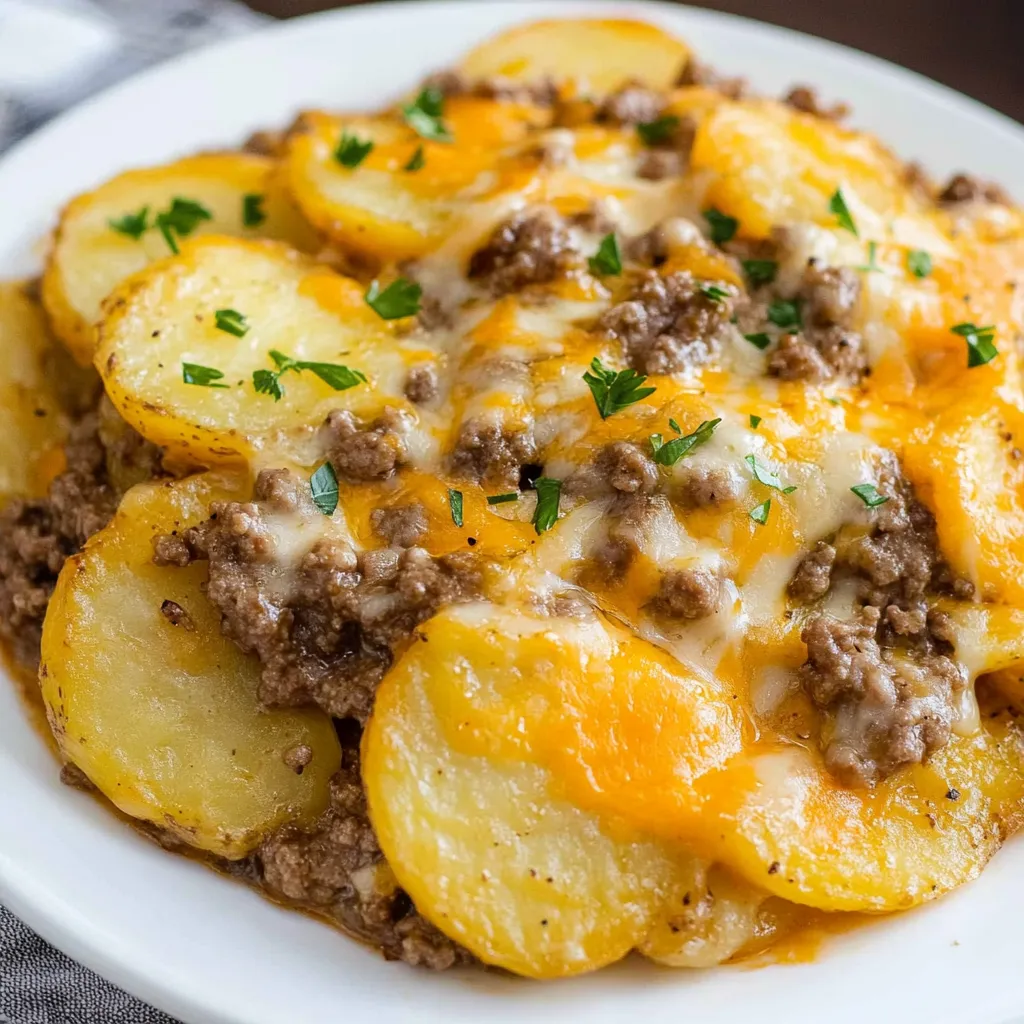
This hamburger potato casserole has earned its place as one of my most reliable recipes because it delivers consistent results even when I'm tired and not paying close attention. The ingredient list is short and forgiving, the technique is straightforward without requiring any advanced skills, and the final result satisfies everyone from young kids to elderly relatives. I've brought this casserole to potlucks, made it for new neighbors, and served it at casual family dinners, and it's always received enthusiastically. There's something universally appealing about the combination of beef, potatoes, and cheese that transcends personal taste preferences. The fact that it reheats beautifully and even improves slightly after a day in the refrigerator makes it perfect for busy families who need meals that work for multiple nights. This is the kind of recipe that becomes part of your regular rotation because it's simply too useful and too delicious not to make again and again.
Frequently Asked Questions
- → Can I use ground turkey instead of beef?
- Yes, ground turkey works perfectly in this recipe. You might want to add an extra tablespoon of oil since turkey is leaner than beef.
- → Do I have to peel the potatoes first?
- It's up to you. Leaving the skins on adds extra nutrition and texture, but peeling them gives a smoother result. Either way tastes great.
- → Can I make this casserole ahead of time?
- Absolutely. Assemble everything up to the baking step, cover tightly, and refrigerate for up to 24 hours. Add about 10 extra minutes to the baking time if cooking from cold.
- → What can I use instead of cream of mushroom soup?
- Try cream of chicken, cream of celery, or even a homemade white sauce. Cream of cheddar soup makes it extra cheesy too.
- → How do I know when the potatoes are done?
- Stick a fork or knife into the center of the casserole. If it slides through the potatoes easily without resistance, they're ready.
- → Can I add vegetables to this casserole?
- Sure! Diced bell peppers, mushrooms, or frozen mixed vegetables work well. Just mix them in with the beef layer.