
 Pin it
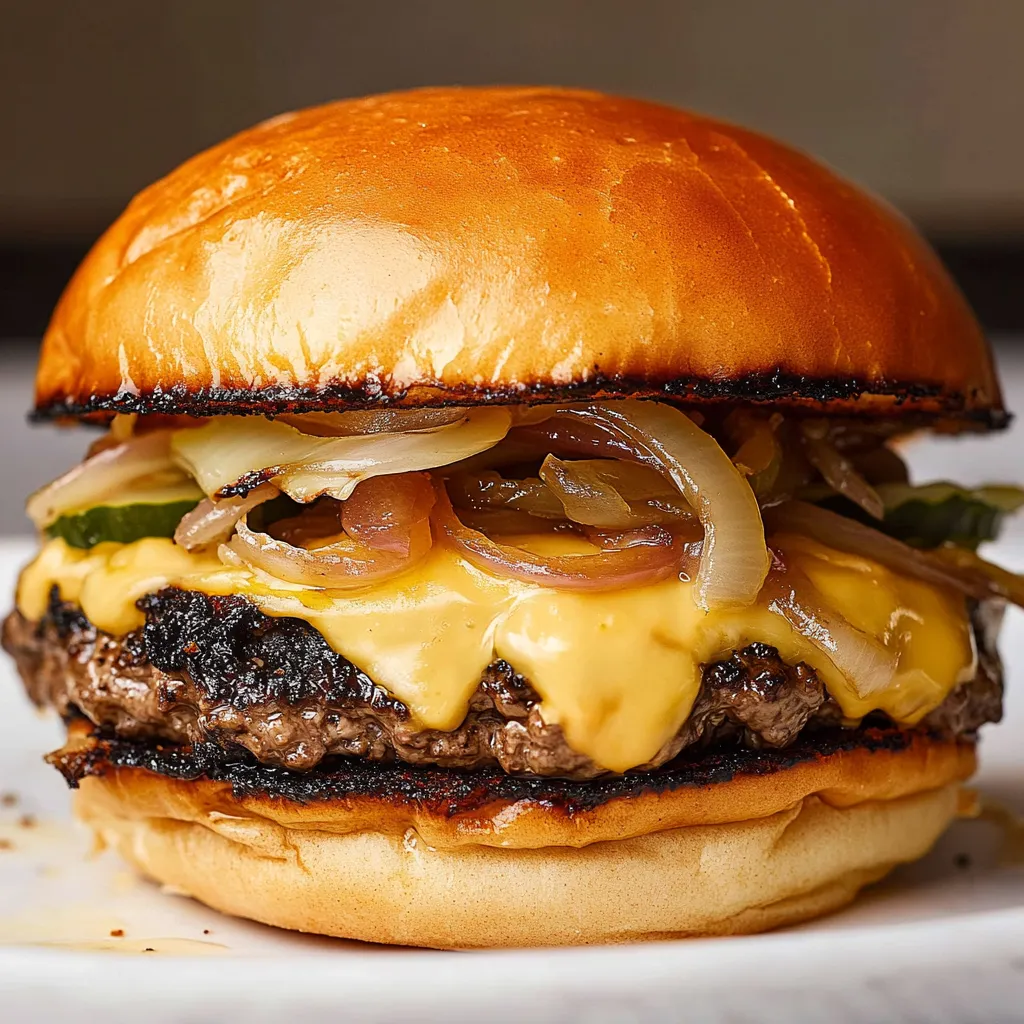
The Oklahoma onion burger is one of those regional specialties that seems strange on paper - smashing a beef patty onto a pile of thinly sliced raw onions so tall it looks like a mistake - but produces results so spectacularly delicious that you'll wonder why anyone makes burgers any other way. The technique was born out of Depression-era necessity in El Reno, Oklahoma during the 1920s when restaurant owners needed to stretch expensive ground beef with cheap onions, but what started as economical desperation turned into culinary genius. When you press the patty down hard onto those onions and leave it undisturbed, the onions trapped underneath steam and caramelize simultaneously while the exposed ones frizzle and crisp, creating this incredible texture where the bottom is jammy and sweet and the top is crispy and slightly charred. The resulting burger is essentially half onions, half beef, which sounds like too much until you taste how the caramelized sweetness balances the savory meat and realize you never want a regular burger again.
I first encountered Oklahoma onion burgers about eight years ago at a dive bar that specialized in regional American burgers, and I was skeptical when the server described them because I thought I hated cooked onions. The pile of raw onions they placed on the raw patty before smashing looked alarming and excessive. But that first bite converted me instantly - the onions weren't harsh or overwhelming but sweet and jammy with crispy edges, perfectly integrated with the thin, crusty beef. Now I make these at home constantly and have stopped ordering regular burgers at restaurants because they taste boring in comparison.
Ingredients and What Makes Them Essential
- Yellow Onions (2 large, very thinly sliced): Yellow onions are ideal because they have good sugar content for caramelization and aren't too sharp or pungent. You need them sliced paper-thin - ideally on a mandoline - because thick slices won't cook through in the short time the burger cooks. Each patty gets topped with about ½ cup of sliced onions, which seems like too much until they cook down.
- Ground Beef (1 pound, 90/10 or 85/15): Use relatively lean ground beef because the short cooking time doesn't give fat time to render out, and fatty beef shrinks more. The beef should be 90/10 (90% lean, 10% fat) or 85/15 at the leanest. Don't use 80/20 which is too fatty for this application. The beef should be cold from the refrigerator.
- American Cheese (4 slices, deli-sliced): American cheese melts into creamy perfection over the hot patty. Get it sliced fresh from the deli counter rather than buying individually-wrapped singles which contain more stabilizers and melt less smoothly. You can substitute cheddar, Swiss, or Muenster if you prefer.
- Hamburger Buns (4, soft and squishy): Soft, squishy buns like Martin's potato buns are ideal because they compress nicely and don't overpower the thin patty. Avoid heavy, bread-y buns like brioche or pretzel rolls which are too substantial for such a thin burger. The buns should be fresh and soft.
- Unsalted Butter (2 tablespoons, softened, for toasting buns): Butter adds flavor and helps the buns toast golden and crispy. Softened butter spreads more easily than cold butter without tearing the soft buns.
- Kosher Salt and Black Pepper (for seasoning): Generous seasoning is crucial because the thin patties don't have much mass to carry flavor. Use coarse kosher salt which adheres better than fine table salt. Freshly ground black pepper tastes better than pre-ground.
Optional Toppings: Yellow mustard, dill pickle slices, lettuce, tomato, special sauce, ketchup, or whatever you like.
Step-by-Step Instructions
- Slice the Onions:
- This is the most important prep step and the one that determines success. If you have a mandoline, use it to slice 2 large yellow onions into paper-thin slices - about ⅛ inch or thinner. If you don't have a mandoline, use the sharpest knife you have and slice as thinly as humanly possible, going slowly and carefully. The onions need to be thin enough that you can almost see through them. Thicker slices won't cook through in the time it takes to cook the burger. Separate the onion slices into individual rings and place them in a large bowl. You need about 2 cups of thinly sliced onions total.
- Prepare the Buns:
- Split 4 hamburger buns and spread the cut sides with softened butter. Place a large cast-iron skillet or heavy griddle over medium-high heat. Once hot, place the buttered buns cut-side-down in the skillet, working in batches if they don't all fit. Toast for about 2 to 3 minutes until golden brown. Remove and set aside. Don't skip this step - toasted buns add texture and prevent them from getting soggy from the burger juices.
- Form the Patties:
- Divide 1 pound of cold ground beef into 4 equal portions, about 4 ounces each. Gently shape each portion into a loose ball - don't compact them or handle them too much. Press each ball lightly into a rough patty about 3 inches in diameter and ½ to ¾ inch thick. These don't need to be perfect because you'll be smashing them flat anyway. Season both sides of each patty generously with kosher salt and black pepper. Place about ½ cup of the thinly sliced onions on top of each patty, piling them high into what looks like an absurd, towering mound. The pile will be several inches tall and look like way too many onions - this is correct.
- Heat the Skillet:
- Wipe out the skillet you used for toasting buns and place it over high heat. Let it get very hot - you want it almost smoking. No oil is needed because the beef will release enough fat. The high heat is essential for creating proper crust and caramelization.
- Cook the First Batch:
- Carefully place 2 of the onion-topped patties into the screaming hot skillet, onion-side up, spacing them apart so you have room to work. Immediately take a wide, flat, non-slotted metal spatula and press down on one patty as hard as you can, using your other hand to press down on top of the spatula for maximum pressure. Press in multiple spots, really grinding that patty and those onions into the skillet. You want the patty as thin as possible - ideally about ¼ inch thick or less. The onions should be pressed into the beef and touching the hot pan. Repeat with the second patty. Once pressed, leave them completely alone. Don't touch them, don't peek under them, don't move them. Let them cook undisturbed for about 2 to 3 minutes until the edges turn from red to brown-grey and you can see a dark crust forming around the bottom edges. The onions trapped under the patty are steaming while the ones on top are starting to brown.
- Flip and Add Cheese:
- After 2 to 3 minutes when the edges are brown and the bottom is deeply crusty, it's time to flip. Slide your spatula under one patty, getting right up against the skillet surface and scraping firmly to release all the crust and caramelized onions stuck to the bottom. This scraping is crucial - you want every bit of that golden crust and those jammy onions to come with the patty. Flip the patty over so the onion side is now down. The surface should be gorgeously brown with crispy onions and a dark crust. Immediately place a slice of American cheese on top of the patty. Repeat with the second patty. Cook for another 1 to 2 minutes until the second side develops a crust and the cheese melts completely. The burger cooks very quickly because it's so thin.
- Transfer and Repeat:
- Once the cheese is melted and the second side is crusty, use your spatula to transfer each patty to a bottom bun half. Scrape the skillet to collect any stray onions or crusty bits and pile them on top of the patties - every bit adds flavor. Immediately repeat the entire process with the remaining 2 patties and onions. You're working in batches because most home skillets don't have room for 4 patties at once, and overcrowding lowers the temperature too much to get proper browning.
- Assemble and Serve:
- Add your desired toppings to the patties on the bottom buns. Classic Oklahoma style is just pickles and yellow mustard, but you can add lettuce, tomato, more onions, special sauce, ketchup, or whatever you want. Close each burger with a toasted top bun. Serve immediately while the patties are hot, the cheese is melted, and the buns are still toasted. These are best eaten right away.
 Pin it
My brother claims he hates onions and will pick them off any burger or sandwich, insisting they're too strong and taste terrible. When I made Oklahoma onion burgers for a family cookout and he grabbed one without asking what was on it, he ate the entire thing before asking what kind of burger it was. When I told him it was literally half onions by volume, he looked at the remaining half burger in his hand with betrayal, but then finished eating it and grudgingly admitted these onions were "different" and "actually good." Converting the onion hater through aggressive caramelization feels like a personal victory.
Understanding the Depression-Era Origins
The Oklahoma onion burger emerged during the Great Depression in El Reno, Oklahoma, when Homer and Ross Davis ran the Hamburger Inn during the Railroad Strike of 1922. Ground beef was expensive and striking railroad workers needed affordable meals, so the Davis brothers needed to stretch their beef supply to keep prices low. Onions were cheap and plentiful, so they started topping patties with generous amounts of sliced onions before smashing them onto the griddle. The technique worked brilliantly - the onions not only extended the beef but improved it, creating sweet, caramelized flavor and keeping the thin patties moist. They priced the burgers at 5 cents, making them accessible to struggling workers. What started as economic necessity became a regional specialty that outlasted the restaurant itself. The technique spread throughout Oklahoma and remains popular today, though most people make them because they're delicious rather than because they're stretching beef. The history reminds us that some of the best recipes emerge from constraint and creativity rather than abundance.
The Science of Smashing and Caramelization
The smash burger technique creates superior crust through several scientific principles. When you press raw ground beef onto a screaming hot surface with significant force, you maximize the surface area in direct contact with heat. This creates extensive Maillard reaction - the chemical process where amino acids and sugars react under high heat to create hundreds of new flavor compounds that taste savory, meaty, and complex. More surface contact means more Maillard reaction means better crust. The onions trapped underneath the patty are pressed into both the meat and the hot pan. They steam from their own moisture while simultaneously frying in the beef fat that renders out, creating caramelization (sugars breaking down and browning) alongside steaming. The onions on top of the patty frizzle and char slightly in the open air. This combination of steaming, frying, and charring creates complex texture and flavor that onions cooked by only one method can't match. The ultra-thin patty cooks through quickly before moisture can escape, staying juicy despite being well-done.
Why Lean Beef Works Better Than Fatty
Counterintuitively, this is one application where leaner ground beef produces better results than fattier beef. Most burger recipes call for 80/20 ground beef (80% lean, 20% fat) because the fat keeps thick burgers moist during extended cooking. However, Oklahoma onion burgers are so thin they cook through in under 5 minutes total. In that short time, fatty beef doesn't have enough time to render out its fat, which means the fat mostly stays in the meat and makes it greasy rather than juicy. The burgers also shrink more as fat renders. Additionally, you need the patty to maintain contact with the hot pan for maximum crust development, and excess fat creates a layer between the meat and the pan, reducing contact. Lean beef (90/10 or even 93/7) has just enough fat to keep the meat from being completely dry while minimizing shrinkage and excess grease. The onions also contribute moisture that keeps the meat from drying out, which is part of why this technique works so well.
The Critical Importance of Paper-Thin Onions
The entire technique hinges on having onions sliced thin enough to cook through in the 3 to 4 minutes the burger is on the heat. Thick onion slices would still be raw and crunchy when the burger is done, creating harsh texture and sharp, sulfurous flavor. Paper-thin slices cook through completely, caramelizing on the surfaces touching the hot pan and the beef while steaming through from their own moisture. The thinness also means you can pile them very high because they compact dramatically as they cook - ½ cup of raw sliced onions reduces to maybe 2 tablespoons of cooked onions. This is why a mandoline is genuinely worth buying even if you rarely use kitchen tools - it creates uniform paper-thin slices in seconds that would take forever by hand and be less consistent. If you don't have a mandoline, invest serious time and attention into slicing as thinly as humanly possible with your sharpest knife. The effort makes or breaks the dish.
Equipment Considerations and Temperature
A heavy cast-iron skillet or griddle is ideal for Oklahoma onion burgers because cast iron retains heat exceptionally well. When you press cold beef onto the pan, cast iron doesn't lose temperature as dramatically as thinner pans do, which means it continues creating crust rather than steaming the meat. The seasoned surface also prevents sticking and adds slight flavor. A flat griddle works beautifully too. Stainless steel pans work but don't retain heat as well. Non-stick pans are not recommended because they can't handle the very high heat needed for proper crust formation. The skillet must be screaming hot - nearly smoking - before you add the patties. Many home cooks are afraid of high heat and cook too low, which creates steaming rather than searing. High heat is not optional for this technique. The wide, flat, non-slotted spatula is also crucial - you need a tool that can really press down with force and scrape up every bit of crust when flipping.
Topping Choices and Oklahoma Tradition
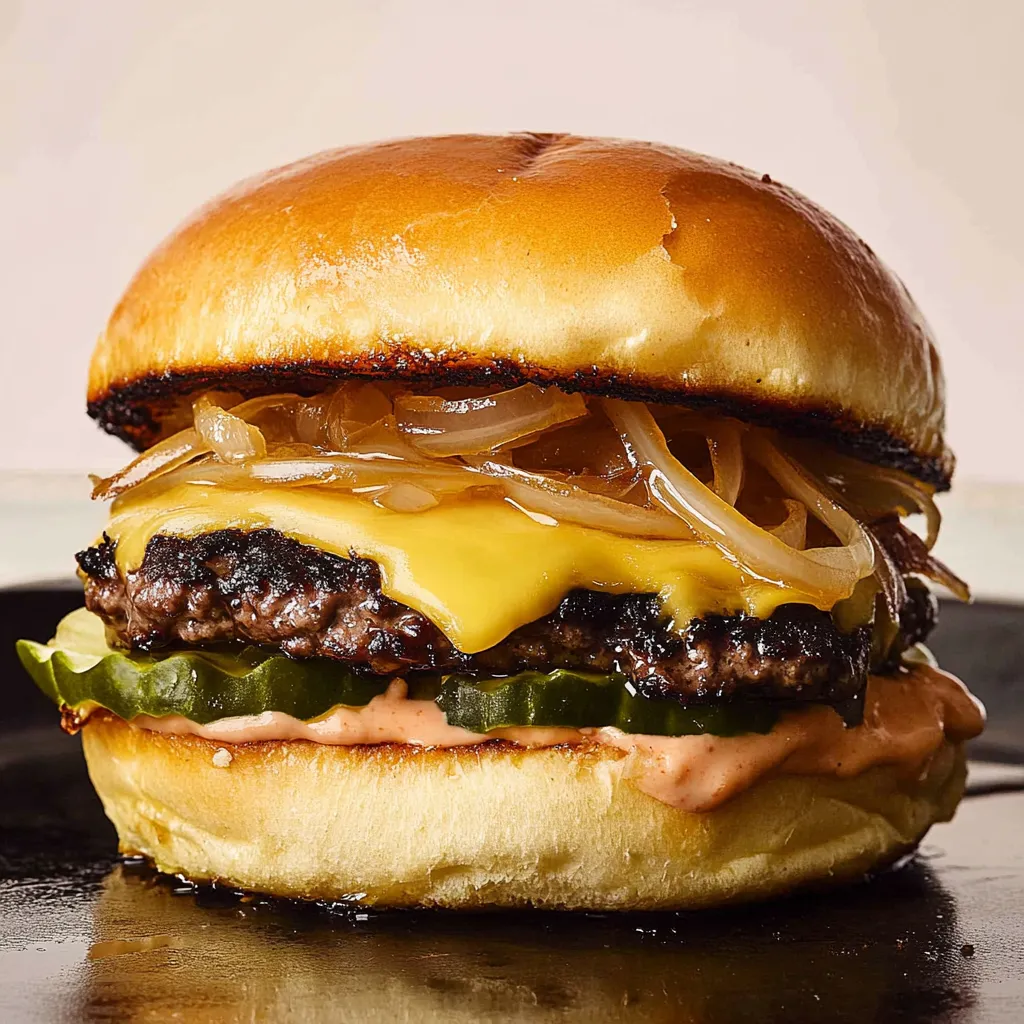
Traditional Oklahoma onion burgers are dressed simply - maybe yellow mustard, dill pickle slices, and the melted American cheese. This minimalism lets the caramelized onions and crusty beef shine without competition. The pickles add acid and crunch that contrasts with the sweet onions and rich beef. Yellow mustard provides tangy brightness. That's genuinely all you need. However, you can add whatever you like - lettuce, tomato, more raw onions, special sauce, ketchup, bacon, or any other burger toppings. Just remember that this burger's appeal is the ratio of caramelized onions to beef, so adding too many other ingredients can obscure that balance. If you want to get fancy, try a simple sauce of mayonnaise, ketchup, and pickle relish stirred together, or just good mayonnaise with a squeeze of lemon juice. Avoid heavy, saucy toppings that make the thin burger soggy or overpower the delicate onion flavor.
Storage, Reheating, and Make-Ahead
Oklahoma onion burgers are definitely best fresh off the griddle when the crust is at peak crispiness and the cheese is freshly melted. However, you can do some advance prep to make cooking day easier. Slice the onions up to 4 hours ahead and store covered in the refrigerator - don't slice them further in advance because onions release moisture and become limp. Portion the beef into balls and keep them covered in the refrigerator until cooking time. Toast the buns several hours ahead and store in a sealed container. Prepare any toppings the day before. For leftovers, the cooked patties can be stored separately from buns and toppings in an airtight container in the refrigerator for up to 3 days. Reheat in a hot skillet for about 1 minute per side until warmed through, then reassemble on fresh toasted buns. The onions won't be quite as crispy after reheating but they're still good. These don't freeze well because the onions become watery when thawed.
Variations and Scaling
While the classic version is perfect, you can create variations on the theme. For spicy Oklahoma burgers, add sliced jalapeños with the onions before smashing. For mushroom onion burgers, add paper-thin sliced mushrooms along with the onions. For Swiss and onion burgers, use Swiss cheese instead of American and add a smear of whole grain mustard. For bacon onion burgers, add cooked bacon to the assembled burger. For double onion burgers, add raw sliced onions as a topping in addition to the caramelized ones smashed into the patty. To scale up for a crowd, you can cook multiple batches but keep finished burgers warm in a 200°F oven while you finish cooking. To scale down, the recipe halves perfectly - use ½ pound beef for 2 burgers. The technique works at any scale as long as you maintain the ratios and don't overcrowd your cooking surface.
Troubleshooting Common Problems
When Oklahoma onion burgers don't turn out right, there's usually a fixable cause. If the onions are still crunchy and raw-tasting, you didn't slice them thin enough or didn't press hard enough - use a mandoline next time and press aggressively. If the patties are thick instead of thin, you didn't press hard enough or used a spatula that's too small - press with all your strength using a large, flat spatula. If there's no crust, your pan wasn't hot enough or you moved the patties before they were ready - get the pan nearly smoking and leave them alone. If the bottom sticks when flipping, you tried to flip too early before the crust formed - wait until the edges are brown and the crust releases naturally. If the burgers are dry, you used too-lean beef or overcooked them - use 85/15 to 90/10 beef and cook just until done. If they're greasy, you used beef that's too fatty - use leaner ground beef. Most issues relate to heat management, onion thickness, or pressing technique.
 Pin it
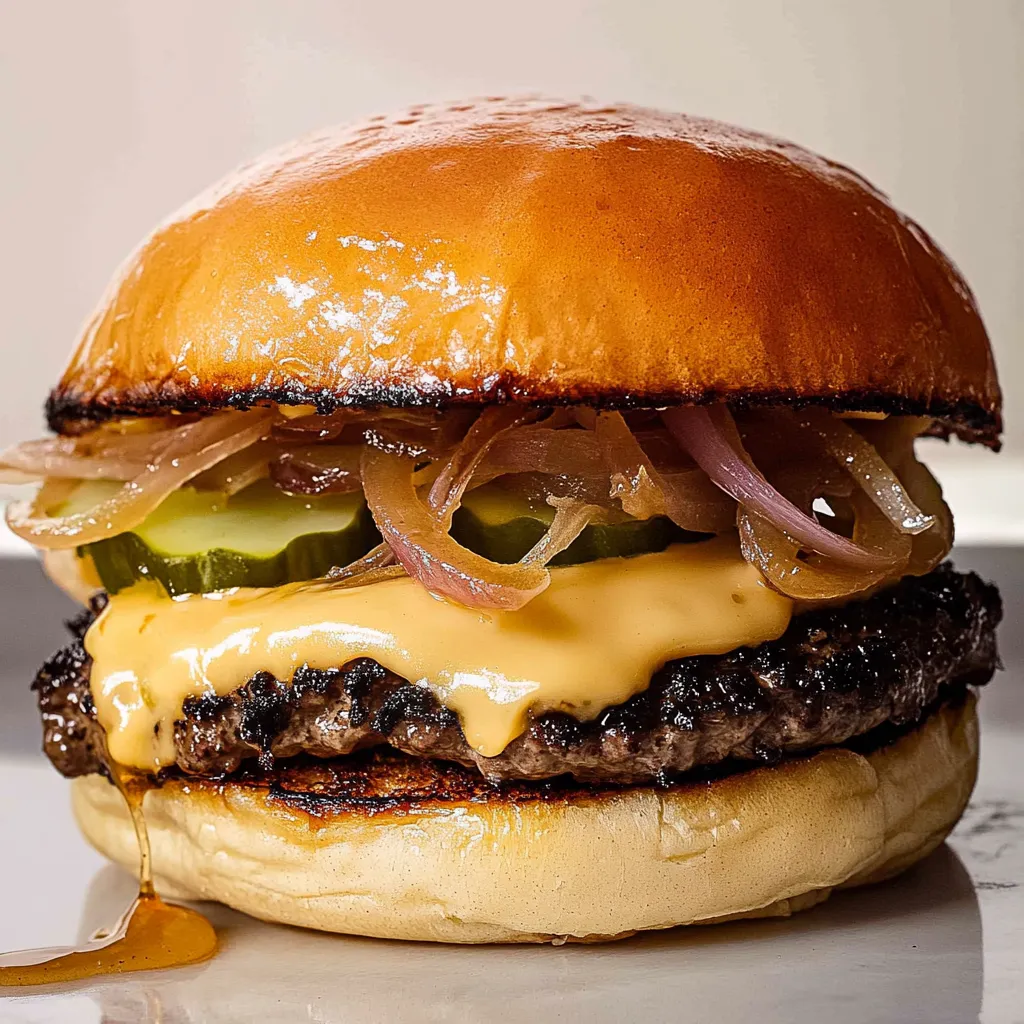
After making Oklahoma onion burgers probably a hundred times over the past eight years, they've completely replaced regular burgers in my cooking rotation because they're genuinely better in every way. The onions add so much flavor and keep the thin patties moist, the crust is spectacular, and they cook so fast that I can have dinner ready in ten minutes. I appreciate the Depression-era ingenuity that created this technique - using cheap onions to stretch expensive beef ended up improving the burger rather than just extending it. The aggressively high heat and smashing technique creates textures and flavors impossible to achieve with gentle cooking. These represent exactly what regional American cooking should be - born from necessity, perfected through repetition, genuinely delicious enough to spread beyond their original context, and simple enough that anyone can make them at home with basic ingredients and proper technique.
Frequently Asked Questions
- → Why do you press the onions into the burger?
- Pressing the onions into the raw beef while cooking helps them caramelize and stick to the patty, creating a sweet and crispy crust that's the signature of Oklahoma-style burgers.
- → Can I use a regular skillet instead of cast iron?
- Cast iron works best because it holds heat really well and creates that perfect crust. A heavy-bottomed stainless steel pan can work in a pinch, but avoid nonstick pans for this recipe.
- → How thin should I slice the onions?
- Slice them as thin as you possibly can, almost paper-thin. The thinner they are, the better they'll caramelize and integrate into the burger when you smash it down.
- → Do I need to add oil to the pan?
- No oil needed. The beef has enough fat to prevent sticking, and the high heat will create a natural release once the crust forms on the bottom.
- → Can I make these burgers ahead of time?
- These burgers are best eaten right away while the crust is still crispy. Reheating them won't give you the same texture, so cook them fresh when you're ready to eat.
- → What type of ground beef works best?
- Lean ground beef (80/20 or 85/15) works great. You want some fat for flavor, but not so much that it makes the burgers greasy when you press them flat.