
 Pin it
Thanksgiving dinner for a small group shouldn't mean sacrificing any of those classic holiday flavors or spending your entire day in the kitchen managing multiple pots and pans. This sheet pan approach puts everything - turkey breast, maple-glazed sweet potatoes, and crispy Brussels sprouts - onto one baking sheet where they roast together in perfect harmony. The turkey gets slathered with a mayonnaise and za'atar mixture that might sound unconventional but creates the most incredibly moist, flavorful meat with golden skin. Meanwhile, the sweet potatoes caramelize into candy-like wedges and the Brussels sprouts get crispy and brown around the edges. What makes this particularly smart is how the vegetables are added at staggered times so everything finishes cooking simultaneously, meaning you're not juggling multiple dishes or worrying about things getting cold. Whether you're cooking for a small gathering, don't want leftovers for days, or just have a craving for Thanksgiving flavors in March, this delivers all that holiday comfort without the usual stress and mountains of dishes.
I made this for the first time a few years ago when it was just going to be my husband and me for Thanksgiving because our families were celebrating elsewhere. I was skeptical about the mayonnaise thing and almost skipped it, but I'm so glad I didn't because the turkey came out juicier than any I'd ever made before. The za'atar was a revelation too - it made the meal feel special and different rather than just a sad, scaled-down version of the big family feast. Now we actually prefer doing Thanksgiving this way even when we could join larger gatherings, and we've started making it randomly throughout the year when we want those cozy holiday flavors without the commitment of cooking for twenty people.
Ingredients and What Makes Them Essential
- Boneless Turkey Breast (2 to 2 ½ pounds, skin-on): A boneless breast with the skin still attached is ideal because the skin protects the meat from drying out and adds flavor, but you can remove it before eating if you're watching fat intake. Look for a breast that's not pre-brined or "enhanced" with solution, which can make the meat spongy. The turkey should feel firm and smell fresh, not off or sour.
- Kosher Salt and Black Pepper (for seasoning): These basic seasonings are essential for bringing out the turkey's natural flavor. You'll need more salt than you think - turkey is a large, dense piece of meat that requires generous seasoning. Use kosher salt rather than table salt because the larger crystals distribute more evenly.
- Fresh Garlic (2 cloves, finely grated): Garlic rubbed directly onto the turkey adds pungent, savory depth. Grate it on a microplane rather than mincing so it becomes almost paste-like and adheres to the meat better. Fresh garlic makes a huge difference over garlic powder here since it's one of the main flavors.
- Light Mayonnaise (⅓ cup): The mayonnaise serves double duty - part goes on the turkey to keep it moist during roasting, and the rest becomes the sauce served alongside. Light mayo works fine and saves some calories, but regular full-fat mayo creates an even richer result. Don't use Miracle Whip or salad dressing - you need real mayonnaise.
- Za'atar Spice Blend (2 tablespoons): This Middle Eastern seasoning blend typically contains dried thyme, oregano, marjoram, toasted sesame seeds, and sumac, which gives it a slightly tangy, lemony quality. You can find za'atar at Middle Eastern markets, specialty spice shops, or many regular grocery stores now. Each brand tastes slightly different, so if you fall in love with one, stick with it.
- Fresh Lemon Juice (1 tablespoon): Lemon juice brightens the za'atar sauce at the end, adding acidity that cuts through the richness of the mayonnaise and turkey. Always use fresh lemon juice, not bottled, which tastes flat and artificial.
- Sweet Potatoes (1 ½ pounds, about 2 large, peeled and cut into wedges): Sweet potatoes provide that classic Thanksgiving sweetness and become beautifully caramelized in the oven. Look for sweet potatoes that are firm with smooth skin and no soft spots. Cut them into wedges about 1-inch thick at the widest part so they cook through without burning.
- Olive Oil (3 tablespoons total, divided): Oil helps the vegetables roast and caramelize rather than steam. Extra virgin olive oil has more flavor but regular olive oil works fine too. You'll use some for the potatoes and some for the Brussels sprouts.
- Pure Maple Syrup (2 tablespoons): Real maple syrup adds that signature sweet glaze to the potatoes. Don't use pancake syrup which is mostly corn syrup - the real stuff tastes better and has a more complex flavor. Grade A maple syrup is perfect for this.
- Red Pepper Flakes (¼ teaspoon): A small amount of heat balances the sweetness of the potatoes and adds complexity. If you don't like any spice at all, omit these, but ¼ teaspoon provides just a subtle warmth, not real heat.
- Brussels Sprouts (12 ounces, trimmed and halved): Brussels sprouts are classic fall vegetables that roast beautifully. Choose firm, bright green sprouts without yellow or brown leaves. Trim off the stem ends and peel away any loose or damaged outer leaves, then cut them in half lengthwise so they have a flat side to caramelize on the pan.
- Cumin Seeds (½ teaspoon): Whole cumin seeds add a warm, earthy flavor to the Brussels sprouts that complements the za'atar on the turkey. If you only have ground cumin, use about ⅛ teaspoon since ground spices are more concentrated than whole seeds.
Step-by-Step Instructions
- Prepare the Turkey:
- Remove your turkey breast from the refrigerator and packaging. If it came tied with kitchen twine to hold its shape, use scissors or a knife to cut and remove all the string. Pat the entire surface of the turkey completely dry with paper towels - this is important because moisture on the surface prevents browning and crisping. Place the dried turkey breast on a cutting board. Finely grate 2 cloves of garlic using a microplane grater directly onto the turkey breast, spreading the grated garlic paste evenly over all surfaces of the meat. Sprinkle the turkey generously with kosher salt on all sides - you'll need about 1 to 1 ½ teaspoons total, which might seem like a lot but turkey is dense meat that needs substantial seasoning. Add several grinds of black pepper over all surfaces as well. Use your hands to rub the salt, pepper, and garlic into the meat, making sure everything is evenly distributed. Leave the seasoned turkey sitting on the counter at room temperature for 15 minutes while you prepare everything else. This tempering time allows the turkey to come closer to room temperature, which means it will cook more evenly instead of being cold in the center when the outside is done.
- Make the Za'atar Mayo:
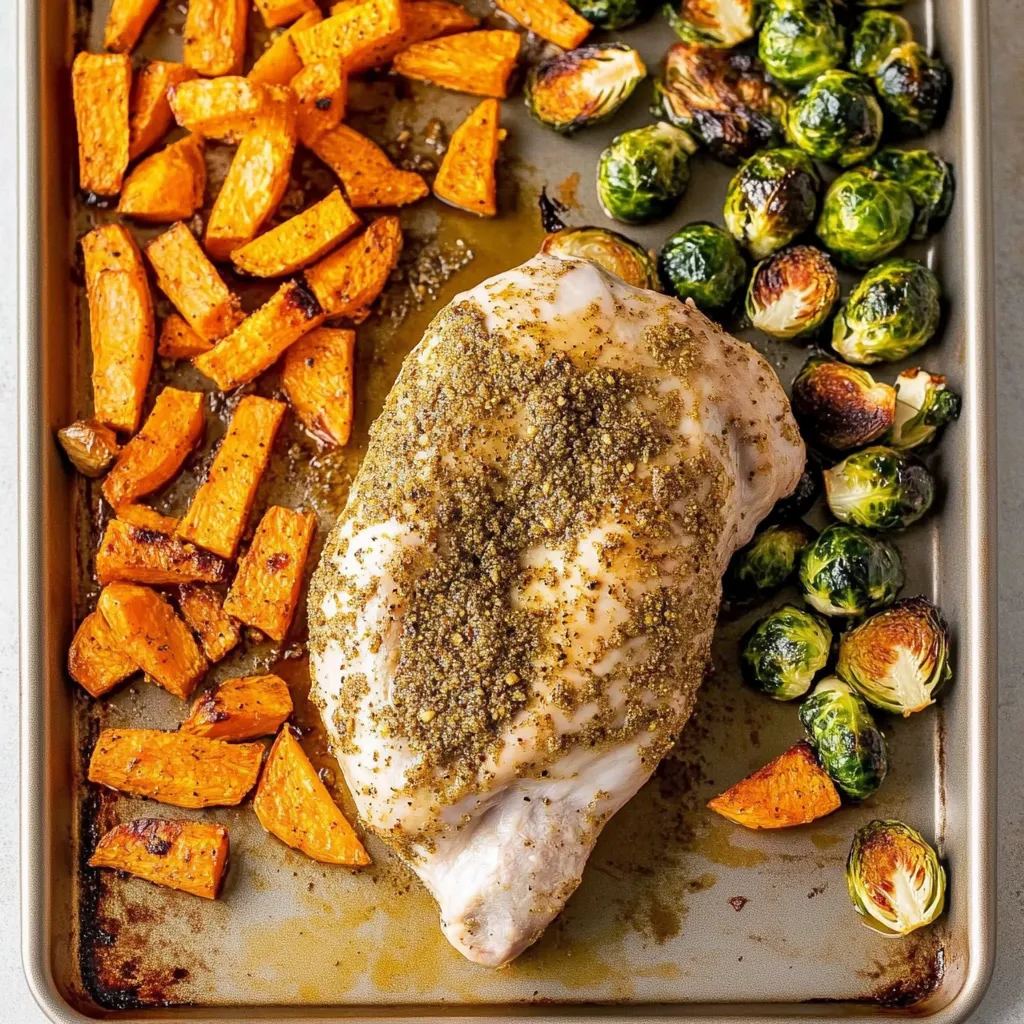
- In a small bowl, combine ⅓ cup of light mayonnaise with 2 tablespoons of za'atar spice blend. Stir them together thoroughly with a spoon until the za'atar is completely incorporated throughout the mayo and you have an evenly colored, herb-flecked mixture. The mayo will take on a greenish-brown color from the herbs and look quite different from plain mayo. Spoon out 2 tablespoons of this za'atar mayo and transfer it to a separate small bowl - this portion will go on the turkey. Leave the remaining za'atar mayo in the original bowl, cover it, and set it aside at room temperature for now. You'll finish turning it into a sauce later. Take the 2 tablespoons of za'atar mayo you set aside and use a pastry brush or the back of a spoon to spread it all over the turkey breast in an even layer, coating all surfaces including the sides. Make sure you get into all the nooks and crannies. The mayo will look thick and almost paste-like on the meat. Don't worry about it looking messy - it's going to melt and baste the turkey as it cooks, creating that moist, flavorful result.
- Prepare and Start Roasting the Sweet Potatoes:
- Preheat your oven to 400°F so it's fully heated when you're ready to start roasting. Peel your sweet potatoes using a vegetable peeler, removing all the skin. Cut each potato in half lengthwise, then cut each half into wedges, aiming for pieces that are about 1-inch thick at the widest part and roughly similar in size so they cook evenly. You should get about 6 to 8 wedges per large sweet potato. Place all the sweet potato wedges in a large mixing bowl. Drizzle 2 tablespoons of olive oil over them, then add 2 tablespoons of maple syrup, ½ teaspoon of kosher salt, and ¼ teaspoon of red pepper flakes. Use your hands or a large spoon to toss everything together thoroughly, making sure every wedge is coated with the oil-syrup mixture and seasoning. The wedges should look glossy and sticky. Now take a large rimmed baking sheet - you need one with sides to contain the juices and prevent dripping. Place your mayo-coated turkey breast in the center of the sheet pan. Arrange all the seasoned sweet potato wedges around the turkey, spreading them out in a single layer as much as possible. Try not to let them overlap too much because overlapping vegetables will steam instead of roasting and won't caramelize properly. Slide the sheet pan into your preheated 400°F oven and set a timer for 20 minutes. The potatoes get a head start because they take longer to cook through than the Brussels sprouts.
- Add the Brussels Sprouts and Continue Roasting:
- While the turkey and sweet potatoes have been roasting for their first 20 minutes, prepare your Brussels sprouts. Place the trimmed and halved Brussels sprouts in a medium bowl. Drizzle with 1 tablespoon of olive oil. Add ½ teaspoon of whole cumin seeds and a generous pinch of salt, about ¼ teaspoon. Toss everything together until the sprouts are evenly coated with oil and seasoning. When your timer goes off after that first 20 minutes, carefully pull the hot sheet pan out of the oven using oven mitts. Use a spatula or tongs to flip and toss the sweet potato wedges, moving them around so the sides that were touching the pan are now facing up. Push all the sweet potato wedges to one side of the pan, creating space for the Brussels sprouts. Arrange the seasoned Brussels sprouts in the empty space on the pan, spreading them out in a single layer with their cut sides facing down against the pan - this flat surface will caramelize and brown beautifully. Return the sheet pan to the oven and roast for another 20 to 30 minutes. The exact time depends on the size of your turkey breast - start checking at 20 minutes. The turkey is done when an instant-read thermometer inserted into the thickest part of the breast reads 145°F to 150°F. Don't rely on visual cues alone for turkey doneness - you need a thermometer. The sweet potatoes should be tender when pierced with a knife and caramelized around the edges. The Brussels sprouts should be browned on their cut sides and tender throughout with crispy outer leaves.
- Rest the Turkey and Finish the Sauce:
- Once your turkey reaches the proper internal temperature, remove the entire sheet pan from the oven and place it on a heat-safe surface. Immediately transfer the turkey breast to a cutting board and tent it loosely with aluminum foil. Let it rest for 10 minutes before carving - this resting time allows the juices to redistribute throughout the meat instead of running out when you cut into it, keeping the turkey moist. While the turkey rests, finish your sauce. Take that reserved bowl of za'atar mayo you set aside earlier. Squeeze in 1 tablespoon of fresh lemon juice and stir it in thoroughly. Taste the sauce and adjust the seasoning - it should taste bright, tangy, and well-seasoned. If it seems too thick, stir in a teaspoon or two of olive oil to thin it to a drizzle-able consistency. Add a pinch of salt if needed. The sauce should be creamy, herby, tangy, and just slightly salty. Set it aside until serving time.
- Carve and Serve:
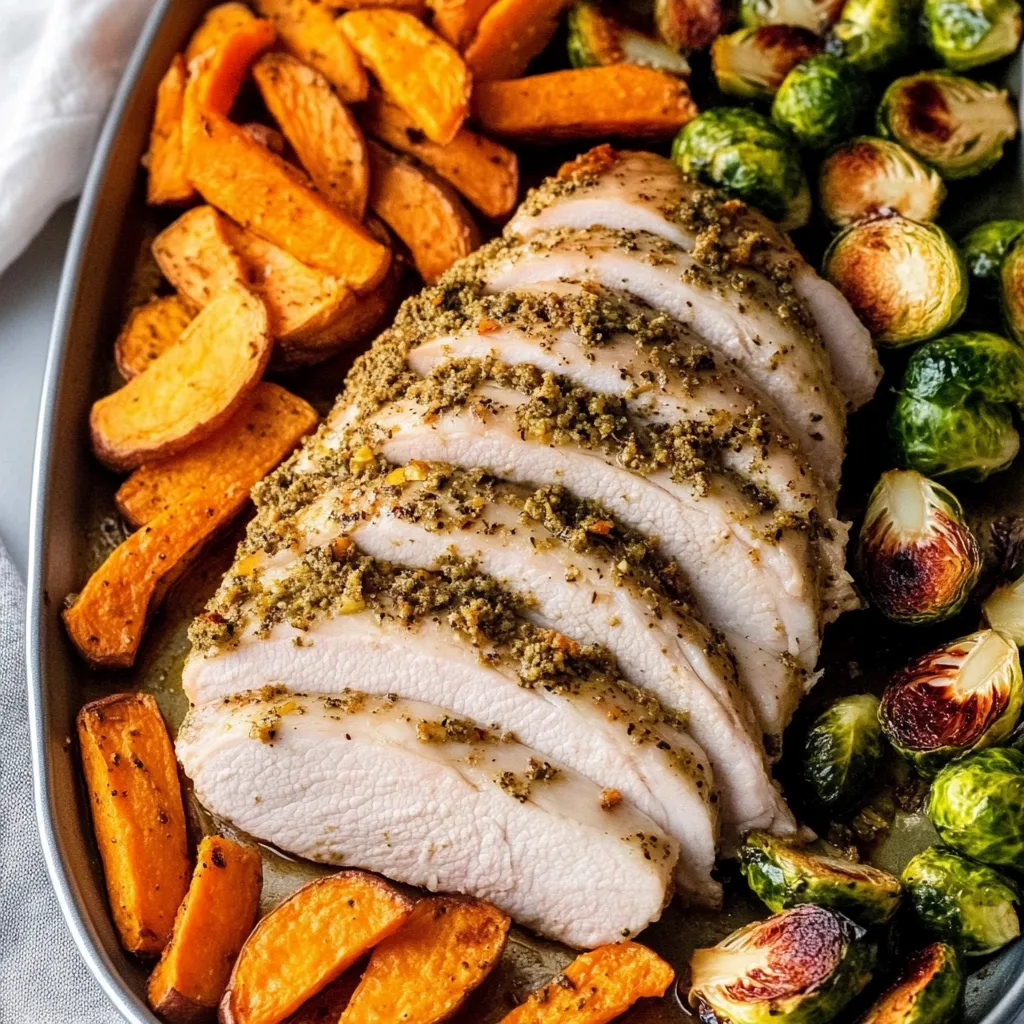
- After the turkey has rested for 10 minutes, use a sharp knife to carve it into slices. Cut against the grain of the meat, slicing crosswise across the breast in ½-inch thick slices. The turkey should be juicy with no pink remaining in the center. If you prefer to remove the skin before serving to reduce fat, peel it off now and discard it - the nutritional information assumes skinless servings. Arrange the carved turkey slices on a serving platter or individual plates. Add the roasted sweet potato wedges and Brussels sprouts around the turkey. Drizzle some of the za'atar sauce over the turkey slices, and serve the remaining sauce on the side so people can add as much as they want. If you're feeling festive, garnish with fresh herbs like parsley or thyme, or serve with traditional Thanksgiving sides like cranberry sauce or stuffing alongside.
 Pin it
The first time I suggested we do Thanksgiving this way instead of the full traditional spread, my husband looked at me like I'd suggested we skip the holiday entirely. He's very particular about traditions and worried that a sheet pan dinner would feel like we weren't trying hard enough or celebrating properly. But after he tasted that first bite of incredibly moist, flavorful turkey with those caramelized sweet potatoes, he completely changed his tune. Now he actually gets disappointed when we attend larger Thanksgiving dinners because he prefers this version so much. My mother-in-law was scandalized when I told her about the mayonnaise on the turkey, insisting that wasn't how it should be done, but when I made it for her last year and she reluctantly tried it, she asked for the recipe before she left. Sometimes the unconventional approaches turn out to be the best ones.
Understanding Turkey Breast Cooking Temperatures
The USDA recommends cooking all poultry to 165°F for food safety, but that guideline is designed to kill bacteria instantly. What many home cooks don't realize is that holding turkey at lower temperatures for longer periods achieves the same safety while keeping the meat much more moist and tender. Turkey held at 145°F for just a few minutes reaches the same level of safety as turkey instantly cooked to 165°F. This is why this recipe targets 145-150°F - by the time the turkey rests for 10 minutes, it will have spent enough time in the safe zone while avoiding the dry, stringy texture that happens when breast meat hits 165°F. The carryover cooking that happens during resting will also bring the temperature up a few degrees. If you're nervous about food safety or serving to vulnerable populations, you can cook to 160°F, which provides extra insurance while still being considerably more moist than 165°F. Always use an instant-read thermometer rather than guessing - insert it into the thickest part of the breast, avoiding any bones, and take multiple readings to ensure accuracy. Dark meat needs higher temperatures than white meat, but since this recipe uses only breast meat, you can safely target these lower temperatures.
The Science Behind Mayonnaise as a Coating
Coating meat with mayonnaise before roasting might sound bizarre, but it makes complete sense when you understand what's happening chemically. Mayonnaise is an emulsion of oil and egg yolks, creating a stable mixture that clings to meat better than brushing with plain oil. As the turkey roasts, the mayonnaise doesn't just sit on the surface - it melts and continuously bastes the meat throughout cooking, preventing moisture loss. The oil component conducts heat evenly and promotes browning through the Maillard reaction. The egg proteins add richness and help create that golden color on the skin. The slight acidity in mayonnaise also helps tenderize the surface of the meat. Many professional chefs use mayonnaise on everything from chicken to fish because it's so effective at keeping proteins moist. The flavor of the mayo itself disappears during cooking - you won't taste it in the finished dish, you'll just notice how incredibly juicy the turkey is. Some people add mayonnaise to the outside of cakes before baking for the same moisture-retaining properties. Once you try this technique, you'll start using it on all sorts of roasted meats.
Za'atar and Other Middle Eastern Spice Blends
Za'atar is one of the most versatile Middle Eastern spice blends, used throughout Lebanon, Syria, Palestine, Jordan, and other countries in the region. While recipes vary by family and region, most contain dried thyme, oregano, and marjoram as the herbal base. Toasted sesame seeds add nutty richness and texture. Sumac, made from ground dried sumac berries, provides a tangy, lemony quality without actual citrus. Some blends include salt while others don't. The proportions vary widely - some are heavy on sesame, others emphasize the herbs. Za'atar has been used for thousands of years, with mentions in ancient texts, and many Middle Eastern families consider their za'atar recipe a treasured secret passed down through generations. Beyond this recipe, you can use za'atar on roasted vegetables, sprinkled on hummus, mixed into yogurt for a dip, stirred into olive oil for bread dipping, or seasoning for grilled meats. It's one of those transformative ingredients that makes everything taste more interesting. If you can't find za'atar, you could make a simplified version by mixing dried thyme with sesame seeds and a bit of lemon zest, though it won't be quite the same without the sumac.
Sheet Pan Cooking Strategies and Timing
The key to successful sheet pan meals is understanding that different ingredients cook at different rates and strategically managing when each component gets added. Dense vegetables like potatoes, sweet potatoes, carrots, and winter squash need the longest cooking time and should go on the pan first. Proteins like chicken, fish, or turkey typically go on at the start too, though their timing depends on size and type. Quick-cooking vegetables like asparagus, green beans, cherry tomatoes, or bell peppers need only 10 to 15 minutes and should be added toward the end. Delicate items like fresh herbs or cheese get sprinkled on in the final minutes or after cooking. The size you cut ingredients matters enormously - smaller pieces cook faster than larger ones, so if you want everything to finish together, cut items that cook slowly into smaller pieces and items that cook quickly into larger pieces. Overcrowding the pan prevents proper roasting because trapped steam makes vegetables soggy instead of caramelized. If your pan is crowded, use two pans rather than piling everything on one. Understanding these principles lets you create endless sheet pan combinations using whatever proteins and vegetables you have available.
Adapting This Recipe for Different Occasions
While this recipe is designed as a small-scale Thanksgiving dinner, the template works year-round with different seasonal vegetables and flavor profiles. In summer, use the same turkey preparation but swap the sweet potatoes for bell peppers and zucchini, and replace Brussels sprouts with cherry tomatoes. The za'atar still works beautifully with these vegetables. In early fall, try butternut squash instead of sweet potatoes and add some apple wedges alongside. For spring, asparagus and new potatoes make excellent substitutions. You can also change the protein entirely - this cooking method works perfectly with chicken thighs, pork tenderloin, or even thick fish fillets, though you'll need to adjust cooking times. The za'atar mayo technique translates to any of these proteins. For a completely different flavor direction, swap the za'atar for other spice blends like Italian herbs, curry powder, or Cajun seasoning. The maple glaze on sweet potatoes could become a balsamic glaze, soy-ginger glaze, or honey-mustard coating depending on your mood. This flexibility means you can use the same basic technique but create dozens of completely different meals.
Making This Dinner Part of a Larger Thanksgiving Spread
If you're cooking for more than four people but still want to use this sheet pan approach, you can easily scale it up by using multiple sheet pans. Double or triple the recipe, using multiple turkey breasts across two or three pans, and rotate them in the oven or cook them in shifts. The timing stays the same. You could also use this as your main protein for a larger dinner and supplement with traditional sides like mashed potatoes, stuffing, green bean casserole, and cranberry sauce. The za'atar turkey provides an interesting twist alongside classic dishes rather than replacing them entirely. For very large gatherings, consider making a whole roasted turkey using traditional methods for the centerpiece, then preparing this sheet pan version for people who prefer white meat or want seconds without fighting over the breast meat from the whole bird. The method also works beautifully for Friendsgiving celebrations or pre-Thanksgiving "practice runs" where you want Thanksgiving flavors without the pressure of the actual holiday. Having this simpler option in your repertoire means you can serve Thanksgiving-style meals anytime without the usual stress and time commitment.
Leftover Ideas and Storage
This recipe intentionally makes generous portions because leftover Thanksgiving turkey is one of life's great pleasures. Store the carved turkey, sweet potatoes, and Brussels sprouts in separate airtight containers in the refrigerator for up to four days. The za'atar sauce keeps for about a week in the fridge. Leftover turkey makes incredible sandwiches - pile it on good bread with the za'atar sauce, some lettuce, and maybe cranberry sauce for a next-level turkey sandwich. Chop the turkey and vegetables and toss them with salad greens and the sauce for a hearty dinner salad. Make turkey hash by dicing everything and pan-frying it with some beaten eggs for breakfast. Use the turkey in place of chicken in any recipe - tacos, quesadillas, pasta, soup, or casseroles. The sweet potatoes can be mashed and turned into sweet potato pancakes. The Brussels sprouts are delicious cold in salads or reheated as a side dish. For longer storage, freeze the carved turkey in freezer bags with all the air pressed out for up to three months. Frozen turkey works great in soups, casseroles, or any recipe where you're heating it through thoroughly. Just thaw it overnight in the refrigerator before using.
 Pin it
After making this sheet pan Thanksgiving dinner probably twenty times over the past few years, it's become one of my most reliable recipes for impressing people with minimal effort. The presentation of pulling that golden turkey off the sheet pan surrounded by caramelized vegetables always makes people think you've been cooking all day, when really it was under an hour of actual work. The za'atar adds just enough unexpected flavor to make the meal interesting and memorable without being so different that it doesn't feel like Thanksgiving anymore. Whether you're cooking for two or preparing a weeknight dinner that happens to taste like the holidays, this approach delivers all the comfort and satisfaction of traditional Thanksgiving dinner without the stress, the heating timing juggling act, or the days of leftovers. The simplicity of having everything roast together on one pan means you can actually relax and enjoy the meal instead of running back and forth to the kitchen managing six different dishes. That's what holiday cooking should be - delicious food that brings people together, not kitchen stress that keeps the cook isolated and frantic.
Frequently Asked Questions
- → Can I use a bone-in turkey breast instead?
- Yes, but you'll need to increase the cooking time by about 15-20 minutes. Check that the internal temperature reaches 165°F at the bone.
- → What can I use instead of za'atar?
- Try Italian seasoning, herbs de Provence, or a mix of dried thyme, oregano, and sesame seeds. Any herb blend you like will work.
- → Can I prep this ahead of time?
- You can season the turkey and cut the vegetables up to a day ahead. Store them separately in the fridge, then assemble and roast when ready.
- → Do I have to remove the turkey skin?
- No, the skin adds flavor while cooking. You can leave it on or remove it before serving - the nutrition info is calculated without skin.
- → What other vegetables work well with this recipe?
- Carrots, parsnips, butternut squash, or green beans all roast nicely. Just cut them similar sizes so everything cooks evenly.
- → Can I double this recipe for more people?
- Use two sheet pans if doubling. Crowding everything on one pan will steam the vegetables instead of roasting them.