
 Pin it
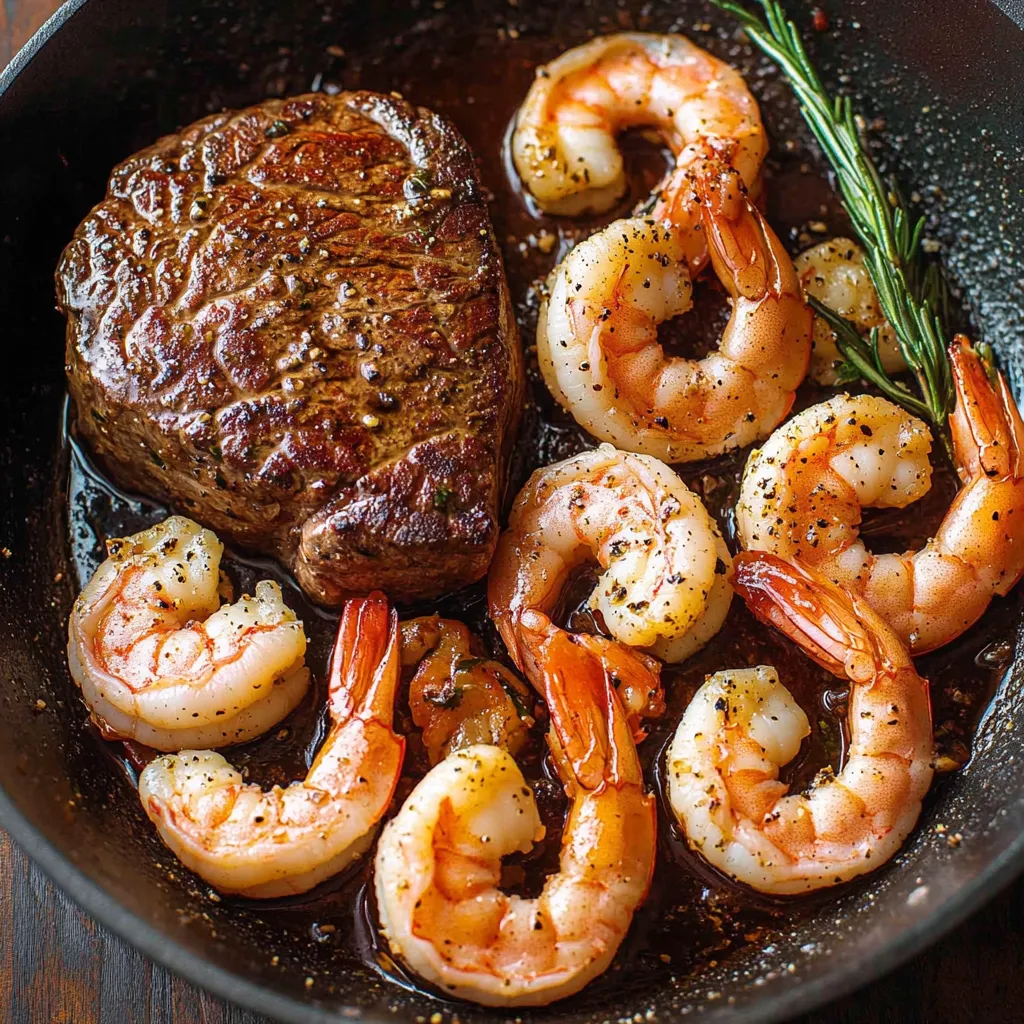
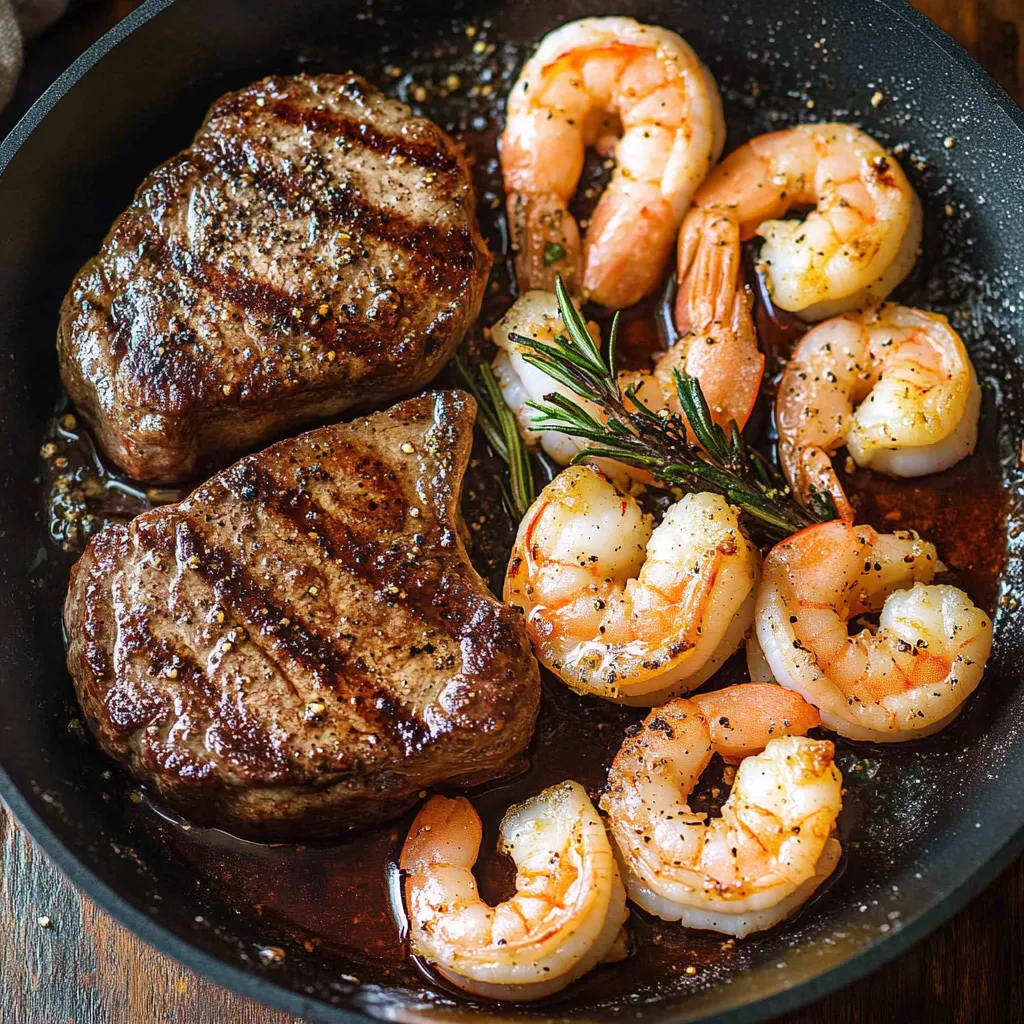
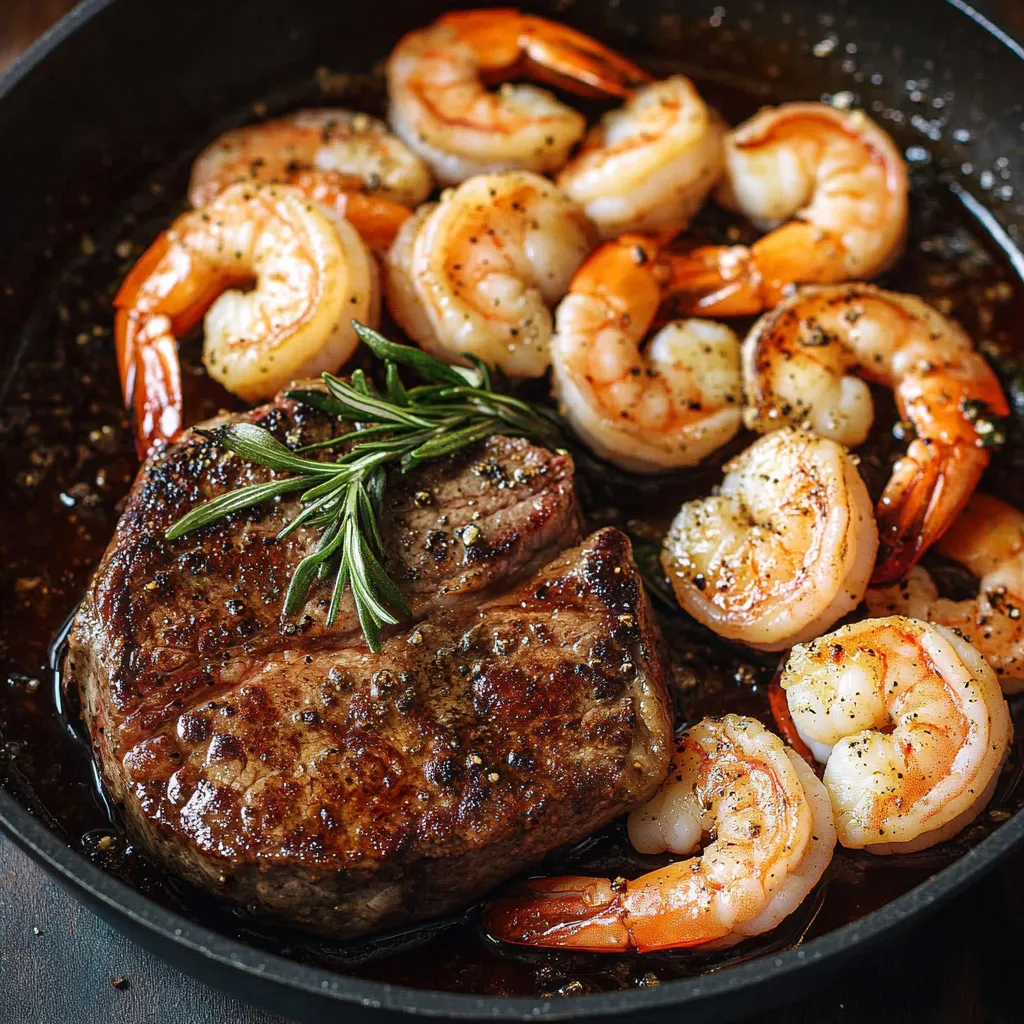
Surf and turf - steak and shrimp cooked together - sounds like something reserved for expensive steakhouse date nights or special anniversaries, but it's actually one of the easiest impressive dinners you can make at home in under thirty minutes with minimal skill required. The genius is cooking both proteins in the same skillet with garlic-rosemary butter, which means the shrimp pick up beefy flavors from the steak drippings while the returning steak gets basted in shrimp-infused butter, creating this back-and-forth flavor exchange that makes both components taste better than they would alone. Filet mignon is traditional because it's tender and cooks quickly, while large shrimp provide sweet seafood contrast without requiring the expense or hassle of lobster tail. What makes this particularly appealing for home cooks is how restaurant-quality results come from proper technique rather than complicated recipes - just good searing, flavored butter, and understanding that both proteins need only minutes of actual cooking time.
I first made surf and turf about ten years ago after a memorable anniversary dinner at a steakhouse where we spent a hundred and fifty dollars on two steaks, two shrimp sides, and drinks. The meal was excellent but I left thinking I could probably make something similar at home for a quarter of the price. That first attempt was decent but the steak was overcooked because I didn't use a thermometer, and the shrimp were rubbery because I cooked them too long. After learning to trust temperature rather than timing and understanding that shrimp need barely two minutes total, it became one of those special occasion meals I make several times a year for birthdays, anniversaries, or Valentine's Day.
Ingredients and What Makes Them Essential
- Filet Mignon (2 steaks, 6-8 ounces each, about 1½ inches thick): Filet mignon, also called beef tenderloin, is the most tender cut of beef and cooks quickly to perfection. Choose steaks of even thickness so they cook uniformly. Look for steaks with some marbling (white fat running through) which adds flavor. If filet is too expensive, substitute ribeye, New York strip, or top sirloin.
- Large Shrimp (8-10 shrimp, 21-25 count per pound): The "count" refers to how many shrimp per pound - 21-25 means larger shrimp that make a statement on the plate. Buy them peeled and deveined with tails on for easiest preparation. If buying frozen, thaw completely in the refrigerator overnight before cooking.
- Unsalted Butter (3 tablespoons): Butter creates the rich sauce that bastes both proteins. Unsalted lets you control salt levels precisely. Cut it into pieces so it melts quickly when added to the hot pan.
- Garlic (2 large cloves, quartered): Fresh garlic infuses the butter with pungent, aromatic flavor. Quartering rather than mincing prevents it from burning in the hot butter. Don't substitute jarred garlic or powder.
- Fresh Rosemary (1 sprig): Fresh rosemary adds piney, aromatic flavor that complements beef and shrimp beautifully. One sprig is sufficient - too much rosemary overwhelms. Don't substitute dried rosemary which tastes dusty in this application.
- High-Heat Cooking Oil (1 tablespoon, divided): Use vegetable oil, light olive oil, or avocado oil with high smoke point. Don't use regular olive oil or butter for the initial searing, which burn at the high temperatures needed.
- Fine Sea Salt and Freshly Ground Black Pepper (for seasoning): Season generously just before cooking. Fine sea salt distributes more evenly than coarse salt. Freshly ground pepper tastes dramatically better than pre-ground.
Step-by-Step Instructions
- Prepare Proteins:
- Remove your steaks from the refrigerator about 15 to 20 minutes before cooking to take the chill off - room temperature steaks sear better than ice-cold ones. Pat the steaks completely dry on all sides with paper towels. Moisture prevents proper browning, so they should feel dry to the touch. If using frozen shrimp, make sure they're completely thawed and pat them dry as well. Right before you start cooking - not earlier - season both steaks generously on all sides with fine sea salt and freshly ground black pepper. Season the shrimp on both sides with salt and pepper too. Seasoning too early draws out moisture which interferes with searing.
- Heat the Pan:
- Place a heavy skillet - cast iron is ideal but any heavy-bottomed skillet works - over medium-high heat. Let it heat for about 3 to 4 minutes until it's very hot and just starting to smoke slightly. You need high heat for proper searing. Once hot, add ½ tablespoon of high-heat oil and swirl to coat the bottom of the pan.
- Sear the Steaks:
- Carefully place both seasoned steaks in the hot skillet. They should sizzle immediately and loudly - if they don't, the pan isn't hot enough. Let the steaks cook completely undisturbed for 4 minutes. Don't move them, don't press on them, don't peek under them. Just let them sear. After 4 minutes, use tongs to flip each steak. Cook the second side for 3 minutes undisturbed. After 3 minutes, use tongs to stand each steak on its edge and sear the edges for about 30 to 60 seconds per edge - there are usually 4 edges to sear. Insert an instant-read thermometer into the thickest part of one steak. You want to remove the steaks about 10 degrees before your desired final temperature because they'll continue cooking as they rest. For medium-rare, remove at 120°F; for medium, remove at 125°F; for medium-well, remove at 130°F. Transfer the steaks to a plate and tent loosely with aluminum foil. Let them rest while you cook the shrimp - the temperature will rise about 10 degrees during resting.
- Make Flavored Butter:
- Reduce the heat under your skillet to medium. Don't wipe out the pan - those browned bits and beef drippings are flavor gold. Add 3 tablespoons of butter cut into pieces, 2 cloves of garlic quartered, and 1 sprig of fresh rosemary to the skillet. Swirl the pan as the butter melts so it doesn't spatter. The garlic and rosemary will sizzle and become fragrant, infusing the butter. Cook for about 30 seconds to 1 minute, just until the butter melts completely and smells amazing.
- Cook the Shrimp:
- Add all your seasoned shrimp to the flavored butter in a single layer. Cook for exactly 1 minute without moving them. Flip each shrimp and cook the second side for another 1 minute. The shrimp are done when they're opaque throughout and pink - they cook very quickly and become rubbery if overcooked. Immediately remove the skillet from the heat. Return the rested steaks to the pan along with any accumulated juices from the plate. Turn the steaks to coat them in the buttery pan sauce and spoon flavored butter over both the steaks and shrimp.
- Serve:
- Transfer the steaks and shrimp to serving plates. Spoon the garlic-rosemary butter from the pan over everything. Serve immediately while hot with your choice of sides - boiled new potatoes, mashed potatoes, roasted vegetables, or crusty bread all work beautifully.
 Pin it
My younger sister claims she can't cook meat properly and always either undercooks or overcooks it, so she avoids making steak at home. For her birthday, I gave her a decent instant-read thermometer and showed her this surf and turf recipe, emphasizing that the thermometer eliminates all guesswork. She made it that weekend and called me genuinely shocked that both the steak and shrimp turned out perfectly. She said using actual temperature instead of vague timing made her feel competent for the first time cooking expensive proteins. Now she makes it regularly for date nights and has stopped being afraid of steak. Converting the meat-cooking-phobic sister through one good thermometer feels like a win.
Understanding Why Filet Mignon Works Best
Filet mignon, cut from the beef tenderloin, is the most tender cut of beef available because it comes from a muscle that does very little work during the animal's life. This tenderness makes it ideal for quick, high-heat cooking methods like pan-searing. The cut is lean with minimal fat compared to ribeye or strip steak, which means it cooks quickly without rendering excessive fat. The relatively uniform cylindrical shape ensures even cooking. The mild flavor benefits from the garlic-rosemary butter enrichment. The main downside is cost - filet mignon is expensive. However, for special occasions, the tenderness and quick cooking make it worthwhile. If substituting with other cuts, ribeye has more marbling and richer flavor but takes slightly longer to cook. New York strip is leaner like filet but has more beefy flavor. Top sirloin is more affordable but slightly less tender. Any good quality steak about 1½ inches thick will work with this method.
The Science of Proper Steak Searing
Searing steak properly requires understanding several key principles. First, the steak surface must be completely dry - moisture creates steam which prevents the Maillard reaction (browning). This is why patting dry is essential. Second, the pan must be very hot - ideally 400-500°F - because the Maillard reaction requires high heat. A too-cool pan steams rather than sears. Third, the steak must sit undisturbed to develop crust - moving it breaks contact with the hot surface and interferes with browning. Fourth, crowding lowers pan temperature, so cook in batches if necessary. Fifth, some smoke is normal and even desirable - it indicates proper searing temperature. The brown crust that develops contains hundreds of new flavor compounds created through the Maillard reaction that taste savory, complex, and meaty. This crust is what separates restaurant-quality steak from mediocre home-cooked versions.
Why Shrimp Cook So Quickly
Shrimp cook dramatically faster than most proteins, and understanding why prevents overcooking. Shrimp are small with high surface area relative to mass, which means heat penetrates throughout very quickly. They're also mostly water and protein with minimal fat or connective tissue to break down. The proteins in shrimp denature and coagulate rapidly when exposed to heat - you can literally watch them change from translucent grey to opaque pink in real time. Fresh or properly thawed shrimp typically need only 1 to 2 minutes per side in a hot pan. Overcooked shrimp become rubbery and tough as the proteins squeeze out moisture and contract excessively. The visual cue for doneness is complete opacity and pink color throughout. If you can see any translucent grey, they need another 30 seconds. If they're curled into tight circles, they're overcooked. Properly cooked shrimp are just opaque, still slightly plump, and form a gentle C-shape.
The Role of Garlic-Rosemary Butter
The garlic-rosemary butter serves multiple purposes beyond just tasting good. First, it's a cooking medium that prevents sticking and promotes browning on the shrimp. Second, it's a flavor carrier - the fat-soluble compounds in garlic and rosemary dissolve in butter and coat both proteins. Third, it creates sauce that ties the steak and shrimp together into a cohesive dish rather than two separate items on a plate. Fourth, it enriches both proteins with luxurious richness. The technique of cooking aromatics in butter before adding proteins is fundamental to French cooking. The garlic and rosemary need only 30 seconds to 1 minute in hot butter to release their essential oils - longer and the garlic burns and turns bitter. Quartering the garlic rather than mincing prevents burning while still releasing flavor. Using unsalted butter lets you control salt precisely, which matters when you've already seasoned the proteins.
Temperature Guide and Resting Importance
Understanding steak temperatures and the resting period is crucial for perfect results. Rare steak (120-125°F) has a cool red center. Medium-rare (130-135°F) has a warm red center and is most people's preference. Medium (135-145°F) has a warm pink center. Medium-well (145-155°F) has a slightly pink center. Well-done (155°F+) has no pink. Because steak continues cooking from residual heat after you remove it from the pan - a phenomenon called carryover cooking - you must remove it before it reaches your target temperature. The thicker the steak, the more carryover occurs. For 1½-inch steaks, expect about 10 degrees of carryover. Resting is equally important - it allows juices that have been driven to the center by heat to redistribute throughout the meat. Cutting immediately causes all those juices to run out onto your cutting board, leaving you with dry steak. Resting for 5 to 10 minutes allows reabsorption.
Storage, Reheating, and Leftover Uses
While surf and turf is best enjoyed fresh and hot, leftovers can be stored and reheated with decent results if you know how. Let any uneaten steak and shrimp cool to room temperature, then store separately in airtight containers in the refrigerator for up to 2 days. Don't store them together because they have different moisture content and reheating needs. To reheat steak, bring it to room temperature first, then warm in a 250°F oven for about 10 minutes until just heated through - don't cook it further or it will become tough. Or slice it thin and quickly warm in a hot skillet with butter. To reheat shrimp, add them to hot butter or sauce for literally 30 seconds just to warm - any longer and they'll become rubbery. For creative leftover uses, slice the steak thin for steak sandwiches or salads. Chop the shrimp and make shrimp fried rice, pasta, or quesadillas. Or combine both in surf and turf nachos or tacos.
Variations and Customization Ideas
While the classic filet and shrimp combination is perfect, you can create variations based on preferences or availability. For lobster surf and turf, substitute lobster tail for shrimp - split it, season, and cook cut-side down in butter for 5 to 6 minutes. For scallop version, use large sea scallops, pat very dry, and sear 2 minutes per side. For different cuts, try ribeye for richer flavor or strip steak for more beefy taste. For different butter flavors, use lemon-thyme butter, herb butter with parsley and tarragon, or cajun butter with spices. For Asian-inspired, use ginger-soy butter and sesame oil. For Mediterranean, use oregano-lemon butter. For spicy version, add red pepper flakes to the butter. Each variation maintains the core technique of searing proteins in flavored butter while creating different flavor profiles.
Serving Suggestions and Complete Meal Planning
Surf and turf deserves thoughtful accompaniments that complement without competing. Classic steakhouse sides work beautifully - baked potatoes, mashed potatoes, or crispy roasted potatoes provide starch that soaks up the butter sauce. Creamed spinach is traditional and pairs well with both proteins. Grilled or roasted asparagus adds elegant green. Sautéed mushrooms complement the beef. Caesar salad or wedge salad with blue cheese provides fresh contrast. For bread, crusty baguette or garlic bread works for mopping up sauce. For wine pairing, choose based on the steak - Cabernet Sauvignon, Merlot, or Malbec all work with beef while being substantial enough for shrimp. For white wine lovers, a rich Chardonnay bridges both proteins. For dessert, chocolate soufflé, crème brûlée, or chocolate lava cake complete the steakhouse experience.
Troubleshooting Common Problems
When surf and turf doesn't turn out right, there's usually a fixable cause. If the steak doesn't develop good crust, the pan wasn't hot enough, the steak was too wet, or you moved it too soon - use higher heat, pat very dry, and leave undisturbed for the full time. If it's overcooked, you didn't use a thermometer or didn't account for carryover cooking - always use a thermometer and remove 10 degrees early. If the shrimp are rubbery, you overcooked them - watch the clock and remove as soon as opaque. If the butter burns, your heat is too high after searing the steaks - reduce to medium before adding butter. If everything tastes bland, you underseasoned - season generously with salt and pepper. If the garlic tastes bitter, it burned - add it to melted butter off heat next time rather than cooking it too long. Most issues relate to temperature management, timing, or seasoning.
 Pin it
After making surf and turf probably thirty times over the past decade for various special occasions, it's become my go-to impressive dinner when I want to celebrate something but don't want to spend hours in the kitchen or a fortune at a restaurant. I appreciate how the ingredient list is simple and mostly just about buying good quality proteins, and how the actual cooking takes maybe twenty minutes from start to finish once you understand the technique. The garlic-rosemary butter creates harmony between the steak and shrimp that makes them taste better together than they would separately. Knowing I can make restaurant-quality surf and turf at home for a quarter of the restaurant price while having complete control over doneness and seasoning makes me rarely order it out anymore. This represents exactly what special occasion cooking should be - impressive enough to feel celebratory, genuinely delicious, achievable with basic technique, and way better than what most restaurants serve once you master the fundamentals.
Frequently Asked Questions
- → What temperature should I cook the steak to?
- Remove the steak at 125°F for medium doneness. It will reach 135°F while resting. For medium-rare, pull it at 120°F.
- → Can I use a different cut of steak?
- Yes! Ribeye, New York strip, or sirloin all work well. Just adjust the cooking time based on thickness.
- → How do I know when the shrimp are done?
- Shrimp are ready when they turn pink and opaque, usually about 1 minute per side. Don't overcook or they'll get rubbery.
- → Do I need a cast iron skillet?
- Cast iron works best for the high heat sear, but any heavy-bottomed skillet will do. Avoid nonstick pans for this recipe.
- → Can I make this for more people?
- Absolutely. Just cook the steaks in batches to avoid crowding the pan. This keeps the temperature high for a good sear.
- → Why do I need to rest the steak?
- Resting lets the juices redistribute throughout the meat. This keeps your steak tender and juicy instead of dry.