
 Pin it
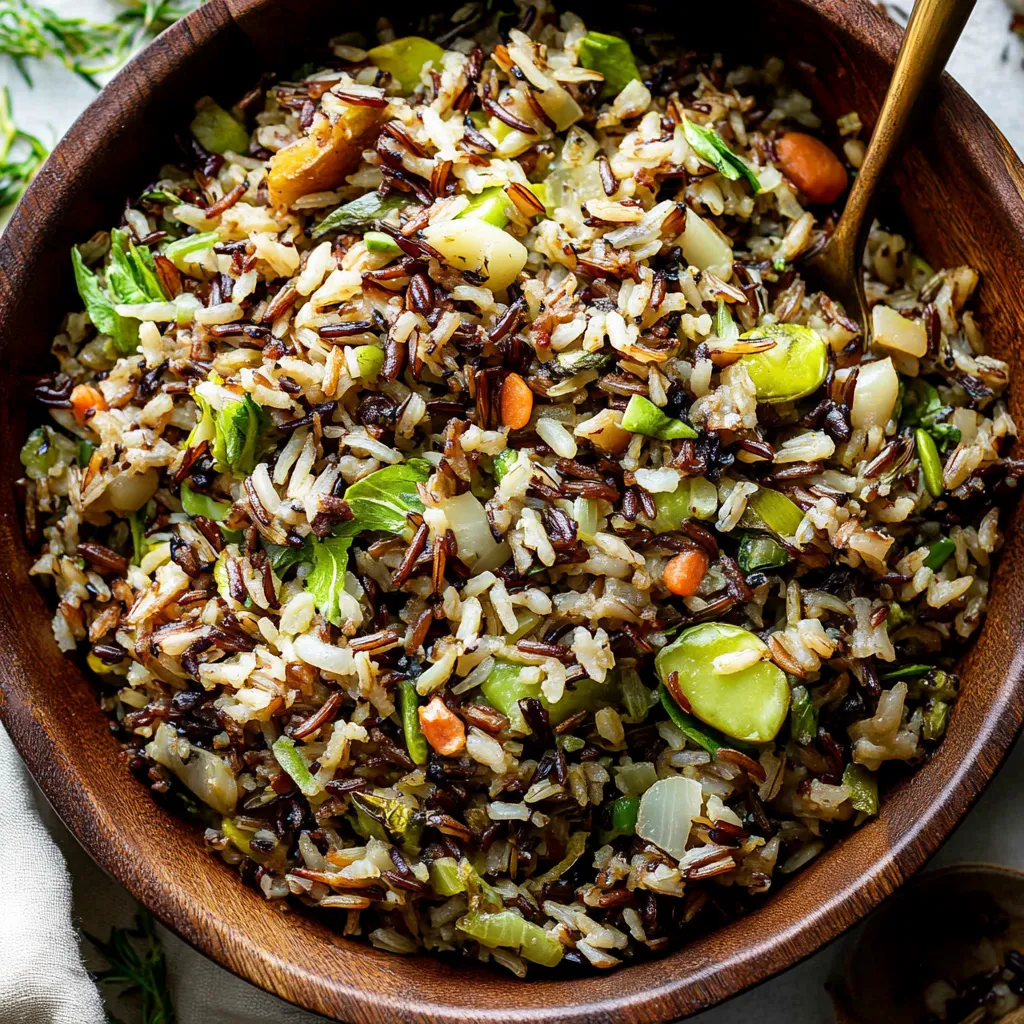
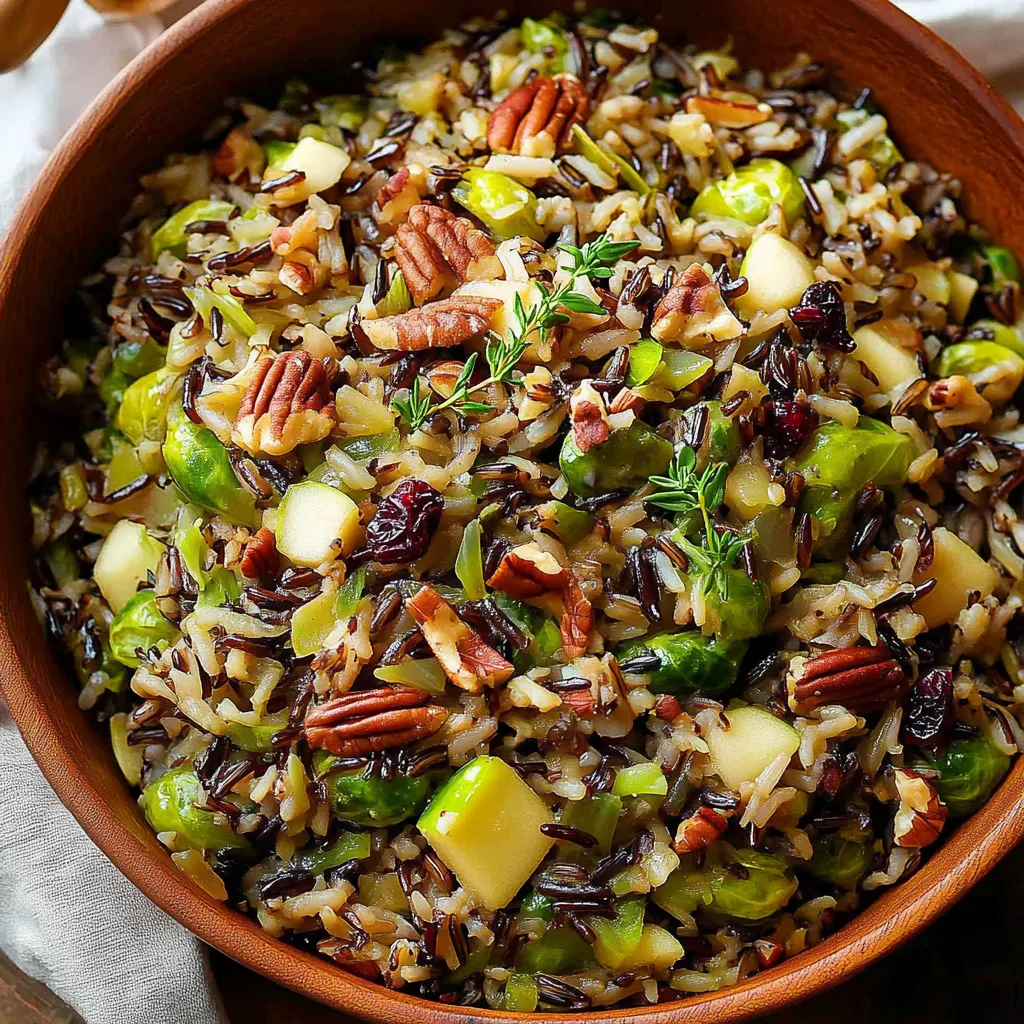
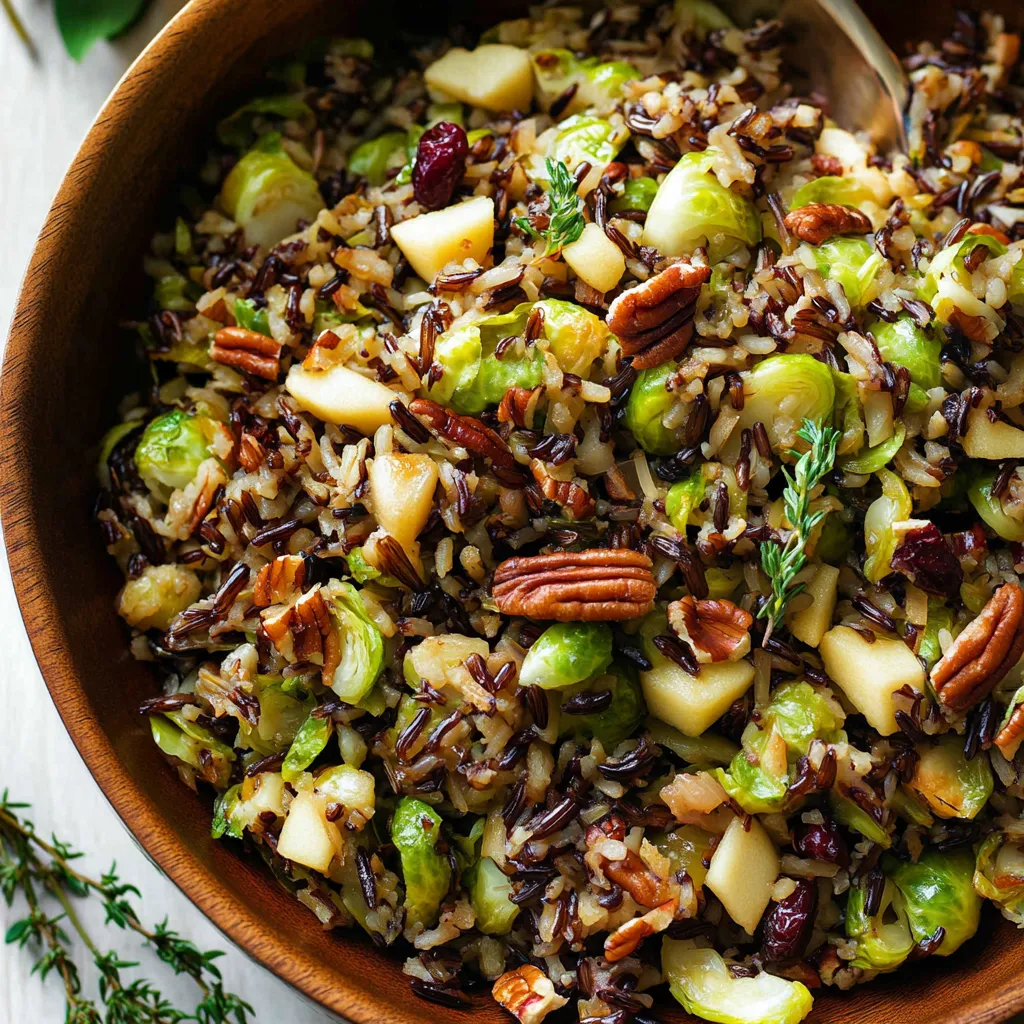
Wild rice pilaf gets unfairly overlooked in favor of fancier grain dishes, but this combination of nutty wild rice, crispy Brussels sprouts, sweet apple chunks, toasted pecans, and tart dried cranberries creates something special enough for holiday tables while being straightforward enough for weeknight dinners. What makes wild rice particularly appealing is its distinctly chewy texture and earthy, almost smoky flavor that's completely different from regular white or brown rice. The process of toasting pecans first, then building layers of flavor with sautéed aromatics, and finally tossing everything together with the cooked rice creates a dish where every forkful delivers multiple textures and flavors. This isn't one of those grain sides that just sits there being beige and boring on your plate - the green from the Brussels sprouts, the red from the cranberries, and the golden pecans make it visually interesting, while the combination of crunchy nuts, tender rice, slightly crisp vegetables, and chewy dried fruit keeps your mouth engaged with every bite.
I started making wild rice pilaf regularly about four years ago when I needed a side dish that could work for both my gluten-free sister and my nut-allergic nephew at the same family dinner. That first version was pretty basic - just rice, some vegetables, and herbs - but it was such a hit that I kept refining it, adding the toasted pecans for richness, the apple for sweetness, and the cranberries for that pop of tartness. Now it's become my go-to contribution to potlucks and holiday dinners because I know it'll complement whatever protein is being served and accommodate most dietary needs without tasting like "special diet food" that people politely eat but don't actually enjoy.
Ingredients and What Makes Them Essential
- Wild Rice (1 ½ cups, uncooked): Despite its name, wild rice isn't actually rice at all but rather the seed of an aquatic grass native to North America. It has a distinctly nutty, earthy flavor and a pleasantly chewy texture that holds up well in pilafs and casseroles. Look for wild rice that's long and dark brown or black - avoid any that looks broken or dusty. The rice takes longer to cook than regular rice, usually 50 to 60 minutes, but you can't rush it or it'll be tough and unpleasant.
- Chicken or Vegetable Broth (3 cups): Cooking wild rice in broth instead of water infuses every grain with savory flavor from the inside out. Use low-sodium broth so you can control the salt level yourself. Homemade broth tastes best but store-bought works perfectly fine. If keeping this vegetarian, use vegetable broth; for maximum flavor, chicken or turkey broth is ideal.
- Yellow Onion (1 medium, diced): Onions form the aromatic base that gives the pilaf depth and subtle sweetness as they cook down. Yellow onions are perfect because they're not as sharp as white onions but more flavorful than sweet onions. Dice them into small, uniform pieces about ¼-inch so they soften completely and distribute evenly.
- Celery (2 stalks, diced): Celery adds a subtle herbal quality and slight crunch even after cooking. It's a classic pilaf ingredient that provides aromatic backbone without overpowering other flavors. Dice it to match your onion size for even cooking.
- Apple (1 medium, diced): The apple adds unexpected sweetness and a slight tartness that brightens the earthy wild rice. Use a firm, slightly tart variety like Granny Smith, Honeycrisp, or Fuji. The apple pieces soften during cooking but maintain some structure, creating little pockets of sweetness throughout the pilaf.
- Brussels Sprouts (8 ounces, thinly sliced or shaved): Thinly sliced Brussels sprouts add beautiful green color, a slightly bitter note that balances the sweet fruit, and a tender-crisp texture. Look for firm, bright green sprouts without yellow or brown leaves. Slice them as thin as you can manage - the thinner they are, the more quickly they cook and the better they integrate into the pilaf.
- Pecans (¾ cup, roughly chopped and toasted): Toasted pecans provide buttery richness and essential crunch. Toasting them enhances their natural oils and creates a deeper, more complex nutty flavor. Buy raw pecans and toast them yourself rather than pre-toasted which can taste stale. If you need this nut-free, substitute toasted pumpkin seeds or sunflower seeds.
- Dried Cranberries (½ cup): These add pops of sweetness and chewy texture that contrast beautifully with the other components. Their tartness cuts through the richness of the pecans and butter. If you don't like cranberries, dried cherries, blueberries, or golden raisins all work well.
- Poultry Seasoning (1 teaspoon): This blend typically contains thyme, rosemary, sage, and sometimes a hint of nutmeg or marjoram. It's the classic seasoning for Thanksgiving and pairs perfectly with wild rice. If you don't have poultry seasoning, make your own by combining ½ teaspoon dried thyme, ¼ teaspoon dried rosemary, and ¼ teaspoon dried sage.
- Butter (2 tablespoons): Butter adds richness and helps the vegetables caramelize beautifully. Combined with olive oil, it provides the perfect cooking fat. For dairy-free pilaf, use all olive oil or substitute vegan butter.
- Olive Oil (1 tablespoon): Oil helps prevent the butter from burning and adds its own subtle fruity flavor. Extra virgin olive oil tastes best but regular olive oil works fine too.
- Salt and Black Pepper (to taste): You'll need salt at multiple stages - in the cooking liquid for the rice, when sautéing vegetables, and potentially a final adjustment at the end. Taste as you go and adjust.
Step-by-Step Instructions
- Cook the Wild Rice:
- Start by measuring 1 ½ cups of wild rice into a fine-mesh strainer and rinse it under cold running water for about 30 seconds, swishing it around with your hand. This rinses away any dust or debris. Let it drain thoroughly. Pour 3 cups of chicken or vegetable broth into a medium saucepan - one with a tight-fitting lid is important because you'll be steaming the rice. Add the drained wild rice and ¼ teaspoon of salt to the broth. Give it a quick stir. Place the pan over high heat and bring everything to a rolling boil, which should take about 5 minutes. Once it's boiling vigorously with big bubbles breaking the surface, immediately reduce the heat to low - as low as it will go while still maintaining a very gentle simmer. Put the lid on the saucepan securely. Now here's the important part - don't lift that lid for the next 50 minutes. I know it's tempting to check on it, but every time you lift the lid, you release steam that's needed for proper cooking. Set a timer for 50 minutes and walk away. After 50 minutes, lift the lid carefully and check a few grains of rice. They should be tender with a slight chew but not hard or crunchy in the center. If they're still quite hard, put the lid back on and continue cooking for another 5 to 10 minutes, checking periodically. Once the rice is tender, turn off the heat completely. Remove the lid, fluff the rice gently with a fork to release steam and separate the grains, then put the lid back on and let it sit for 10 minutes off the heat. This steaming period allows any remaining moisture to be absorbed and the grains to firm up slightly so they're not mushy. After 10 minutes, your rice is ready. It should be tender but still have a nice chew, with most grains having split open to reveal their creamy interior.
- Toast the Pecans:
- While your rice cooks, you can start preparing the other components. Place a large skillet - at least 12 inches wide - over medium heat and let it warm up for about a minute. Don't add any oil or butter yet. Add your ¾ cup of roughly chopped pecans to the dry, hot skillet. Spread them out in an even layer. Let them toast, stirring or shaking the pan every 30 seconds or so to ensure even toasting. You'll start to smell them after about 2 minutes - that amazing, warm, buttery aroma means they're releasing their oils. Continue toasting for another 2 to 3 minutes, watching them carefully and stirring frequently. Nuts go from perfectly toasted to burnt in seconds, so don't walk away during this step. The pecans are done when they've darkened slightly in color, smell intensely nutty and aromatic, and maybe have just a hint of smoke coming off them. Immediately transfer them to a bowl to stop the cooking - if you leave them in the hot pan, they'll continue cooking and might burn. Set them aside and wipe out the skillet with a paper towel so it's clean for the next step.
- Sauté the Aromatics:
- Return your wiped-out skillet to medium heat and let it warm for about 30 seconds. Add 1 tablespoon of olive oil and 2 tablespoons of butter to the pan. Swirl them around as the butter melts, combining them into one cooking fat. Once the butter is completely melted and just starting to foam slightly, add your diced onion and diced celery. Give everything a good stir to coat the vegetables with the fat. Let them cook, stirring occasionally - every couple of minutes - for about 5 minutes. You want them to soften and become translucent, and the onion should start developing some golden color on the edges. Now add your diced apple to the skillet along with a pinch of salt. Stir to combine. Continue cooking everything together for another 2 to 3 minutes until the apple pieces start to soften slightly and everything smells sweet and aromatic. At this point, add 1 teaspoon of poultry seasoning to the vegetables. Stir constantly for about 30 seconds, allowing the dried herbs in the poultry seasoning to toast slightly in the hot fat, which releases their essential oils and makes them more fragrant. The mixture should smell intensely herby and wonderful at this stage.
- Add the Brussels Sprouts:
- Add all your thinly sliced Brussels sprouts to the skillet with the aromatic vegetables. Use a spatula or wooden spoon to toss everything together thoroughly, making sure the Brussels sprouts are coated with the butter and oil mixture and distributed evenly with the other vegetables. Season with another pinch of salt and several grinds of black pepper. Continue cooking, stirring frequently - every minute or so - for about 5 to 7 minutes. You're watching for the Brussels sprouts to turn bright green, soften considerably, and develop some golden brown spots on their edges where they've been in contact with the hot pan. They should still have a slight bite when you taste one but shouldn't be raw or crunchy. The onion and celery should be completely soft at this point, and the apple should be tender. If the vegetables are sticking to the pan or things look dry, add another drizzle of olive oil. Once the Brussels sprouts are tender with those nice browned edges, stir in the toasted pecans you set aside earlier and the ½ cup of dried cranberries. Toss everything together for about 30 seconds just to warm the cranberries slightly and distribute the nuts throughout.
- Combine Everything:
- By now your wild rice should be done steaming and ready to use. Add all the cooked wild rice to the skillet with the vegetable mixture. Use a large spoon or spatula to gently fold and toss everything together, making sure the rice gets distributed evenly throughout and every component is mixed well. You want to see green Brussels sprouts, red cranberries, and golden pecans scattered throughout the brown rice rather than having them clumped in one area. Keep tossing and folding gently for about 2 minutes until everything is well combined and heated through. Taste the pilaf now and adjust the seasoning - it probably needs more salt and maybe more black pepper. Remember that rice absorbs a lot of salt, so don't be shy. Add salt in small increments, tasting after each addition until it tastes properly seasoned and flavorful rather than flat. The pilaf should taste nutty from the wild rice and pecans, slightly sweet from the apple and cranberries, herby from the poultry seasoning, and well-balanced overall.
- Serve:
- Transfer the finished pilaf to a large serving bowl or platter. For a prettier presentation, garnish the top with a few extra whole cranberries, some additional pecan halves, and maybe some fresh thyme sprigs if you have them. Serve immediately while hot, or keep it warm by covering the serving dish with foil. This pilaf is delicious hot, but it's also excellent at room temperature if you're serving it as part of a buffet-style meal where food sits out for a while.
 Pin it
My grandmother made wild rice for every Thanksgiving when I was growing up, but hers was pretty basic - just rice, maybe some mushrooms, and butter. I remember thinking it was fine but boring, especially compared to all the other exciting dishes on the table. When I started hosting my own holiday dinners, I wanted to include wild rice because it reminded me of her, but I needed to make it more interesting and appealing. After testing probably ten different variations, I landed on this combination with Brussels sprouts and apple, and it transformed the dish from something people politely ate to something they actively asked for seconds of. My uncle, who'd been eating my grandmother's plain version for forty years, tried this one and actually said "This is how she should have made it," which is probably the highest compliment he's ever given any food.
Understanding Wild Rice and How It Differs From True Rice
Wild rice deserves its own category entirely because it's botanically and culinarily distinct from all types of true rice. While white rice, brown rice, jasmine, basmati, and others all come from the same grass species, Oryza sativa, wild rice comes from several species in the genus Zizania. These aquatic grasses grow naturally in shallow lakes and slow-moving streams throughout North America, particularly around the Great Lakes region. The grain itself is longer and thinner than rice grains, with a tough outer hull that's dark brown or black. When cooked properly, this hull splits open to reveal a cream-colored, almost white interior that has a completely different texture than rice - more chewy and substantial. The flavor is distinctly nutty and earthy with a slight grassy quality that some people describe as almost smoky. Because of its tough hull and different structure, wild rice requires much longer cooking than regular rice - typically 45 to 60 minutes versus 15 to 20 minutes for white rice. It also absorbs less water, which is why the rice-to-liquid ratio is different than what you'd use for regular rice. Wild rice is significantly more expensive than regular rice because it's often still hand-harvested traditionally by Native American tribes in Minnesota and Wisconsin, making it more labor-intensive to produce.
The Importance of Layering Flavors in Pilaf Dishes
Pilaf, whether made with wild rice, white rice, or other grains, relies on building layers of flavor through sequential cooking rather than just dumping everything in a pot at once. The technique starts with toasting nuts or aromatics in fat, which creates a foundation of deep, rich flavor. Then aromatic vegetables like onions and celery get sautéed until they caramelize slightly and release their natural sugars, adding sweetness and complexity. Adding herbs and spices to hot fat releases their essential oils in ways that just stirring them into cooked rice never could. Each ingredient gets added at the optimal time for its cooking needs - delicate herbs at the end, hardy vegetables early on. This sequential approach means each component contributes its full potential to the final dish rather than getting lost or overcooked. The alternative - throwing raw vegetables, dried fruit, and nuts into cooking rice - results in mushy vegetables, hard nuts, and one-dimensional flavor. Professional cooks understand that developing flavor takes time and attention to order of operations. Home cooks can achieve restaurant-quality results by following this same principle of layering flavors thoughtfully rather than rushing through steps.
Why Brussels Sprouts Work So Well in This Pilaf
Brussels sprouts have experienced a major image rehabilitation in recent years as people discovered that properly cooked sprouts taste nothing like the mushy, sulfurous, boiled versions that traumatized previous generations. The key to good Brussels sprouts is high heat and quick cooking, which caramelizes their natural sugars and creates those delicious browned edges without breaking down the compounds that cause bitterness and unpleasant odors. In this pilaf, slicing them very thin accomplishes multiple things. First, thin slices cook much faster than whole or halved sprouts, so they're tender in just 5 to 7 minutes of sautéing. Second, thin slices integrate better into the dish, distributing throughout the rice rather than sitting as large chunks. Third, thin slices create more surface area for browning and caramelization, meaning more of those sweet, nutty, charred flavors develop. The slight bitterness of Brussels sprouts also plays an important role in this recipe by balancing the sweetness from the apple and cranberries - without that bitter note, the dish would taste too sweet and one-dimensional. Brussels sprouts also provide visual appeal with their bright green color that stands out beautifully against the dark rice. If you truly dislike Brussels sprouts, kale or thinly sliced cabbage would provide similar color and texture, though the flavor would be different.
The Role of Dried Fruit in Savory Dishes
Adding dried fruit to savory grain dishes might seem strange if you're not familiar with the technique, but it's a practice with ancient roots in cuisines around the world. Middle Eastern pilafs often include dried apricots or raisins. Moroccan tagines feature prunes or dates alongside meat and vegetables. Indian biryanis incorporate raisins and sometimes dried mango. The practice works because dried fruit provides multiple benefits. First, the concentrated sweetness balances savory and salty flavors, creating more complex taste experiences. Second, the chewy texture contrasts with other components, adding textural interest. Third, dried fruit provides bursts of intense flavor that surprise and delight your palate. Fourth, many dried fruits contain natural acids that brighten dishes and prevent them from tasting heavy or muddy. In this wild rice pilaf specifically, the dried cranberries add tartness and sweetness simultaneously, playing off the earthy rice, bitter Brussels sprouts, and rich pecans. The cranberries also contribute visual appeal with their bright red color. When selecting dried fruit for savory dishes, choose varieties that aren't overly sweet or candied - you want fruit that's been dried naturally with minimal added sugar. Cranberries, cherries, apricots, and currants all work beautifully in grain dishes, while super-sweet options like candied pineapple or papaya would taste out of place.
Make-Ahead Strategies for Stress-Free Entertaining
One of this pilaf's greatest strengths is how well it holds up when made in advance, which makes it ideal for holiday entertaining when you're juggling multiple dishes and limited oven space. Unlike many sides that must be made at the last minute, wild rice pilaf actually benefits from resting because it gives the flavors time to meld and develop. You can cook the entire pilaf up to two days before serving, let it cool completely, transfer it to an airtight container, and refrigerate it. When you're ready to serve, you have several reheating options. The microwave works in a pinch - transfer the portion you want to a microwave-safe bowl, cover it loosely, and heat for 2 to 3 minutes, stirring halfway through. For better results, reheat it on the stovetop. Place the cold pilaf in a large skillet over medium heat, add a few tablespoons of chicken or vegetable broth to help rehydrate the grains, and stir frequently until everything is heated through, about 5 to 7 minutes. For large quantities serving a crowd, you can reheat it in the oven - spread it in a baking dish, drizzle with a bit of broth, cover with foil, and bake at 350°F for about 20 minutes until hot throughout. For even more flexibility, you can prep individual components ahead. Cook the wild rice up to three days in advance and refrigerate it. Dice the onion, celery, and apple up to two days ahead. Toast the pecans a week ahead if you store them in an airtight container. Then just sauté everything and combine on the day you're serving.
Scaling This Recipe Up or Down
The beauty of pilaf recipes is how easily they scale to feed different sized groups. This recipe as written serves about 6 to 8 people as a side dish, but you can double it without any issues as long as you have a large enough skillet and saucepan. When doubling, use two separate pans to cook the rice - trying to cook 3 cups of wild rice in one pot doesn't work well because the bottom layer can scorch while the top layer stays undercooked. For the vegetable sautéing portion, either use a very large skillet (14 inches or bigger) or work in two batches, because crowding vegetables in a too-small pan causes them to steam instead of browning properly. If you need to halve the recipe for just 2 to 4 people, cut all the ingredients in half and use a smaller saucepan for the rice and a medium skillet for sautéing. The cooking times stay approximately the same regardless of how much you're making - wild rice still needs 50 to 60 minutes to cook through, and vegetables still need their full cooking time to soften and caramelize. For huge crowds of 20-plus people, consider making multiple batches rather than trying to scale this up to massive proportions, because cooking enormous quantities of rice evenly is tricky and requires restaurant-sized equipment most home kitchens don't have.
Nutritional Benefits of Wild Rice
Beyond its superior flavor and texture, wild rice offers impressive nutritional advantages over white rice and even brown rice. It contains approximately twice as much protein as brown rice, making it more satisfying and better for maintaining stable blood sugar levels. The protein in wild rice includes all nine essential amino acids, making it a complete protein source - rare for plant foods. Wild rice is also significantly higher in fiber than white rice, with about 3 grams per cooked cup versus less than 1 gram in white rice. This fiber aids digestion, promotes feelings of fullness, and helps regulate blood sugar spikes. Wild rice is rich in minerals including magnesium, which supports muscle and nerve function; zinc, which boosts immune health; and manganese, which plays a role in bone formation. It contains more antioxidants than many other grains, particularly anthocyanins - the same beneficial compounds found in blueberries and red wine. For people managing their glycemic index, wild rice has a lower GI than white rice, meaning it causes a slower, steadier rise in blood sugar rather than a sharp spike. It's naturally gluten-free, making it safe for people with celiac disease or gluten sensitivity. The only nutritional downside is that wild rice provides less iron than other grains, so if iron intake is a concern, pair it with iron-rich foods.
Variations and Customization Ideas
Once you've mastered the basic technique, this pilaf becomes a template for countless variations depending on the season, your preferences, and what you have available. For a spring version, swap the Brussels sprouts for asparagus cut into 1-inch pieces and the apple for diced fresh strawberries, using pistachios instead of pecans. Summer pilaf could include diced zucchini, fresh corn kernels, and dried apricots with toasted almonds. A fall variation might use diced butternut squash, dried figs, and hazelnuts. Winter could feature diced root vegetables like parsnips or turnips with dried cherries and walnuts. You can change the protein by stirring in cooked, shredded chicken for a complete meal, or adding cooked white beans or chickpeas for vegetarian protein. Different herbs create completely different flavor profiles - try fresh dill and lemon zest for a bright, Greek-inspired version, or cumin and cilantro for a Southwestern take. For a richer pilaf, stir in crumbled goat cheese or blue cheese at the end. Toasted sesame oil and tamari create an Asian-fusion version. The possibilities are truly endless once you understand the basic structure of toasting nuts, sautéing aromatics, cooking vegetables, and combining everything with perfectly cooked wild rice.
 Pin it
After making this wild rice pilaf dozens of times over the years, it's become my default contribution to any gathering where I need to bring a side dish. The fact that I can make it completely ahead of time removes so much stress from holiday cooking, and knowing that it accommodates most dietary restrictions means I don't have to worry about whether everyone can eat it. What I love most is watching people who claim they don't like wild rice try this version and completely change their minds - usually they'd only had plain, under-seasoned wild rice before and didn't realize how delicious it could be with the right additions. The combination of textures keeps things interesting from start to finish, and the balance of sweet, savory, nutty, and tart flavors means your palate never gets bored. Whether you're serving it alongside roasted turkey for Thanksgiving, with a simple roasted chicken for Sunday dinner, or as part of a vegetarian meal with soup and salad, this pilaf delivers comfort and satisfaction without being heavy or overly rich. It's exactly the kind of recipe that earns a permanent spot in your rotation because it works for so many different occasions while being reliable, delicious, and genuinely easy to execute well.
Frequently Asked Questions
- → Can I make this pilaf ahead of time?
- Yes! You can chop all the vegetables up to 2 days early and store them in the fridge. The finished pilaf also reheats well, so you can make it a day ahead.
- → What kind of rice blend should I use?
- Any wild rice blend from the store works great. Look for packages that mix wild rice with brown rice or other grains for the best texture.
- → Can I skip the butter to make it dairy-free?
- Absolutely. Just use all olive oil instead of butter, or try a plant-based butter substitute if you prefer.
- → How do I store leftover pilaf?
- Keep leftovers in a sealed container in the fridge for up to 5 days. Reheat in a skillet with a splash of broth to freshen it up.
- → What can I serve this with?
- This pilaf pairs beautifully with roasted chicken, turkey, pork chops, or even grilled salmon. It's versatile enough for weeknight dinners or special occasions.
- → Can I freeze this dish?
- Yes! Let it cool completely, then freeze in a sealed bag for up to 3 months. Thaw overnight in the fridge before reheating.