
 Pin it
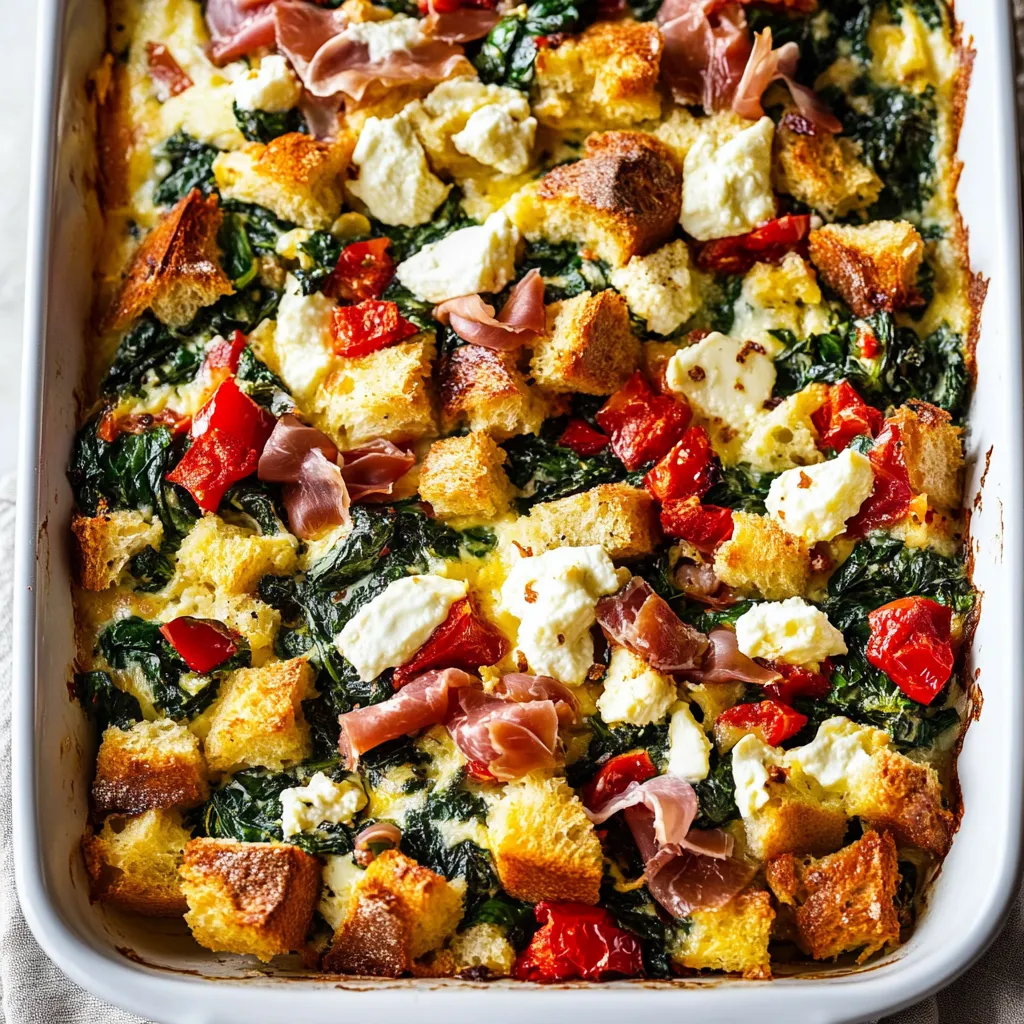
This breakfast strata transforms humble bread and eggs into an elegant, layered breakfast casserole that's perfect for feeding a crowd without morning stress. Crusty sourdough bread soaks overnight in a seasoned egg and milk custard, layered with tangy chevre, salty prosciutto, roasted red peppers, and fresh spinach that create beautiful color and sophisticated flavor. The long soak allows the bread to absorb the custard completely, creating incredibly rich, custardy texture that's almost like savory bread pudding. Bake it fresh in the morning and watch it puff up golden and set into something that slices beautifully yet stays moist and tender inside—perfect for holiday brunches, overnight guests, or meal prep that provides delicious breakfasts all week.
I started making breakfast stratas about 20 years ago when I needed something I could prepare ahead for hosting overnight guests without having to wake up early and cook while everyone else relaxed. The first time I tried it, I was amazed by how the simple combination of bread, eggs, and whatever I had in the refrigerator transformed into something that looked bakery-quality and tasted sophisticated. Now I make variations of this constantly—for holiday brunches, weekend meal prep, potlucks, and anytime I need to feed multiple people without spending my morning in the kitchen. The combination of tangy goat cheese, salty prosciutto, and colorful vegetables in this particular version has become my signature, and people always ask for the recipe even though it's remarkably simple. Leftovers make excellent next-day lunches reheated in the microwave, which extends the convenience even further.
Ingredients and What Makes Them Essential
- Crusty bread (8 to 10 cups, cubed, preferably day-old): Sturdy, crusty bread like sourdough, French bread, or Italian loaf is essential because it holds up to the long soak in custard without disintegrating into mush. The crusty exterior and dense crumb absorb liquid beautifully while maintaining some structure and creating textural interest. Day-old or slightly stale bread actually works better than completely fresh because it's drier and can absorb more custard. Cut or tear it into roughly 1-inch cubes for optimal soaking and serving. Don't substitute soft sandwich bread, which becomes waterlogged and pasty rather than custardy—the bread quality genuinely matters here.
- Chevre (goat cheese, 4 ounces, crumbled): Tangy, creamy goat cheese adds sophisticated flavor and luxurious richness that makes this taste elevated rather than ordinary. The tanginess balances the rich eggs and adds complexity that mild cheese can't provide. Chevre also melts beautifully into pockets of creamy cheese throughout the casserole. Fresh chevre in a log is ideal—crumble it with your fingers as you layer. Feta or fresh mozzarella can substitute if you don't like goat cheese, though the flavor will be different.
- Parmesan cheese (½ cup, grated): Parmesan adds nutty, salty, umami-rich flavor and helps create golden-brown top crust during baking. Freshly grated Parmesan from a block melts and browns better than pre-grated, which contains anti-caking agents. The Parmesan also contributes to the savory, almost soufflé-like quality that defines excellent strata. Don't skip it even if you're using other cheeses—the combination is what creates depth.
- Fresh spinach (2 to 3 cups, packed): Spinach adds vibrant color, fresh flavor, and nutritional value while wilting down to practically nothing in the finished casserole. Fresh baby spinach is ideal because the leaves are tender and mild. Sautéing the spinach briefly before layering releases excess moisture that would otherwise water down the custard and allows the garlic to infuse flavor. You could substitute with other greens like kale or Swiss chard, though heartier greens need longer cooking to soften properly.
- Garlic (2 to 3 cloves, minced): Fresh garlic sautéed with the spinach adds aromatic, savory depth that enhances the entire dish. Mincing it finely helps it distribute evenly and prevents biting into large chunks. The brief cooking mellows the raw garlic's harshness while developing sweet, nutty flavors. If you're extremely rushed, you can skip sautéing and add raw minced garlic to the layers, but it will have sharper flavor and the spinach will release more moisture.
- Roasted red peppers (1 cup, from a jar, sliced): Jarred roasted red peppers provide sweet, smoky flavor and gorgeous red color without requiring you to roast fresh peppers. They add visual appeal and taste complexity that plain vegetables can't match. Drain them well and pat dry with paper towels before using to remove excess liquid that would make the strata soggy. Fresh tomatoes or sun-dried tomatoes can substitute for different but equally delicious results.
- Prosciutto (4 ounces, torn or chopped): This Italian cured ham adds salty, meaty richness and sophisticated flavor without requiring cooking. The thin slices tear easily into bite-sized pieces that distribute throughout the casserole. Prosciutto is more elegant than bacon or sausage while being convenient since it needs no preparation. The recipe is easily vegetarian by omitting it, or you can substitute with cooked bacon, sausage, or diced ham for different flavor profiles.
- Scallions or chives (¼ cup, chopped): These mild alliums add fresh, oniony flavor and attractive green flecks without the harshness of raw onions. Scallions and chives are essentially interchangeable here—use whichever you have or prefer. They provide color contrast and subtle flavor that enhances without dominating. The green parts are milder than white, so use the entire scallion or just greens depending on how much onion flavor you want.
- Large eggs (8): Eggs provide the protein structure that transforms this from soggy bread into set, sliceable casserole. Whisking them aggressively until completely uniform and slightly frothy incorporates air that makes the finished strata light and fluffy rather than dense. The number of eggs relative to milk creates custard-like consistency—too few eggs would be watery, too many would be tough and rubbery. Room-temperature eggs whisk more smoothly than cold, though either works.
- Whole milk (3 cups): Milk provides the liquid that creates custard when combined with eggs and soaks into the bread overnight. Whole milk is ideal because the fat contributes to rich flavor and tender texture, though 2% milk works with slightly less luxurious results. Don't use skim milk, which produces thin, watery custard without proper richness. Half-and-half can replace some of the milk for even richer results, while non-dairy milk works for dairy-free versions though texture will differ.
- Italian seasoning (1 tablespoon): This herb blend typically contains oregano, basil, thyme, and sometimes rosemary—all flavors that complement the Mediterranean-inspired ingredients beautifully. Using a premixed blend is convenient and provides balanced flavor. If you don't have it, substitute with individual dried herbs—about 1 teaspoon each of oregano and basil plus ½ teaspoon thyme. Homemade Italian seasoning tastes fresher than store-bought if you want to make your own.
- Kosher salt (1 teaspoon) and black pepper (½ teaspoon): Generous seasoning is crucial for bringing out all the flavors and preventing the casserole from tasting flat. Salt especially is essential—it enhances the eggs, cheese, and vegetables while balancing the richness. Start with these amounts and taste the custard mixture before pouring it over the bread, adjusting if needed. Underseasoned strata tastes disappointingly bland no matter how good your ingredients are.
Step-by-Step Instructions
- Prepare the baking dish and oven:
- Preheat your oven to 350°F and position a rack in the center where heat circulation is most even. Generously grease a 9x13-inch baking dish with olive oil or butter, making sure to coat the bottom and all sides thoroughly to prevent sticking. Place the greased baking dish on a rimmed baking sheet, which catches any drips and makes it easier to move the heavy casserole in and out of the oven safely. Set everything aside while you prepare the other components.
- Sauté spinach and garlic:
- Heat about a tablespoon of olive oil in a large skillet over medium heat until it shimmers. Add the minced garlic and cook for about 1 minute, stirring constantly, until it becomes fragrant and releases its aroma without browning or burning. Add the fresh spinach all at once—it will seem like a huge amount but will wilt dramatically. Stir and cook for about 2 to 3 minutes until the spinach is completely wilted and has released its moisture. You should see liquid pooling in the pan. Continue cooking for another minute to evaporate most of this moisture, which prevents it from watering down your custard later. Transfer the cooked spinach and garlic to a plate and let it cool slightly. If you're very rushed, you can skip this step and layer raw spinach with raw minced garlic, but plan to add 5 extra minutes to the baking time and expect the garlic to have sharper flavor.
- Layer the ingredients strategically:
- Arrange about half of the bread cubes in a relatively even layer across the bottom of your prepared baking dish—don't pack them tightly, just distribute them to cover the bottom. Over this bread layer, scatter half of the crumbled chevre and half of the grated Parmesan. Distribute half of the sliced roasted red peppers, half of the cooked spinach and garlic mixture, half of the torn prosciutto, and half of the chopped scallions. The goal is even distribution so every portion of the finished casserole contains all the ingredients. Add the remaining bread cubes on top, then repeat the layering process with the remaining cheese, peppers, spinach, prosciutto, and scallions. This double layering ensures the flavors distribute throughout rather than concentrating at the bottom.
- Make the custard mixture:
- In a large bowl, crack all eight eggs. Using a whisk, beat them aggressively and vigorously for about 1 to 2 minutes until the yolks and whites are completely combined into a uniform, slightly frothy mixture with no streaks of white or yellow remaining. This thorough whisking incorporates air that makes the finished strata light and fluffy. Add the whole milk, Italian seasoning, salt, and black pepper. Whisk everything together thoroughly for another 30 seconds until completely combined and uniform. Taste the mixture—it should be well-seasoned and slightly salty since it will be diluted by the bread. Adjust seasoning if needed.
- Pour custard and let it soak:
- Pour the egg mixture slowly and evenly over the layered bread and fillings in the baking dish, making sure to distribute it across the entire surface rather than dumping it all in one spot. Use a spatula or your hands to gently press down on the bread pieces, submerging them into the custard and ensuring they all make contact with the liquid. Some pieces will naturally float to the top, which is fine—just make sure most of the bread is touching the custard. Press down gently several times over the course of a few minutes to help the bread begin absorbing liquid. Cover the baking dish tightly with plastic wrap or aluminum foil and refrigerate for at least 4 hours, though overnight (8 to 12 hours) is ideal. The long soak allows the bread to fully absorb the custard, creating that characteristic rich, custardy texture throughout.
- Bake until golden and set:
- When you're ready to bake—either the next morning or after the minimum 4-hour soak—remove the casserole from the refrigerator and let it sit at room temperature while the oven preheats, about 15 to 20 minutes. This takes the chill off and helps it bake more evenly. Remove the covering and transfer the baking dish (still on its baking sheet) to the preheated 350°F oven. Bake for 60 to 70 minutes until the strata is puffed, golden brown on top, and set in the center. To test doneness, insert a knife into the center—it should come out clean without raw custard clinging to it. The edges might pull away slightly from the pan and be deeply golden. The top should look dry and set rather than wet or jiggly. If the top is browning too quickly before the center sets, tent it loosely with aluminum foil.
- Rest and serve:
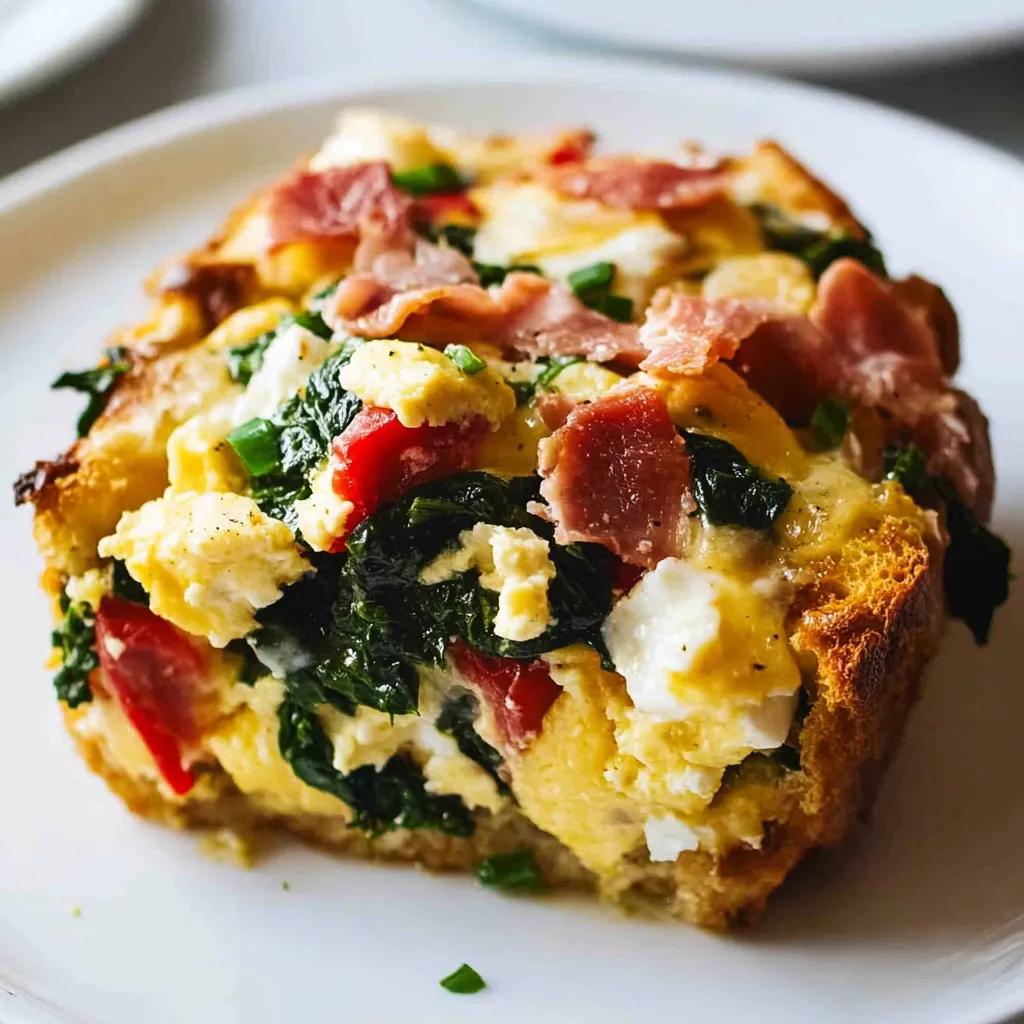
- Remove the baked strata from the oven and let it rest for at least 10 minutes before cutting and serving. This resting period allows the custard to firm up fully so it slices neatly instead of falling apart, and it brings the temperature down from dangerously hot to pleasantly warm. Use a sharp knife or spatula to cut it into squares—you should get 8 to 12 servings depending on how large you cut them. The strata should hold its shape beautifully when plated, with distinct layers visible in cross-section. Serve warm, though it's also delicious at room temperature or even cold from the refrigerator the next day.
 Pin it
The technique that transformed my strata from decent to genuinely excellent was learning to season the custard properly before pouring it over the bread. My early attempts tasted somewhat bland and one-dimensional despite having good ingredients, and I couldn't understand why restaurant versions had so much more flavor. Once I learned to generously salt the egg mixture—tasting it before pouring and adjusting until it tasted properly seasoned on its own—my strata improved dramatically. The eggs, cheese, vegetables, and bread all tasted more vibrant and flavorful because they were being seasoned from within rather than just having salt sprinkled on top at the end. Now I always taste that custard mixture and adjust salt until it's slightly more seasoned than seems necessary, knowing it will be diluted by the bread. That willingness to use more salt than instinct suggests is what makes my strata taste restaurant-quality rather than just homemade.
Understanding Strata Construction
Strata differs from other egg casseroles like quiche or frittata through its defining characteristic: layers of bread that soak in custard rather than just being mixed together. This layering serves multiple purposes beyond just looking nice. The bread acts as a sponge that absorbs the egg mixture, transforming from dry and crusty to moist and tender while providing structure that supports the other ingredients. The custard-soaked bread creates texture similar to bread pudding—custardy and rich but still distinctly bread-like rather than purely egg-based.
The overnight soaking is what separates good strata from mediocre versions. When bread sits in custard for hours, capillary action draws the liquid deep into the bread's interior, creating even saturation throughout rather than wet exteriors surrounding dry centers. This thorough soaking also allows flavors to develop and meld—the herbs infuse into the custard, the cheese begins melding with the eggs, and everything harmonizes. Quick-soaked strata that only rests for an hour has uneven texture with some pieces perfectly saturated while others remain dry and bready.
The baking process transforms the soaked bread and custard into something cohesive and sliceable through protein coagulation and starch gelatinization. As the eggs heat, their proteins denature and form networks that set the custard, while the milk proteins contribute to structure. The bread's starches absorb liquid and swell, creating tender texture while providing scaffold that prevents the eggs from being rubbery. The cheese melts into pockets of richness while the top exposed to dry heat develops golden crust. This combination of custard, bread, and melted cheese creates texture that's uniquely satisfying—rich and creamy but substantial enough to be filling.
Make-Ahead Strategies and Timing
The beauty of strata is its incredible flexibility around timing, which makes it ideal for various hosting and meal-prep scenarios. The most common approach is assembling the casserole completely the night before, refrigerating it overnight, then baking fresh in the morning. This works perfectly for hosting overnight guests or holiday brunches when you want impressive food without morning stress. The 8 to 12-hour soak creates optimal texture and flavor while you sleep, and you just need to remember to remove it from the refrigerator 15 to 20 minutes before baking so it's not ice-cold going into the oven.
For same-day preparation when you can't plan overnight, you can assemble and soak the strata for a minimum of 4 hours before baking. This shorter soak produces good results—not quite as perfectly saturated as overnight but still delicious and far superior to no soaking at all. This timing works well for afternoon brunches where you assemble in the morning and bake at noon. The bread needs those minimum 4 hours to absorb custard properly, so don't try to shortcut below that or you'll have dry bread floating in eggy liquid.
For maximum advance planning, you can freeze unbaked strata for up to 2 months. Assemble it completely in a freezer-safe, oven-safe dish, cover tightly with plastic wrap and foil, and freeze. Thaw in the refrigerator overnight, then let it come to room temperature and bake as directed. The texture after freezing is slightly less perfect than fresh but still very good and incredibly convenient. Baked strata keeps refrigerated for up to 4 days, making it excellent for meal prep—just reheat individual portions in the microwave for quick breakfasts all week.
Customization and Dietary Variations
Strata's flexible nature makes it endlessly customizable based on preferences, dietary needs, or whatever ingredients you have available. The basic formula is sturdy bread plus eggs and dairy plus mix-ins, and you can vary the mix-ins dramatically while maintaining that essential strata character. For heartier meat-lover versions, use cooked sausage, bacon, or ham instead of prosciutto. Southwest-style strata incorporates black beans, corn, diced green chiles, and pepper jack cheese with cumin in the custard. Greek-inspired versions use feta, kalamata olives, sun-dried tomatoes, and oregano.
Vegetarian stratas are easily achieved by omitting meat and loading up on vegetables—mushrooms, zucchini, tomatoes, bell peppers, broccoli, or asparagus all work beautifully. Just make sure to cook watery vegetables first to release moisture before layering, or they'll make the strata soggy. Vegan versions are trickier but possible using plant-based milk, egg replacer or silken tofu blended smooth, and vegan cheese, though texture will differ from traditional strata significantly.
For dietary restrictions, gluten-free strata works perfectly using gluten-free bread—just make sure it's sturdy rather than soft. Dairy-free versions use non-dairy milk and skip or replace the cheese with vegan alternatives, though again, results will be different. Lower-calorie versions can use 2% milk instead of whole and reduce cheese amounts, though richness decreases proportionally. The beauty of strata is that almost any variation still produces something delicious even if it's not identical to the original.
 Pin it
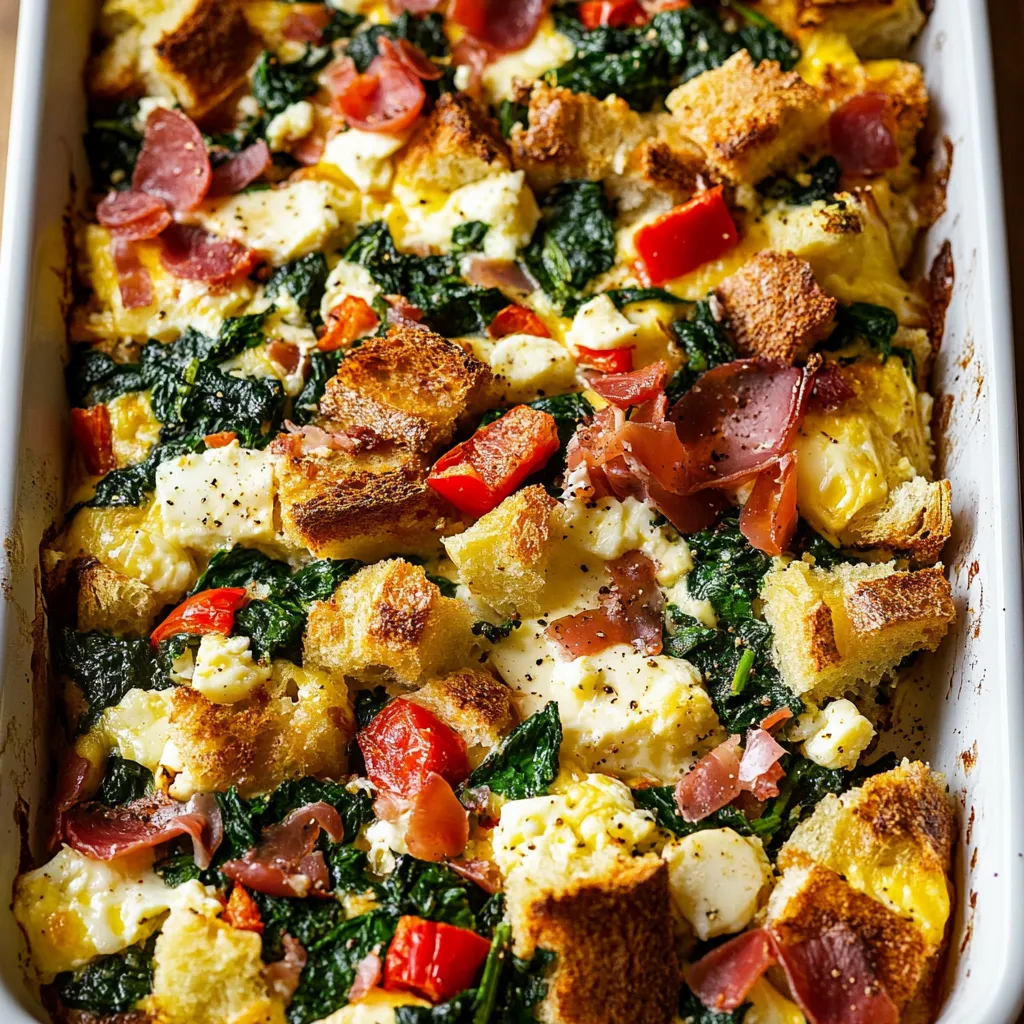
This breakfast strata has become my most-relied-upon recipe for hosting and meal prep because it delivers genuine satisfaction and impressive presentation without requiring morning stress or complicated technique. The make-ahead capability means I can do all the work the evening before when I'm relaxed and organized, then just pop it in the oven while guests are arriving or while I'm getting ready for work. The combination of tangy goat cheese, salty prosciutto, sweet peppers, and fresh spinach creates sophisticated flavors that make people think I've done something special, yet the actual technique is straightforward enough that I can make it while doing other things without paying close attention. I love that leftovers reheat beautifully and provide easy breakfasts throughout the week, and the endless customization options mean I never get bored even though I make variations of this constantly. Once you experience how overnight soaking transforms bread and eggs into rich, custardy casserole that slices beautifully and tastes restaurant-quality, and you see how impressed people are by something that required minimal effort on your part, you'll understand why strata has been in my regular rotation for 20 years and why it's become my go-to solution for feeding crowds without spending my morning in the kitchen.
Frequently Asked Questions
- → Can I make this breakfast casserole ahead of time?
- Yes, you can assemble the entire dish the night before, cover it with foil, and refrigerate. Just pop it in the oven when you're ready to bake.
- → What kind of bread works best for strata?
- Use a crusty artisan bread like sourdough, French bread, or ciabatta. You'll need about three-quarters of a large round loaf.
- → How do I know when the strata is fully cooked?
- Insert a knife in the center. If it comes out clean and the top is golden and puffed up, it's done. This usually takes 60 to 70 minutes.
- → Can I make this vegetarian?
- Absolutely. Just skip the prosciutto and you'll have a delicious vegetarian breakfast casserole.
- → What can I substitute for goat cheese?
- Mozzarella works great if you're not a fan of goat cheese. You could also try feta or fontina.
- → How many people does this recipe serve?
- This makes enough for 10 servings, making it perfect for family gatherings or brunch parties.