
 Pin it
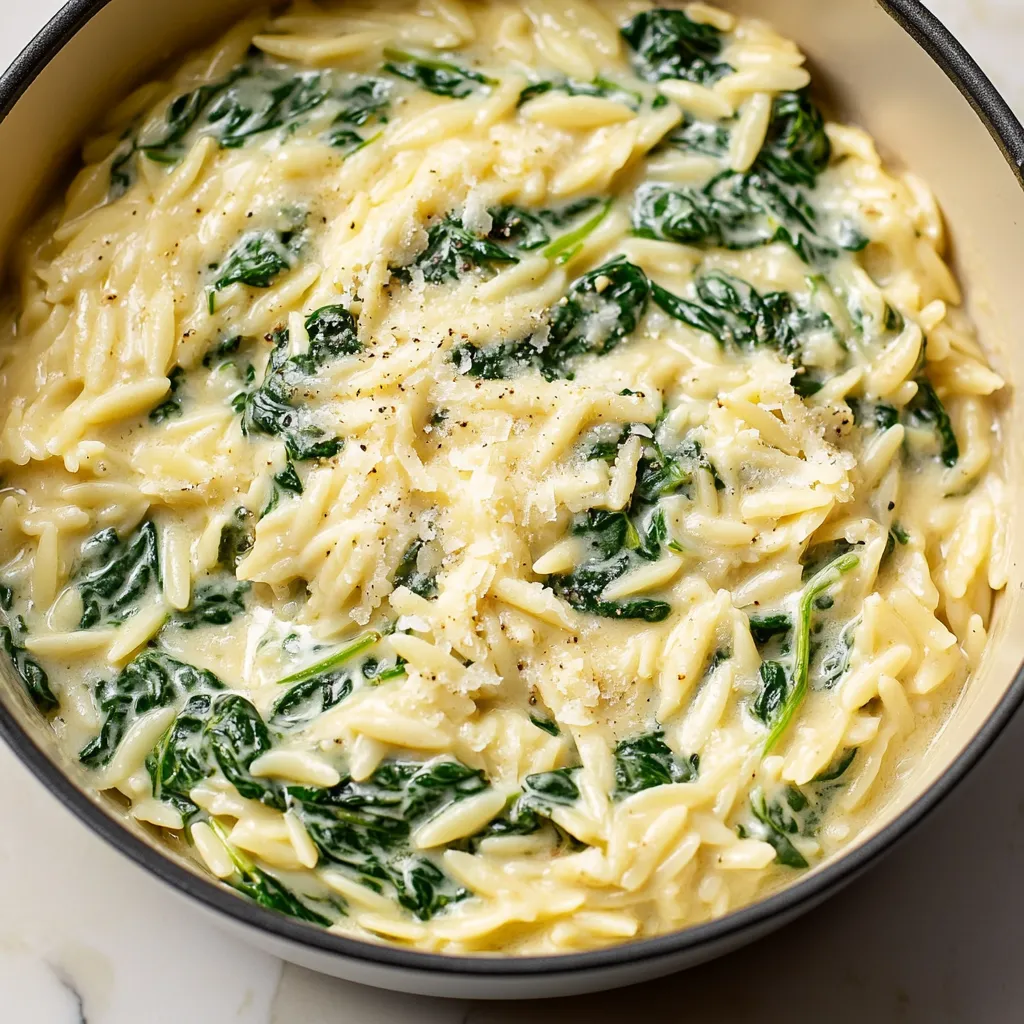
Creamy garlic spinach orzo is one of those deceptively simple one-pot dishes that delivers risotto-like richness and comfort without requiring the constant stirring, specific rice, or precise technique that actual risotto demands. The tiny rice-shaped pasta cooks directly in broth and cream, releasing starch that thickens the liquid into a silky sauce while garlic and onions build savory depth and fresh spinach wilts into bright green ribbons throughout. What makes this particularly appealing is how it comes together in one pot in thirty minutes with ingredients you probably already have, and how it works equally well as an impressive vegetarian main dish or an elegant side that makes weeknight chicken feel like a special occasion. The Parmesan stirred in at the end adds that salty, nutty richness that transforms good into genuinely crave-worthy.
I started making creamy orzo about seven years ago after getting frustrated with risotto that required twenty minutes of constant stirring and always turned out either too soupy or too thick. The first batch of orzo I made was watery because I added too much liquid and didn't let it reduce enough. After learning that orzo releases starch like risotto rice and that covering the pot for a few minutes allows it to absorb excess liquid, it became foolproof. Now I make this constantly throughout fall and winter because it feels indulgent without actually requiring effort or unusual ingredients.
Ingredients and What Makes Them Essential
- Orzo Pasta (1½ cups, about 10 ounces): Orzo is tiny rice-shaped pasta that cooks quickly and releases starch that thickens the cooking liquid into creamy sauce. Don't substitute regular pasta shapes which won't create the same texture. Look for orzo in the pasta aisle near other small shapes.
- Olive Oil (2 tablespoons): Oil provides fat for sautéing aromatics without burning.
- Butter (2 tablespoons): Butter adds richness and helps create the silky sauce. Use unsalted butter so you control salt levels.
- Yellow Onion (1 medium, diced): Onion provides aromatic sweetness and savory depth. Sweet Vidalia onions are particularly good here. Dice into small pieces about ¼-inch so they soften completely.
- Garlic (4-5 cloves, minced): Fresh garlic is essential for that pungent, aromatic flavor. Don't substitute jarred garlic or powder which taste completely different. Mince finely so it distributes throughout.
- Italian Seasoning (1 teaspoon): This herb blend typically contains oregano, basil, thyme, and rosemary that complement garlic and spinach beautifully. You can substitute individual dried herbs if preferred.
- Chicken Broth (2½ cups, low-sodium): Broth provides savory liquid base. Low-sodium is essential so the dish doesn't become too salty as it reduces. Use vegetable broth for vegetarian version. The amount may need slight adjustment depending on your pot and heat level.
- Heavy Cream (1 cup): Heavy cream creates the rich, silky sauce that makes this feel indulgent. You can substitute half-and-half for a lighter version, though it won't be quite as creamy. Don't use milk which is too thin.
- Parmesan Cheese (¾ cup, freshly grated): Freshly grated Parmesan adds salty, nutty, umami richness. Buy a block and grate it yourself - pre-grated contains anti-caking agents that prevent smooth melting. Use a Microplane or box grater.
- Fresh Baby Spinach (4 cups, packed): Fresh spinach wilts into the hot orzo, adding color, nutrition, and mild flavor. Baby spinach has tender leaves that wilt quickly. You can use frozen spinach that's been thawed and squeezed completely dry, but fresh is better.
- Kosher Salt and Black Pepper (to taste): Season at the end after adding Parmesan, which adds saltiness. Freshly ground pepper tastes better than pre-ground.
Step-by-Step Instructions
- Sauté the Aromatics:
- Place a large, deep skillet or Dutch oven over medium heat. Add 2 tablespoons of olive oil and 2 tablespoons of butter. Once the butter melts and foams, add 1 diced onion. Cook, stirring occasionally, for about 4 to 5 minutes until the onion softens and turns translucent. Add 4 to 5 cloves of minced garlic and cook, stirring constantly, for about 1 minute until fragrant. Don't let the garlic brown or it will taste bitter.
- Toast the Orzo:
- Add 1½ cups of orzo pasta to the pot along with 1 teaspoon of Italian seasoning. Stir to coat the orzo with the butter and oil. Cook, stirring frequently, for about 2 to 3 minutes. You're lightly toasting the orzo, which develops nutty flavor. The pasta should look slightly golden and smell toasty but not brown. This step is similar to toasting rice for risotto and adds depth to the final dish.
- Add Liquids:
- Pour in 2½ cups of chicken broth and 1 cup of heavy cream. Stir everything together to combine and scrape up any browned bits from the bottom of the pan. Increase the heat to medium-high and bring the mixture to a boil. Once boiling, reduce the heat to medium-low so the liquid is bubbling gently but not vigorously. You want a gentle simmer, not a rolling boil.
- Cook the Orzo:
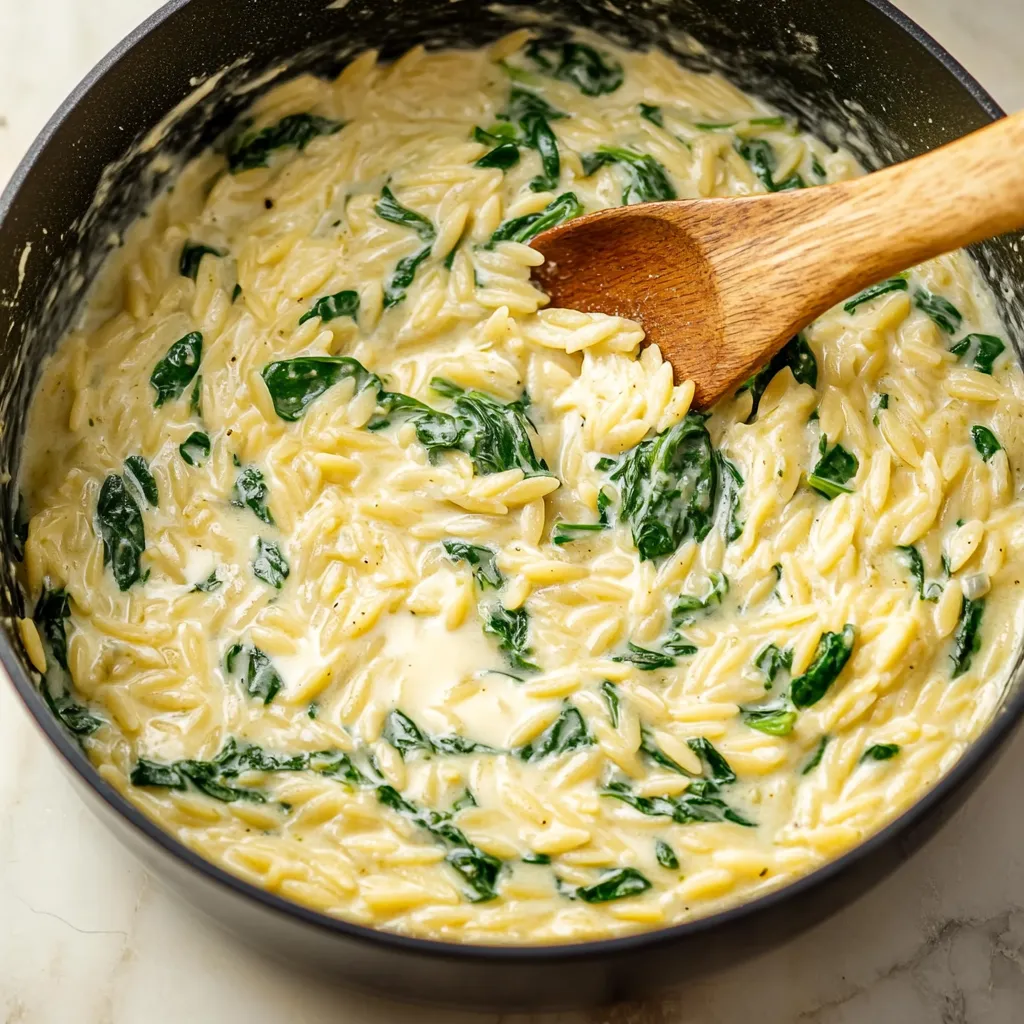
- Let the orzo cook at a gentle simmer, stirring every few minutes to prevent sticking and ensure even cooking. Don't stir constantly like risotto - occasional stirring is sufficient. Cook for about 12 to 15 minutes total until the orzo is tender and has absorbed most of the liquid. The mixture should look creamy rather than soupy, with just a bit of liquid pooling around the edges. The orzo will continue absorbing liquid after you remove it from heat, so it should look slightly wetter than your desired final consistency. If the liquid reduces too quickly and the orzo isn't tender yet, add a splash more broth - ¼ cup at a time. If there's too much liquid when the orzo is tender, let it simmer uncovered for a few more minutes until it reduces.
- Add Cheese and Spinach:
- Once the orzo is tender and most of the liquid is absorbed, remove the pot from the heat. Stir in ¾ cup of freshly grated Parmesan cheese. The residual heat will melt it into the sauce. Add 4 cups of packed fresh baby spinach on top of the orzo - it will look like way too much spinach, but it wilts dramatically. Put the lid on the pot and let it sit for about 2 to 3 minutes. The trapped heat and steam will wilt the spinach. After 2 to 3 minutes, remove the lid and stir everything together. The spinach should be completely wilted and distributed throughout the creamy orzo.
- Season and Serve:
- Taste the orzo and season with kosher salt and freshly ground black pepper as needed. Start conservatively with salt since the Parmesan and broth already contribute saltiness - you may only need a pinch or two. Serve immediately while hot and creamy. The orzo will continue thickening as it sits, so serve right away for best consistency.
 Pin it
My sister who claims she doesn't like "fancy pasta dishes" and only eats plain spaghetti tried this reluctantly at a family dinner, clearly expecting to hate it. She ate her entire serving, then asked for seconds, then quietly requested the recipe while insisting it was "just curiosity" and she probably wouldn't make it. She's made it four times since then and admitted it's now her go-to impressive side dish. Converting the plain-pasta-only person through creamy orzo feels like a genuine accomplishment.
Understanding How Orzo Creates Creamy Texture
Orzo creates risotto-like creaminess through the same mechanism as risotto rice - starch release. When pasta cooks in liquid, the starch granules on the surface absorb water, swell, and eventually burst, releasing starch molecules into the surrounding liquid. These dissolved starches thicken the liquid, creating body and creamy texture. Orzo's small size means high surface area relative to volume, which means more starch release per unit of pasta compared to larger shapes. Cooking orzo directly in the cream and broth rather than draining it means all that released starch stays in the dish, thickening the sauce. The gentle simmering allows gradual starch release and absorption. This is why the dish thickens as it cooks and continues thickening after you remove it from heat. The heavy cream contributes richness while the Parmesan adds body and helps stabilize the sauce through its fat and protein content.
Why Toasting Orzo Matters
The step of cooking dry orzo in butter and oil for a few minutes before adding liquid isn't optional fussiness - it fundamentally improves flavor. When you heat starches in fat, they undergo the Maillard reaction, creating hundreds of new flavor compounds that taste nutty, toasted, and complex. This adds depth that makes the dish taste more interesting than if you just boiled orzo in broth. The toasting also creates a slightly firmer exterior on each piece of orzo, which helps it maintain some textural integrity during cooking rather than becoming mushy. The process is borrowed from risotto technique where rice is always toasted before adding liquid. The key is achieving light golden color and toasted aroma without burning - stir frequently and watch carefully. This two-minute step elevates the final dish significantly.
The Role of Fresh Versus Pre-Grated Parmesan
The recipe specifically calls for freshly grated Parmesan rather than the pre-grated kind sold in containers, and this matters more than you might think. Real Parmigiano-Reggiano or good quality Parmesan has complex, nutty, salty flavor and melts smoothly into sauces. Pre-grated Parmesan contains cellulose (wood pulp) added as an anti-caking agent to prevent clumping. This cellulose interferes with melting, creating grainy texture rather than smooth sauce. Pre-grated also often includes lower quality cheese or cheese "product" rather than real Parmesan. Freshly grated melts seamlessly, creating silky consistency and contributing proper flavor. The difference is genuinely dramatic. Buy a wedge of Parmigiano-Reggiano, store it wrapped in the refrigerator, and grate it on a Microplane or box grater as needed. It takes thirty seconds and transforms the dish.
Managing Liquid Levels and Consistency
Getting the liquid-to-orzo ratio right requires some attention because stovetops, pots, and heat levels vary. The recipe calls for 2½ cups of liquid (broth and cream combined) to 1½ cups of orzo, which works well in most situations. However, you may need to adjust. If your pot has a wide surface area, liquid evaporates faster and you may need to add more broth during cooking. If your heat is too high, the same thing happens. If your pot is narrower or your heat lower, you may have excess liquid when the orzo is done. The key visual cues: when done, the orzo should be tender when you bite it, and the mixture should be creamy with just a small amount of visible liquid pooling around the pasta. If the pasta is tender but too soupy, simmer uncovered for a few minutes to reduce. If the liquid is absorbed but the pasta is still hard, add broth ¼ cup at a time until tender. The orzo will continue thickening off heat, so err on the side of slightly too wet rather than too thick.
Why Cooking Method Differs From Risotto
While this dish achieves risotto-like results, the technique is much simpler than actual risotto. Traditional risotto requires constant stirring because rice releases starch gradually and needs agitation to prevent sticking and ensure even cooking. You add liquid in small amounts (½ cup at a time), stirring constantly until absorbed before adding more, which takes 20-25 minutes of active attention. Orzo cooks much faster than risotto rice (12-15 minutes versus 20-25), releases starch more readily due to smaller size, and doesn't require constant stirring because it's less likely to stick. You can add all the liquid at once and just stir occasionally. This makes orzo accessible to people who find risotto too demanding or intimidating. The trade-off is that risotto has slightly more refined texture and can be cooked to more precise doneness, while orzo is more forgiving and practical for weeknight cooking.
Adding Protein and Making It a Main
While delicious as a vegetarian side, this orzo easily transforms into a complete main dish with added protein. For chicken, stir in 2 cups of cooked, diced or shredded chicken when you add the spinach - rotisserie chicken is convenient. For shrimp, sauté 1 pound of peeled shrimp separately until just cooked, then fold in at the end. For Italian sausage, brown 12 ounces of crumbled sausage and drain excess fat, then add with the spinach. For sun-dried tomatoes and chicken, add ½ cup of chopped oil-packed sun-dried tomatoes along with cooked chicken. For bacon, stir in ½ cup of cooked, crumbled bacon. Each addition transforms the dish from side to satisfying main while maintaining the creamy, comforting character. Calculate about 4-6 ounces of protein per person for main dish portions.
Storage, Reheating, and Texture Changes
Leftover creamy orzo stores well but requires understanding how the texture changes. Transfer cooled leftovers to an airtight container and refrigerate for 3 to 4 days. The orzo will continue absorbing liquid during storage, becoming thicker and drier. This is normal and expected. To reheat, transfer to a pot over low heat and add a splash of cream, broth, or milk - start with ¼ cup and add more as needed to restore creamy consistency. Heat slowly, stirring frequently, until warmed through. The orzo will loosen as the liquid heats and gets absorbed. Don't microwave at high power which can cause the cream to separate - use 50% power and stir every minute. Freezing isn't recommended because cream-based sauces often break (separate) when frozen and thawed, creating grainy texture. The spinach also becomes mushy after freezing.
Variations and Customization Ideas
While the base recipe is excellent, you can create numerous variations. For lemon orzo, add 1 tablespoon of lemon zest and 2 tablespoons of lemon juice with the Parmesan for bright acidity. For mushroom orzo, sauté 8 ounces of sliced mushrooms with the onions. For sun-dried tomato orzo, add ½ cup of chopped oil-packed sun-dried tomatoes with the spinach. For pesto orzo, stir in ¼ cup of pesto at the end. For spicy orzo, add red pepper flakes with the garlic. For different greens, substitute kale (tear into pieces and add earlier so it cooks longer) or arugula. For vegan version, use vegetable broth, coconut cream instead of dairy cream, and nutritional yeast instead of Parmesan. Each variation maintains the creamy one-pot structure while creating different flavor profiles.
Troubleshooting Common Problems
When creamy orzo doesn't turn out right, there's usually a fixable cause. If it's too watery, you added too much liquid or didn't let it reduce enough - simmer uncovered for a few more minutes. If it's too thick and dry, you didn't add enough liquid or overcooked it - stir in more broth until creamy. If the orzo is hard, you didn't cook it long enough or the heat was too low - continue cooking and add more liquid if needed. If it's bland, you underseasoned or used regular broth instead of low-sodium which concentrates salt - add more salt, pepper, and Parmesan. If the spinach is slimy, you overcooked it - add spinach off heat and wilt with residual heat only. If the sauce is grainy, you added cheese while boiling - always remove from heat first. Most issues relate to liquid management, heat level, or timing.
 Pin it
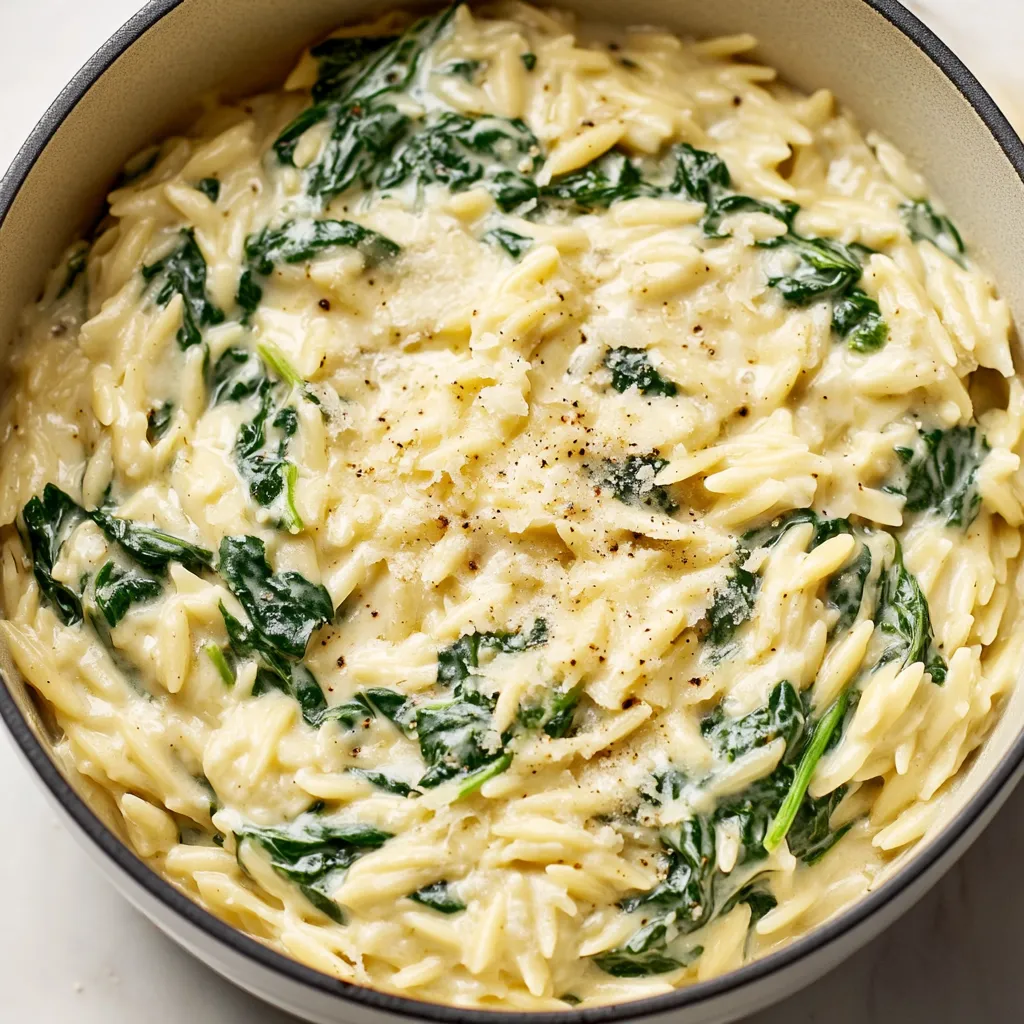
After making creamy garlic spinach orzo countless times over the past seven years, it's become one of my most reliable weeknight dinners because it delivers restaurant-quality comfort food in thirty minutes with one pot. I appreciate how it achieves risotto-like richness without requiring the constant stirring and precise technique that make actual risotto feel like a project. The ability to customize it with different proteins, vegetables, or flavorings means it never gets boring despite making it regularly. Knowing the simple secrets - toast the orzo, manage liquid levels by visual cues, add cheese off heat - transforms something that could be tricky into something genuinely foolproof. This represents exactly what weeknight cooking should be - comforting enough to satisfy cravings, impressive enough to serve to guests, practical enough to make even when tired, and delicious enough that leftovers are genuinely exciting rather than obligatory.
Frequently Asked Questions
- → Can I use regular milk instead of heavy cream?
- Heavy cream gives the best creamy texture, but you can use half-and-half if needed. Regular milk will make it thinner and less rich, so you might need to add extra parmesan to thicken it up.
- → What can I serve this orzo with?
- This pairs great with grilled chicken, baked salmon, steak, pork chops, or any roasted meat. It's a versatile side that goes with just about anything.
- → Can I make this ahead of time?
- Yes, but it tastes best fresh. If you need to make it ahead, store it in the fridge and reheat gently on the stove with a splash of broth or cream to loosen it back up.
- → Do I have to use spinach?
- Not at all. The spinach is optional. You can leave it out completely or swap it with kale, arugula, or even sun-dried tomatoes for a different flavor.
- → Can I use vegetable broth instead of chicken broth?
- Absolutely! Vegetable broth works perfectly and keeps the dish vegetarian. The flavor will be slightly different but still delicious.
- → Why is my orzo too thick or dry?
- Orzo keeps absorbing liquid as it sits. If it gets too thick, just stir in a bit more broth or cream until you reach your preferred consistency.
- → Can I freeze leftover orzo?
- Cream-based dishes don't freeze well as they can separate when thawed. It's best to keep leftovers in the fridge for up to 3 days and reheat as needed.