
 Pin it
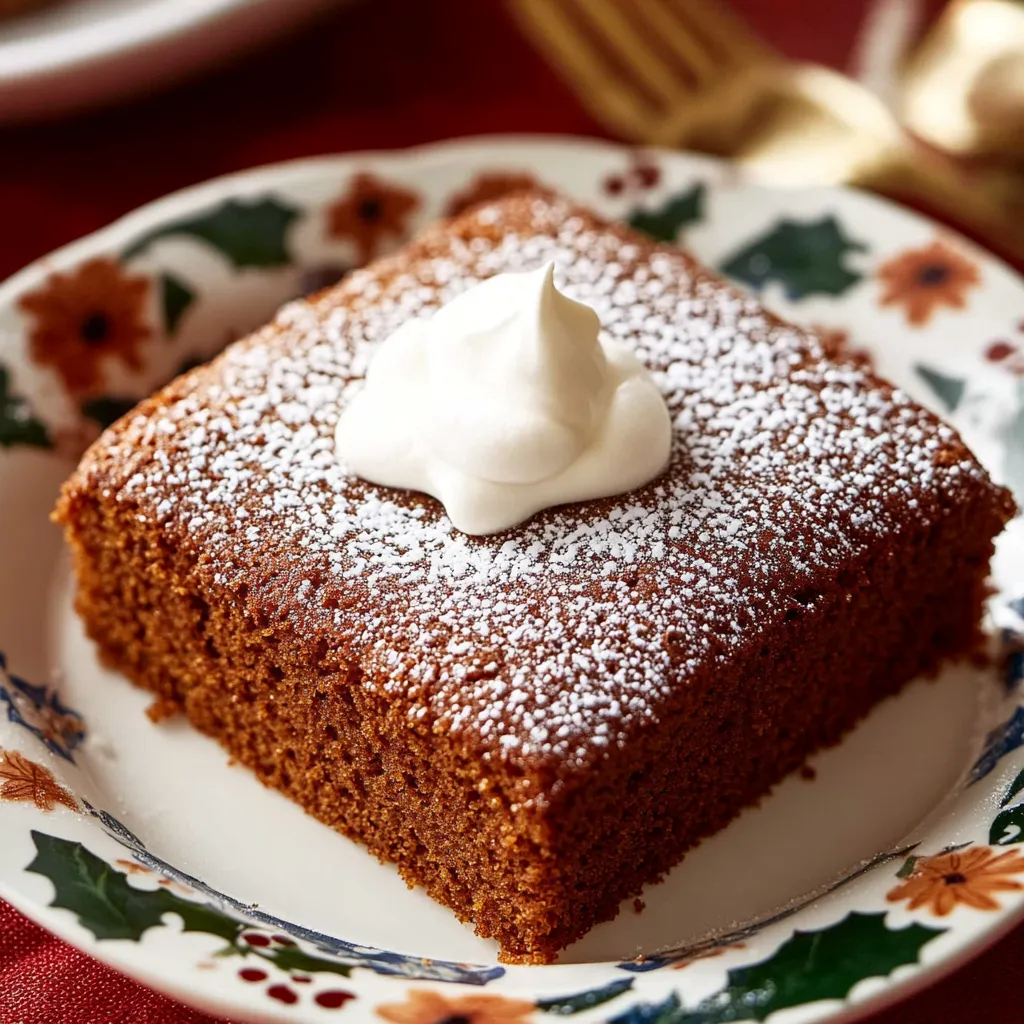
Gingerbread cake is one of those classic holiday desserts that captures the season through warming spices - ginger, cinnamon, and cloves - combined with deep molasses flavor and baked into a tender, moist sheet cake that requires no mixer, no frosting, just mixing bowls and a whisk. The technique is straightforward once you understand that dissolving molasses in hot water before adding it to the batter prevents clumping and ensures even distribution, and that whisking rather than overmixing creates tender crumb instead of tough, dense texture. What makes this particularly appealing is how it's genuinely easy enough for beginners - no creaming butter, no separating eggs, no complex techniques - yet delivers results impressive enough for holiday gatherings where a simple dusting of powdered sugar makes it look elegant without requiring frosting skills.
I started making gingerbread cake about twelve years ago after my grandmother passed away and I inherited her stained recipe card with barely legible handwriting. The first batch I made was dense and heavy because I packed the flour into the measuring cups instead of spooning and leveling, adding too much flour. After learning that properly measured flour is essential for tender cake, and that mixing just until combined rather than beating prevents toughness, it became one of those cakes I make throughout winter. Now it's my go-to holiday dessert because it's genuinely easier than most cakes while tasting better than complicated recipes.
Ingredients and What Makes Them Essential
- All-Purpose Flour (2½ cups, about 300 grams): Flour provides structure. Measure by spooning into your cup and leveling off, or better yet, use a scale. Packing flour into cups creates too much flour and makes the cake dense.
- Baking Powder (1½ teaspoons): Provides leavening for rise and light texture. Make sure it's fresh and not expired or the cake won't rise properly.
- Baking Soda (1 teaspoon): Additional leavening that reacts with the acidic molasses. Also keeps the cake from being too dense.
- Ground Ginger (2 teaspoons): Ginger provides the characteristic sharp, spicy bite that defines gingerbread. Use fresh ground ginger for best flavor.
- Ground Cinnamon (1 teaspoon): Cinnamon adds warm, sweet spice that complements ginger.
- Ground Cloves (½ teaspoon): Cloves provide aromatic depth. Use sparingly as cloves are very strong.
- Salt (½ teaspoon): Enhances all the flavors and balances sweetness.
- Unsulphured Molasses (1 cup): Molasses is essential for authentic gingerbread flavor and dark color. Use unsulphured molasses which is sweet with warm flavor. Don't substitute blackstrap molasses which is bitter and robust.
- Hot Water (1 cup, almost boiling): Hot water thins the thick molasses and helps incorporate it smoothly into the batter. Don't use cold water which won't dissolve the molasses properly.
- Granulated Sugar (¾ cup): Sugar provides sweetness and tender texture. The molasses also contributes sweetness.
- Unsalted Butter (½ cup, 1 stick, melted): Butter adds richness and moisture. Melt it completely so it incorporates easily.
- Large Eggs (2, at room temperature): Eggs bind ingredients and add structure. Room temperature eggs incorporate more easily without requiring excessive mixing.
- Pure Vanilla Extract (1 teaspoon): Vanilla enhances all the other flavors. Use pure extract, not imitation.
Step-by-Step Instructions
- Prep the Pan:
- Preheat your oven to 350°F and position a rack in the center. Generously butter a 9x13-inch baking pan, then dust with flour, tapping out excess. Alternatively, line the bottom with parchment paper and butter the paper. This prevents sticking.
- Mix Dry Ingredients:
- In a large mixing bowl, whisk together 2½ cups of flour, 1½ teaspoons of baking powder, 2 teaspoons of ground ginger, 1 teaspoon of ground cinnamon, ½ teaspoon of ground cloves, ½ teaspoon of salt, and 1 teaspoon of baking soda. Whisk thoroughly for about 30 seconds to evenly distribute all the leavening and spices. Set aside.
- Dissolve Molasses:
- In a medium mixing bowl, combine 1 cup of molasses and 1 cup of hot water (almost boiling). Whisk together vigorously until the molasses is completely dissolved and the mixture is uniform. The hot water thins the thick molasses and makes it much easier to incorporate into the batter. Let this sit for a minute while you prepare the other ingredients.
- Add Wet Ingredients:
- To the molasses mixture, add ¾ cup of sugar and ½ cup of melted butter. Whisk together until well combined and the sugar begins to dissolve. Add 2 eggs and 1 teaspoon of vanilla extract. Whisk until completely smooth and uniform. The mixture should look glossy and well combined.
- Combine Wet and Dry:
- Pour the molasses mixture into the bowl with the flour mixture. Using a whisk or wooden spoon, stir gently until just combined and no streaks of flour remain. Don't overmix - stop as soon as you can't see dry flour. The batter will be thin and pourable, almost like thick pancake batter. This thin consistency is correct and will create moist cake.
- Bake:
- Pour the batter into your prepared 9x13-inch pan and spread evenly with a spatula. Place in the preheated 350°F oven and bake for 30 to 35 minutes. The cake is done when the center springs back when lightly pressed with your finger, and a toothpick inserted in the center comes out with just a few moist crumbs. Don't overbake or the cake will be dry.
- Cool and Serve:
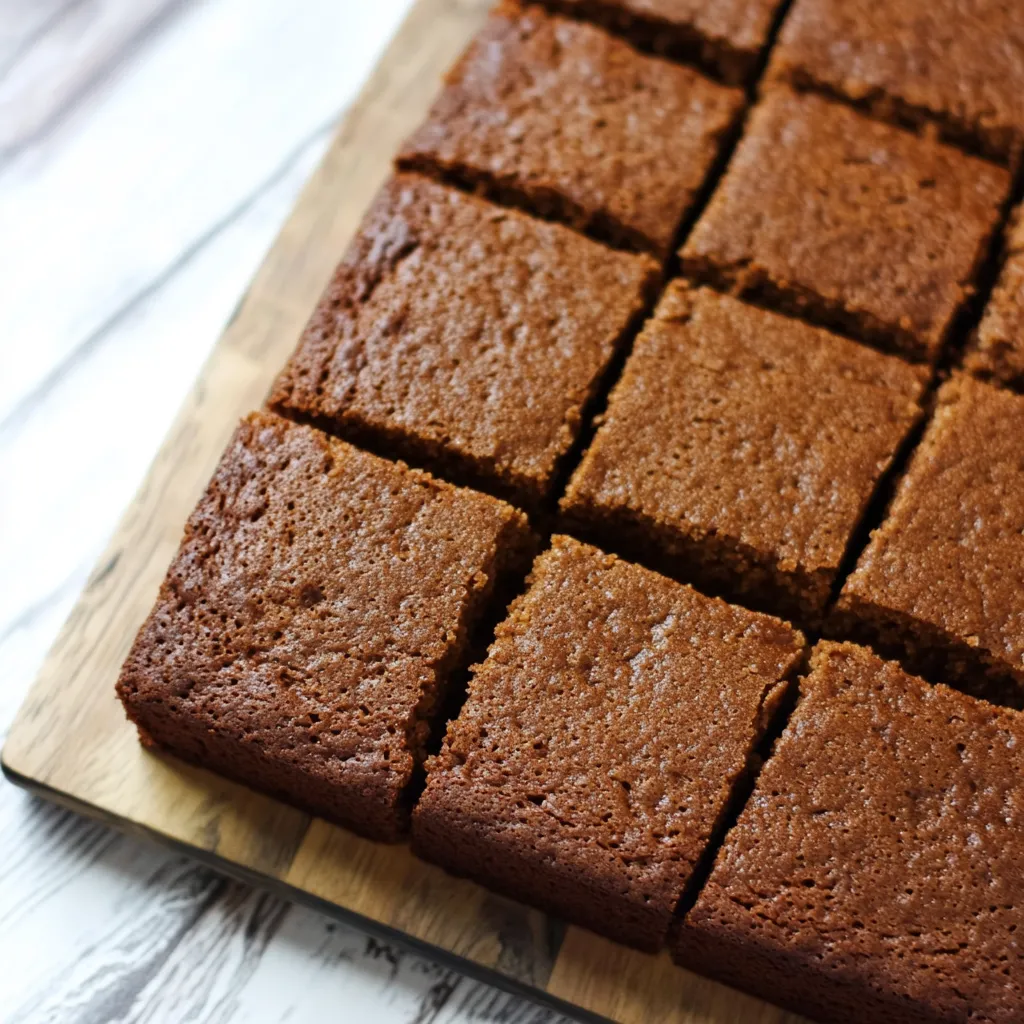
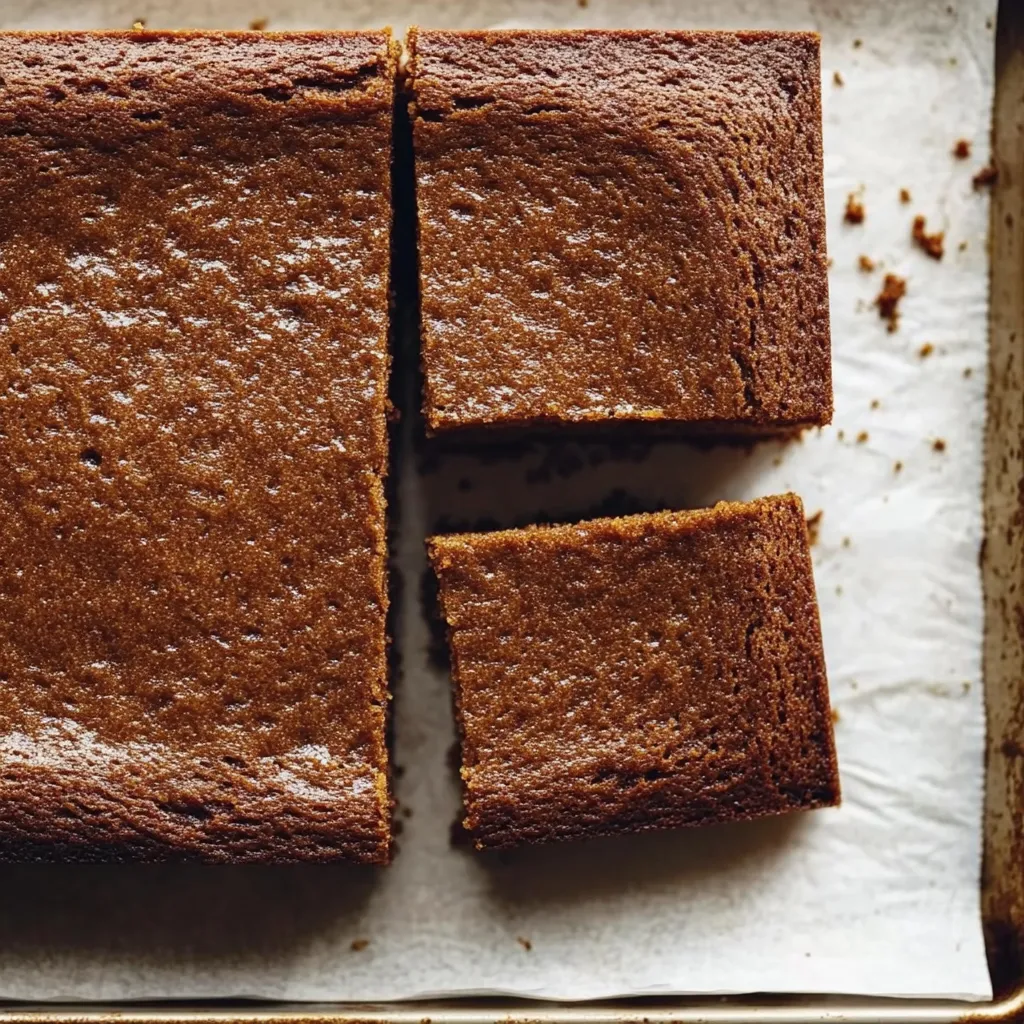
- Remove from the oven and place the pan on a wire rack. Let the cake cool completely in the pan - at least 1 to 2 hours. Once completely cool, dust the top with powdered sugar through a fine-mesh sieve if desired. Cut into squares and serve. The cake is delicious plain, with whipped cream, or with cream cheese frosting.
 Pin it
My brother-in-law who claims he doesn't like gingerbread and refuses to eat it during the holidays tried this cake without knowing what it was. He ate an entire piece and asked for seconds before learning it was gingerbread cake. When I told him, he looked confused and insisted it couldn't be gingerbread because he hates gingerbread. Now he requests it specifically at Christmas while maintaining he "still doesn't like regular gingerbread." Converting the gingerbread-hater through proper baking feels like a genuine accomplishment.
Understanding Molasses Types and Flavors
Molasses is a byproduct of sugar refining with different varieties based on how many times the sugar cane juice is boiled. Light molasses (first boiling) is sweet and mild. Dark molasses (second boiling) is less sweet with more robust flavor. Blackstrap molasses (third boiling) is very dark, thick, bitter, and robust - it's often used as a health supplement rather than for cooking. For gingerbread cake, you want unsulphured molasses, which is usually labeled as "original" or "mild" molasses. Unsulphured means no sulphur dioxide was used during processing, creating cleaner, sweeter flavor. Blackstrap molasses in gingerbread cake would create bitter, harsh flavor that overwhelms the spices. Always use unsulphured molasses for baking unless a recipe specifically calls for blackstrap.
Why Hot Water Matters
The instruction to dissolve molasses in hot water isn't optional - it fundamentally affects how the molasses incorporates. Molasses is extremely thick and viscous at room temperature because it's concentrated sugar syrup. If you tried to whisk thick molasses directly into cake batter, it would form clumps and pockets rather than distributing evenly. Hot water (almost boiling) thins the molasses dramatically, making it pourable and easy to incorporate. The heat also helps dissolve some of the sugar crystals in the molasses. When you whisk hot water and molasses together, you create a uniform liquid that blends smoothly into the batter, ensuring every bite has consistent molasses flavor rather than concentrated pockets. Cold water would thin it slightly but not nearly as effectively.
The Science of Not Overmixing
The instruction to mix "just until combined" is crucial for tender cake. Flour contains proteins (gluten) that form elastic networks when mixed with liquid. Gentle mixing creates minimal gluten development, resulting in tender, cake-like crumb. Vigorous or prolonged mixing develops strong gluten networks, creating tough, chewy texture more appropriate for bread. For this gingerbread cake, you whisk the wet ingredients thoroughly to combine them, then gently stir them into the dry ingredients just until no flour streaks remain. As soon as the batter looks uniform, stop. Overmixing is indicated by batter that looks smooth and glossy rather than slightly lumpy. The thin, pourable consistency helps - it's hard to overmix because you don't need much stirring to combine everything.
Proper Flour Measuring Technique
The recipe emphasizes measuring flour properly because too much flour is the most common cause of dense, heavy cake. When you scoop flour directly with a measuring cup, you pack it in, potentially adding 20-30% more flour than the recipe intends. The correct method: fluff the flour in its container with a spoon, spoon it gently into your measuring cup until heaping, then level off the excess with a straight edge (back of a knife). This gives you the amount the recipe expects. Even better, use a kitchen scale - 2½ cups of properly measured all-purpose flour weighs about 300 grams. Weighing is the most accurate method and eliminates measuring variation entirely.
Storage, Freezing, and Make-Ahead
Gingerbread cake stores exceptionally well and actually improves after a day as flavors meld. Store unfrosted cake covered tightly with plastic wrap or in an airtight container at room temperature for up to 3 days, or refrigerated for up to 1 week. If you've frosted the cake with cream cheese frosting or whipped cream, it must be refrigerated and will last about 5 days. For freezing, cool the cake completely, wrap tightly in plastic wrap, then wrap again in aluminum foil. Freeze for up to 3 months. Thaw overnight in the refrigerator, then bring to room temperature before serving. The molasses keeps the cake moist even after freezing. For make-ahead convenience, you can bake the cake up to 2 days in advance and store covered at room temperature until ready to serve.
Frosting and Topping Options
While gingerbread cake is delicious plain or with just powdered sugar, you can dress it up for special occasions. For cream cheese frosting, beat 8 ounces of softened cream cheese with ½ cup of butter, 3 cups of powdered sugar, and 1 teaspoon of vanilla (add lemon zest for extra brightness). For whipped cream topping, whip heavy cream with sugar and vanilla until stiff peaks form and dollop on each slice. For caramel sauce, drizzle warm caramel sauce over individual pieces. For lemon glaze, whisk powdered sugar with lemon juice until smooth and drizzle over the cake. For simple elegance, just dust with powdered sugar through a fine-mesh sieve. Each option works well, but the cake is genuinely delicious enough to serve plain.
Converting to Layer Cake
While the recipe makes a 9x13-inch sheet cake, you can convert it to a two-layer round cake for more impressive presentation. Divide the batter between two greased and floured 9-inch round cake pans. Bake at 350°F for 25-30 minutes until a toothpick comes out with moist crumbs. Cool in pans for 10 minutes, then turn out onto wire racks to cool completely. Once cool, frost with cream cheese frosting or buttercream between layers and on top and sides. The baking time is shorter for round pans because the batter is in shallower layers. Check for doneness starting at 25 minutes.
Variations and Flavor Additions
While classic gingerbread is perfect, you can create variations. For extra ginger punch, add 2 tablespoons of finely minced fresh ginger with the molasses. For orange gingerbread, add 1 tablespoon of orange zest to the dry ingredients. For chocolate gingerbread, add ¼ cup of cocoa powder (reduce flour by ¼ cup). For nutmeg addition, add ½ teaspoon of ground nutmeg with the spices. For crystallized ginger, fold in ½ cup of finely chopped crystallized ginger with the batter. For bourbon gingerbread, replace ¼ cup of the water with bourbon. Each variation maintains the moist, tender texture while creating different flavor profiles for various preferences.
Troubleshooting Common Problems
When gingerbread cake doesn't turn out right, there's usually a fixable cause. If it's dry, you overbaked it, overmixed the batter, or used too much flour - bake until just done, mix gently, measure flour properly. If it's dense and heavy, you used too much flour or old leavening - spoon and level flour and check expiration dates. If it didn't rise, your leavening is expired or oven temperature is off - use fresh baking powder and soda. If it has lumps of molasses, you didn't dissolve it in hot water - always use hot water and whisk thoroughly. If it's tough, you overmixed - stir just until combined. If it sank in the center, you underbaked it or opened the oven too early - bake full time and don't open oven until 30 minutes. Most issues relate to mixing, measuring, or baking time.
 Pin it
After making gingerbread cake probably a hundred times over the past twelve years, it's become one of my most reliable holiday desserts because it consistently delivers impressive results while being genuinely easier than most cakes. I appreciate how the combination of warming spices creates authentic gingerbread flavor without tasting artificial, and how the molasses keeps the cake moist for days. The no-mixer-required simplicity removes barriers for people who find baking intimidating. Knowing the simple secrets - hot water for molasses, don't overmix, measure flour properly - transforms something that could be dense or dry into something genuinely tender and delicious. This represents exactly what holiday baking should be - traditional flavors executed through understanding proper technique, impressive enough for guests but practical enough for family dinners, and genuinely delicious rather than just nostalgic.
Frequently Asked Questions
- → Can I make this gingerbread cake ahead of time?
- Yes, you can bake it a day ahead. Keep it covered at room temperature or refrigerate it for up to 3 days. The flavors actually get better as it sits.
- → What kind of molasses should I use?
- Use unsulphured molasses for the best flavor. Blackstrap molasses is too strong and will make the cake taste bitter.
- → Can I freeze gingerbread cake?
- Absolutely. Wrap it tightly in plastic wrap and foil, then freeze for up to 3 months. Thaw it overnight in the fridge before serving.
- → How do I know when the cake is done?
- The center should spring back when you touch it lightly. You can also insert a toothpick in the middle—it should come out clean or with just a few crumbs.
- → What can I serve with gingerbread cake?
- Whipped cream is classic, but cream cheese frosting, vanilla ice cream, or a simple dusting of powdered sugar all work great too.
- → Can I make this into cupcakes instead?
- Yes, divide the batter into a lined muffin tin and bake for about 18-22 minutes. Check them with a toothpick to make sure they're done.