
 Pin it
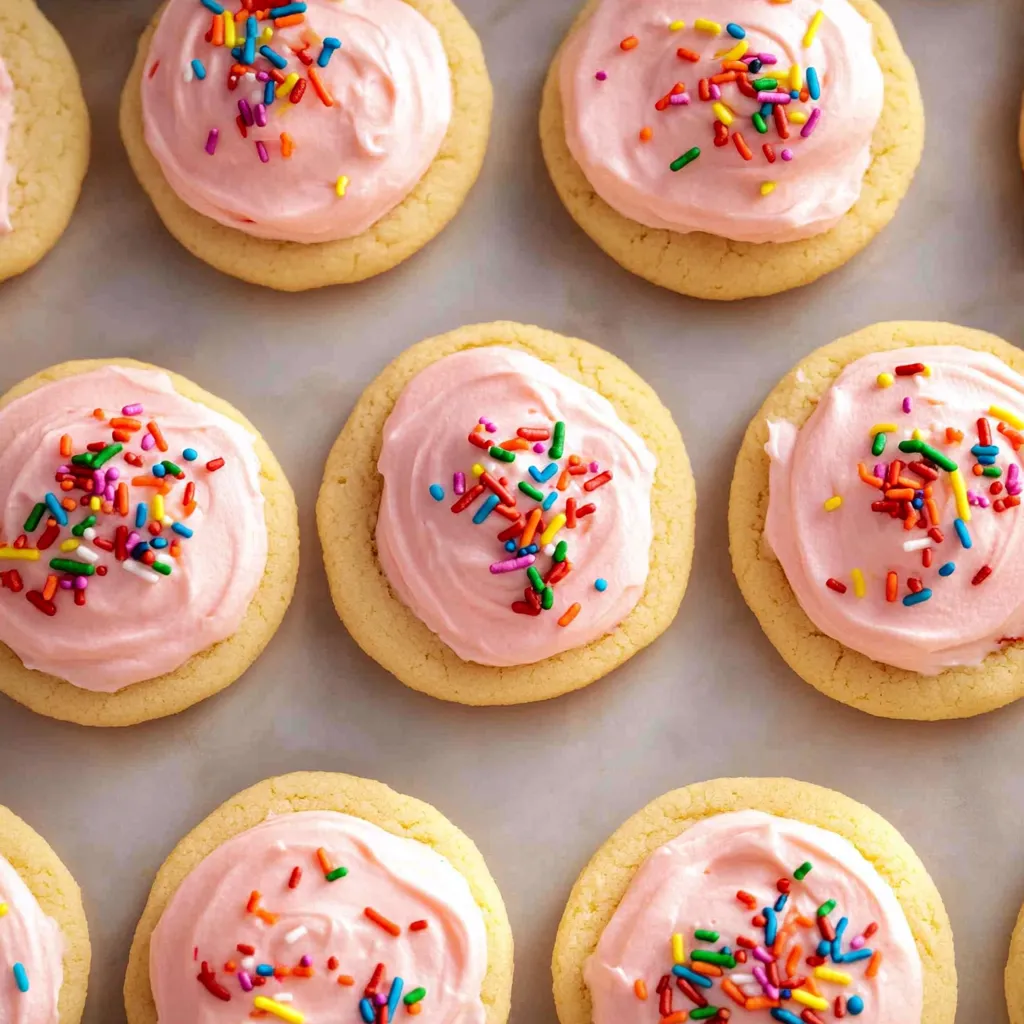
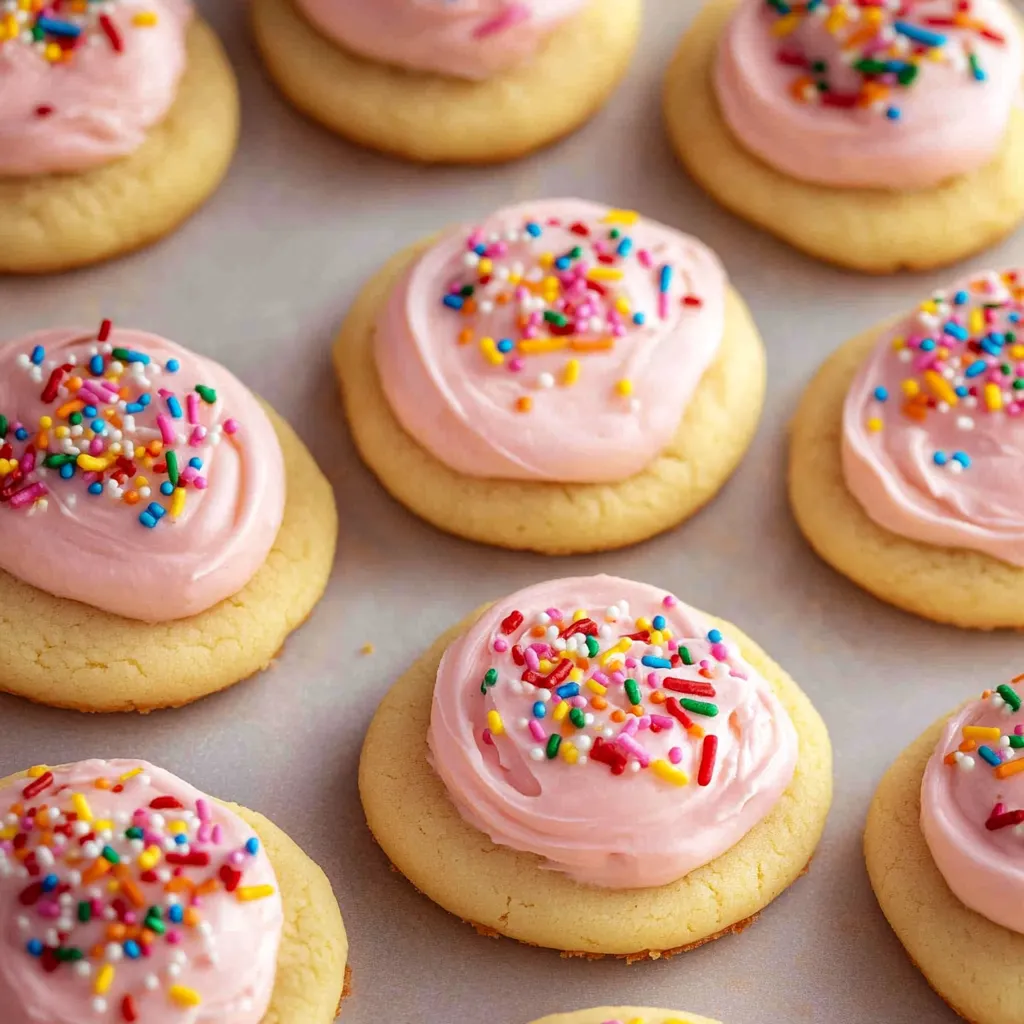
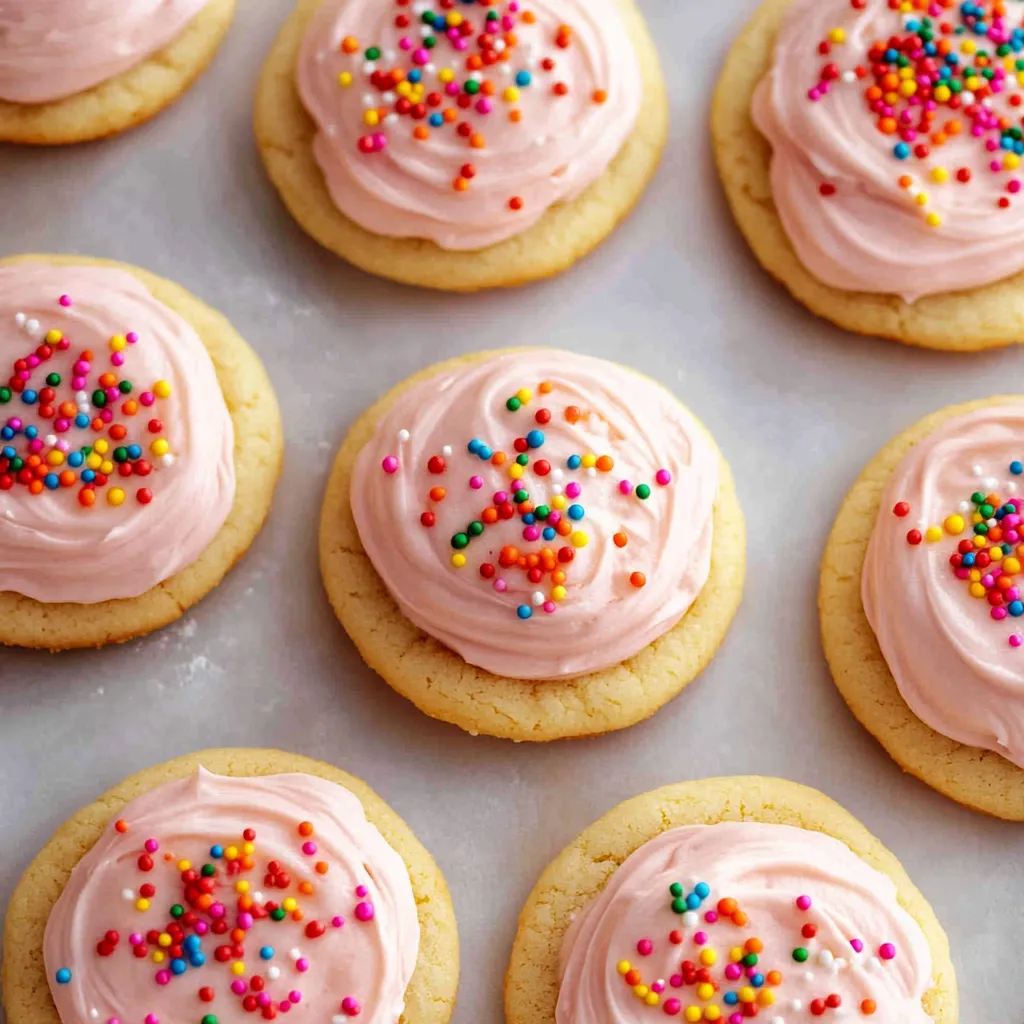
Lofthouse cookies are those iconic grocery store sugar cookies that have a cult following despite being objectively too sweet and artificially colored - soft, cakey, almost cake-like texture, thick layer of bright pink buttercream frosting, rainbow sprinkles on top - and recreating them at home means you can have that same nostalgic flavor and texture but with real butter, actual vanilla extract, and the satisfaction of knowing exactly what went into them. The secret to their distinctive soft, pillowy texture comes from a combination of cornstarch, sour cream, and both baking powder and baking soda working together to create cookies that are almost fluffy rather than crisp. What makes these particularly appealing is how they capture that specific childhood grocery store memory without requiring any unusual ingredients or complicated techniques - just mix, chill, cut, bake, frost, and suddenly you have cookies that taste exactly like the ones from the store bakery section but somehow better because they're fresh and homemade.
I became obsessed with recreating Lofthouse cookies about five years ago after buying a package from the grocery store and being shocked by how much I still loved them despite knowing they were probably terrible quality. The first batch I made at home used all-purpose flour without cornstarch and came out like regular sugar cookies - good, but completely wrong texture. After learning that cornstarch is essential for that distinctive soft, cakey texture, and that sour cream adds moisture while both leaveners create fluffiness, they finally tasted right. Now I make them regularly because they're one of those treats that tastes better homemade even though the appeal is partially their artificial grocery store character.
Ingredients and What Makes Them Essential
For the Cookies:
- All-Purpose Flour (2¾ cups): Forms the structure. Some recipes use cake flour, but all-purpose works perfectly and is more commonly available. Measure by spooning into your cup and leveling off for accuracy.
- Cornstarch (¼ cup): This is the secret ingredient that creates Lofthouse's signature soft, tender texture. Cornstarch inhibits gluten development and creates a more delicate crumb. Don't skip this - it's essential.
- Unsalted Butter (½ cup, 1 stick, at room temperature): Butter provides flavor and creates tender texture. It must be at room temperature - softened enough to leave an indent when pressed but not melting or greasy.
- Granulated White Sugar (1 cup): White sugar creates the correct sweetness and texture. Don't substitute brown sugar which would change the flavor and color.
- Large Egg (1, at room temperature): Egg binds ingredients and adds structure. Room temperature egg incorporates more easily than cold egg.
- Sour Cream (½ cup, at room temperature): Sour cream adds moisture and tanginess that keeps cookies soft for days. It's crucial to the texture. Full-fat sour cream works best.
- Pure Vanilla Extract (1½ teaspoons): Vanilla adds essential flavor. Use pure extract, not imitation, for best taste.
- Almond Extract (¼ teaspoon, optional): Almond extract mimics the slight artificial flavor of store-bought Lofthouse cookies. If you have nut allergies, omit it.
- Baking Powder (1½ teaspoons): Provides leavening for fluffy texture.
- Baking Soda (½ teaspoon): Additional leavening that also reacts with the sour cream's acidity.
- Salt (½ teaspoon): Enhances all the flavors and balances sweetness.
For the Buttercream Frosting:
- Unsalted Butter (½ cup, 1 stick, at room temperature): Forms the base of the frosting. Must be properly softened.
- Powdered Sugar (3 cups): Creates sweet, smooth frosting. Sift it if lumpy.
- Milk (3-4 tablespoons): Thins the frosting to spreadable consistency. Add gradually until you reach desired thickness.
- Pure Vanilla Extract (1 teaspoon): Adds flavor to the frosting.
- Pink Gel Food Coloring (optional): Creates that classic bright pink color. Gel food coloring is better than liquid because you need less and it doesn't thin the frosting. This is completely optional.
- Rainbow Sprinkles (for topping): Traditional Lofthouse cookies have rainbow sprinkles. Use whatever you like or omit them.
Step-by-Step Instructions
- Make the Cookie Dough:
- In a medium bowl, whisk together 2¾ cups of flour, ¼ cup of cornstarch, 1½ teaspoons of baking powder, ½ teaspoon of baking soda, and ½ teaspoon of salt. Set this bowl aside. In the bowl of a stand mixer fitted with the paddle attachment (or in a large bowl with a hand mixer), beat ½ cup of room temperature butter and 1 cup of sugar on medium speed for about 3 to 4 minutes until light and fluffy. The mixture should look noticeably paler and airy. Stop the mixer and scrape down the sides. Add 1 egg, 1½ teaspoons of vanilla extract, and ¼ teaspoon of almond extract (if using). Beat on medium speed for about 1 minute until combined. Add ½ cup of sour cream and beat just until incorporated - don't overmix. With the mixer on low speed, gradually add the flour mixture, mixing just until no streaks of flour remain. The dough will be quite thick and may look a bit crumbly, but it will come together when you press it with your hands.
- Chill the Dough:
- Turn the dough out onto a large piece of plastic wrap. Use your hands to press and pat it into a flat disk about 1 inch thick. Wrap tightly in the plastic wrap and refrigerate for at least 1 hour, or up to 3 days. This chilling is essential - unchilled dough is too sticky to roll out properly.
- Roll and Cut:
- After chilling, remove the dough from the refrigerator. If it's been chilled longer than 2 hours, let it sit at room temperature for about 10 minutes to soften slightly - it should be cold but pliable. Preheat your oven to 350°F and line two large baking sheets with parchment paper. On a lightly floured surface with a floured rolling pin, roll the dough to ½ inch thickness. This thickness is important - thinner cookies won't have the right soft, cakey texture. Use a 2½ to 3-inch round cookie cutter dipped in flour to cut out circles. Place the circles on your prepared baking sheets, spacing them about 2 inches apart. Gather the scraps, press them together gently (don't knead), re-roll, and cut more cookies. You can re-roll twice total.
- Bake:
- Place the baking sheets in the preheated 350°F oven. Bake for 8 to 9 minutes until the cookies are just set and puffed. They should look very pale - almost white - with barely any color. They should NOT be golden or browned. The centers may look slightly underdone, which is correct. They'll continue setting as they cool. Remove from the oven and let the cookies cool on the baking sheets for 5 minutes, then transfer to a wire rack to cool completely before frosting. The cookies must be completely cool or the frosting will melt.
- Make the Frosting:
- In a clean mixing bowl with the paddle attachment (or using hand beaters), beat ½ cup of room temperature butter on medium speed for about 2 minutes until smooth and creamy. Add 3 cups of powdered sugar (sifted if lumpy) and 1 teaspoon of vanilla extract. Beat on low speed until the sugar is incorporated, then increase to medium speed. Add 3 tablespoons of milk and beat until smooth and fluffy, about 2 to 3 minutes. The frosting should be thick but spreadable - if it's too thick, add another tablespoon of milk. If you want pink frosting, add a small amount of pink gel food coloring and beat until evenly colored. Start with a tiny amount - you can always add more but can't remove it.
- Frost and Decorate:
- Once the cookies are completely cool, spread or pipe the frosting on top of each cookie. You can spread it with a knife or offset spatula for a rustic look, or use a piping bag fitted with a large round tip for neater appearance. The frosting layer should be generous - about ¼ inch thick - to match the store-bought version. Immediately after frosting each cookie, add rainbow sprinkles on top while the frosting is still soft. Let the frosted cookies sit at room temperature for about 30 minutes to allow the frosting to set before storing.
 Pin it
My coworker who's an excellent baker and makes elaborate decorated sugar cookies was openly dismissive when I told her I was making copycat Lofthouse cookies, insisting that "grocery store cookies aren't worth recreating." She tried one grudgingly, clearly expecting to prove her point, then ate two more and admitted they were "surprisingly good for what they are" and that the texture was "impressively accurate." Getting the accomplished baker to acknowledge that recreating nostalgic junk food could be a worthy baking project felt like validation.
Understanding the Role of Cornstarch
Cornstarch is the secret ingredient that creates Lofthouse cookies' distinctive soft, tender, almost cake-like texture. When you replace a portion of all-purpose flour with cornstarch, several things happen. First, cornstarch contains no gluten-forming proteins (it's pure starch), so it dilutes the flour's gluten potential, creating more tender texture. Second, cornstarch gelatinizes when heated, absorbing moisture and creating soft, tender crumb. Third, cornstarch creates lighter texture because the granules are finer than flour granules. The result is cookies that are tender rather than crisp, soft rather than crunchy, and almost pillowy in texture. This is the same technique used in many shortbread recipes and tender cake recipes. Without cornstarch, you'd get regular sugar cookies with normal texture - good, but completely wrong for recreating Lofthouse's signature softness.
Why Sour Cream Creates Moisture
Sour cream serves multiple purposes in these cookies beyond just adding moisture. The fat content (about 20%) contributes to tender texture and rich mouthfeel. The moisture keeps cookies soft for days rather than drying out quickly. The acidity reacts with the baking soda, creating carbon dioxide bubbles that make cookies fluffy. The tangy flavor balances the extreme sweetness, preventing the cookies from being cloying. The proteins and emulsifiers in sour cream also contribute to structure and help retain moisture during baking and storage. You could substitute Greek yogurt in a pinch, but sour cream is preferable because it has more fat and better consistency. Don't use low-fat or non-fat sour cream which don't provide the same richness and moisture retention.
The Importance of Not Overbaking
Lofthouse cookies should be barely baked - they should look almost underdone when you remove them from the oven. This is crucial to achieving the right texture. The cookies are done when they're just set and slightly puffed, but still very pale - almost white with no golden color anywhere. They may look underdone in the center, which is correct. They'll continue cooking from residual heat as they cool on the hot baking sheet. If you bake until golden brown like regular sugar cookies, you'll get dry, crisp cookies instead of soft, tender ones. The visual cue is color - they should look barely cooked. This goes against instinct because most cookies benefit from golden edges, but Lofthouse-style cookies are the exception. Eight to nine minutes at 350°F is typically right, but watch your first batch carefully and adjust timing for subsequent batches if needed.
Achieving the Right Buttercream Consistency
The frosting should be thick enough to hold its shape but soft enough to spread or pipe easily. Too thick and it's difficult to spread evenly and won't have smooth appearance. Too thin and it will run off the cookies or not provide enough frosting layer. The key is adding milk gradually - start with 3 tablespoons, beat well, and assess consistency. The frosting should be spreadable but not runny. If it's too thick, add more milk a teaspoon at a time. If it's too thin (rare), add more powdered sugar a tablespoon at a time. Room temperature butter is crucial - cold butter won't cream properly, while melted butter creates greasy frosting. The finished frosting should be smooth, fluffy, and hold soft peaks when you lift the beater.
Storage and Maintaining Softness
Proper storage is crucial for keeping these cookies at peak softness. Store unfrosted cookies in an airtight container at room temperature for up to 5 days. Store frosted cookies in a single layer (or layered with parchment between layers) in an airtight container in the refrigerator for up to 1 week. The refrigeration is necessary because buttercream can spoil at room temperature. Before serving refrigerated cookies, let them sit at room temperature for about 15 minutes to soften slightly. For freezing, freeze unfrosted cookies in airtight containers for up to 3 months. Thaw at room temperature, then frost and serve. You can freeze frosted cookies, but unfrosted is easier to store and stack. The high moisture content from sour cream is what keeps these soft during storage - properly stored cookies should remain tender for days.
Variations and Customization Ideas
While classic pink-frosted cookies are traditional, you can create variations. For lemon cookies, add 1 tablespoon of lemon zest to the dough and substitute lemon juice for milk in the frosting, then use yellow food coloring. For chocolate cookies, replace ½ cup of flour with cocoa powder and use chocolate frosting. For different colors, use any food coloring - blue for baby showers, orange for Halloween, red and green for Christmas. For different sprinkles, use seasonal varieties or nonpareils. For different flavors, try peppermint extract in the frosting with crushed candy canes on top. For adult versions, add a tablespoon of liqueur to the frosting. Each variation maintains the soft, cakey texture while creating different flavor profiles for various occasions.
Troubleshooting Common Problems
When Lofthouse cookies don't turn out right, there's usually a fixable cause. If cookies are hard instead of soft, you overbaked them or used too much flour - bake until barely set and measure flour accurately. If dough is too sticky to roll, you didn't chill long enough - refrigerate for full hour minimum. If cookies spread too much, your butter was too soft or you didn't chill the dough - use proper room temperature butter and chill dough. If texture is too dense, your leaveners are expired - check expiration dates and replace if needed. If frosting is grainy, you didn't beat it long enough or your butter was too cold - beat for full time and use proper room temperature butter. Most issues relate to ingredient temperature, baking time, or proper chilling.
 Pin it
After making Lofthouse copycat cookies probably thirty times over the past five years, perfecting the recipe through trial and error, they've become one of those nostalgic treats I make regularly because they genuinely taste like the grocery store version but somehow better. I appreciate how cornstarch creates that signature soft texture without requiring cake flour or unusual ingredients, and how the sour cream keeps them tender for days. The ability to recreate childhood grocery store memories in my own kitchen with real butter and actual vanilla extract feels satisfying in ways that just buying the store version doesn't. Knowing the simple secrets - cornstarch for softness, don't overbake, chill before rolling - transforms something that seems like it might require artificial ingredients into something completely achievable with normal pantry staples. These represent exactly what nostalgic baking should be - capturing specific memories and flavors from childhood, genuinely delicious rather than just sentimentally appealing, and simple enough that you'll actually make them instead of just reminiscing about them.
Frequently Asked Questions
- → Why do I need to chill the dough?
- The dough is sticky and needs to firm up in the fridge for at least an hour so you can roll it out without it sticking everywhere.
- → Can I skip the cornstarch?
- No, the cornstarch is what makes these cookies soft and tender. Don't leave it out or they won't have the right texture.
- → How do I know when the cookies are done?
- They should barely start to turn golden around the bottom edges but stay pale on top. Usually 8 to 9 minutes at 375°F.
- → Can I make these ahead of time?
- Yes! Baked and frosted cookies keep in the fridge for up to a week, or you can freeze them for up to 3 months.
- → What if I don't have sour cream?
- Sour cream adds moisture and tang, but you could try using plain Greek yogurt as a substitute in the same amount.
- → Do I have to use almond extract?
- No, it's totally optional. It adds a hint of the original flavor but you can leave it out, especially if you have nut allergies.
- → How thick should I roll the dough?
- Roll it to about ¼ inch thick. Any thinner and they'll be crispy instead of soft and fluffy.