
 Pin it
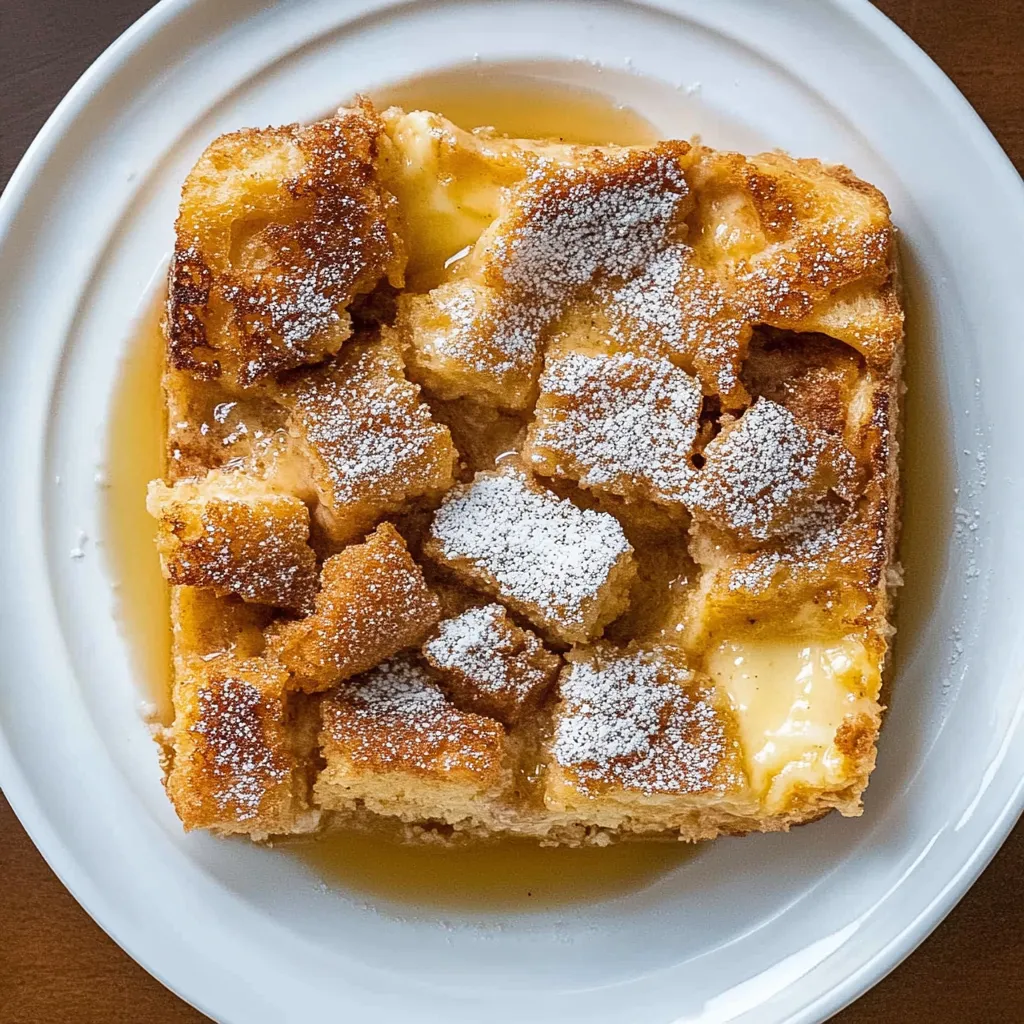
This overnight French toast casserole transforms breakfast preparation into something effortless by letting the bread soak in sweet, spiced custard while you sleep, then baking it all together with a buttery brown sugar crumble that caramelizes into crispy, golden perfection. Thick slices of brioche bread absorb the rich egg and cream mixture overnight, becoming custardy and soft inside while the top layer crisps up beautifully during baking. The brown sugar crumble adds textural contrast and concentrated sweetness that creates those irresistible caramelized edges everyone fights over. This is the kind of breakfast that makes special occasions feel truly celebratory without requiring you to wake up at dawn and stand over a griddle flipping individual slices—just pop it in the oven and let it work its magic while you make coffee.
I started making this French toast casserole years ago when I got tired of spending holiday mornings standing at the stove making individual pieces of French toast while everyone else relaxed and waited to eat. The first time I tried the overnight method, I was skeptical that it could possibly taste as good as freshly made French toast, but I was completely wrong—it was actually better in many ways. The long soak creates incredibly custardy texture throughout every piece of bread, and the crumble topping adds a dimension that regular French toast doesn't have. Now this is my default for every holiday breakfast, birthday brunch, and special-occasion morning because it lets me actually enjoy the event instead of being stuck in the kitchen. My family has started requesting it specifically, and guests always ask for the recipe after tasting how the crispy top contrasts with the soft, rich interior.
Ingredients and What Makes Them Essential
- Brioche bread (1 loaf, about 16 ounces, cut into cubes): This slightly sweet, enriched bread has the perfect texture for soaking up custard overnight without falling apart or becoming mushy. Brioche contains eggs and butter in the dough itself, which makes it tender and rich with a subtle sweetness that complements the spiced custard beautifully. The sturdy structure holds up to prolonged soaking while still becoming wonderfully soft and custardy. Cut the bread into roughly 1-inch cubes for optimal soaking and serving. Look for day-old or slightly stale brioche if possible, since fresh bread can become too soggy—the drier texture absorbs custard better. Challah bread works as an excellent substitute with similar richness and structure, while cinnamon raisin bread creates a fun variation with built-in flavor.
- Eggs (6 large): These provide the protein structure that transforms liquid custard into firm, sliceable casserole during baking. The eggs set when heated, creating that characteristic French toast texture that's soft and custardy but holds together when cut. Use large eggs at room temperature if possible, which incorporate more smoothly into the custard mixture than cold eggs straight from the refrigerator. The yolks contribute richness and golden color while the whites add structure.
- Whole milk (2 cups): Milk provides the liquid base for the custard and contributes mild dairy flavor without making the mixture too rich or heavy. Whole milk works best because it has enough fat to create creamy texture but isn't as thick as cream. You could use 2% milk in a pinch, though the casserole will be slightly less rich. Avoid skim milk, which produces thin, watery custard without proper body.
- Heavy whipping cream (1 cup): Adding cream alongside the milk creates luxurious richness and velvety texture that makes this taste special rather than ordinary. The high fat content in cream contributes to that custardy, almost pudding-like interior texture that defines excellent French toast casserole. Heavy cream also helps the casserole brown beautifully during baking. If you don't have cream, you could use all milk instead, though the result will be noticeably less decadent.
- Light brown sugar (½ cup, for custard): Brown sugar sweetens the custard while adding subtle molasses notes and deeper, more complex flavor than white sugar alone. The moisture in brown sugar also helps keep the casserole tender. Light brown sugar has mild molasses flavor that enhances without overwhelming, though dark brown sugar would work if you prefer stronger molasses taste. Pack the sugar firmly when measuring to ensure accurate sweetness.
- Vanilla extract (1 tablespoon, pure): Pure vanilla extract adds aromatic depth and enhances all the other flavors without tasting obviously vanilla-forward. Use real vanilla extract rather than imitation, which can taste artificial and chemical in custard-based dishes where the flavor is quite prominent. The amount seems generous but is appropriate for the volume of custard—you want that vanilla warmth to come through in every bite.
- Ground cinnamon (2 teaspoons, divided): Cinnamon provides warm, sweet-spicy flavor that's essential to French toast character and makes the casserole smell incredible while baking. The cinnamon goes into both the custard and the crumble topping, creating layers of spice throughout. Use relatively fresh ground cinnamon rather than a jar that's been in your cabinet for years, since old cinnamon loses potency and tastes dusty rather than aromatic.
- Salt (¾ teaspoon, divided): Salt might seem like an odd addition to a sweet dish, but it's crucial for balancing the sweetness and enhancing all the other flavors. Without salt, the casserole would taste flat and one-dimensional. The salt gets divided between the custard and the topping to season both components properly. If using salted butter in the topping, reduce the salt slightly to avoid oversalting.
- All-purpose flour (1 cup, for topping): Flour forms the base of the crumble topping and provides structure that creates those crispy, golden pieces on top of the casserole. All-purpose flour works perfectly here with its moderate protein content. The flour absorbs the melted butter and combines with the sugar to create streusel-like texture that bakes up crunchy and delicious.
- Light brown sugar (½ cup, for topping): Brown sugar in the topping caramelizes during baking to create those irresistible crispy, sweet bits on top that everyone loves. The moisture in brown sugar helps the topping clump into appealing chunks rather than staying sandy and uniform. The caramelization provides concentrated sweetness and slight bitterness that balances the rich custard underneath.
- Unsalted butter (½ cup, melted, for topping): Melted butter binds the flour and sugar together into crumble topping and adds rich flavor while helping everything brown beautifully. Unsalted butter gives you control over the salt level. Make sure the butter is fully melted but not hot when you add it to the dry ingredients—hot butter would start cooking the flour instead of just coating it. If using salted butter, reduce the added salt in the topping slightly.
Step-by-Step Instructions
- Prepare the baking dish and bread:
- Get out a 9x13-inch baking dish and spray it generously with cooking spray or grease it thoroughly with butter to prevent sticking—this is important because the custard will bake onto the dish and stuck-on bits are difficult to clean. Take your brioche loaf and use a serrated bread knife to cut it into roughly 1-inch cubes. You don't need to be perfectly precise about the size, but try to keep the pieces relatively similar so they soak and bake evenly. Arrange all the bread cubes in your prepared baking dish in a relatively even layer, though they don't need to be perfectly organized—just distribute them so you don't have some areas with tightly packed bread and other areas with barely any.
- Make the custard mixture:
- In a large mixing bowl, crack all six eggs and whisk them vigorously until the yolks and whites are completely combined and the mixture looks uniform and slightly frothy. Add the whole milk, heavy cream, brown sugar, vanilla extract, 1 teaspoon of the cinnamon, and half a teaspoon of the salt. Whisk everything together thoroughly for at least 30 seconds to a minute, making sure the brown sugar dissolves completely and all the ingredients are fully incorporated without any streaks of egg or pockets of unmixed sugar remaining. The custard should be smooth, pale tan in color from the eggs and brown sugar, and smell warmly spiced from the cinnamon and vanilla. Taste the mixture if you want to check the sweetness and spice levels—it should be noticeably sweet since some of that sweetness will be absorbed by the bread.
- Pour custard over bread and soak:
- Pour the custard mixture slowly and evenly over all the bread cubes in the baking dish, making sure to distribute it across the entire surface rather than dumping it all in one spot. Use a spatula or your hands to gently press down on the bread pieces, submerging them into the custard and ensuring they all get coated and start soaking. Some pieces will naturally float to the top, which is fine—just make sure most of the bread has direct contact with the custard. Press down gently a few times over the course of a few minutes to help the bread absorb the liquid. Cover the baking dish tightly with plastic wrap or aluminum foil and transfer it to the refrigerator. Let it soak for at least 4 hours, though overnight is ideal—8 to 12 hours gives the bread time to fully absorb the custard and become evenly soaked throughout rather than having dry centers.
- Make the crumble topping:
- When you're ready to bake the casserole—either the next morning or after the minimum 4-hour soak—prepare the crumble topping. In a medium bowl, combine the flour, brown sugar, remaining 1 teaspoon of cinnamon, and remaining quarter teaspoon of salt. Stir these dry ingredients together with a fork or whisk until they're evenly mixed with no clumps of brown sugar remaining. Pour the melted butter over the dry ingredients and stir with a fork or your fingers, working the butter into the flour mixture until it forms clumps and crumbles of various sizes. The texture should be like wet sand or streusel topping—some fine crumbs and some larger chunks, all moistened with butter. Don't overmix it into a paste; you want that varied texture that will create interesting crispy bits when baked.
- Add topping and bake:
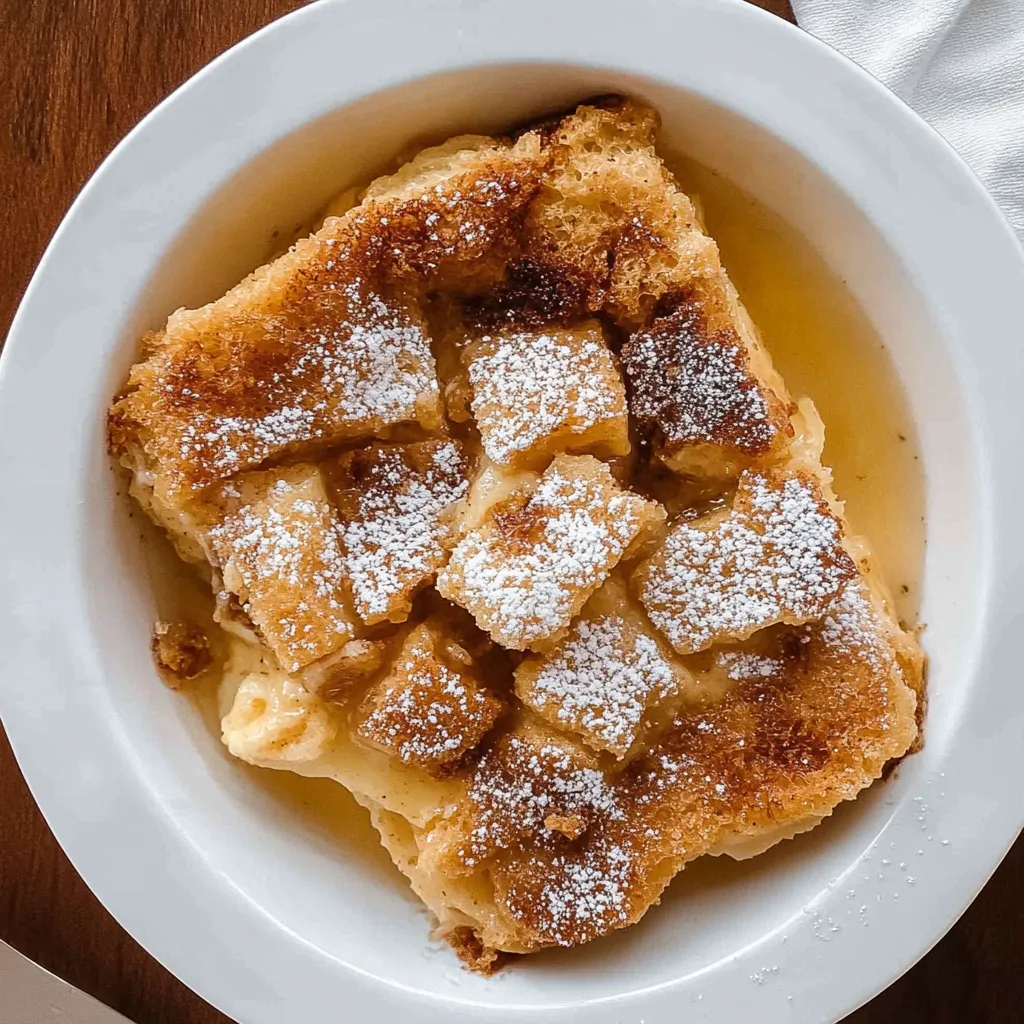
- Preheat your oven to 350°F and position a rack in the center where heat circulation is most even. Remove the soaked casserole from the refrigerator and take off the covering. The bread should look very saturated and custardy, with most of the liquid absorbed though there might be some pooled in spots. Sprinkle the crumble topping evenly over the entire surface of the soaked bread, distributing it from edge to edge and breaking up any large clumps with your fingers so you get good coverage. The topping doesn't need to completely blanket every piece of bread—some gaps are fine and actually create nice contrast between crispy topped pieces and softer exposed pieces. Transfer the uncovered casserole to the preheated oven and bake for 45 to 55 minutes. You'll know it's done when the custard is set and doesn't jiggle when you gently shake the pan, the edges are puffed and golden brown, and the crumble topping has turned deep golden brown and looks crispy and caramelized. A knife inserted in the center should come out mostly clean without raw custard clinging to it.
- Cool briefly and serve:
- Remove the casserole from the oven and let it rest for about 10 minutes before serving. This brief cooling period allows the custard to set fully so it slices neatly instead of falling apart, and it brings the temperature down from dangerously hot to pleasantly warm. The casserole is best served warm rather than piping hot or cold. Use a sharp knife or spatula to cut it into squares—you should get 12 to 15 servings depending on how large you cut the pieces. Plate the portions and dust them with powdered sugar if desired, which adds pretty visual contrast against the golden-brown topping. Serve with maple syrup on the side for people to drizzle over their portions, though honestly the casserole is sweet enough that many people will find syrup optional. Fresh berries, whipped cream, or a sprinkle of chopped nuts make excellent additional toppings.
 Pin it
The technique that improved my results most dramatically was learning to really press down on the bread cubes multiple times during the initial soaking to ensure thorough custard absorption. My early attempts produced casseroles where some pieces were perfectly soaked and custardy while others had dry centers that tasted like plain bread even after overnight soaking. Once I started pressing down firmly on all the bread pieces right after pouring the custard, then checking back after 10 to 15 minutes and pressing again to submerge any floating pieces, my results became much more consistent. I discovered that bread cubes naturally want to float on the surface because they're full of air pockets, and unless you actively push them down into the liquid, some pieces never fully saturate. Taking those few extra moments to press the bread down thoroughly ensures every piece absorbs custard evenly, which means every bite of the finished casserole has that perfect custardy texture throughout. Now this pressing step is automatic for me, and I haven't had an unevenly soaked casserole since learning this lesson.
Understanding Overnight Soaking Benefits
The overnight soaking period is what transforms this from decent casserole into genuinely exceptional breakfast through slow, even custard absorption that can't be rushed. When bread sits in custard for extended time, the liquid gradually penetrates all the way to the center of each cube through capillary action, creating uniform texture throughout rather than soggy exteriors surrounding dry centers. This thorough saturation means every bite has that characteristic French toast custardy quality rather than having some pieces perfectly soaked while others remain dry and bready.
The long soak also allows flavors to develop and meld in ways that aren't possible with quick preparation. The cinnamon and vanilla infuse deeply into the bread rather than just coating the surface, while the sugar dissolves completely and distributes evenly. The eggs have time to relax and blend thoroughly with the dairy, creating smoother custard without any eggy streaks or pockets. This gradual flavor development results in more cohesive, integrated taste where all the components work together rather than tasting like separate elements competing for attention.
From a practical standpoint, the overnight method provides incredible convenience that makes special-occasion breakfasts stress-free and enjoyable for the cook. Instead of waking up early to prepare breakfast while everyone else sleeps, you do the prep work the night before when you're already in the kitchen cleaning up from dinner. In the morning, you just add the topping and slide the dish into the oven, then relax with coffee while it bakes. This advance preparation is invaluable during holidays when you have multiple dishes to coordinate or when hosting guests and want to actually spend time with them rather than being isolated in the kitchen.
Bread Selection and Preparation
The type of bread you choose fundamentally affects the final texture and flavor of your French toast casserole, making this decision more important than it might seem. Brioche is ideal because its enriched dough contains eggs and butter, which makes it inherently tender, rich, and slightly sweet. The structure is sturdy enough to withstand prolonged soaking without disintegrating into mush, yet soft enough to become wonderfully custardy rather than staying tough or chewy. The slight sweetness complements the spiced custard without competing, and the tender crumb absorbs liquid beautifully while maintaining integrity.
Challah bread serves as an excellent alternative with similar characteristics—it's also enriched with eggs though typically contains less butter than brioche, giving you slightly lighter texture with comparable soaking properties. Challah has a tighter crumb structure than brioche, which some people prefer because it creates more distinct bread texture rather than the almost pudding-like quality very soft brioche can develop. Either bread works beautifully, so choose based on availability and personal preference. Day-old bread of either variety works even better than completely fresh because slightly stale bread has less moisture to start with, which means it can absorb more custard without becoming waterlogged.
Avoid using lean breads like French baguettes or Italian bread, which lack the richness and tender crumb structure needed for excellent French toast casserole. These breads can become tough and chewy or, conversely, dissolve into mush depending on soaking time. Regular sandwich bread is too soft and delicate—it falls apart during the long soak and bakes up with unpleasant texture. If you want variety or have dietary restrictions, cinnamon raisin bread creates a delicious variation with built-in flavor and sweetness, while Texas toast (thick-sliced white bread) can work in a pinch though it produces slightly denser results than enriched breads.
Make-Ahead and Freezing Strategies
French toast casserole's flexibility around timing and advance preparation is one of its greatest strengths and why it's so popular for entertaining and holiday meals. The standard overnight method—assembling the casserole the evening before and refrigerating it until morning—works perfectly and is the approach most people use regularly. This gives you 8 to 12 hours of soaking time, which is ideal for thorough custard absorption. You can refrigerate it for as little as 4 hours if you're short on time, though the bread won't be quite as evenly soaked. Longer than overnight (up to 24 hours) works fine too, though at some point the bread becomes extremely soft and loses some structural integrity.
For even more advance planning, you can freeze the assembled casserole before baking, which is perfect for making multiple batches to have on hand or preparing well ahead of a busy holiday. Assemble the casserole with the bread and custard but don't add the crumble topping yet. Cover it extremely tightly with plastic wrap followed by heavy-duty aluminum foil to prevent freezer burn, label it with the date and baking instructions, and freeze for up to 2 to 3 months. When you're ready to bake, you can either thaw it in the refrigerator overnight (the preferred method), then add the topping and bake as directed, or bake it directly from frozen by adding the topping and increasing the baking time by 20 to 30 minutes. Cover it with foil for the first half of baking to prevent the topping from burning while the interior thaws and cooks.
Leftover baked casserole can also be frozen successfully if you find yourself with more than you can eat within a few days. Let it cool completely, then cut it into individual portions and wrap each one tightly in plastic wrap. Place the wrapped portions in a freezer bag or airtight container, label and date everything, and freeze for up to 2 to 3 months. Reheat individual portions directly from frozen in the microwave for quick weekday breakfasts, or thaw overnight in the refrigerator and reheat in the oven at 350°F for crispier texture. The frozen and reheated version won't be quite as perfect as fresh, but it's still delicious and incredibly convenient for busy mornings.
Customization and Flavor Variations
The basic French toast casserole formula adapts beautifully to countless variations that keep it interesting even if you make it frequently. For chocolate lovers, add half a cup of chocolate chips scattered throughout the bread before pouring in the custard, which creates pockets of melted chocolate throughout the finished casserole. A berry version incorporates fresh or frozen blueberries, raspberries, or sliced strawberries mixed with the bread—the berries burst during baking and create fruity pockets of flavor. For apple cinnamon variation, sauté diced apples with butter, cinnamon, and brown sugar until softened, then layer them with the bread before adding custard.
Nutty variations add textural interest and sophisticated flavor. Mix chopped pecans or walnuts into the crumble topping for extra crunch, or fold them into the bread before soaking for nuts throughout. A praline version increases the brown sugar in the topping and adds a generous amount of chopped pecans, creating a topping reminiscent of praline candy. For tropical flair, use Hawaiian bread instead of brioche and add diced pineapple and shredded coconut mixed with the bread, then top with macadamia nuts in the crumble.
Seasonal adaptations make the casserole appropriate for different times of year. A fall version adds pumpkin puree to the custard (about three-quarters cup) along with pumpkin pie spice instead of just cinnamon, creating pumpkin French toast casserole perfect for Thanksgiving. A gingerbread version uses molasses in place of some brown sugar and adds ground ginger, cloves, and nutmeg to the custard. Summer berry version highlights seasonal berries and adds lemon zest to the custard for brightness. A s'mores version layers chocolate chips and mini marshmallows with the bread, then tops with graham cracker crumbs mixed into the crumble.
 Pin it
This overnight French toast casserole has completely changed how I approach special-occasion breakfasts and eliminated the stress I used to feel about holiday mornings when I was expected to produce impressive food while also wanting to enjoy time with family. The make-ahead capability means I can do all the work the night before when I'm calm and organized, then just add the topping and bake in the morning while chatting with everyone over coffee. The casserole itself is so reliably delicious and crowd-pleasing that I never worry about whether people will like it—the combination of custardy interior with crispy, caramelized topping wins over everyone from picky kids to sophisticated food lovers. I love that it feeds a crowd from one pan without requiring me to cook in batches or keep things warm, and the fact that it actually tastes better than individually made French toast because of the long soak has made this my preferred method even when I'm just cooking for my immediate family. Once you experience the convenience of throwing together this casserole the night before and waking up to an almost-ready breakfast that just needs baking, you'll understand why it's become my default for every occasion that calls for something special in the morning.
Frequently Asked Questions
- → Can I make this casserole the night before?
- Yes, that's actually the best way to make it. The bread needs at least 4 hours to soak up the custard, so overnight in the fridge works perfectly.
- → What type of bread works best for this recipe?
- Brioche is ideal because it's rich and holds up well when soaked. You can also use challah or thick-cut French bread if that's what you have on hand.
- → How do I know when the casserole is done baking?
- The top should be golden brown and the center should be set. If you gently shake the dish, it shouldn't jiggle too much in the middle. This usually takes 45-55 minutes.
- → Can I freeze this French toast casserole?
- Yes, you can freeze it either before or after baking. Wrap it tightly and freeze for up to 2 months. Thaw overnight in the fridge before baking or reheating.
- → What should I serve with this casserole?
- It's delicious with maple syrup, fresh berries, whipped cream, or a dusting of powdered sugar. Bacon or sausage on the side makes it a complete breakfast.
- → Do the eggs and milk really need to be room temperature?
- Room temperature ingredients mix together more smoothly and create a better custard. Just take them out of the fridge 30 minutes before you start.