
 Pin it
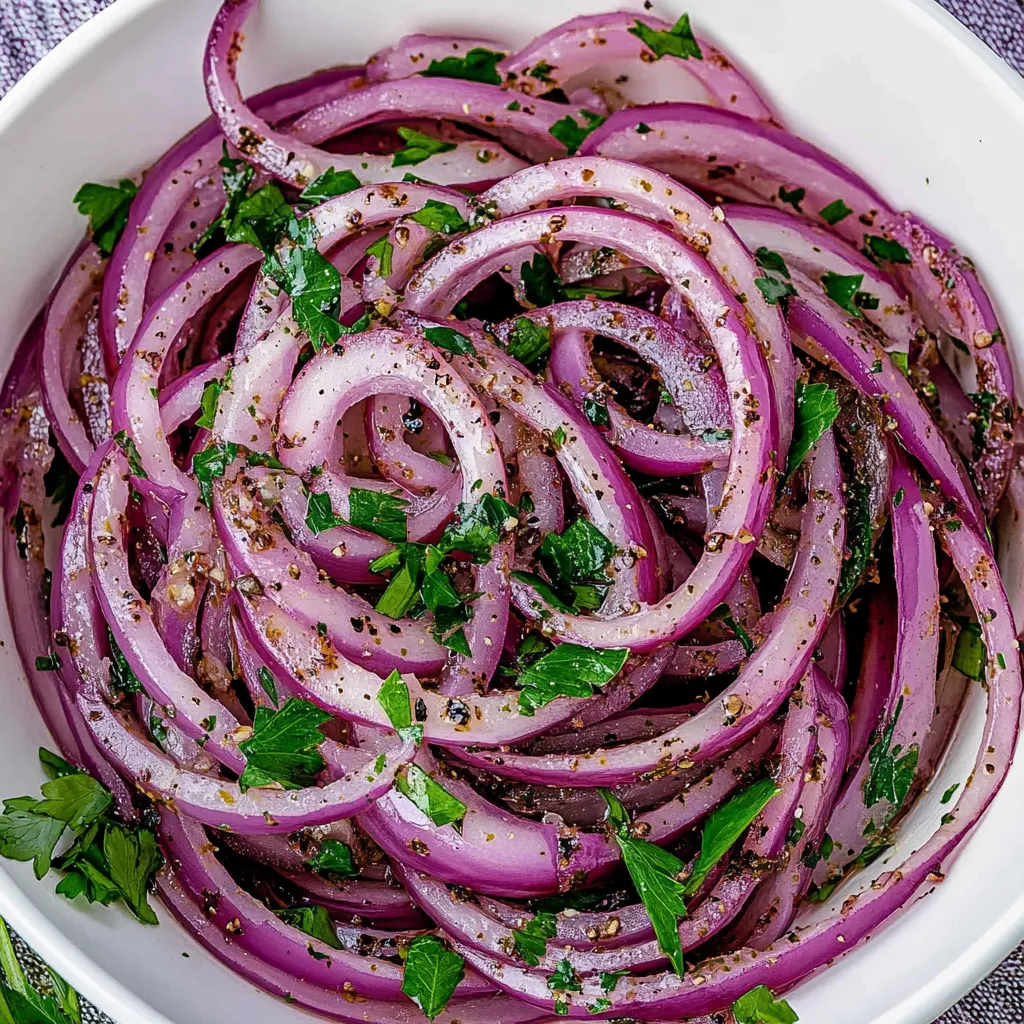
These sumac onions deliver everything you want from perfect Middle Eastern condiment - thinly sliced red onions (sliced paper-thin using sharp knife or mandoline creating delicate ribbons rather than thick chunks) that get "quick-pickled" through marination in bright, tangy dressing made from lemony-sour sumac spice (ground dried berries from sumac bush providing that signature citrusy-tart-earthy flavor essential to Turkish and Persian cuisines), fresh lemon juice adding acidity that "cures" the onions softening their harsh bite, extra virgin olive oil providing richness and helping bind the dressing while further mellowing the onions, chopped fresh parsley contributing herbaceous brightness and beautiful green color contrast against burgundy-red sumac and purple-pink onions, all seasoned with salt that draws out moisture through osmosis simultaneously softening texture and concentrating flavors. What makes this simple five-ingredient condiment so brilliant is how the combination of sumac and lemon juice transforms raw red onions from harsh, tear-inducing, breath-ruining vegetables into crisp-yet-tender, tangy-yet-sweet, refreshing accompaniment that enhances rather than overwhelms whatever you're serving it with, while the ten-minute preparation (literally just slicing onions, optionally soaking them to remove excess sharpness, then tossing with dressing and letting sit five minutes) makes this the easiest way to add authentic Middle Eastern flavor and visual appeal to any meal. The genius is in how the acidic marinade essentially performs quick pickling without actual pickling process - the lemon juice and sumac's citric acid denature the onions' cell wall proteins and draw out moisture creating texture somewhere between raw (still crisp with bite) and fully pickled (soft and vinegary), hitting that perfect sweet spot where onions maintain their crunch but lose their aggressive sharpness, while the sumac's distinctive lemony flavor (different from actual lemon - more complex, slightly floral, with earthy undertones) provides flavor profile that screams "Middle Eastern cuisine" to anyone familiar with Turkish, Persian, or Levantine food.
The first time making these reveals how soaking sliced onions in cold water for ten minutes draws out their sulfurous compounds (what makes you cry and causes harsh bite) creating noticeably milder result. That moment when you toss the drained onions with the sumac and watch the white-purple onion slices immediately turn vibrant pink-red from the sumac's pigments creates visual satisfaction. Tasting them after just five minutes of marinating and experiencing how the harsh raw onion flavor has transformed into something tangy, lemony, and almost sweet demonstrates the "curing" power of acid and salt.
Ingredients - What You Need and Why
- Red onions: two medium red onions (about one pound total) sliced paper-thin provide the vegetable base; red onions are preferred for their beautiful purple-pink color that becomes even more vibrant when exposed to acidic sumac and lemon, plus they have slightly sweeter, milder flavor than yellow or white onions; however, white or yellow onions substitute with slightly sharper flavor; the key is slicing them extremely thin (one-eighth inch or thinner) - thick slices stay too harsh and don't pickle properly; use a mandoline for perfectly uniform slices or a very sharp knife taking care with your fingertips
- Ground sumac: three tablespoons is the star ingredient providing that distinctive lemony-tart-earthy flavor; sumac comes from dried, ground berries of the sumac plant (Rhus coriaria) and is essential to Middle Eastern cuisines particularly Turkish, Persian, Lebanese, and Syrian cooking; the spice has deep burgundy-red color and tastes like lemon mixed with mild vinegar with subtle floral, slightly fruity notes; it's not spicy-hot at all despite the red color; find it at Middle Eastern markets, specialty spice shops, or increasingly in regular supermarkets; there's no perfect substitute though lemon zest mixed with a pinch of citric acid approximates it; sumac also contains tannins that help "cure" the onions alongside the acid
- Fresh lemon juice: from one to two lemons (about one-quarter cup) provides citric acid that pickles and softens the onions while adding bright, fresh lemon flavor that complements sumac's lemony notes; fresh-squeezed is dramatically better than bottled; lime juice substitutes in a pinch with different but still delicious flavor; the acid is essential to the quick-pickling effect that makes these onions edible
- Extra virgin olive oil: three tablespoons adds richness, helps distribute fat-soluble flavor compounds from sumac, coats the onions creating glossy appearance, and contributes to the softening/mellowing effect; the oil also helps the sumac and other seasonings cling to onion surfaces rather than settling at the bottom; use quality olive oil as its flavor comes through
- Fresh parsley: about half a cup chopped (one small bunch) adds herbaceous brightness, fresh flavor, and beautiful green color creating visual appeal; Italian flat-leaf parsley has more flavor than curly though either works; chop roughly rather than finely - large pieces maintain more flavor and texture; cilantro or fresh mint substitute for different but equally delicious variations; dried parsley doesn't work here - fresh is essential
- Salt: about half to three-quarters teaspoon seasons the onions and, more importantly, draws out moisture through osmosis helping soften them and concentrate flavors; sea salt or kosher salt work best; the salt combines with acid to create the curing/pickling effect
How to Make Sumac Onions - Step by Step
- Slice onions paper-thin and optionally soak:
- Peel your red onions and cut them in half through the root end (from top to bottom, not horizontally). Place each half cut-side-down on your cutting board for stability. Using a very sharp knife or mandoline, slice the onions as thinly as possible - aim for one-eighth inch thickness or thinner, creating delicate half-moon ribbons. The thinner they are, the better they'll cure and the more tender they'll become. If using a mandoline, use the safety guard and work carefully as these tools are extremely sharp. If using a knife, curl your fingertips back away from the blade using your knuckles as a guide. Place all sliced onions in a large bowl. At this point, you have an optional but highly recommended step: cover the sliced onions completely with cold water and let them soak for ten minutes. This soaking draws out sulfurous compounds (responsible for harsh bite and tear-inducing properties) through osmosis, creating significantly milder onions. Some cooks also massage the sliced onions with a teaspoon of salt for one minute then rinse - this also helps mellow them though I prefer the water soaking method. After ten minutes, drain the onions in a colander or strainer, shaking to remove excess water. You can even pat them gently with paper towels or use a salad spinner to remove more water - the drier they are, the better they'll absorb the marinade.
- Prepare parsley and combine everything:
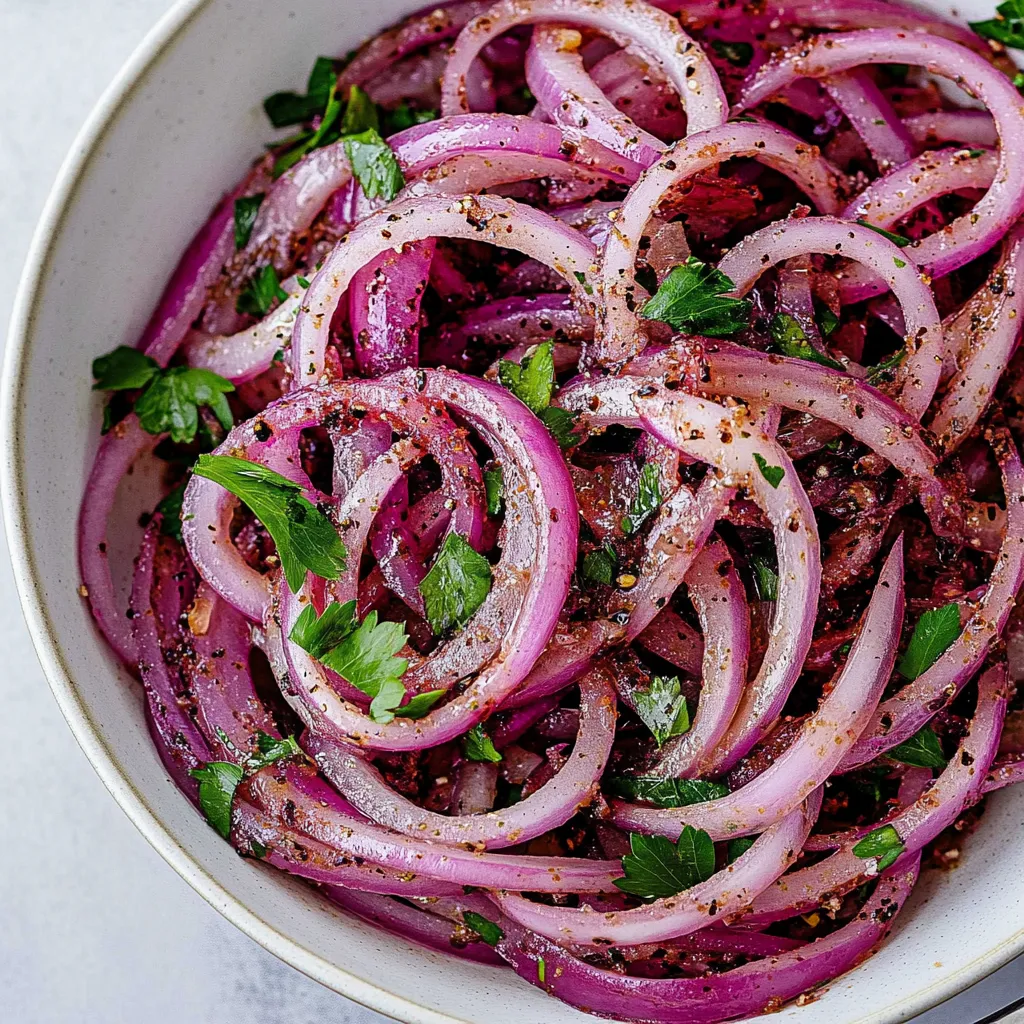
- While onions soak, prepare your parsley. Rinse the bunch well under cold water to remove any dirt or grit, then shake dry or pat with towels. Remove the very thick bottom stems (the thin stems are fine to include - they have flavor). Using a sharp knife, chop the parsley roughly - don't mince it finely or you'll lose the fresh, bright flavor and vibrant color. Aim for pieces about half an inch to one inch - you want visible green flecks throughout the finished dish. Set aside about half a cup of chopped parsley. In a large mixing bowl (the same one you used for soaking is fine once drained and dried, or use a serving bowl if you plan to serve directly from it), combine your drained onion slices, three tablespoons of ground sumac, one-quarter cup of fresh lemon juice, three tablespoons of extra virgin olive oil, half to three-quarters teaspoon of salt, and your chopped parsley. Using clean hands or salad tongs, toss everything together thoroughly for about one to two minutes, ensuring every onion slice gets coated with the sumac mixture. You'll notice the onions immediately begin changing color - the burgundy-red sumac stains them creating beautiful pink-red hue. The onions should be evenly coated with reddish coating, glistening from oil, with green parsley flecks distributed throughout. Once thoroughly mixed, let the onions sit at room temperature for at least five minutes before serving - this brief marination allows the acid and salt to begin their curing work, softening the onions slightly and mellowing their flavor while the sumac's lemony notes infuse throughout.
- Serve or refrigerate for deeper flavor:
- After five minutes, the onions are ready to serve and will be crisp-tender with bright, tangy flavor. However, they actually improve with time - if you can wait fifteen to thirty minutes, the flavors meld more and onions soften further. For even better results, cover and refrigerate for one to two hours or up to overnight - the longer they marinate, the more pickled they become, the more mellow and sweet the onion flavor, and the deeper pink-red the color. Taste and adjust seasoning before serving - you may want more lemon juice for tang, more salt for seasoning, or more sumac for color and flavor. Serve chilled or at room temperature (they're delicious either way) as condiment alongside grilled meats, kebabs, sandwiches, falafels, grain bowls, or any dish that benefits from bright, acidic, crunchy element.
 Pin it
Understanding that sumac onions represent quick-pickling technique rather than raw onion salad helps you appreciate this as preserving method that extends shelf life while transforming flavor and texture.
Understanding Sumac and Middle Eastern Culinary Traditions
Sumac (Rhus coriaria) has been used in Middle Eastern, Mediterranean, and Persian cooking for thousands of years, predating the arrival of lemons to the region. Ancient Romans used sumac as souring agent before citrus became available. The spice comes from grinding the dried berries (drupes) of the sumac shrub into coarse powder with distinctive dark red color. The Arabic name "summāq" means "dark red" reflecting the spice's characteristic color. Sumac grows wild across Middle Eastern countries, Mediterranean regions, and parts of Europe, with different species varying slightly in tartness. In Turkish cuisine, sumac appears in countless applications: sprinkled over lahmacun (Turkish pizza), mixed into bulgur salads, rubbed on grilled meats, and of course in this onion preparation served alongside kebabs and grilled meats at every Turkish restaurant. Persian cooking uses sumac extensively - it's one of the most important spices, served alongside every kebab meal where diners sprinkle it over rice, used in mast-o-khiar (yogurt-cucumber dip), and added to many rice dishes and stews. Lebanese and Syrian cuisines incorporate sumac into za'atar spice blend (sumac, thyme, sesame seeds) used on breads and mezze. The spice contains high levels of antioxidants, vitamin C, and has antimicrobial properties, historically helping preserve foods before refrigeration. Understanding this deep culinary history helps appreciate sumac onions as part of living tradition connecting modern cooking to ancient practices, while the technique of quick-pickling onions reflects broader Middle Eastern practice of preserving and transforming vegetables through acid, salt, and spices.
Creating Flavor Variations and Creative Additions
While classic Turkish sumac onions are delicious as written, exploring variations honors different regional traditions while allowing customization for various preferences. For spicy version, add one teaspoon of Aleppo pepper or crushed red pepper flakes creating gentle heat that complements sumac's tartness without overwhelming. Persian-style variation includes one teaspoon of dried mint alongside parsley for more herbaceous, aromatic profile traditional in Persian cuisine. Lebanese za'atar onions incorporate one tablespoon of za'atar spice blend (sumac, thyme, sesame seeds) creating more complex herbal notes. Pomegranate molasses version adds one tablespoon of pomegranate molasses for sweet-tart depth and gorgeous dark color. Cumin-sumac variation includes half a teaspoon of ground cumin for earthy, warming notes. Fresh mint version substitutes mint for parsley creating cooling, refreshing flavor perfect for lamb dishes. Garlic-enhanced adds one minced garlic clove for pungent depth. Turkish chili flakes (pul biber) version uses authentic Turkish pepper for traditional heat level. Cilantro-sumac uses cilantro instead of parsley for different herbaceous character. Mixed herb variation combines parsley, mint, and dill in equal parts. Yogurt-based transforms this into creamy condiment by folding sumac onions into Greek yogurt creating cacik-adjacent sauce. Each variation maintains the fundamental quick-pickling technique while exploring different flavor directions suitable for various dishes and regional traditions.
Troubleshooting Common Problems
Even with straightforward technique, sometimes sumac onions don't turn out perfectly, but understanding solutions prevents disappointment and improves results. If onions remain too harsh and strong-tasting rather than mellow and tangy, they either weren't sliced thin enough allowing acid to penetrate, weren't soaked adequately to remove sulfurous compounds, or didn't marinate long enough - slice paper-thin (mandoline helps), soak full ten minutes in cold water, and let marinate at least fifteen to thirty minutes or refrigerate overnight. When color doesn't develop and onions stay white-purple rather than turning pink-red, your sumac is old and has lost pigment, you didn't use enough sumac, or the onions weren't acidic enough to trigger color change - use fresh sumac (should smell strongly lemony), use full three tablespoons, and ensure adequate lemon juice. If texture becomes too soft and mushy rather than crisp-tender, you over-marinated them (several days in fridge), used too much salt drawing out excessive moisture, or didn't drain them properly after soaking - eat within three to four days for best texture, use measured salt amount, and drain/pat dry thoroughly. Onions that taste bland despite seasoning need more salt (draws out flavor), more lemon juice (brightens everything), or fresher sumac with more potent flavor - always taste and adjust before serving. When sumac clumps rather than distributing evenly, the onions were too wet preventing even coating or you didn't toss thoroughly - ensure onions are well-drained and dry, then toss vigorously for full two minutes. If parsley turns brown and wilted, it was added too far in advance or wasn't fresh to begin with - add parsley just before serving for maximum brightness, or store separately and toss in when serving. Onions that are too sour and puckering used too much lemon juice or very acidic lemons - reduce lemon juice to three tablespoons and taste before adding more, or add pinch of sugar to balance.
Complete Meal Planning and Serving Suggestions
Understanding what to serve alongside sumac onions creates complete, satisfying meals leveraging this condiment's versatility. For classic Middle Eastern mezze spread, serve with hummus, baba ganoush, falafel, pita bread, tabbouleh, and stuffed grape leaves where sumac onions provide tangy crunch balancing creamy dips. Kebab dinners (lamb, chicken, beef) feature these as essential accompaniment alongside rice pilaf, grilled tomatoes, and flatbread - the acidic onions cut through rich, fatty meat perfectly. Shawarma and döner kebab applications use these as topping along with tahini sauce and pickled vegetables. Sandwich and wrap fillings incorporate these into falafel wraps, chicken shawarma sandwiches, or vegetarian grain bowls adding brightness and crunch. Grilled meat applications (steaks, chops, burgers) benefit from topping with sumac onions creating instant sophistication and Middle Eastern flair. Fish and seafood preparations (grilled salmon, white fish, shrimp) pair beautifully with sumac onions' citrusy acidity complementing delicate proteins. Vegetarian applications include topping roasted cauliflower, grilled eggplant, crispy tofu, or grain bowls (quinoa, bulgur, rice) where onions add essential brightness and acid. Breakfast dishes like shakshuka or fried eggs benefit from sumac onion garnish. Salads incorporate these as component in fattoush, Mediterranean chopped salads, or Greek salads. For beverages, Turkish tea (çay), mint tea, ayran (yogurt drink), or pomegranate juice complement without competing. The key is recognizing these work as both condiment (small amounts adding brightness) and side dish (larger portions as salad component), making them incredibly versatile across meal types and courses.
Storage, Reheating, and Make-Ahead Strategies
Understanding proper storage and advance preparation maximizes convenience while maintaining quality and food safety. Freshly made sumac onions can be served immediately after five-minute marinade, but they're even better after longer marination allowing flavors to develop. Store in airtight container or mason jar refrigerated for up to one week - the onions continue pickling becoming more mellow, tender, and deeply flavored over time. The texture changes gradually: day one they're crisp-crunchy with bright flavor; by day three they're tender-crisp with deeper, more pickled flavor; by day seven they're quite soft (still delicious) with very mellow, almost sweet onion flavor and deep burgundy-pink color. Some people prefer them fresh and crisp, others love them after several days - both are correct. The marinade liquid at the bottom of container is packed with flavor - don't discard it but rather spoon it over the onions when serving or use it as salad dressing. For make-ahead entertaining, these are perfect - make one to three days before your event for optimal flavor development and one less thing to do day-of. The longer marination also intensifies the pink-red color creating more dramatic presentation. Don't freeze sumac onions - freezing destroys their crisp texture, and upon thawing they become mushy and watery with separated liquid making them unappetizing. Serve chilled directly from refrigerator or bring to room temperature (let sit out thirty minutes) - both temperatures work beautifully depending on preference and what you're serving them with. If taking to potlucks or picnics, transport in sealed container with ice pack to maintain food safety, though the high acid content provides some preservation making them relatively stable.
The Science of Quick Pickling and Acid Curing
Understanding the chemistry of pickling helps explain why this technique transforms harsh raw onions into delicious condiment. Traditional pickling uses vinegar (acetic acid) and often involves heating, sterilization, and long storage times. Quick pickling (what's happening here) uses acids (citric acid from lemon juice, organic acids in sumac) and salt to rapidly change onions' flavor and texture without traditional pickling process. Several mechanisms work simultaneously: (1) Acid denatures proteins in onion cell walls, breaking down structure and softening texture while the onions remain crisp rather than fully cooked-soft; (2) Osmosis occurs as salt draws out water from onion cells through cell membranes, concentrating flavors while reducing volume slightly; (3) The sulfur compounds responsible for onions' harsh bite and tear-inducing properties (syn-propanethial-S-oxide) are volatile and water-soluble, so soaking in water allows them to leach out reducing harshness; (4) Anthocyanins (pigments in red onions) change color in acidic environments - the purple pigments shift to pink-red when exposed to acids (same phenomenon makes red cabbage turn pink in vinegar); (5) The fat in olive oil helps distribute fat-soluble flavor compounds from sumac while coating onions creating barrier that slows moisture loss. The sumac itself contains tannins and organic acids that contribute astringency and tartness while also providing antimicrobial properties that help preserve the onions. The combination of salt and acid creates environment hostile to bacterial growth, which is why these keep well refrigerated for a week. Understanding these processes explains why each ingredient matters and why technique details (thin slicing for better acid penetration, soaking to remove harsh compounds, adequate salt for osmosis) significantly impact final results.
Teaching Fundamental Cooking Skills
This recipe provides excellent opportunity to learn techniques that transfer across countless preparations. Learning to slice onions uniformly and extremely thin teaches knife skills essential to all cooking - proper hand position (claw grip), knife angle, consistent pressure all matter. Using a mandoline safely (with guard) expands your tool repertoire for tasks requiring precision slicing. The technique of soaking vegetables to remove bitter or harsh compounds applies broadly to raw onions, eggplant (removes bitterness), cabbage (reduces sulfur), and other vegetables. Understanding how acid affects vegetables - softening, pickling, color changes - teaches principles applicable to all quick pickles, ceviches (fish "cooked" with acid), and acid-based marinades. The skill of balancing flavors (acid, fat, salt, aromatics) represents fundamental cooking principle applicable to all dressings, marinades, and sauces. Learning to taste and adjust seasoning teaches that recipes are starting points requiring your judgment based on ingredients' variability (lemon acidity varies, onion sharpness varies, sumac potency varies). The concept of marination time affecting flavor and texture teaches patience and planning - understanding that some preparations improve with time rather than being consumed immediately. Working with unfamiliar spices (sumac) builds confidence for exploring other cuisines and expanding your flavor vocabulary. For beginners intimidated by unfamiliar ingredients or "ethnic" cooking, this recipe builds confidence because it's extremely simple (just slicing and tossing) yet produces authentic, impressive results that taste genuinely Middle Eastern, proving that exploring new cuisines doesn't require complicated techniques when you have proper ingredients and follow simple methods.
The Economics of Homemade Versus Restaurant Condiments
Understanding cost comparisons reveals how making simple condiments at home saves money while providing superior quality. Homemade sumac onions cost: two red onions (two dollars), sumac (expensive per ounce but three tablespoons costs about one dollar fifty from bulk spice stores or Middle Eastern markets), one lemon (fifty cents), olive oil (fifty cents), parsley (one dollar) - total approximately five dollars fifty for large batch (about three cups) that serves six to eight as condiment or side dish, or roughly seventy cents per serving. This seems modest, but consider: restaurants charge three to six dollars for small portion (quarter to half cup) of sumac onions as side order, or they're included "free" with kebab platters costing twenty to thirty dollars where the condiments are factored into the high price. Making at home means you can enjoy them frequently without the restaurant markup. More significantly, many Middle Eastern restaurants don't even offer proper sumac onions - they serve plain raw onions or quick pickled onions without sumac, so making these at home provides authentic flavor you often can't buy. The sumac itself is the investment - a four-ounce container costs eight to twelve dollars but makes eight to ten batches, so per-batch cost is under one dollar fifty. For people who regularly eat Middle Eastern food and want authentic accompaniments, learning to make these saves money while improving authenticity. Beyond cost, homemade offers control over onion sharpness (proper soaking), sumac quality (fresh, potent spice versus old restaurant spice), and freshness (made that day versus sitting in restaurant containers for unknown duration).
Understanding Persian and Turkish Food Culture
Sumac onions sit at intersection of several Middle Eastern culinary traditions, each with distinct but overlapping uses. In Turkish cuisine, these onions (soğan salatası or sumak soğan) appear at every kebab restaurant, served automatically alongside grilled meats much like bread and water. Turkish food culture emphasizes balance - rich, fatty grilled meats need acidic, fresh counterpoints, hence the prevalence of pickled vegetables, sumac onions, fresh herbs, and yogurt-based sauces. The condiment isn't afterthought but essential component of proper meal structure. Persian (Iranian) cuisine similarly relies heavily on sumac - it's one of the most important spices alongside saffron and dried limes. Sumac appears on every restaurant table in shakers allowing diners to sprinkle it over rice (especially chelow kabab, the national dish), and sumac onions appear as piyaz served with kebabs. Persian food philosophy emphasizes ghormeh (stews) and grilled meats with salad Shirazi (cucumber-tomato salad) and pickled vegetables (torshi) providing fresh, acidic balance. Lebanese and Syrian cuisines incorporate sumac into za'atar blend and use sumac onions in fattoush salad. These condiment traditions reflect practical wisdom developed over millennia - in hot climates before refrigeration, acidic preserved vegetables provided safe, shelf-stable foods while cutting through fatty meats' heaviness and providing nutrients. The emphasis on fresh herbs, lemon, and acid in Middle Eastern cuisines creates balanced eating where heavy proteins are always tempered with bright, fresh elements promoting digestion and preventing that uncomfortable overstuffed feeling. Understanding these cultural contexts helps appreciate that sumac onions aren't just tasty addition but represent sophisticated food culture that understands how different elements work together creating balanced, healthful, satisfying meals.
 Pin it
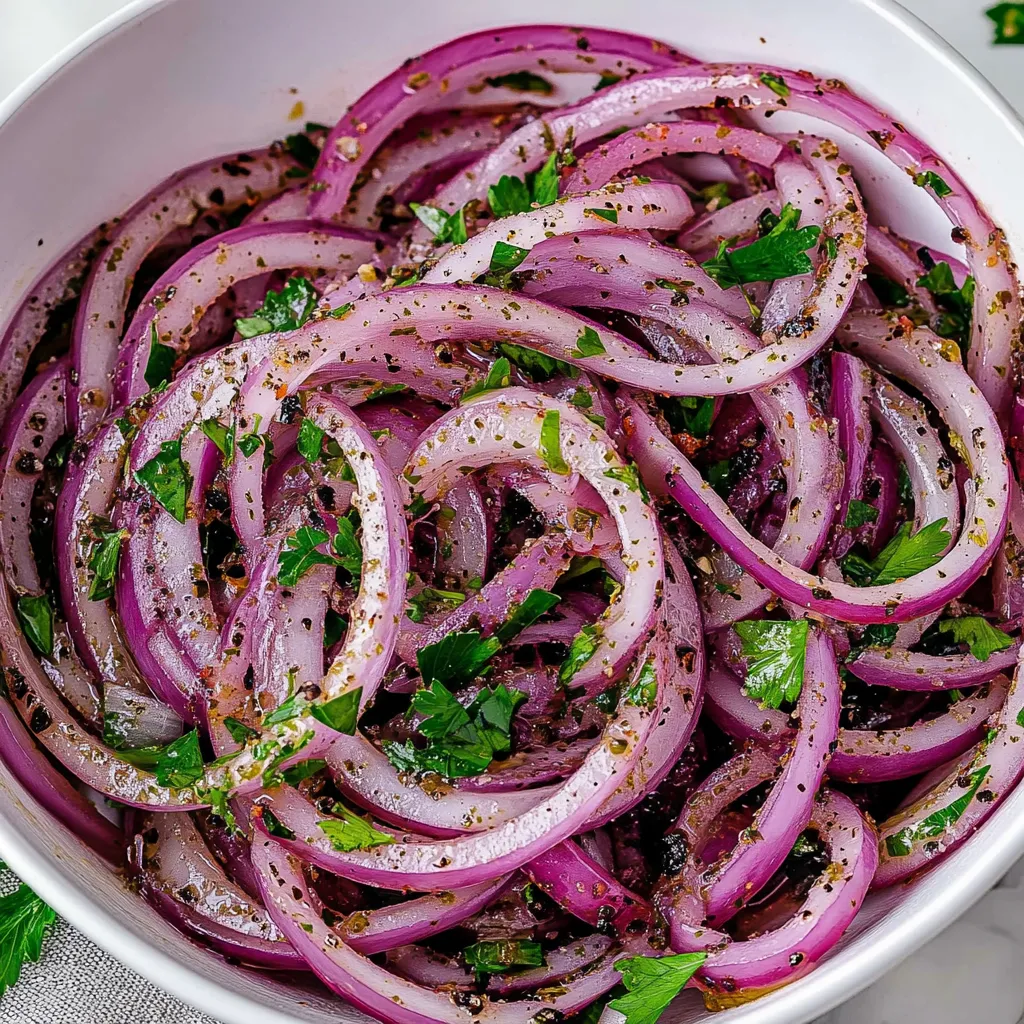
This sumac onions recipe represents the perfect intersection of ancient food preservation wisdom and modern convenience-seeking, proving that some of the most valuable recipes are those simple preparations that have sustained cultures for millennia because they solve fundamental problems - transforming harsh raw vegetables into delicious condiments, preserving foods through acid and salt, providing essential brightness and acidity to balance rich meals - while requiring minimal time, effort, or ingredients making them realistic for contemporary home cooks who want authentic flavors without complicated processes. What makes this recipe genuinely valuable is how it introduces Western cooks to sumac, one of Middle Eastern cuisine's most important but underutilized (in the West) spices, demonstrating through dead-simple application how this distinctive lemony-tart spice transforms ordinary ingredients into something special while teaching quick-pickling technique applicable far beyond just onions. The transformation of harsh, tear-inducing raw red onions into tender-crisp, tangy-sweet, vibrant pink condiment through nothing more than acid, salt, and ten minutes of time demonstrates that impressive cooking often requires understanding chemistry and technique rather than complexity, showing how traditional food preservation methods leveraged natural processes creating delicious results that modern cooks can still appreciate and replicate. Whether you're someone exploring Middle Eastern cuisines wanting to understand authentic flavors and traditional accompaniments, a home cook seeking simple condiments that elevate everyday meals from ordinary to restaurant-quality, a grill master needing the perfect accompaniment for grilled meats that cuts richness while adding visual appeal, someone who typically avoids raw onions but wants to understand how proper preparation makes them delicious, a spice enthusiast building your repertoire of global flavors and techniques, or simply anyone who appreciates how the best recipes are often the simplest when they're rooted in deep cultural knowledge about how ingredients work together, this delivers completely. The ten-minute preparation time and week-long refrigerator storage mean you can make these anytime and always have authentic Middle Eastern condiment available for weeknight dinners, impromptu gatherings, or meal prep bowls, while the five-dollar cost for large batch proves that authentic international flavors don't require expensive ingredients when you know where to shop and what to buy. Once you've experienced how that brief soaking removes onions' harsh bite making them approachable even for raw-onion skeptics, tasted how sumac's unique lemony-earthy flavor is genuinely different from and more complex than actual lemon providing flavor you can't replicate with other ingredients, understood how the quick-pickling technique creates texture somewhere between raw-crisp and fully-pickled that's more interesting than either extreme, watched how the dramatic color transformation from white-purple to vibrant pink-red creates visual drama that makes every plate more appealing, and appreciated how this simple condiment elevates literally everything it touches from grilled chicken to grain bowls to sandwiches by providing that essential bright, acidic, crunchy element that makes meals feel complete and balanced, you'll find yourself making batch after batch keeping them constantly in your refrigerator, experimenting with herb variations discovering whether you prefer parsley or mint or cilantro, confidently serving these at dinner parties knowing they signal sophistication and cultural awareness, using leftover marinade liquid as salad dressing or meat marinade waste-free cooking, understanding that sometimes the most impressive things we can serve are those simple traditional preparations that cultures have relied on for centuries because they work perfectly doing exactly what they're meant to do, and recognizing that learning to cook means not just following recipes but understanding the why behind techniques - why we soak onions, why acid changes color and texture, why salt draws out moisture, why marination time matters - building foundational knowledge that transforms you from recipe-follower into confident cook who understands food at molecular level enabling creative adaptation and innovation while respecting traditions that represent accumulated wisdom of countless cooks across generations, ultimately teaching us that the best cooking honors both heritage and practicality, respecting where recipes come from while adapting them to contemporary kitchens and lifestyles, with sumac onions embodying this perfect balance between ancient Middle Eastern food wisdom and modern quick-meal culture, proving that traditional techniques remain relevant and valuable when they produce authentic flavors through simple methods that fit real life, demonstrating that exploring global cuisines doesn't require exotic equipment or complicated processes when you have proper ingredients and willingness to try new flavors, making international cooking accessible and achievable for anyone curious enough to buy an unfamiliar spice and slice some onions, thereby expanding our culinary horizons one simple, delicious condiment at a time.
Frequently Asked Questions
- → What does sumac taste like?
- Sumac has a tangy, lemony flavor that's slightly fruity and not too sharp. It adds a nice bright taste to dishes without being overpowering.
- → Can I make this ahead of time?
- Yes! You can prep this up to a few hours ahead. Just keep it covered in the fridge and give it a quick stir before serving.
- → Where can I buy sumac?
- You can find sumac at Middle Eastern grocery stores, specialty spice shops, or online. Some larger supermarkets carry it in the international aisle too.
- → Do I have to soak the onions in water?
- No, soaking is optional. It just helps take away some of the sharp raw onion bite if you prefer a milder flavor.
- → What dishes go well with sumac onions?
- These onions are great with grilled meats, kebabs, shawarma, falafel wraps, rice dishes, or any Middle Eastern meal. They add a nice tangy crunch.
- → Can I use white onions instead of red?
- You can, but red onions are milder and sweeter, which works better for this salad. White or yellow onions might be too sharp when raw.