
 Pin it
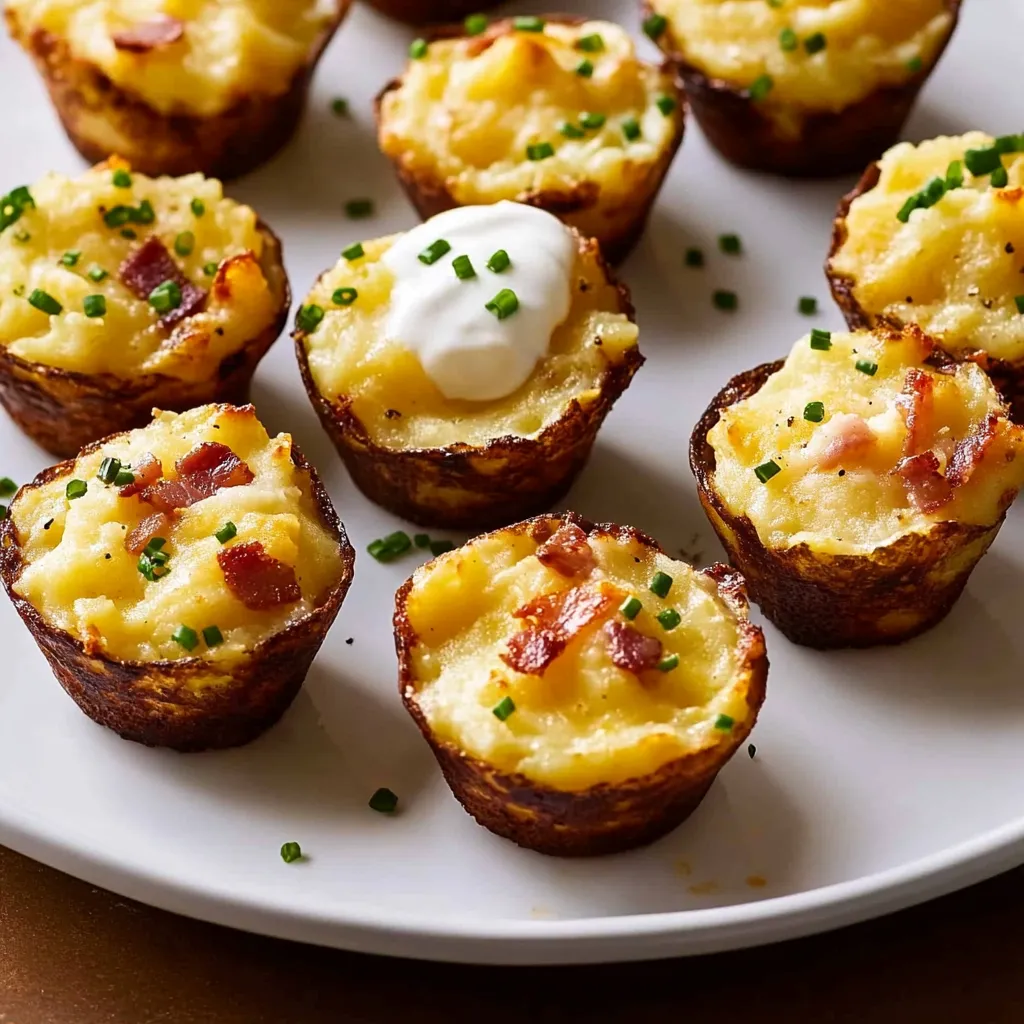
Leftover mashed potatoes are one of those foods that never tastes quite right when you reheat them - they get gluey or separated or somehow just wrong compared to how fluffy and creamy they were fresh from the pot. These mashed potato puffs solve that problem by transforming those sad leftovers into something completely different and arguably better than the original, creating crispy-on-the-outside, creamy-on-the-inside bites that disappear faster than you can make them. The genius is in mixing the cold mashed potatoes with eggs and cheese, portioning them into muffin tins, and baking them until they're golden and set, which creates individual portions with maximum crispy surface area. What makes these particularly versatile is how they work for breakfast, as a side dish, or as party appetizers, and how you can customize them with whatever mix-ins you have - bacon, ham, different cheeses, herbs, or vegetables. They're the rare recipe that makes leftovers feel like a bonus rather than something you're trying to use up out of obligation.
I started making these about six years ago the day after Thanksgiving when I had a huge bowl of leftover mashed potatoes that nobody wanted to eat. Reheating them in the microwave always made them weird and gummy, and I was tired of throwing away perfectly good food just because the texture was wrong. After searching for ideas online and experimenting with ratios, I landed on this version that's more crispy-cheesy-delicious bite than reheated potato. Now I sometimes make extra mashed potatoes on purpose just so I have leftovers to turn into these puffs the next day, which feels backwards but makes sense once you've tried them.
Ingredients and What Makes Them Essential
- Leftover Mashed Potatoes (2 cups, cold): Any kind of mashed potatoes work perfectly here, whether they were made with butter and cream, milk, sour cream, or even garlic and herbs. The potatoes should be cold and fairly thick - if they're very loose and liquidy, they won't hold their shape well. Homemade mashed potatoes taste best, but even instant mashed potatoes can work in a pinch.
- Large Eggs (2): Eggs act as the binder that holds everything together and helps the puffs set into cohesive portions rather than falling apart. They also add richness and help create structure. Make sure they're at room temperature so they incorporate more easily into the cold potatoes.
- Shredded Cheese (1 cup, divided): Any cheese you like works beautifully. Sharp cheddar adds tangy, bold flavor. Gruyère creates nutty, sophisticated taste. Parmesan adds salty umami. Mozzarella provides mild flavor and great melt. Use a combination if you want. Shred it yourself from a block rather than buying pre-shredded if possible, because pre-shredded cheese has anti-caking agents that prevent it from melting as smoothly.
- Fresh Chives (2 tablespoons, chopped): Chives add mild onion flavor and pretty green flecks throughout the puffs. You can substitute green onions, parsley, or skip the herbs entirely if you don't have them. Fresh herbs taste significantly better than dried in this application.
- Cooked Bacon or Ham (½ cup, diced, optional): Adding diced cooked bacon or leftover ham makes these more substantial and adds smoky, salty flavor. This is completely optional but highly recommended if you have leftover meat from your holiday meal. Cook bacon until crispy before crumbling, or dice ham into small pieces about ¼-inch.
- Salt and Black Pepper (to taste): You'll need to season the mixture because cold mashed potatoes often taste bland on their own. Start conservatively since the cheese and bacon (if using) also add saltiness. Taste the mixture and adjust until it's well-seasoned.
- Cooking Spray or Butter (for greasing pan): You need to grease your muffin tin well or the puffs will stick stubbornly when you try to remove them. Cooking spray works great, or you can butter each cup generously.
Step-by-Step Instructions
- Prepare Your Pan and Preheat:
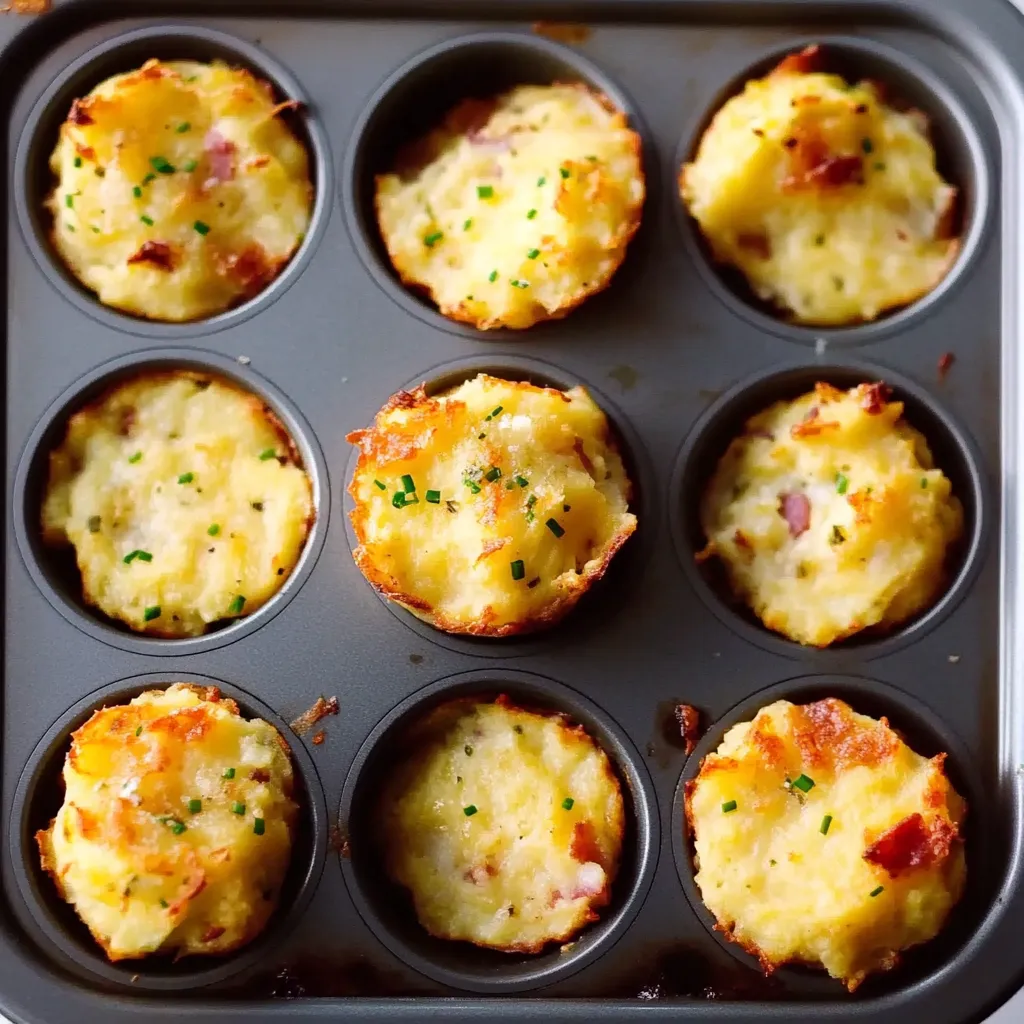
- Preheat your oven to 400°F and position a rack in the center. Generously grease a 12-cup muffin tin with cooking spray or softened butter, making sure to coat the bottom and sides of each cup thoroughly. If using a mini muffin pan, grease 24 cups. If using a specialty pan with rectangular compartments, grease all the sections. Proper greasing is crucial - these puffs have a tendency to stick, so don't skimp on this step. You can also line regular muffin cups with paper liners if you prefer, though the puffs won't get as crispy on the sides.
- Mix the Ingredients:
- Place your 2 cups of cold leftover mashed potatoes in a large mixing bowl. If the potatoes are very stiff from refrigeration, let them sit at room temperature for about 10 minutes to soften slightly, which makes mixing easier. Add 2 eggs to the bowl and use a fork or sturdy spoon to mix them thoroughly into the potatoes. The mixture should look uniform with the eggs completely incorporated. Add ¾ cup of your shredded cheese (reserving ¼ cup for topping), 2 tablespoons of chopped chives, and ½ cup of diced bacon or ham if using. Mix everything together thoroughly until evenly distributed. You should see cheese and bacon throughout rather than having them clumped in certain areas. Now taste the mixture - it should be well-seasoned and flavorful. Add salt and black pepper as needed, keeping in mind that it will taste more seasoned after baking when flavors concentrate.
- Fill the Muffin Cups:
- Using a spoon or small ice cream scoop, divide the potato mixture evenly among your prepared muffin cups. Each cup should be filled nearly to the top - about ¾ full for regular muffin tins or just about full for mini muffin tins. Use the back of your spoon to press down gently on each portion, compacting it slightly and smoothing the top. This helps them hold together better during baking. You don't need to pack them down hard, just eliminate any air pockets and create a relatively smooth surface. Sprinkle the remaining ¼ cup of shredded cheese evenly over the tops of all the puffs, distributing it so each one gets some cheese. This cheese will melt and create a golden, crispy topping.
- Bake Until Golden:
- Slide the muffin tin into your preheated 400°F oven and set a timer for 20 minutes for mini muffin tins or 25 to 30 minutes for regular muffin tins. You're watching for the puffs to become set and firm to the touch, heated all the way through, and golden brown on top. The cheese on top should be melted and starting to brown in spots. The edges should pull away slightly from the sides of the pan and look crispy. If you're unsure whether they're done, insert a toothpick into the center of one - it should come out clean without any wet potato mixture clinging to it. If the tops are browning too quickly before the centers are heated through, tent the pan loosely with aluminum foil and continue baking.
- Cool and Remove:
- Once the puffs are done, remove the pan from the oven and let it cool on a wire rack for about 5 minutes. This brief cooling period allows them to set up and firm slightly, making them much easier to remove without falling apart. After 5 minutes, run a small offset spatula or butter knife around the edge of each puff to loosen it from the pan. Gently lift each puff out using the spatula or your fingers. If they stick stubbornly, let them cool for another few minutes and try again. Transfer the puffs to a serving platter.
- Serve:
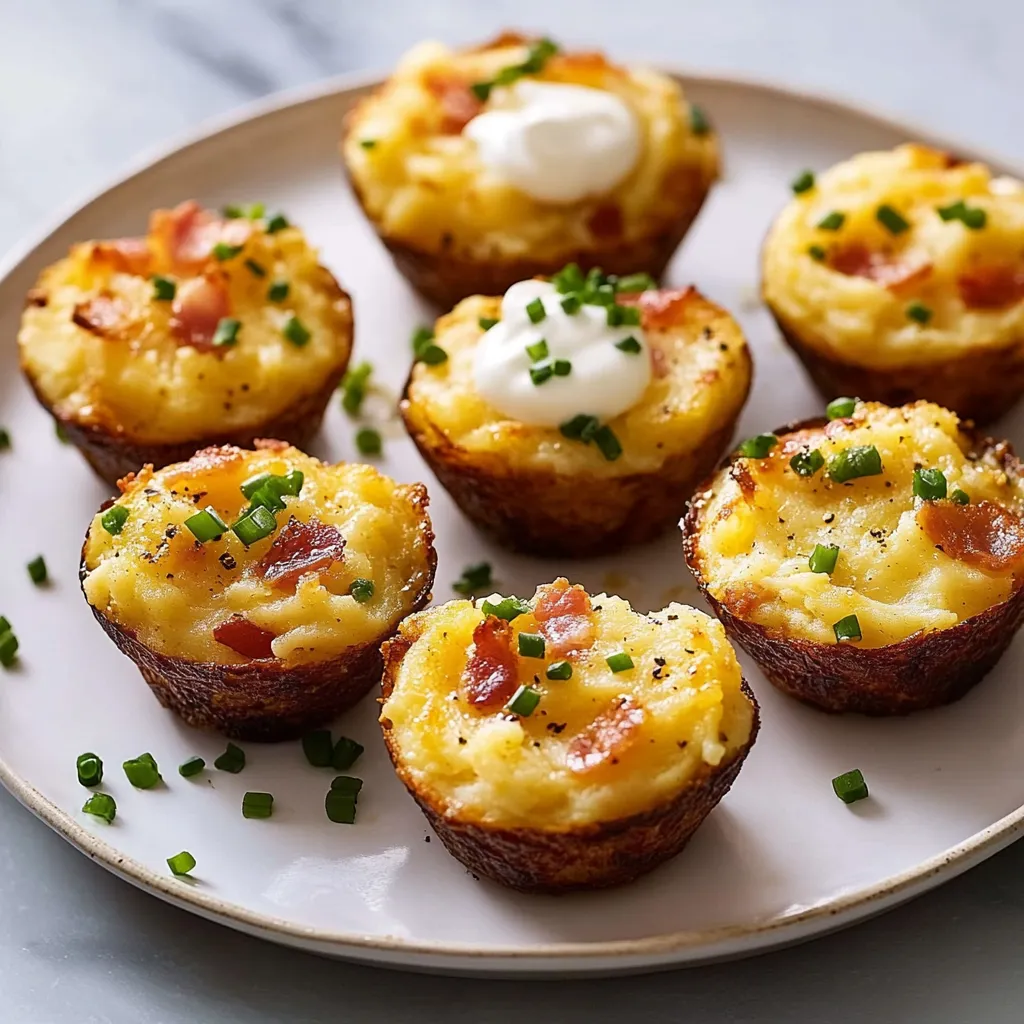
- Serve the mashed potato puffs warm while the centers are still creamy and the outsides are crispy. They're delicious on their own, or you can serve them with sour cream, extra chives, hot sauce, or whatever condiments appeal to you. For a loaded baked potato experience, top them with additional crumbled bacon, sour cream, and green onions. These are best eaten the day they're made while they're at peak crispiness, though they reheat reasonably well.
 Pin it
My kids normally won't eat leftover mashed potatoes no matter how I try to serve them, claiming they taste "weird" compared to fresh ones. But when I made these puffs for the first time and just set them on the table without explaining what they were, both kids ate three each before asking what was in them. When I told them they were made from the leftover mashed potatoes they'd refused to eat the day before, they looked skeptical but then asked if I could make them again. Now whenever we have mashed potatoes for dinner, they ask if we'll have enough leftovers to make puffs the next day. Turning rejected leftovers into requested food feels like a parenting victory.
Understanding Why Reheated Mashed Potatoes Taste Wrong
Mashed potatoes undergo textural changes when cooled and reheated that make them less appealing than when freshly made. When you first mash hot potatoes with butter and cream or milk, you're creating an emulsion where fat coats starch granules and everything feels light and fluffy. As the potatoes cool, the starch begins to retrograde - meaning the starch molecules that were separated by heat start linking back together, creating a firmer, more compact texture. The emulsion also breaks down as fat solidifies. When you reheat refrigerated mashed potatoes, especially in the microwave, the texture becomes either gluey and sticky if you heat them quickly, or separated and grainy if the emulsion completely breaks. The contrast with the light, fluffy texture you remember makes reheated mashed potatoes disappointing. By transforming them into puffs instead of trying to recreate their original state, you sidestep this problem entirely. The eggs and cheese create new structure, and baking at high heat creates crispy exteriors that distract from any textural issues in the potato base.
The Role of Eggs in Creating Structure
Eggs serve multiple crucial functions in these puffs beyond just helping ingredients stick together. When eggs are heated, their proteins denature and coagulate, forming a network that sets and becomes firm. This is the same process that turns liquid egg into solid scrambled eggs or custard. In these potato puffs, the eggs distributed throughout the cold potato mixture create structure as they cook, binding everything into cohesive portions that hold their shape when you remove them from the muffin tin. The proteins also trap air bubbles created by the water in the potatoes turning to steam, which helps the puffs rise slightly and become tender rather than dense. Eggs add richness through their fat content and contribute to browning through the Maillard reaction between their proteins and sugars. The ratio of eggs to potatoes matters - too few eggs and the puffs fall apart, too many and they become rubbery and egg-like. Two eggs for 2 cups of mashed potatoes hits the sweet spot where you get good binding without tasting eggy.
Why High Heat Creates Better Texture
Baking these puffs at 400°F rather than a more moderate temperature like 350°F makes a significant difference in the final texture. High heat causes rapid moisture evaporation from the outer surfaces, which creates crispy, golden exteriors. The Maillard reaction, which creates browning and complex flavors, occurs more intensely at higher temperatures. High heat also causes the cheese on top to melt quickly and brown in spots, creating that appealing golden crust. Inside the puffs, the high heat sets the egg proteins quickly, which helps them hold their shape. The water in the potatoes turns to steam, which creates some rise and helps achieve a light, tender interior rather than dense and heavy. Baking at lower temperatures would take longer, allowing more moisture to escape overall and resulting in drier puffs without the appealing crispy-creamy contrast. The trade-off is that you need to watch them more carefully at high heat to prevent burning.
The Importance of Cheese Selection
Different cheeses create dramatically different results in these puffs, so choosing based on the flavor and texture you want matters. Sharp cheddar provides bold, tangy flavor and melts well, creating gooey pockets throughout the puffs. It's the classic choice that most people recognize and enjoy. Gruyère melts beautifully into creamy smoothness and adds nutty, sophisticated flavor that makes these feel more elegant. Parmesan doesn't melt as gooily but adds intense umami and salty depth - it's best used in combination with a better-melting cheese. Mozzarella melts incredibly well and provides that satisfying cheese pull but has mild flavor, so it works best mixed with stronger cheeses. Pepper jack adds spicy kick. Fontina creates luxurious creaminess. Goat cheese adds tangy complexity but doesn't melt traditionally. For best results, use a combination of cheeses - maybe half sharp cheddar for flavor and half Gruyère for melt quality, or mostly cheddar with some Parmesan for umami boost. Avoid pre-shredded cheese if possible because the anti-caking agents prevent smooth melting.
Equipment Variations and How They Affect Results
The pan you use significantly impacts the final product. Standard 12-cup muffin tins create substantial puffs that work well as a side dish, baking in 25 to 30 minutes. Mini muffin tins create bite-sized appetizer portions with more crispy surface area per puff since there's more edge relative to interior, baking in about 20 minutes. Specialty pans with rectangular compartments create fun shapes but may require timing adjustments. Silicone muffin pans don't conduct heat as well as metal, which means less browning and potentially longer baking times. Cast iron muffin pans create excellent crispy exteriors but retain heat longer, so you need to remove the puffs promptly or they'll overcook. Non-stick muffin tins make removal easier but may not brown as well. For maximum crispiness, use metal pans and grease them very well rather than using paper liners which prevent the sides from crisping. If you don't have a muffin tin at all, you can drop spoonfuls onto a greased baking sheet and flatten them slightly to make patties, though they won't have the same structured shape.
Creative Variations and Flavor Combinations
The basic formula of mashed potatoes plus eggs plus cheese is a template for countless variations. For loaded baked potato puffs, use cheddar cheese, add crispy bacon, top with sour cream and chives after baking. For Southwest-inspired puffs, mix in diced jalapeños, corn, pepper jack cheese, and cilantro. For Italian versions, add chopped sun-dried tomatoes, basil, mozzarella, and Parmesan. For breakfast puffs, include cooked breakfast sausage and serve with maple syrup for dipping. For curry puffs, stir in curry powder, diced onion, peas, and serve with mango chutney. For Greek-inspired puffs, use feta cheese, chopped spinach, dill, and serve with tzatziki. For garlic herb puffs, mix in roasted garlic, fresh herbs, and Parmesan. For truffle puffs, add truffle oil and Gruyère. The key is balancing flavors and not overloading the mixture with too many add-ins, which can make the puffs fall apart. Stick to about 1 to 1½ cups of total add-ins for 2 cups of potatoes.
Storage, Reheating, and Make-Ahead Strategies
These puffs are definitely best fresh from the oven when they're at peak crispiness, but they store and reheat reasonably well. Let cooled puffs come to room temperature, then store them in an airtight container in the refrigerator for up to 3 days. The crispy exterior will soften during storage, but you can revive it through proper reheating. To reheat and re-crisp, arrange the puffs on a baking sheet and bake at 400°F for 10 to 15 minutes until heated through and the outsides crisp up again. Don't use the microwave for reheating if you care about texture - it makes them soft and soggy. For freezing, let the puffs cool completely, arrange them on a baking sheet and freeze until solid, then transfer to a freezer bag for up to 3 months. Reheat from frozen at 375°F for 20 to 25 minutes. You can also make the mixture ahead - combine all ingredients, cover tightly, and refrigerate for up to 24 hours before portioning and baking. The mixture may firm up quite a bit in the refrigerator, so let it sit at room temperature for 15 minutes before portioning to make it easier to work with.
Troubleshooting Common Problems
When these puffs don't turn out right, there's usually a fixable reason. If they stick to the pan, you didn't grease well enough - next time use more cooking spray or butter and make sure you coat every surface. If they fall apart when you try to remove them, let them cool longer in the pan before attempting removal. If they're dense and heavy, you didn't use enough eggs or you packed them too tightly into the cups - mix gently and fill loosely. If they're too dry, your original mashed potatoes were very thick, or you overbaked them - add a splash of milk to the mixture next time and watch baking time carefully. If they're pale instead of golden, your oven temperature is too low or you pulled them out too early - verify your oven's actual temperature and bake longer. If they taste bland, the mixture wasn't seasoned enough before baking - always taste and adjust seasoning. If they're rubbery, you used too many eggs - stick to the ratio of 2 eggs per 2 cups potatoes. Most issues come down to greasing, seasoning, or temperature control.
 Pin it
After making these mashed potato puffs countless times over the past several years, they've completely changed how I think about leftover mashed potatoes. Instead of viewing them as inferior reheated food I need to tolerate, I actually get excited about having them in the refrigerator because it means I can make puffs. The recipe is so flexible that I never make them exactly the same way twice - sometimes they're loaded with bacon and cheddar, sometimes they're simple with just Parmesan, sometimes I throw in whatever vegetables I have lurking in the crisper drawer. That flexibility means I can use them for any meal and customize to whatever the occasion demands. They've become one of my most reliable crowd-pleasers for potlucks and parties because everyone loves crispy, cheesy potato bites, and nobody realizes they started as leftovers. These represent exactly the kind of practical, delicious cooking that makes meal planning easier - taking something you'd normally waste or choke down reluctantly and transforming it into something you're genuinely happy to eat.
Frequently Asked Questions
- → Can I make these without bacon?
- Yes, absolutely. Just skip the bacon or ham and they'll still taste great. You can also add other mix-ins like green onions or sautéed mushrooms instead.
- → How do I store leftover potato puffs?
- Keep them in an airtight container in the fridge for up to 3 days. Reheat in the oven at 350°F for about 10 minutes to get them crispy again.
- → Can I freeze these?
- Yes, they freeze well. Let them cool completely, then freeze in a freezer bag for up to 2 months. Reheat from frozen in a 350°F oven for 15-20 minutes.
- → What cheese works best for this recipe?
- Parmesan and Gruyère are both great, but cheddar, mozzarella, or any cheese you have on hand will work fine. Just use something that melts well.
- → Do I need to use leftover mashed potatoes or can I make fresh ones?
- Either works, but leftovers are easier since they're already cooked and cooled. If making fresh, just be sure to let them cool down before mixing with the eggs.
- → Can I make these in a regular muffin tin instead of mini?
- Sure, but you'll get fewer puffs and they'll need to bake a bit longer, probably 25-30 minutes. Check that they're golden and set in the center.