
 Pin it
Baked brie has this reputation for being fancy party food, but the truth is it's one of the easiest appetizers you can make while still looking like you put in real effort. This cranberry version takes that molten, gooey wheel of cheese and tops it with tart cranberry sauce, then serves the whole thing nestled in a hollowed-out bread bowl that becomes edible dippers as guests pull off pieces and drag them through the melted cheese. The combination of creamy, rich brie with that bright, slightly tangy cranberry sauce creates a perfect sweet-savory balance that makes people keep reaching for just one more piece of bread. What makes this particularly smart for entertaining is that it's essentially self-contained - the bread bowl holds everything together and provides the dipping vehicle, so you're not scrambling for crackers or worrying about serving pieces. The entire thing takes maybe ten minutes of actual hands-on work, then it just bakes while you do other things, emerging from the oven golden and bubbling and guaranteed to become the centerpiece of your appetizer spread.
I started making this about eight years ago for a holiday party after seeing a similar version at a catering event, and it's become so expected now that people actually ask me to bring it. One year I decided to make something different instead, and I had three separate people text me asking where the brie bread bowl was. My brother-in-law, who normally doesn't care about appetizers and just wants to get to the main meal, will position himself near this and steadily work his way through half the bowl before dinner is even ready. Last Christmas my teenage niece, who claims to hate cheese, ate so much of this that she barely had room for dinner, then tried to convince everyone that brie "doesn't count" as regular cheese.
Ingredients and What Makes Them Essential
- Round Bread Boule (1 large, about 1 pound): This rustic round loaf forms both the serving vessel and half the eating experience. Sourdough is ideal because its sturdy crust holds up under the weight of the cheese without getting soggy, and its tangy flavor complements the brie beautifully. The bread should be at least 8 to 9 inches in diameter to properly accommodate a standard brie wheel. Look for a loaf with a thick, crusty exterior and dense crumb that won't fall apart when hollowed out. Fresh bakery bread works perfectly, but day-old bread is actually better because it's slightly dried out and less likely to get soggy from the melted cheese.
- Cooking Spray or Olive Oil (for brushing): A light coating of oil helps the exposed bread surfaces crisp up and turn golden in the oven rather than drying out and getting hard. Cooking spray makes this easy because you get even coverage without using too much oil. If you prefer, you can brush on olive oil or melted butter with a pastry brush for even richer flavor.
- Brie Wheel (8 ounces, whole wheel): The star of this appetizer, brie is a soft French cheese with a white, edible rind and a creamy interior that becomes wonderfully melty when heated. Buy a whole wheel rather than a wedge because you need the round shape to fit properly in the bread bowl. Look for triple-cream brie if you can find it because it has a higher fat content that makes it even more luxuriously creamy. The wheel should feel slightly soft when you press it gently, not rock-hard, which indicates it's ripe and ready. Avoid any brie that smells strongly of ammonia, which means it's overripe.
- Cranberry Sauce (½ to ¾ cup): Either homemade or canned cranberry sauce works beautifully here. The whole-berry style is preferable to the jellied kind because the berry texture adds visual interest and more complex flavor. The tartness of cranberries cuts through the richness of the brie perfectly, preventing the dish from feeling too heavy or one-dimensional. If using canned, go for a good-quality brand that has actual cranberry pieces visible. If using homemade, slightly thicker sauce works better than very liquidy sauce which might run off the cheese.
- Fresh Thyme (1 to 2 sprigs, leaves stripped): Fresh thyme adds an herbal, earthy note that bridges the sweet cranberries and savory cheese. The tiny leaves look pretty scattered on top too. Don't substitute dried thyme which doesn't have the same fresh, bright quality. If you can't find thyme or don't like it, you can skip it entirely or use fresh rosemary instead, though rosemary is stronger so use less.
Step-by-Step Instructions
- Prepare Your Bread Bowl:
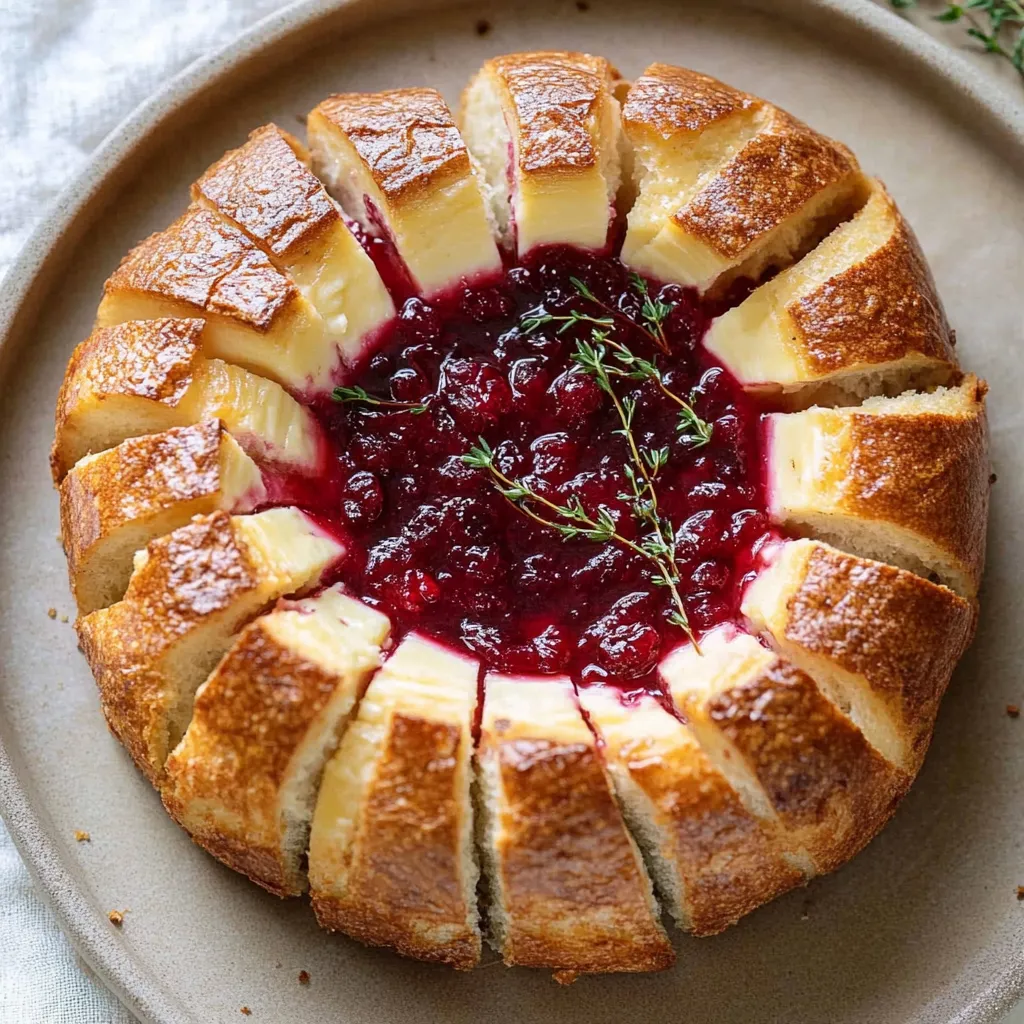
- Start by preheating your oven to 350°F so it's ready when you need it. Place your round bread boule on a cutting board. Using a sharp serrated knife, carefully cut off the top quarter of the loaf - imagine you're slicing off a hat from the bread. You want to remove enough to create an opening but not so much that you don't have enough bread left for the bowl structure. Set this bread "lid" aside because you'll use it later for dipping. Now look at the cut surface of your bread and use your knife to score a circle about 1 inch in from the edge, cutting straight down about 2 inches deep. Be careful not to cut all the way through the bottom of the loaf - you're creating a guide for hollowing out the center. Use your hands to pull out the soft interior bread from within this scored circle, creating a cavity that will hold your brie wheel. Pull out enough bread to create a space that's roughly the same diameter as your brie wheel and about 2 inches deep. You'll remove quite a bit of bread - save all these pieces in a bowl because they're perfect for toasting and serving alongside the finished dish or using later for breadcrumbs or croutons. Once you've created your cavity, place the brie wheel inside to test the fit. It should nestle in snugly without too much extra space around the edges. If the fit is too tight and the brie won't sit flat, pull out a bit more bread. If there's too much space around the brie, that's okay - it'll still work fine.
- Score the Bread for Pulling:
- This step creates those pull-apart pieces that make serving so easy and fun. With your bread bowl still sitting on the cutting board and the brie wheel temporarily removed, take your serrated knife and make diagonal cuts all the way around the outer edge of the bread, spacing them about 1 to 1½ inches apart. Each cut should go from the top edge down toward the bottom at an angle, cutting almost all the way through the bread but stopping about ½ inch from the bottom so the loaf stays intact as one piece. Continue making these angled cuts all the way around the perimeter of the bread bowl. You'll end up with a ring of bread wedges that are still attached at the base but can be easily pulled off one at a time. These scored wedges are what people will tear off and use to scoop up the melted brie and cranberry sauce. Make sure your cuts go deep enough that the wedges will pull away easily, but don't cut completely through or your bread bowl will fall apart. Take your time with this step and make your cuts as even as possible so each wedge is roughly the same size.
- Prepare the Brie and Assemble:
- Take your wheel of brie and use a sharp knife to carefully trim off the top rind in a circular pattern, removing just the white coating from the top surface but leaving the sides intact. You want to expose the creamy cheese underneath without cutting away too much of the actual cheese. This step is important because it allows the brie to ooze out beautifully when melted rather than staying trapped inside the rind. Some people skip this step, but removing at least the top rind makes a significant difference in how gooey and accessible the melted cheese becomes. Once trimmed, nestle the brie wheel into the cavity you created in the bread bowl, pressing it down gently so it sits securely. The top of the brie should be roughly level with the top of the bread. Place the entire bread bowl on a rimmed baking sheet lined with parchment paper or aluminum foil - this catches any cheese or cranberry that might drip during baking and makes cleanup easier. Lightly spray or brush the exposed cut edges of the bread with cooking spray or olive oil, coating all those scored wedges you created. This helps them toast up golden and crispy rather than drying out.
- Add Toppings and Bake:
- Spoon your cranberry sauce directly onto the top of the brie, spreading it out to cover the entire exposed cheese surface. You want a generous layer - about ½ to ¾ cup total - that will create a nice tart topping on every bite of cheese. If your cranberry sauce is very thick, you can warm it slightly in the microwave for 10 to 15 seconds to make it easier to spread. Strip the leaves from 1 to 2 sprigs of fresh thyme and sprinkle them over the cranberry sauce for that final herbal touch. At this point, your bread bowl should look beautiful and ready to bake - golden bread surrounding a white and red center. Carefully transfer the baking sheet to your preheated 350°F oven, making sure it sits level so the cranberry sauce doesn't slide off. Bake for 20 to 25 minutes, checking after 20 minutes. You're looking for the bread to turn golden brown and toasty around all those scored edges, and for the brie to become soft and melty in the center. You'll know the brie is ready when you can see it starting to ooze slightly at the sides and the top looks glossy and liquidy under the cranberry sauce. The cranberries might bubble a bit around the edges, which is perfect. If the bread is getting too dark before the cheese is fully melted, tent the top loosely with foil and continue baking.
- Finish and Serve:
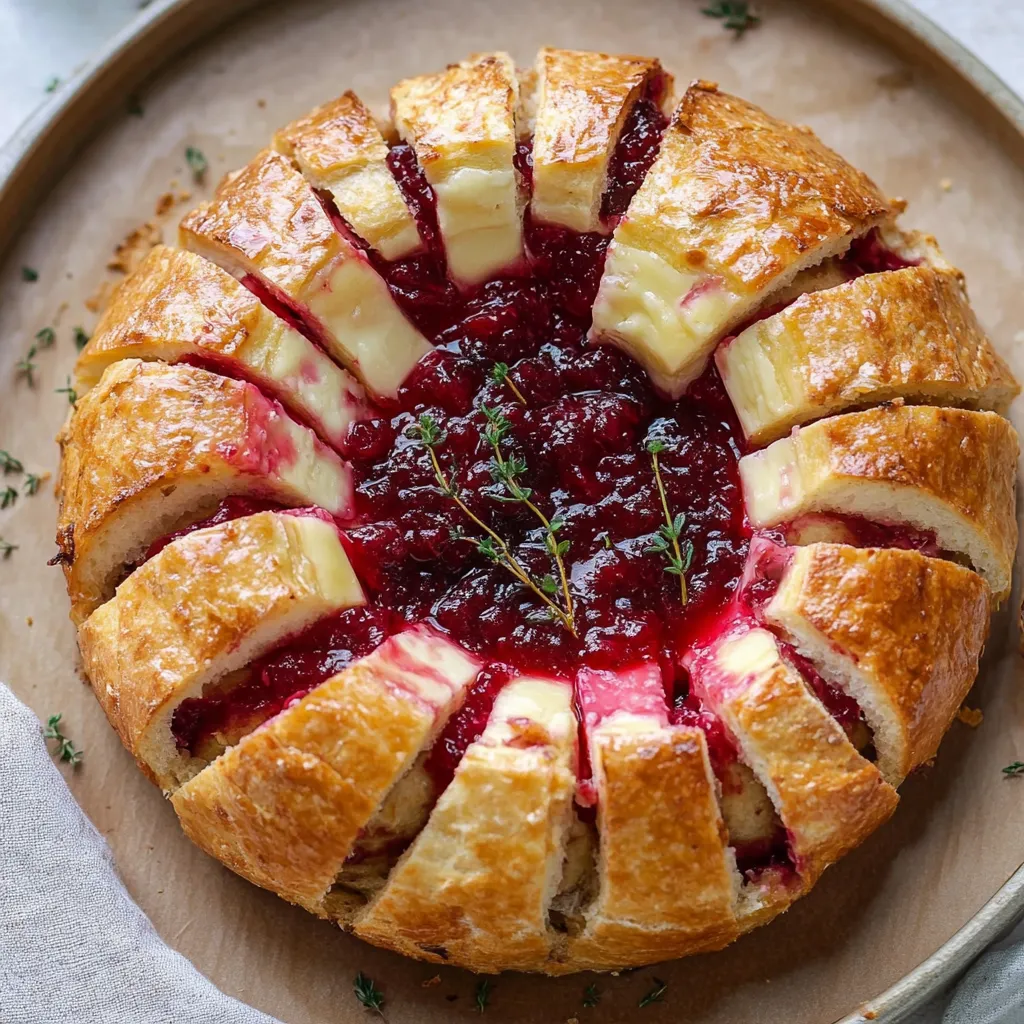
- Once the bread is golden and toasted and the brie is gloriously melted, remove the baking sheet from the oven and let it cool for about 5 minutes. This brief cooling time allows the cheese to set just slightly so it's not dangerously hot and molten when people start eating, while still remaining gooey and spreadable. Transfer the entire bread bowl to a serving board or large platter - you can use a large spatula to move it, or if your baking sheet is presentable, you can serve it directly from there. Place the bread "lid" you cut off earlier alongside the bowl, either whole or torn into pieces. You can also arrange those chunks of interior bread you removed around the base of the bowl. To serve, demonstrate by pulling off one of the scored bread wedges and dragging it through the melted brie and cranberry. The cheese should be stretchy and gooey, coating the bread beautifully. Guests will immediately understand the concept and start pulling off their own pieces. Encourage people to get both cheese and cranberry sauce on each piece for the full flavor experience. As people eat their way through the bread wedges, they can start breaking off chunks from the bottom and sides of the bowl too - eventually, most of the bread gets eaten along with all the cheese and cranberries.
 Pin it
The first time I made this, I was nervous about the bread bowl construction because I'm not particularly skilled with knife work and worried I'd cut through the bottom or make the wedges uneven. I proceeded very slowly and carefully, and honestly, it looked a bit rough when I finished scoring it. But after baking, when that bread turned golden and toasty and the cheese was bubbling, all those imperfections disappeared and it looked gorgeous anyway. My husband, who usually couldn't care less about presentation, actually pulled out his phone to take a picture before people started eating. That taught me that this recipe is incredibly forgiving - even if your knife work isn't perfect, the final result still looks and tastes amazing. Now I'm much more relaxed about it and can prep the bread bowl in just a few minutes.
Understanding Different Types of Brie and How They Melt
Not all brie is created equal, and understanding the differences helps you choose the right one for baking. Traditional French brie from the Brie region has a complex, earthy flavor with a bit of funkiness that develops as it ages. Domestic American brie tends to be milder and less pungent, which many people actually prefer for cooking since it won't overpower other flavors. Triple-cream brie contains at least 75% butterfat in its dry matter, making it incredibly rich and luxurious when melted - this is ideal for baked brie because that high fat content creates that gorgeously gooey texture everyone loves. Regular brie has less fat and doesn't get quite as liquid when heated, though it still melts nicely. The age of the brie matters too - very young brie is firmer and less complex, while properly aged brie has a runny center even before heating and more pronounced flavor. For this recipe, aim for a brie that's ripe but not overripe - it should give slightly when pressed gently but not be completely liquid inside already. Overripe brie that smells strongly of ammonia has an unpleasant taste that baking only intensifies. When shopping, don't be afraid to ask the cheese counter staff for their recommendation on a brie that's perfect for baking.
The Role of Cranberries in Sweet-Savory Pairings
Cranberries have a unique flavor profile that makes them perfect for bridging sweet and savory dishes. Their natural tartness comes from high levels of benzoic acid and vitamin C, creating that puckering quality that prevents them from tasting cloying when sweetened. This acidity cuts through rich, fatty foods like cheese and makes each bite feel lighter and more refreshing rather than heavy. The slight bitterness in cranberries also balances sweetness, creating complexity that your palate finds more interesting than one-dimensional flavors. Cranberries contain compounds called tannins that give them an astringent quality similar to red wine, which is why they pair so beautifully with cheese just like wine does. The bright red color provides visual appeal that makes food more appetizing - our brains associate that vibrant color with freshness and ripeness. Beyond flavor, cranberries add textural interest with their slight resistance when you bite into whole berries. In this recipe specifically, the tart cranberry sauce prevents the brie from feeling too heavy and rich, while the sweetness from whatever you've used to sweeten your cranberries plays off the savory bread and mild cheese. This balance is what makes people keep reaching for more - the flavors work together rather than competing.
Bread Selection and Why It Matters for Structure
The bread you choose fundamentally impacts whether this recipe succeeds or becomes a soggy disaster. Artisan bread boules made with traditional methods and minimal ingredients have a thick, crusty exterior created by baking at high temperatures, which forms a sturdy structure that won't collapse when filled with cheese. The crust needs to be thick enough and strong enough to maintain its shape even as the cheese melts and adds moisture. Inside, the crumb should be relatively dense and chewy - breads with very open, holey crumb structure don't work as well because there's not enough substance to hold everything together. Sourdough is ideal because the fermentation process creates a chewy, dense crumb and the natural acidity adds flavor that complements both the brie and cranberries. Other good options include rustic Italian bread, French country bread, or any crusty artisan round. Avoid soft sandwich bread, brioche, or anything with a tender crumb because these don't have the structure to support the cheese weight and will become soggy from the moisture. Day-old bread actually works better than completely fresh bread because it's slightly dried out, making it less likely to absorb moisture and get mushy. If you only have fresh bread, you can dry it slightly by leaving it uncovered at room temperature for several hours before using.
Timing This Appetizer for Entertaining
Getting the timing right makes the difference between serving this at its absolute best versus serving mediocre lukewarm brie. Ideally, you want this to come out of the oven about 5 minutes before you plan to serve it, allowing just enough time to cool slightly while remaining hot and gooey. If you're hosting at home, this is easy to manage - just pop it in the oven about 30 minutes before cocktail hour begins. For parties where you're transporting food, the strategy changes. Assemble the entire bread bowl completely at home - hollow it out, score it, add the brie and cranberries - then wrap it carefully and transport it assembled but unbaked. When you arrive at the party, find the host and ask to use their oven for 25 minutes. Most hosts are happy to accommodate because it means they get to serve fresh-baked appetizers without doing any work. If that's not possible, you can partially bake it at home for 15 minutes, transport it carefully (it will stay warm for about 30 to 45 minutes if wrapped in foil), then finish baking at your destination for the final 10 minutes to reheat and freshen it up. Never bake it completely and let it sit for hours before serving - the magic of this dish is that molten cheese, and once it cools and solidifies, reheating never quite recaptures that perfect texture.
Creative Variations Beyond Cranberry
While cranberry is classic and perfect for the holidays, this bread bowl format works beautifully with countless other flavor combinations throughout the year. For a savory version, skip the cranberries entirely and top the brie with pesto, sun-dried tomatoes, and toasted pine nuts, then drizzle with balsamic glaze after baking. During fig season, use fig jam instead of cranberry sauce and sprinkle with crispy prosciutto pieces and fresh thyme for an elegant autumn appetizer. In summer, top the brie with apricot preserves and fresh basil, or try peach jam with crushed pistachios. For a more indulgent version, add a layer of caramelized onions under the cranberries and top with candied pecans. Honey and walnut is another classic combination - drizzle honey over the brie before baking and top with toasted chopped walnuts after it comes out. For a sweet breakfast or brunch version, use raspberry or strawberry jam instead of cranberries and serve with croissant pieces instead of crusty bread. The basic technique remains the same regardless of what you put on top, so once you've mastered the bread bowl construction, experiment with whatever flavor combinations appeal to you or work with the season and what you have available.
The Appeal of Interactive, Communal Food
There's a psychological reason why dishes like this baked brie bread bowl are so popular at parties beyond just tasting good. Food that requires physical interaction and sharing from a communal vessel encourages socializing in ways that individually plated appetizers don't. When people gather around this bread bowl, pulling off pieces and reaching across each other, they naturally start talking and interacting. The act of eating with your hands is more casual and relaxed than formal utensil dining, which lowers social barriers and makes conversations flow more easily. Sharing food from one dish creates a sense of intimacy and community - anthropologists have studied how communal eating strengthens social bonds and makes people feel connected. The interactive element also makes the food more memorable than standard finger foods because people remember the experience of participating in eating it, not just the taste. This is why fondue, charcuterie boards, and dishes like this baked brie become centerpieces at gatherings - they're designed for lingering and socializing, not quickly grabbing something and walking away. As a host, serving a dish like this actually makes your job easier because it keeps guests entertained and occupied, reducing the pressure on you to constantly circulate and keep conversations going.
Proper Storage and What to Do with Leftovers
Let's be honest - there are rarely leftovers when you serve this because people devour it. But if you somehow do end up with remnants, proper storage will help you enjoy them rather than wasting food. Once the bread bowl has cooled to room temperature, wrap any remaining bread pieces tightly in plastic wrap or place them in an airtight container. The bread will have absorbed some cheese and oil, making it quite rich and flavorful even on its own. Store it in the refrigerator for up to 3 to 4 days. The bread won't be crispy anymore after refrigeration - moisture from the cheese makes it softer - but it's still delicious. To revive leftovers, place pieces on a baking sheet and toast them in a 350°F oven for 5 to 10 minutes until crisped up and heated through. You can also cut the bread into cubes and make croutons by tossing them with olive oil and toasting until golden and crispy. These cheese-flavored croutons are incredible on salads or in soup. Another option is making grilled cheese sandwiches using the leftover bread - the cheese residue already in the bread means you need less additional cheese. If you have leftover cranberry sauce separately, it keeps in the refrigerator for up to two weeks in an airtight container and can be used on toast, stirred into oatmeal, or as a condiment for sandwiches.
 Pin it
After making this cranberry baked brie countless times over the years, it's earned a permanent place in my holiday entertaining rotation. There's something deeply satisfying about pulling this gorgeous, golden bread bowl out of the oven and watching people's faces light up when they realize they get to pull it apart and dig in. The combination of that crispy, toasted bread with molten cheese and tart cranberries hits every note - crunchy, creamy, sweet, savory, rich, bright - all in one bite. What I love most is how this recipe makes me look like a much more accomplished cook than I actually am. People always seem impressed and ask for the recipe, then they're almost disappointed when they realize how simple it is. But that's the beauty of good entertaining food - maximum impact with minimum effort. Whether you're hosting a formal holiday party, a casual game night, or just want to make a regular Tuesday feel special, this baked brie bread bowl delivers that cozy, indulgent feeling that makes people happy to be wherever they are, eating whatever you've made. That's what the best recipes do - they create moments and memories around food, not just fill stomachs.
Frequently Asked Questions
- → Can I use a different type of cheese instead of brie?
- Yes, camembert works great as a substitute. You can also try goat cheese or any soft melting cheese you prefer.
- → What if I don't have cranberry sauce?
- Any jam or fruit preserve works well. Try raspberry, apricot, or fig jam for different flavors.
- → How do I keep the bread from getting too hard?
- Don't overbake it and make sure to spray the outside with cooking spray. Watch it after 20 minutes to check the browning.
- → Can I make this ahead of time?
- You can prep the bread bowl and cheese a few hours early, then bake right before serving. The cheese tastes best when freshly melted.
- → What should I serve with baked brie?
- The bread pieces are perfect for dipping, but you can also add crackers, apple slices, or grapes on the side.
- → Do I really need to remove the brie rind?
- The rind is edible, but removing it helps the cheese melt more evenly and gives you that smooth, creamy texture.