
 Pin it
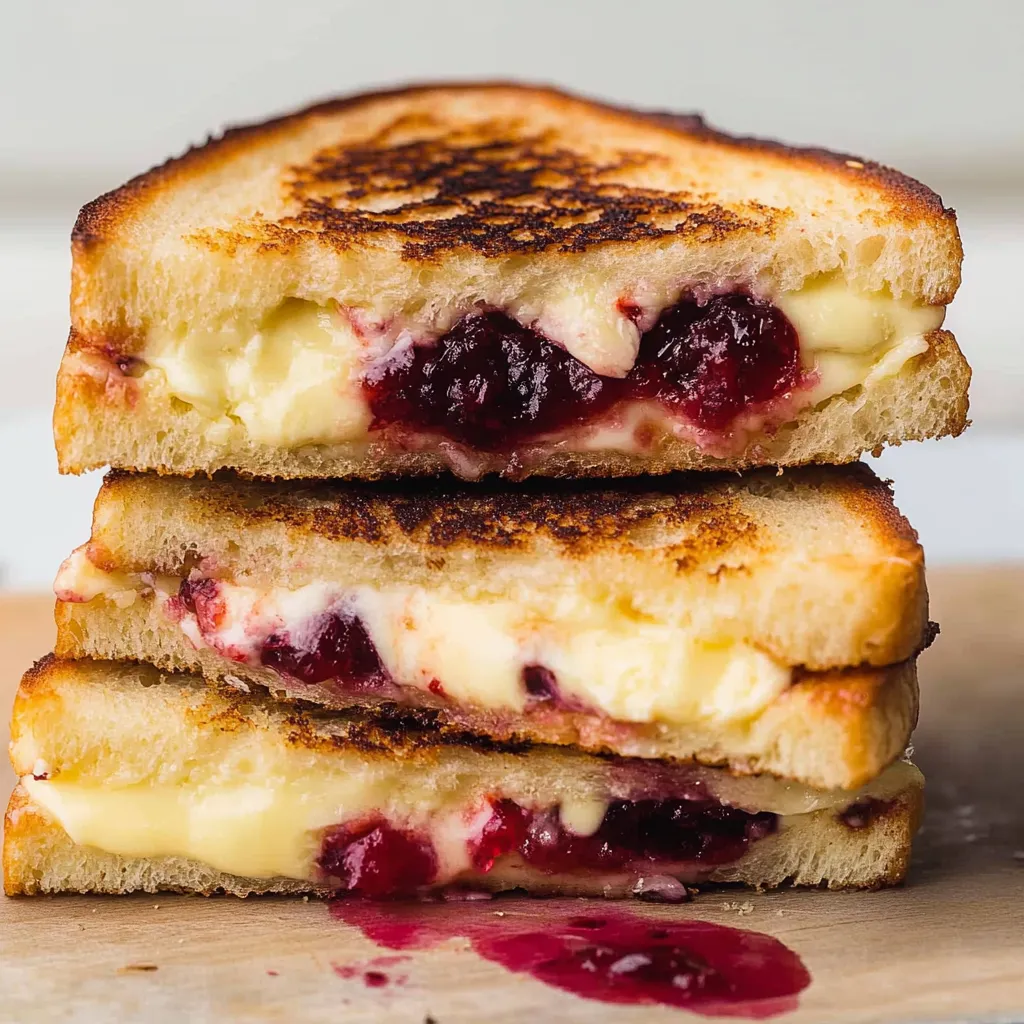
Grilled cheese sandwiches are comfort food personified, but adding cranberry sauce and brie transforms them from basic childhood lunch into something sophisticated enough for adults while still being simple enough to make when you're tired and using up Thanksgiving leftovers. The tart, bright cranberry sauce cuts through the rich, creamy brie beautifully, creating a sweet-savory balance that's more interesting than plain cheese, while the addition of shredded mozzarella ensures you get that satisfying cheese pull without the brie being too mild or subtle. Buttered sourdough bread toasted until golden and crispy provides the perfect vehicle, with its tangy flavor complementing both the cranberries and the cheese. What makes this particularly appealing for the post-Thanksgiving period is how it uses up two common leftovers - cranberry sauce and cheese from the appetizer board - in a way that feels like a completely new meal rather than reheated holiday food.
I started making cranberry brie grilled cheese about eight years ago the day after Thanksgiving when I had a container of homemade cranberry sauce and some leftover brie from the cheese plate that nobody wanted to eat plain. The combination seemed obvious once I thought about it - cranberry and brie are classic pairings on cheese boards and in baked brie recipes - so why not in a grilled cheese. That first sandwich was so good that it became a post-Thanksgiving tradition, and now I actually make extra cranberry sauce on purpose so I have enough for sandwiches the following week.
Ingredients and What Makes Them Essential
- Sourdough Bread (4 slices, about ½-inch thick): Sourdough's tangy flavor complements both the tart cranberries and rich cheese perfectly. The sturdy, crusty texture holds up to melted cheese and sauce without getting soggy. You can substitute any crusty bread, sandwich bread, or even cranberry pecan bread for extra festivity.
- Leftover Cranberry Sauce (4 tablespoons, about 1 tablespoon per sandwich): Either homemade or canned cranberry sauce works beautifully. The whole-berry style is preferable to the jellied kind because the texture is more interesting. The tartness is what makes this sandwich special, providing contrast to the rich cheese.
- Brie Cheese (4 ounces, sliced): Brie adds creamy, buttery, mild cheese flavor with a slight earthy quality. Remove the rind if you prefer, though it's edible and adds texture. The brie should be cold when slicing but will melt beautifully during cooking. Room temperature brie is too soft to slice neatly.
- Shredded Mozzarella (1 cup): Mozzarella provides that satisfying cheese pull and melts more dramatically than brie alone. It also adds mild, milky flavor and makes the sandwich more substantial. Pre-shredded works fine though freshly shredded melts more smoothly.
- Salted or Unsalted Butter (2 to 3 tablespoons, softened): Butter spread on the bread creates that golden, crispy exterior when grilled. Softened butter spreads more easily than cold butter without tearing the bread. If using unsalted butter, consider adding a pinch of salt to the sandwich.
- Flaky Sea Salt (optional, for finishing): Just a pinch of flaky salt on the cheese before closing the sandwich adds textural crunch and enhances all the other flavors. This is optional but highly recommended.
Step-by-Step Instructions
- Prepare Your Work Area:
- Set up an assembly line for easy sandwich building. Lay out all 4 slices of bread on a large cutting board or clean counter. Have your softened butter, cranberry sauce, sliced brie, and shredded mozzarella within easy reach. This makes assembly much faster and prevents you from having to stop and search for ingredients with buttery hands.
- Butter the Bread:
- Take your softened butter and spread it generously on one side of each slice of bread, going all the way to the edges. You want good coverage because the butter is what creates that golden, crispy exterior. Don't be stingy - about a tablespoon of butter per two slices. Make sure the butter layer is even so the bread browns uniformly. If your butter is too cold and tears the bread, let it sit at room temperature for a few more minutes to soften further.
- Add Cranberry Sauce:
- Flip 2 of the buttered bread slices over so the buttered side is face-down and the unbuttered side is facing up - these will be your bottom slices. Spread about 1 tablespoon of cranberry sauce on each unbuttered side, spreading it evenly to cover most of the surface. Don't go all the way to the very edges or it might squeeze out when you press the sandwich down during cooking. You want enough cranberry sauce to taste it in every bite but not so much that it makes the sandwich wet and drippy.
- Layer the Cheese:
- On top of the cranberry sauce, arrange several slices of brie, overlapping them to cover the surface. You're using about 2 ounces of brie per sandwich, which is roughly 3 to 4 slices depending on how thick you cut them. On top of the brie, sprinkle about ½ cup of shredded mozzarella, distributing it evenly over the brie. The mozzarella fills in the gaps between brie slices and ensures you get melty cheese throughout. If you're using flaky sea salt, sprinkle just a tiny pinch over the cheese now. Don't overdo it - a little flaky salt goes a long way.
- Close the Sandwiches:
- Take your remaining 2 slices of buttered bread and place them butter-side-up on top of the cheese-covered slices, creating two complete sandwiches. Press down very gently just to help everything stick together. The butter should be on the outside surfaces of both the top and bottom of each sandwich - this is what will brown beautifully when cooked.
- Heat the Pan:
- Place a large skillet - cast iron works beautifully but any heavy-bottomed skillet is fine - over medium heat. Let it preheat for about 2 minutes. You want medium heat, not high heat, because you need enough time for the cheese to melt before the bread burns. If you go too hot, you'll end up with burnt bread and cold cheese in the center.
- Cook the Sandwiches:
- Carefully transfer both assembled sandwiches to the hot skillet. If your skillet isn't large enough for both, cook them one at a time. Let them cook undisturbed for about 3 to 4 minutes. Resist the urge to press down on them with your spatula constantly - just let them cook. After 3 to 4 minutes, lift the edge of one sandwich with a spatula to check the bottom. It should be golden brown and crispy. If it's pale, give it another minute. If it's getting too dark, reduce your heat slightly. Once the bottom is golden brown, carefully flip both sandwiches using a wide spatula. Cook the second side for another 3 to 4 minutes until it's also golden brown and the cheese is completely melted. You can gently press down on the sandwiches with your spatula now if you want them more compressed, but be careful not to squeeze out all the filling.
- Check and Serve:
- After the second side is golden, lift one sandwich slightly and peek at the cheese situation. The brie and mozzarella should be visibly melted and gooey. If the bread is done but the cheese isn't quite melted enough, reduce the heat to low, cover the pan with a lid, and let them cook for another minute or two - the trapped heat will finish melting the cheese without burning the bread. Once everything is perfect, transfer the sandwiches to a cutting board and let them rest for about 30 seconds - this brief cooling prevents the molten cheese from immediately running out when you cut them. Cut each sandwich in half diagonally for easier eating and more surface area for that satisfying cheese pull. Serve immediately while hot and crispy.
 Pin it
My husband claims he doesn't like cranberry sauce and always passes on it at Thanksgiving dinner, insisting it's "weird sweet stuff on the side." The first time I made him one of these grilled cheese sandwiches without telling him what was in it, he ate the whole thing and asked what kind of cheese I'd used because it tasted different. When I told him there was cranberry sauce in there, he looked at me like I'd betrayed him, but then grudgingly admitted it was good "in this context." Now he'll eat cranberry sauce in sandwiches but still won't touch it as a side dish, which I find hilarious. Converting the cranberry sauce hater through grilled cheese feels like a personal victory.
Understanding Why Brie and Cranberry Work So Well Together
Brie and cranberry is a classic flavor pairing that appears on cheese boards, in baked brie recipes, and in countless holiday appetizers for good reason - the contrast between rich, creamy cheese and tart, bright fruit creates balance that makes both elements taste better. Brie is a soft-ripened cheese with mild, buttery, slightly earthy flavor and creamy texture. On its own it can feel quite rich and one-dimensional, especially when melted. Cranberries are naturally tart and slightly bitter, with high acid content that cuts through fat and richness. When you combine them, the acid in the cranberries brightens the mild brie and prevents it from coating your mouth with cloying richness, while the creamy cheese tempers the cranberries' aggressive tartness. The slight sweetness in cranberry sauce (from whatever sugar you've added) bridges the savory cheese and tart fruit. This sweet-savory-tart combination hits multiple taste receptors simultaneously, which your brain perceives as more complex and interesting than single-note flavors. The same principles apply whether the combination is on a cracker, baked in pastry, or in a grilled cheese sandwich.
The Science of Perfect Grilled Cheese
Making exceptional grilled cheese requires understanding several key principles. First, the bread must be buttered on the outside and cooked butter-side-down so the fat directly contacts the hot pan, creating even browning through the Maillard reaction and fat conducting heat. Mayo can substitute for butter but provides different flavor and browning. Second, medium heat is crucial because you need time for heat to penetrate to the cheese before the bread burns - too hot and you get burnt bread with cold cheese, too low and bread gets tough without proper browning. Third, the cheese must melt - using cold cheese straight from the refrigerator helps because if cheese is room temperature, it might melt and run out before the bread browns properly. Fourth, not pressing down constantly is important because pressing squeezes out moisture and filling. Fifth, letting the sandwich rest briefly before cutting prevents immediate cheese leakage. These principles apply whether you're making simple American cheese on white bread or fancy combinations like this cranberry brie version.
Why Sourdough Works Particularly Well
Sourdough bread brings several advantages to grilled cheese beyond just being trendy. The natural fermentation process that creates sourdough produces lactic acid and acetic acid, giving the bread its characteristic tangy flavor that complements both sweet and savory ingredients. This tanginess specifically enhances tart cranberries and rich cheese, creating harmony rather than competition. Sourdough's sturdy, chewy crumb with a crispy crust holds up to melted cheese and wet fillings without becoming soggy as quickly as soft sandwich bread might. The crust becomes incredibly crispy when buttered and grilled, creating textural contrast with the soft interior and melted cheese. Sourdough's complex flavor from fermentation makes it more interesting than plain white bread. The slightly acidic pH actually helps cheese melt more smoothly. Many sourdough loaves have an open, irregular crumb structure that creates nooks for melted cheese to pool. If you don't have sourdough, any crusty artisan bread works well, while soft sandwich bread creates a completely different but still delicious experience.
The Role of Mozzarella in Cheese Combinations
Adding mozzarella to brie might seem redundant - why use two cheeses when one would work - but each serves a different purpose. Brie provides rich, creamy, complex flavor with its characteristic earthiness and buttery quality. However, brie doesn't melt dramatically - it softens and becomes gooey but doesn't create those stretchy cheese pulls that make grilled cheese so satisfying. Brie also has subtle flavor that can get lost in a sandwich with bold cranberry sauce. Mozzarella, conversely, is mild and milky in flavor but melts spectacularly, creating long stretchy strands when you pull the sandwich halves apart. It also adds substance and makes the sandwich more filling. The combination gives you brie's flavor complexity plus mozzarella's melting properties. This is a common technique in cooking - combining cheeses with different melting properties and flavors to achieve results neither could alone. Gruyere and mozzarella is another classic combination for the same reasons.
Creative Variations and Add-Ins
While the basic cranberry brie version is delicious, this sandwich template accommodates countless variations. For added protein, layer in sliced leftover turkey, crispy bacon, or prosciutto between the cheese layers. For textural contrast, add fresh arugula or baby spinach after cooking - the residual heat wilts them slightly. For more fruit, include thin apple slices which add sweet crunch. For nuts, sprinkle chopped toasted pecans or walnuts on the cheese before closing. For different cheese profiles, substitute or add white cheddar for sharpness, goat cheese for tang, gruyere for nuttiness, or havarti for creaminess. Whipped goat cheese or whipped feta spread on the bread before adding cranberries creates tangy creaminess. For different fruit, use fig jam, apple butter, or whole grain mustard instead of cranberry sauce. For Mediterranean versions, use pesto and sun-dried tomatoes. Each variation changes the character while maintaining the basic structure of buttered bread grilled with cheese and complementary fillings.
Troubleshooting Common Grilled Cheese Problems
When grilled cheese doesn't turn out right, there's usually a fixable cause. If the bread burns before the cheese melts, your heat is too high or you're using too-thick bread - reduce heat to medium or medium-low and slice bread thinner. If the cheese doesn't melt, your heat is too low or you didn't cook it long enough - increase heat slightly and give it more time, or cover the pan to trap heat. If the bread is greasy and tough, you used too much butter or your heat was too low - use less butter and increase heat. If filling squeezes out, you used too much or pressed too hard - use less filling and be gentler. If bread tears when spreading butter, your butter is too cold - let it soften to room temperature first. If the sandwich falls apart when you flip it, you tried to flip too early before the bottom set - wait longer and use a wide spatula. If it tastes bland, you didn't season enough - add flaky salt or use more flavorful ingredients. Most problems relate to heat management or technique, both improvable with practice.
Serving Suggestions and Complete Meal Ideas
While this grilled cheese works as a complete meal on its own, thoughtful accompaniments can round out the experience. Light, crisp salads provide textural and flavor contrast to rich, hot sandwiches - try arugula salad with lemon vinaigrette, apple spinach salad with maple dijon dressing, or simple mixed greens. Soup is classic with grilled cheese - tomato soup is traditional, but butternut squash, broccoli cheddar, or potato leek all work beautifully. For something lighter, serve with crunchy vegetables and hummus or tzatziki. Pickles add acidity and crunch that cuts through richness - dill pickles, bread and butter pickles, or pickled vegetables. Fresh fruit like apple slices, grapes, or pear provides sweet contrast. For heartier meals, serve with sweet potato fries or regular fries. Chips are classic - kettle-cooked potato chips, sweet potato chips, or even pita chips. The sandwich also works as part of a larger appetizer spread cut into smaller pieces. However you serve it, the rich sandwich benefits from something bright, acidic, or crunchy alongside.
Storage and Reheating Considerations
Grilled cheese is definitely best fresh when the bread is at peak crispiness and the cheese is molten, but leftovers can be stored and reheated with decent results if you know how. Let any uneaten sandwiches cool to room temperature, wrap them tightly in aluminum foil or place in an airtight container, and refrigerate for up to 2 days. The bread will soften considerably during storage, which is inevitable. To reheat and restore some crispiness, the oven is your best option. Preheat to 375°F, place the sandwich directly on the oven rack or on a baking sheet, and heat for about 10 minutes until the bread crisps up and the cheese melts again. You can also reheat in a skillet over medium-low heat, though this requires watching carefully to prevent burning. Microwave reheating works if you're desperate but makes the bread soft and tough rather than crispy - it'll taste fine but the texture won't be great. These sandwiches don't freeze well because the cranberry sauce makes the bread soggy when thawed. For make-ahead convenience, you can assemble sandwiches completely but don't cook them, wrap tightly in plastic wrap, and refrigerate for up to 24 hours before cooking as directed.
 Pin it
After making cranberry brie grilled cheese dozens of times over the past several years, it's become one of those recipes I make repeatedly during the post-Thanksgiving period until the cranberry sauce runs out. There's something deeply satisfying about transforming leftovers into something that feels completely new and different from the original meal. I appreciate how flexible the recipe is - sometimes I add turkey for protein, sometimes I use different cheeses based on what's available, sometimes I keep it simple with just cranberry and brie. The combination of crispy, buttery bread with melted cheese and tart cranberries never gets old no matter how many times I make it. This represents exactly what good leftover cooking should be - taking ingredients you already have and transforming them into something delicious enough that you're genuinely excited to eat it rather than just trying to avoid waste.
Frequently Asked Questions
- → Can I use different cheese instead of brie?
- Yes! Try white cheddar, goat cheese, gruyere, or havarti. They all melt beautifully and pair well with cranberry sauce.
- → What bread works best for this sandwich?
- Sourdough is ideal because it gets crispy and holds up well. You can also use ciabatta, French bread, or any crusty bread you have.
- → Can I make these sandwiches ahead of time?
- These taste best fresh off the skillet. If needed, assemble them ahead and store in the fridge, then cook right before serving.
- → How do I prevent the bread from burning?
- Use medium-low heat and be patient. Lower heat gives the cheese time to melt while the bread toasts to golden perfection without burning.
- → What should I serve with cranberry brie grilled cheese?
- A simple green salad, tomato soup, or some crispy chips work great. Fresh fruit on the side also complements the flavors nicely.
- → Can I freeze leftover cranberry sauce for this?
- Absolutely! Cranberry sauce freezes well. Just thaw it in the fridge overnight before making your sandwiches.