
 Pin it
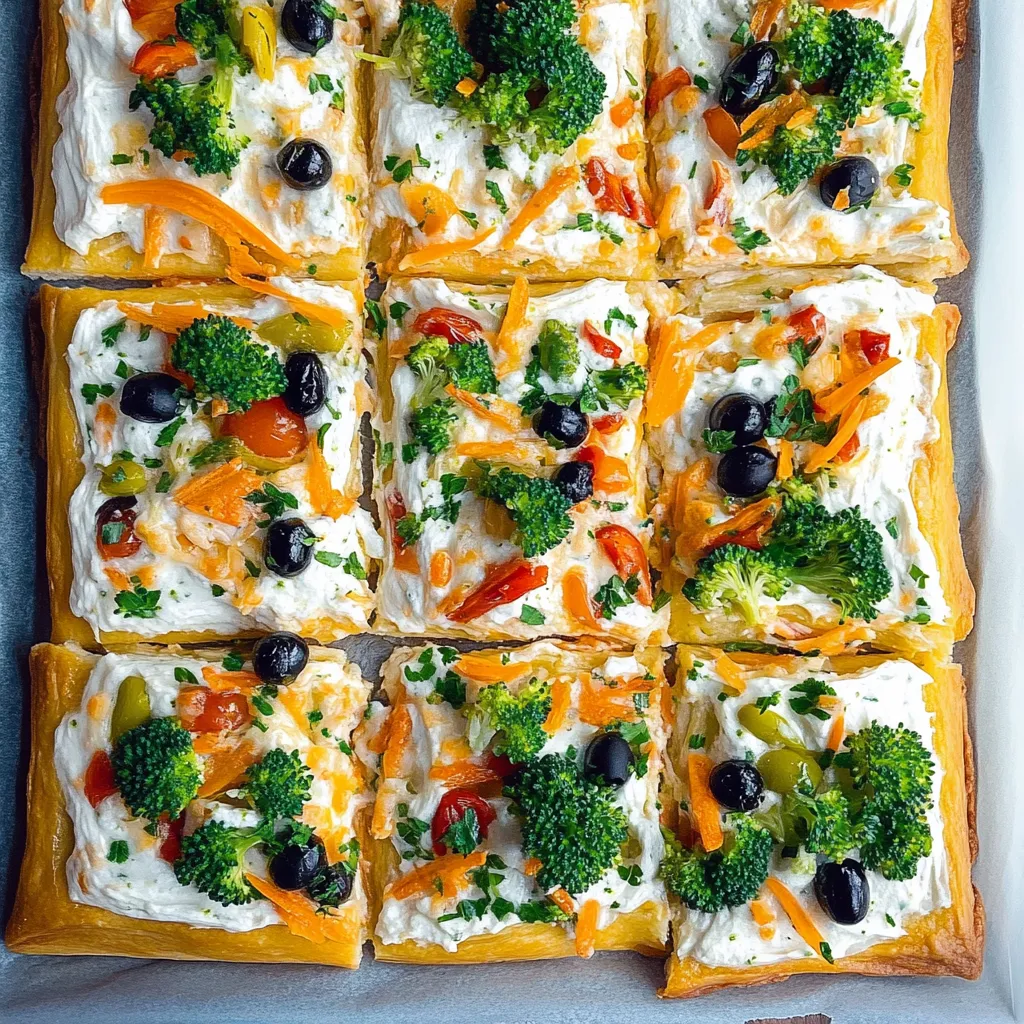
This veggie pizza turns raw vegetables into something people actually get excited about eating by spreading them over a flaky crescent roll crust with herbed cream cheese that tastes infinitely better than anything made with ranch packets. The golden-brown crust provides buttery, slightly crispy foundation while the cream cheese layer adds tangy richness seasoned simply with dried herbs you already have in your pantry. Piles of colorful raw vegetables get arranged on top however you like—crunchy broccoli, sweet bell peppers, juicy tomatoes—then everything gets finished with shredded cheese and cut into neat squares. This appetizer disappears at parties faster than almost anything else because it manages to feel light and fresh while still being indulgent enough to satisfy, and kids who normally refuse vegetables will happily eat them when they're presented this way.
I used to make veggie pizza with ranch seasoning packets like everyone else, but I always found the flavor somewhat artificial and overpoweringly salty with that weird chemical aftertaste that processed mixes often have. When I finally tried making the herbed cream cheese from scratch with basic dried herbs, I was amazed at how much better it tasted—cleaner, fresher, more balanced, with flavors that actually tasted like real herbs rather than powder. The best part was discovering that the homemade version didn't need any resting time for flavors to blend like ranch mix does, so I could mix it up and use it immediately without planning hours ahead. Now this is my go-to recipe for every party, potluck, and casual gathering because it's so reliable and always gets completely devoured. I've watched people who claim they don't like vegetables pile their plates with squares of this pizza, and I've had multiple guests ask for the recipe before they've even finished eating.
Ingredients and What Makes Them Essential
- Crescent roll dough (1 tube, 8 ounces): This refrigerated dough provides an incredibly easy, foolproof crust that bakes up golden and flaky without requiring you to make pastry from scratch. The slightly buttery, layered texture of crescent rolls creates an appealing base that's sturdy enough to hold toppings but tender enough to bite through easily. Look for it in the refrigerated section near cinnamon rolls and biscuits—Pillsbury is the most common brand. If you're feeling ambitious and have extra time, you can make homemade crescent roll dough, which tastes even better though it requires significantly more effort.
- Cream cheese (8 ounces, softened): This forms the rich, tangy base layer that acts as the "sauce" for your veggie pizza and provides creamy contrast to the crisp raw vegetables. Full-fat cream cheese is essential here—don't substitute low-fat or fat-free versions, which have completely different texture and won't spread as smoothly or taste nearly as good. The cream cheese must come to room temperature before mixing, which takes at least 30 minutes sitting on your counter, or it will be impossible to blend smoothly with the mayonnaise and will leave you with lumps.
- Mayonnaise (½ cup): Adding mayo to the cream cheese creates a lighter, more spreadable consistency that's easier to work with than cream cheese alone, while also contributing subtle tangy richness. The mayo helps the mixture spread smoothly across the crust without tearing the delicate crescent roll surface. Use regular full-fat mayonnaise rather than light or fat-free versions, which have different texture and can taste somewhat artificial. Any brand works fine—Hellmann's, Duke's, or your preferred variety all produce good results.
- Dried parsley (2 teaspoons): This mild herb adds subtle herbal flavor and pleasant green flecks throughout the cream cheese without overpowering the other ingredients. Dried parsley is more concentrated than fresh, which would add too much moisture and not enough flavor in this application. Look for relatively fresh dried parsley with good green color rather than faded gray-brown, which indicates age and loss of flavor.
- Dried dill weed (1 teaspoon): Dill provides that distinctive tangy, slightly anise-like flavor that's essential to ranch-style seasoning and gives the cream cheese its characteristic taste. Dried dill is quite potent, so a little goes a long way—too much can make things taste medicinal or overwhelming. The dill is what makes people taste this and think "ranch dressing" even though there's no actual ranch mix involved.
- Garlic powder (½ teaspoon): This adds savory depth and aromatic quality without the moisture or sharpness of fresh garlic, which would be too aggressive here. Garlic powder blends smoothly into the cream cheese mixture and distributes flavor evenly throughout. Make sure your garlic powder is relatively fresh rather than years old, which can taste stale or even slightly rancid.
- Onion powder (½ teaspoon): Onion powder contributes sweet-savory onion flavor in concentrated form without adding moisture or texture that would make the cream cheese mixture watery or chunky. It works synergistically with the garlic powder to create a well-rounded aromatic base that tastes complex despite being simple.
- Dried minced onion (1 teaspoon): These small dehydrated onion pieces rehydrate slightly in the cream cheese mixture and provide subtle texture along with onion flavor. They add tiny flavorful bits throughout rather than being completely smooth, which creates interest and makes the mixture taste more complex. You can find dried minced onion in the spice aisle at any grocery store.
- Fresh vegetables (2 to 3 cups total, chopped small): This is where you make the recipe your own based on preference and availability. Classic combinations include finely chopped broccoli and cauliflower as the base, with smaller amounts of shredded carrots, diced bell peppers, sliced cherry tomatoes, chopped green onions, and sliced black olives. Choose vegetables with good crunch and vibrant colors that will look appealing on top of the white cream cheese. Cut everything into small, bite-sized pieces so they distribute evenly and each square of pizza has a variety of vegetables. Use what you have or what's in season rather than making a special trip—this recipe is extremely forgiving and flexible.
- Shredded cheese (1 cup, optional): Adding cheese on top provides richness, color, and additional flavor that makes the pizza feel more substantial and appealing to cheese lovers. Cheddar is classic and provides sharp, tangy flavor, while mozzarella melts beautifully and offers milder taste. A Mexican blend, Monterey Jack, or even crumbled feta all work depending on what flavor profile you're going for. The cheese is technically optional, but most people find it makes the finished product more irresistible.
Step-by-Step Instructions
- Prepare oven and baking surface:
- Position one of your oven racks in the center position where heat circulation is most even, then turn the oven to 375°F and let it preheat fully while you prepare the crust. Tear off a large piece of parchment paper or aluminum foil—at least 12 by 16 inches—and lay it flat on your counter or other work surface. This will serve as both your assembly surface and your baking surface, eliminating the need to transfer the delicate unbaked crust and preventing sticking issues. Having everything ready before you open the refrigerated dough makes the process much smoother.
- Form and shape the crescent roll crust:
- Open your tube of refrigerated crescent roll dough and carefully unroll it onto your prepared parchment paper. The dough will be perforated into eight triangular pieces, but you want to form them into a solid rectangular crust instead. Arrange the triangles so they create roughly an 8 by 12-inch rectangle, with the points meeting in the middle and the long edges forming the outside. Use your fingers to firmly press and pinch all the perforated seams together so they disappear and you have one cohesive piece of dough rather than separate triangles. Get a rolling pin and gently roll over the entire surface, applying light, even pressure to flatten the dough slightly and ensure all those seams are truly sealed together. Don't roll it too thin or press too hard, or you'll lose the nice flaky layers that make crescent rolls appealing—just enough to create an even thickness and sealed seams. Slide the parchment paper with your shaped crust directly onto a rimmed baking sheet, which makes it easy to transfer to the oven without disturbing the carefully shaped dough.
- Bake the crust until golden:
- Carefully transfer the baking sheet to your preheated oven and set a timer for 6 minutes. After 6 minutes, rotate the pan front to back to ensure even browning since most ovens have hot spots that cook one side faster than the other. Continue baking for another 2 to 6 minutes, watching closely toward the end. The crust is done when it's puffed up slightly and turned a beautiful golden brown color all over, with no pale or raw-looking spots remaining. The edges might be slightly darker than the center, which is fine and actually adds nice color contrast. Total baking time is usually 8 to 12 minutes depending on your oven's accuracy and the thickness of your crust. When it's done, immediately remove the baking sheet from the oven and set it on a cooling rack or heat-safe surface. Let the crust cool completely on the pan—this takes at least 30 minutes and is crucial because spreading cream cheese on a warm crust will melt it into a liquidy mess instead of staying spreadable.
- Make the herbed cream cheese spread:
- While your crust cools, prepare the cream cheese mixture in a medium bowl. Make absolutely sure your cream cheese is genuinely room temperature and soft throughout before starting—cold cream cheese won't blend smoothly no matter how much you mix. Add the softened cream cheese, mayonnaise, dried parsley, dried dill, garlic powder, onion powder, and dried minced onion all to the bowl. Use a rubber spatula, wooden spoon, or electric hand mixer on medium speed to blend everything together thoroughly until you have a smooth, uniform mixture with no lumps of cream cheese remaining and all the herbs distributed evenly throughout. The mixture should be thick but spreadable, similar to the consistency of frosting or a thick dip. Taste it and adjust the seasoning if needed—you might want a tiny pinch of salt or an extra shake of dill depending on your preferences. Transfer the bowl to the refrigerator while the crust finishes cooling, which helps the flavors meld slightly though it's not strictly necessary since this version tastes good immediately.
- Spread the cream cheese evenly:
- Once your crescent roll crust has cooled completely to room temperature—test it with your hand to make sure it's not even slightly warm—it's time to assemble. Keep the crust right on the parchment paper on the baking sheet for easy handling. Scoop your herbed cream cheese mixture onto the cooled crust and use an offset spatula or the back of a spoon to spread it in an even layer that covers the entire surface from edge to edge. Work gently to avoid tearing the delicate crust underneath, spreading with smooth motions rather than aggressive pressing. You want complete coverage without any bare spots, and the layer should be roughly a quarter-inch thick—substantial enough to taste in every bite but not so thick that it overwhelms the vegetables and crust. Make sure to spread all the way to the edges since the corners and sides are where people often notice skimpy coverage.
- Arrange vegetables artfully:
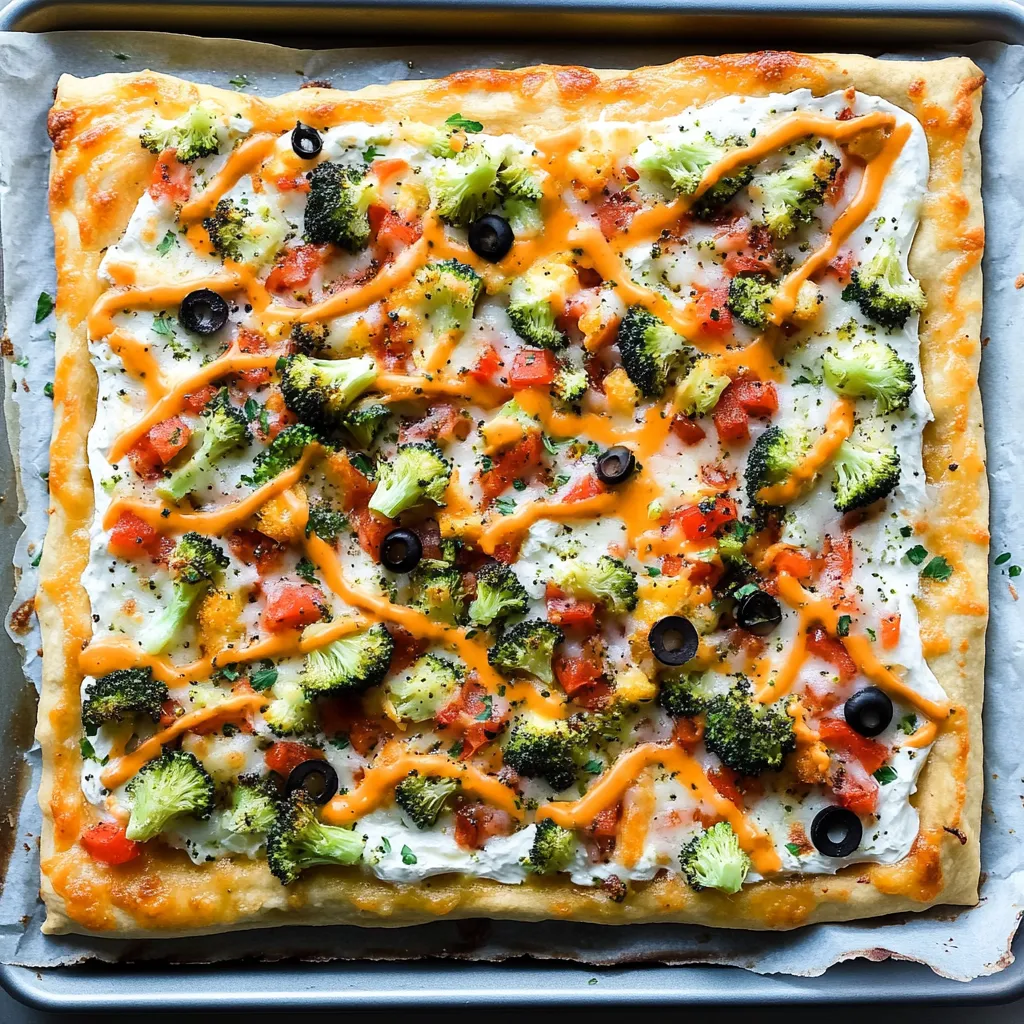
- Now comes the fun part where you can be creative and design your pizza however you like. Take your prepared chopped vegetables—whatever combination you've chosen—and sprinkle them evenly over the cream cheese layer. Start with the larger base vegetables like broccoli and cauliflower if using them, distributing them across the entire surface. Then add accent vegetables like bell peppers, tomatoes, carrots, and olives, scattering them to create visual interest and color variation. Press the vegetables down very gently into the cream cheese so they adhere slightly rather than just sitting loosely on top where they might fall off when you cut squares. The goal is generous vegetable coverage that looks abundant and appealing without being so thick that pieces slide off. Leave tiny gaps between vegetables where the white cream cheese shows through—this creates contrast and makes it look more intentional and attractive rather than like you just dumped vegetables randomly.
- Add cheese and chill before serving:
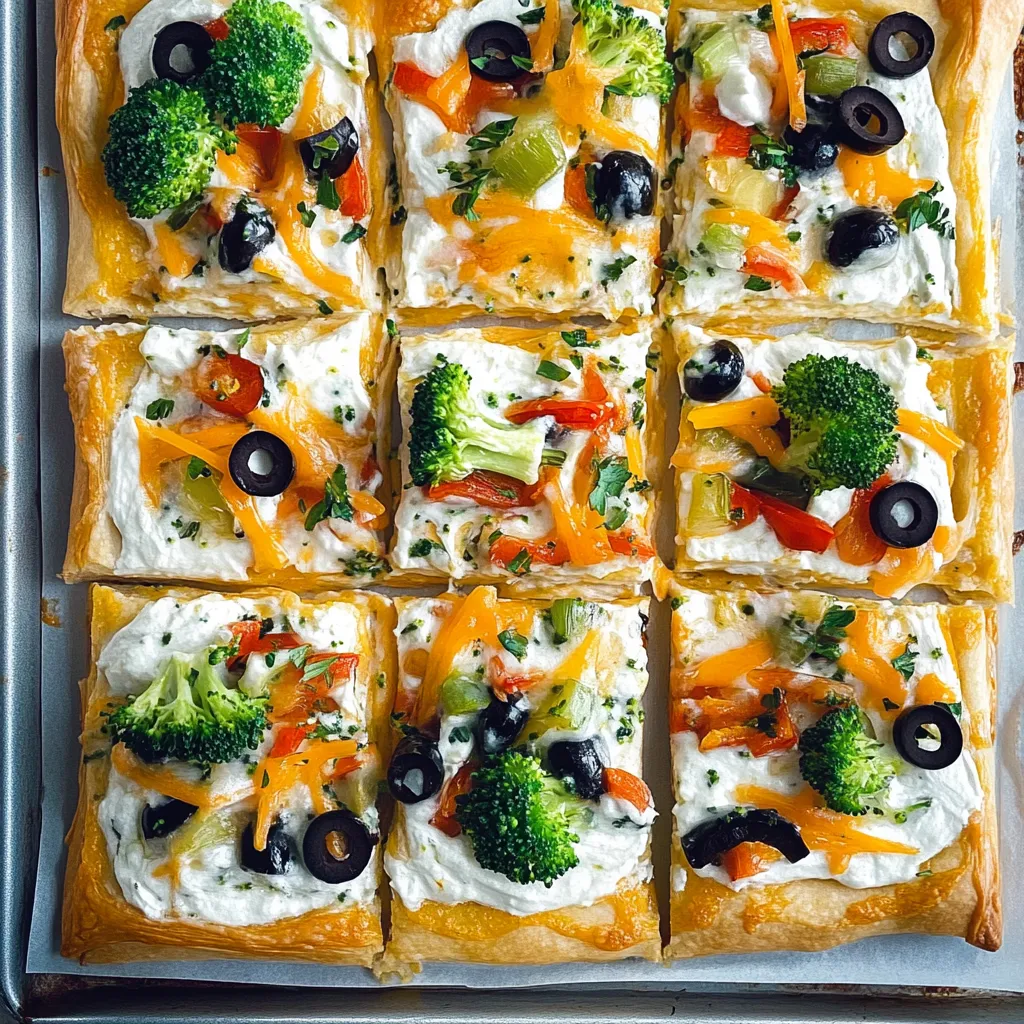
- If you're using shredded cheese, sprinkle it evenly over all the vegetables as the final layer. The cheese helps hold everything together and adds visual appeal with its yellow or white color contrasting against the colorful vegetables. Once your veggie pizza is completely assembled, cover it loosely with plastic wrap or slide the whole baking sheet into the refrigerator. Chill for at least 1 hour before serving, though 2 to 4 hours is even better. This chilling time allows the cream cheese to firm up slightly so it doesn't smear when you cut the pizza, and it makes everything taste better since this is meant to be served cold. When ready to serve, remove from the refrigerator and use a sharp knife to cut the pizza into 24 even squares—4 cuts on the short side and 6 cuts on the long side creates nice 2-inch squares that are perfect single-bite portions. Arrange the squares on a serving platter and watch them disappear.
 Pin it
The technique that improved my results most dramatically was learning to press the vegetable toppings gently into the cream cheese layer rather than just sprinkling them loosely on top. My early attempts at this recipe resulted in vegetables constantly falling off as people picked up their squares, creating messy plates and frustrated guests. Once I started pressing the vegetables down very lightly into the cream cheese immediately after arranging them—just enough to create slight adhesion without sinking them completely—they stayed in place much better when cut and served. The cream cheese acts almost like glue when vegetables are pressed into it slightly, holding everything together throughout cutting and eating. This simple adjustment made the pizza much easier to handle and eat, which increased how much people enjoyed it since they could focus on the flavors rather than chasing runaway vegetables around their plates. Now I always take that extra 30 seconds to gently press down all the toppings, and I never have problems with vegetables sliding off anymore.
Understanding Cold Appetizer Appeal
Cold appetizers like veggie pizza occupy a special category in entertaining because they can be made completely ahead of time and actually improve with resting, which eliminates the stress of last-minute cooking when guests arrive. Unlike hot dishes that require careful timing and coordination, cold apps sit happily in the refrigerator until needed without any degradation in quality. This advance preparation capability is invaluable when you're hosting and need to juggle multiple tasks, or when you're bringing food to a potluck and want something that travels well without requiring reheating.
The psychological appeal of cold veggie pizza specifically comes from how it transforms vegetables into something that feels like a treat rather than virtuous healthy eating. The cream cheese base provides richness and indulgence that makes people forget they're eating raw broccoli and cauliflower, while the buttery crescent roll crust creates association with pastries and baked goods rather than salads. The presentation matters too—cutting it into neat squares and arranging it attractively makes it look like party food rather than health food, which changes how people perceive and respond to it. When vegetables are presented as colorful toppings on a pizza-like base rather than sticks on a crudité platter, suddenly they become exciting and fun.
The textural contrast in veggie pizza is part of what makes it so satisfying to eat. The crisp, flaky crust provides crunch at the base, the smooth, creamy cheese layer offers richness, and the raw vegetables add fresh snap and variety with each different vegetable contributing its own texture. This layering of contrasting textures keeps your mouth interested through multiple bites rather than becoming monotonous. Temperature plays a role too—serving this cold makes it refreshing and light-feeling even though it contains cream cheese and buttery pastry, while warm versions would taste heavy and greasy.
Make-Ahead Strategies and Storage
The component-based nature of veggie pizza makes it exceptionally well-suited for advance preparation and strategic timing around your schedule or event. The crescent roll crust can be baked a full day ahead and kept wrapped at room temperature without refrigeration—it stays perfectly fresh and maintains its texture without getting soggy or stale. Baking the crust ahead means one less thing to do on party day and gives you flexibility to spread the work across multiple days if needed. Just wrap the cooled crust in plastic wrap or foil to prevent it from drying out, and leave it on your counter until you're ready to assemble.
The herbed cream cheese mixture also benefits from advance preparation and can be made up to 3 days ahead, stored in an airtight container in the refrigerator. In fact, making it ahead allows the dried herbs to rehydrate slightly and infuse more deeply into the cream cheese, creating even better flavor than mixing it the same day. Just give it a good stir before spreading since it might separate slightly during storage. Chopping the vegetables can happen a day ahead too—store them in separate containers or bags in the refrigerator with paper towels to absorb excess moisture that would otherwise make them soggy.
The fully assembled veggie pizza keeps remarkably well in the refrigerator for up to 4 days when stored properly in an airtight container, which makes it practical for meal prep or having ready-to-eat snacks available throughout the week. The vegetables stay surprisingly crisp rather than getting waterlogged, and the cream cheese layer continues holding everything together without breaking down. If you're storing multiple layers, place parchment paper between them to prevent sticking. The only component that doesn't freeze well is the assembled pizza—the vegetables become mushy and watery upon thawing, and the cream cheese breaks and becomes grainy. However, you could freeze the baked crust alone wrapped tightly, then thaw and assemble when needed.
Vegetable Selection and Preparation Tips
Choosing the right vegetables and preparing them properly makes significant difference in both the visual appeal and eating experience of your veggie pizza. Vegetables with inherent crunch like broccoli, cauliflower, bell peppers, and carrots work best because they maintain their texture even after sitting on the cream cheese for hours. Avoid vegetables with high moisture content like cucumbers, zucchini, or mushrooms unless you're serving immediately, since they'll release water that makes everything soggy. If you do want to include these, salt them lightly, let them drain for 15 minutes, pat dry thoroughly, and add them right before serving.
The size and shape of your vegetable pieces matters for both aesthetics and functionality. Everything should be chopped into small, uniform pieces—roughly the size of a pea to a corn kernel—so they distribute evenly and don't create tall, unwieldy piles that fall off when people pick up their squares. Broccoli and cauliflower should be broken into tiny florets with the stems trimmed away, then chopped even smaller if needed. Bell peppers should be diced into small cubes rather than sliced into strips, which tend to slide around. Carrots work best shredded rather than chopped, since shredded carrots nestle into the cream cheese and create texture without bulky pieces.
Color coordination makes your veggie pizza more visually appealing and increases the likelihood that people will try it. Aim for a rainbow of colors rather than all vegetables in the same color family—red bell peppers, orange carrots, green broccoli, purple cabbage, yellow tomatoes if you can find them. This variety makes it look abundant and festive rather than monotonous. Arrange colors somewhat randomly rather than in stripes or sections, which can look overly organized and artificial. The random scattering creates natural-looking abundance that draws people in and makes them want to try a piece.
Creative Topping Combinations
While the classic broccoli and cauliflower base works beautifully, experimenting with different vegetable and flavor combinations keeps this recipe interesting if you make it frequently and allows you to tailor it to different tastes or dietary preferences. A Mediterranean version might feature diced red bell peppers, halved cherry tomatoes, sliced Kalamata olives, and crumbled feta cheese, with dried oregano added to the cream cheese base. An Italian-inspired version could use pesto mixed into the cream cheese instead of herbs, then top with diced tomatoes, fresh mozzarella pearls, and fresh basil leaves torn and added after chilling.
For a Southwest flavor profile, mix cumin and chili powder into the cream cheese base and top with diced bell peppers in multiple colors, corn kernels, black beans that have been rinsed and drained well, diced tomatoes, and shredded Mexican cheese blend. Finish with sliced jalapeños for people who want heat, positioned on just one section so others can avoid them. A garden-fresh version perfect for summer highlights seasonal vegetables like diced heirloom tomatoes, thinly sliced radishes, shredded carrots, chopped sugar snap peas, and fresh herbs like basil, dill, or parsley scattered over the top.
You can even create breakfast or brunch versions that transform the concept completely. Use the same crescent roll crust and cream cheese base, but top with diced hard-boiled eggs, crumbled cooked bacon, shredded cheddar cheese, and thinly sliced green onions. Or go sweet by mixing cinnamon and sugar into the cream cheese instead of herbs, then topping with sliced strawberries, blueberries, and kiwi for a fruit pizza that's completely different but uses the same basic technique. These variations demonstrate how versatile the basic formula is and how you can adapt it to different occasions, seasons, and preferences.
 Pin it
This veggie pizza has become my most-requested party contribution and the recipe I turn to constantly when I need a reliable crowd-pleaser that accommodates various dietary needs and preferences. The homemade herbed cream cheese base is so much better than ranch packet versions that I can't imagine going back, and the flexibility to customize toppings means I never get bored making it even though I prepare it regularly. I love that it genuinely encourages both kids and adults to eat vegetables enthusiastically rather than reluctantly, which makes it valuable beyond just being tasty. The make-ahead capability is perfect for my busy schedule since I can prep components across multiple days and just assemble everything the morning of an event without any stress. The fact that it keeps well for days in the refrigerator means I sometimes make it just for my family to have healthy snacks available throughout the week, cutting off squares as we want them. Once you see how simple this recipe is and how enthusiastically people respond to it, you'll understand why it's earned permanent status in my entertaining repertoire and why I've probably made it hundreds of times at this point.
Frequently Asked Questions
- → Can I make this veggie pizza ahead of time?
- Yes, you can prepare it up to 4 days in advance. Just keep it covered in the refrigerator until you're ready to serve.
- → What vegetables work best on this pizza?
- Broccoli and cauliflower are the most popular choices. Add bell peppers, carrots, tomatoes, black olives, or green onions for variety.
- → Can I use a different crust instead of crescent rolls?
- Sure! You can use pizza dough, puff pastry, or even a flatbread base. Just bake it until golden and let it cool completely before adding toppings.
- → Do I need to cook the vegetables first?
- No, the vegetables stay raw and crunchy. Just chop them into small pieces so they stick well to the cream cheese layer.
- → How do I keep the crust from getting soggy?
- Make sure the crust is completely cooled before spreading the cream cheese mixture. Store it in the fridge and the cream cheese layer will help protect the crust.
- → Can I freeze veggie pizza?
- Freezing isn't recommended because the vegetables will get watery when thawed. It's best enjoyed fresh from the fridge.