
 Pin it
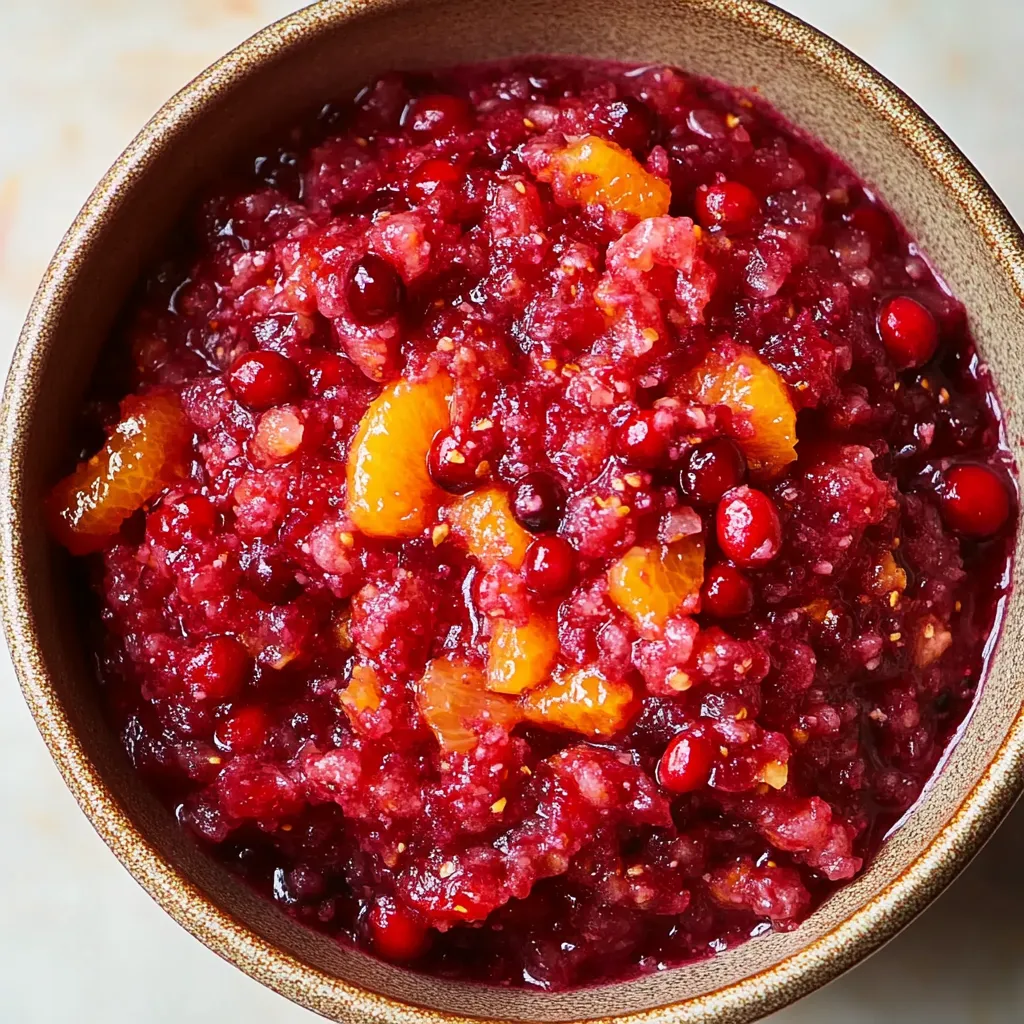
Cranberry relish is the raw, fresh, chunky cousin of smooth, cooked cranberry sauce, and while both have their place on the Thanksgiving table, the no-cook version brings bright, tart, almost aggressive flavor that cuts through all the rich, heavy holiday foods in ways that jammy sauce simply can't. Made by pulsing fresh cranberries with whole unpeeled orange and sugar in a food processor, this condiment takes maybe five minutes to prepare and delivers intense cranberry flavor that hasn't been mellowed by cooking. The orange peel adds slight bitterness that balances the sweetness and tartness, creating complexity that makes this taste more interesting than basic cranberry sauce. What makes this particularly appealing for holiday cooking is how it's completely make-ahead friendly - you can prepare it up to two weeks before Thanksgiving and it actually improves as it sits and the flavors meld together - freeing up valuable oven space and mental bandwidth for dishes that actually require cooking and attention.
I started making cranberry relish about fifteen years ago after my grandmother served it at Thanksgiving and I was surprised by how much better I liked it than the jellied canned stuff or even homemade cooked cranberry sauce. The raw cranberries have this aggressive tartness that wakes up your palate between bites of rich turkey and gravy, while cooked cranberries taste mellower and sweeter. The first time I made it myself, I forgot to trim the orange ends properly and left too much bitter white pith, which made the whole batch taste harsh. After learning to trim just the very ends while leaving most of the peel intact, it became one of those recipes I make every single year without variation because it's already perfect.
Ingredients and What Makes Them Essential
- Fresh Cranberries (12 ounces, one bag): Fresh cranberries are essential here - don't substitute frozen which would become watery as they thaw, and definitely don't use dried cranberries which are too sweet and chewy. Pick through the cranberries and discard any that are shriveled, soft, or discolored. Fresh cranberries should be firm, plump, and bright red. They're available in stores from October through December.
- Orange (1 whole, unpeeled): Using the entire orange including the peel is what makes this relish special. The peel contains aromatic oils that add complexity and slight bitterness that balances the sugar and cranberry tartness. Buy organic oranges if possible since you're eating the peel, or at minimum wash regular oranges thoroughly with soap and water to remove any wax coating and pesticide residue. Navel oranges work beautifully because they're seedless or have minimal seeds.
- Granulated White Sugar (¼ cup, adjust to taste): Sugar sweetens the intensely tart cranberries and orange peel into something balanced and edible rather than mouth-puckeringly sour. The amount can be adjusted based on your preference - start with ¼ cup and add more if needed. The sugar also draws out juice from the cranberries as it dissolves, creating a slightly syrupy texture.
- Kosher Salt (pinch, optional): Just a tiny pinch of salt enhances all the other flavors and makes the sweetness taste more pronounced. This is completely optional but recommended.
Step-by-Step Instructions
- Prepare the Orange:
- Place your orange on a cutting board and use a sharp knife to cut off both ends - just the very tips where the orange attached to the tree. You want to remove the hard, extra-bitter stem and blossom ends, but leave as much of the actual orange as possible. Don't peel the orange. Cut the trimmed orange into 8 wedges, cutting through the center like you're slicing a pie. If you see any seeds, pick them out and discard them - seeds would add bitterness and hard bits to the finished relish. The orange pieces should include both the flesh and the peel.
- Pulse the Orange:
- Place the orange wedges in the bowl of a food processor fitted with the standard blade. Pulse about 10 to 15 times - short, quick pulses rather than continuous processing - until the orange is coarsely chopped into small pieces. You want chunks roughly the size of small peas, not a smooth puree. Scrape down the sides of the food processor bowl with a spatula to make sure everything gets chopped evenly.
- Add Cranberries and Sugar:
- Add all 12 ounces of fresh cranberries to the food processor with the chopped orange. Sprinkle ¼ cup of granulated sugar over everything. Add a small pinch of salt if using. Put the lid back on the food processor.
- Process to Desired Texture:
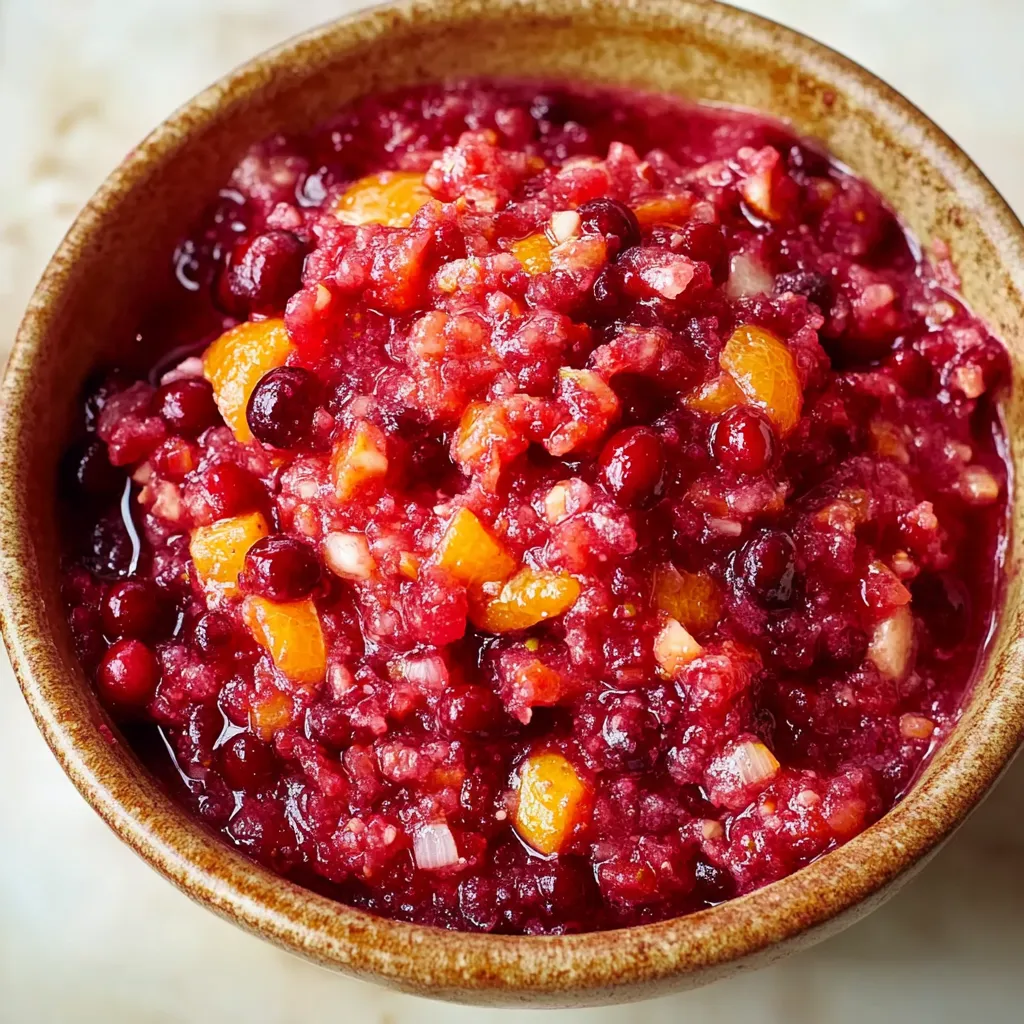
- Pulse the mixture in short bursts - about 20 to 30 pulses total - until the cranberries are chopped into small pieces and everything looks relatively uniform. Stop occasionally to scrape down the sides. The texture should be chunky with visible pieces of cranberry and orange, not a smooth puree. You want some texture rather than baby food consistency. The mixture will look wet from the juice released by the cranberries and orange. If any large pieces of orange peel remain, pulse a few more times to break them down - large pieces of peel can be unpleasantly bitter.
- Taste and Adjust:
- Scoop out a small spoonful and taste the relish. Keep in mind it will taste quite tart at this point, which is normal - the flavors mellow and blend as it chills. If it's intolerably sour and you know you prefer sweeter condiments, add another tablespoon or two of sugar, pulse a few times to incorporate, and taste again. The relish should be noticeably tart with balanced sweetness, not candy-sweet. Remember this is meant to be a tart condiment that cuts through rich foods, so some tartness is desirable.
- Chill Before Serving:
- Transfer the cranberry relish to a bowl or airtight container. Cover tightly with plastic wrap or a lid and refrigerate for at least 2 hours before serving, though overnight is even better. This chilling time allows the sugar to fully dissolve, the cranberries to release more juice, and all the flavors to meld together. The relish will taste smoother and less harsh after chilling. The texture will also thicken slightly as it sits.
- Serve:
- Give the chilled relish a good stir before serving because the juices may have settled to the bottom. Transfer to a serving bowl. The relish should be cold when served - the chilled temperature helps balance its tartness. Serve alongside turkey, stuffing, and other Thanksgiving sides. Leftover relish can be returned to the refrigerator in a covered container.
 Pin it
My uncle claims he hates cranberry sauce in any form and refuses to eat it at Thanksgiving, insisting it's "weird sweet jelly that doesn't belong on a plate with savory food." The first time I brought cranberry relish instead of sauce, he took a tiny spoonful just to be polite, clearly expecting to hate it. After that first bite, he went back for more and admitted this was "completely different" from the canned sauce he hated. He still won't eat regular cranberry sauce, but he specifically requests my cranberry relish every year now. Converting the cranberry sauce hater with the raw version feels like vindication.
Understanding Why Raw Tastes Different Than Cooked
The fundamental difference between cranberry relish and cranberry sauce comes down to what cooking does to cranberries. When you cook cranberries with sugar and water, several things happen - the heat breaks down the fruit's cell walls completely, releasing all the pectin which creates that jammy, gel-like texture. The sugars caramelize slightly, creating deeper, sweeter flavor. The tartness mellows considerably as the acids break down. The bright red color often turns darker and more purple. The result is smooth, sweet, and jammy. Raw cranberries in relish maintain their cell structure, which creates chunky texture. The natural tartness stays sharp and bright because the acids haven't broken down. The color remains vivid, bright red. The flavor tastes fresher and more fruit-forward rather than cooked and concentrated. Some people prefer the mellowed, smooth qualities of cooked sauce, while others love the aggressive brightness of raw relish. Both have their place, but raw relish provides contrast that cooked sauce can't match.
The Role of Orange Peel in Flavor
Using the entire unpeeled orange is what separates good cranberry relish from great cranberry relish. Orange peel contains essential oils - primarily limonene - that add bright, aromatic citrus flavor completely different from the juice alone. The peel also contains compounds that taste slightly bitter, which provides necessary contrast to the sugar and prevents the relish from being one-dimensionally sweet-tart. The white pith between the peel and flesh is bitter, which is why you trim the hard ends where pith is thickest, but leaving the rest creates balanced flavor. If you used only orange flesh without peel, the relish would taste flat and lack complexity. If you used too much pith by not trimming the ends, it would taste unpleasantly bitter. The recipe's instruction to trim just the ends while leaving the orange otherwise intact hits the perfect balance. Some recipes call for zest plus juice, but using the whole orange is easier and creates better texture.
Why Food Processor Is Essential
While you could theoretically make cranberry relish by hand-chopping everything with a knife, a food processor creates dramatically better results with a fraction of the effort. Food processors chop quickly and uniformly, creating even-sized pieces that look professional and provide consistent texture in every spoonful. They break down the tough cranberry skins efficiently - cranberries are quite firm and would take forever to chop by hand. The rapid action of the blade also helps release juice from the cranberries, creating that slightly syrupy consistency. Hand-chopping would take probably twenty minutes of tedious work and result in uneven pieces ranging from large chunks to mush. The pulsing action gives you control over final texture - you can stop when you reach your preferred consistency, whether you like it more chunky or more finely chopped. A blender doesn't work as well because it tends to puree rather than chop, and the shape makes it difficult to process solid ingredients evenly.
Sugar Adjustment and Sweetness Preferences
The ¼ cup of sugar suggested is a starting point that creates relish with noticeable tartness - it's sweet enough to be edible but still quite tart, which is the traditional character of cranberry relish. However, sweetness preferences vary widely. Some people prefer aggressively tart relish that makes their lips pucker slightly, while others want it sweeter and more accessible. If you know you have a sweet tooth, start with ⅓ to ½ cup of sugar instead of ¼ cup. If you prefer very tart foods, you might use only 2 to 3 tablespoons. You can also use different sweeteners for varied flavor profiles - brown sugar creates deeper, more molasses-like sweetness that tastes slightly less sharp than white sugar. Honey or maple syrup add floral or earthy notes respectively, though liquid sweeteners thin the texture slightly. Some people add a tablespoon of orange juice concentrate for extra sweetness and more intense orange flavor. Taste the relish after chilling and add more sugar if needed - you can always add more but can't remove it.
Make-Ahead Timeline and Storage
Cranberry relish is one of the most make-ahead-friendly Thanksgiving dishes, which makes it invaluable when planning holiday cooking schedules. The relish can be made up to two weeks in advance and stored in the refrigerator in an airtight container - in fact, it actually improves after several days as the flavors meld and the sharpness mellows slightly. The sugar continues to draw out juice from the fruit, creating more syrupy consistency. For longest storage, use a very clean container and spoon to prevent introducing bacteria. The relish can also be frozen for up to three months in a freezer-safe container. Leave some headspace because it will expand slightly when frozen. Thaw overnight in the refrigerator before serving - don't try to thaw at room temperature which could allow bacterial growth. After thawing, stir well because the liquid may have separated slightly. The texture might be a bit softer after freezing but the flavor remains excellent.
Creative Variations and Add-Ins
While the basic three-ingredient version is classic and perfect, cranberry relish accepts numerous variations. For apple cranberry relish, add one peeled, cored, and quartered Granny Smith apple to the food processor with the cranberries - the apple adds sweetness, juice, and textural crunch. For nutty relish, pulse in ½ cup of toasted pecans or walnuts for crunch and richness. For spiced relish, add ¼ teaspoon of ground cinnamon or a pinch of ground ginger with the sugar. For ginger cranberry relish, add a 1-inch piece of peeled fresh ginger to the food processor for spicy warmth. For pineapple version, add ½ cup of fresh or canned pineapple chunks for tropical sweetness. For more orange flavor, use two oranges instead of one, or add a tablespoon of orange zest in addition to the whole orange. For less sweetness, substitute half the sugar with orange juice which adds liquid without as much sweetness. Each variation changes the character while maintaining the fresh, raw quality that makes this special.
Serving Suggestions and Uses Beyond Thanksgiving
While cranberry relish is traditional on the Thanksgiving table, its uses extend far beyond the holiday. Obviously, it's excellent with turkey, stuffing, and all the classic sides. It pairs beautifully with rich meats - try it with roast pork, duck, or even lamb where the tartness cuts through fatty richness. Spread it on leftover turkey sandwiches for bright contrast. Stir a spoonful into plain yogurt for breakfast. Use it as a condiment with cheese plates where it complements sharp cheddar, creamy brie, or tangy goat cheese. Mix it into cream cheese as a spread for bagels or crackers. Top vanilla ice cream with it for an unexpected dessert. Use it as a glaze for roasted vegetables like Brussels sprouts or sweet potatoes. Swirl it into oatmeal or spread on toast. The bright, tart flavor works anywhere you want acid and sweetness to balance richness.
Troubleshooting Common Problems
When cranberry relish doesn't turn out right, there's usually a fixable cause. If it's too bitter, you left too much white pith on the orange ends or over-processed the peel - trim the ends more carefully next time and pulse less. If it's too tart, you didn't use enough sugar or need to let it chill longer for sugar to dissolve - add more sugar and let it sit. If it's too sweet, you used too much sugar or too ripe an orange - use less sugar next time. If it's too chunky, you didn't process enough - pulse more times until pieces are smaller. If it's too smooth and puree-like, you over-processed - pulse less next time and stop when texture is still chunky. If it's watery, you used frozen cranberries instead of fresh - always use fresh. If it tastes harsh and raw, you didn't let it chill long enough - refrigerate overnight for best flavor. If it's brown instead of bright red, you may have used old cranberries or processed too much releasing enzymes that cause oxidation - use fresh cranberries and avoid over-processing.
The History and Cultural Context of Cranberry Relish
Cranberry relish, while less famous than cooked cranberry sauce, has deep roots in American Thanksgiving traditions. Cranberries are one of only three fruits native to North America (along with blueberries and Concord grapes) and were used by Native Americans long before European colonization. The idea of combining raw cranberries with oranges and sugar likely emerged in the late 1800s or early 1900s when citrus became more widely available and home cooks began experimenting beyond traditional cooked preparations. The advent of food processors in the 1970s made cranberry relish much easier to prepare, contributing to its popularity. Regional variations exist - New England versions sometimes include apples, while Southern versions might add pecans. Some families call it cranberry salad rather than relish. The raw preparation appeals to people who prefer fresh flavors and those looking to reduce cooking requirements on busy holiday cooking days. It represents a bridge between traditional cranberry sauce and modern preferences for fresher, less processed foods.
 Pin it
After making cranberry relish every Thanksgiving for fifteen years, it's become one of those recipes I don't even think about anymore - it's just automatic that I'll make it the week before Thanksgiving and have it waiting in the refrigerator. I appreciate how it requires zero oven or stovetop space during the cooking chaos of Thanksgiving morning, and how it actually gets better sitting in the fridge for days rather than needing to be made fresh. The bright, aggressive tartness is exactly what's needed on a table full of butter, cream, and gravy - something that wakes up your palate and provides contrast rather than adding to the richness. People who claim they don't like cranberry sauce often end up liking this because it tastes completely different from jammy, cooked sauce. This represents exactly what I want from holiday cooking - something traditional and expected that's also genuinely delicious, practical to make ahead, and adds something essential that no other dish provides.
Frequently Asked Questions
- → Can I make this cranberry relish ahead of time?
- Yes, you can make it up to 2 days ahead. It actually tastes better the next day once the flavors have blended together in the fridge.
- → Do I need to peel the orange?
- No, leave the peel on. It adds great flavor and texture to the relish. Just trim off the ends and remove any seeds.
- → Can I use frozen cranberries instead of fresh?
- Fresh cranberries work best for this recipe. Frozen ones will make the relish too watery and mushy.
- → How long does homemade cranberry relish last?
- It keeps well in the fridge for about 5 to 7 days in an airtight container. The sugar helps preserve it.
- → Is this relish supposed to be crunchy?
- Yes, it has a nice chunky texture with small pieces of cranberry and orange. It's not smooth like cranberry sauce.
- → Can I reduce the sugar in this recipe?
- You can use less sugar, but cranberries are very tart. Start with half a cup and taste it, then add more if needed.