
 Pin it
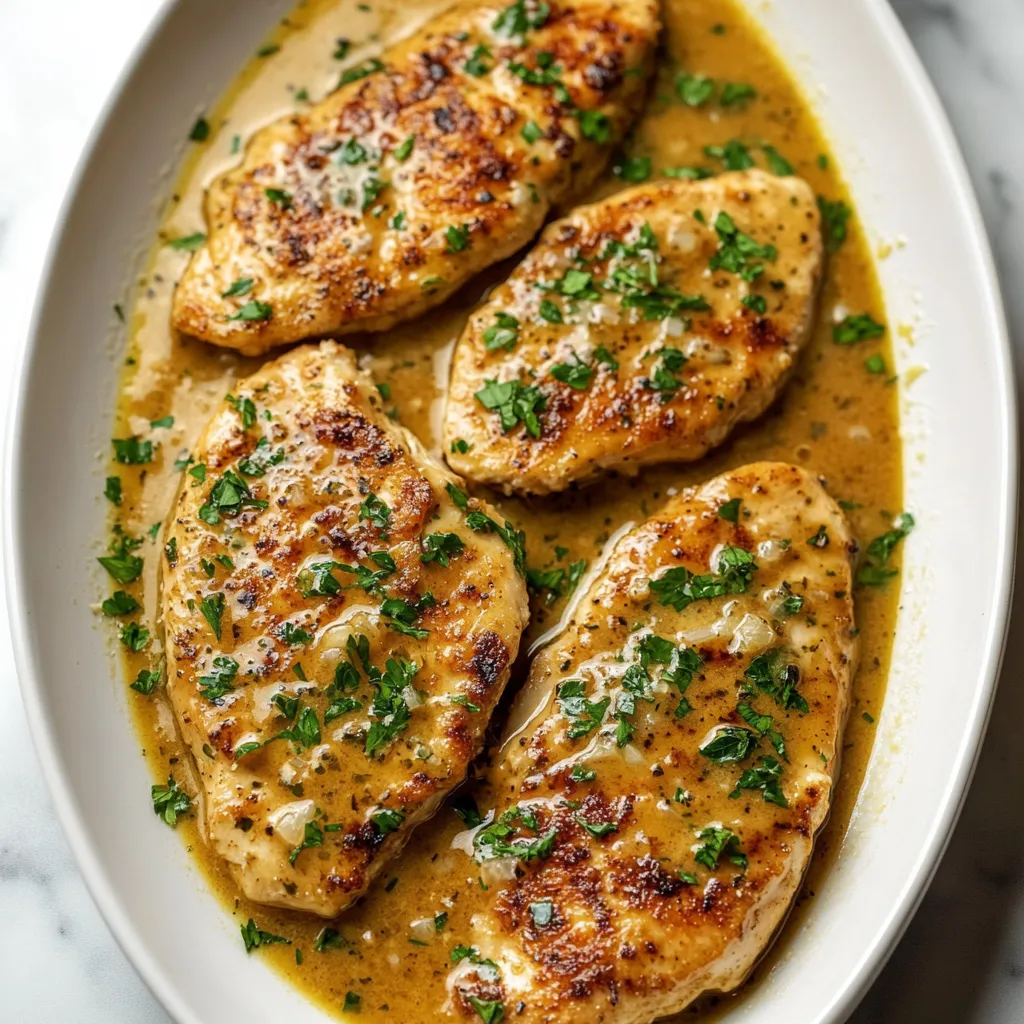
This lemon butter chicken scallopini delivers tender, thinly pounded chicken cutlets that cook in minutes and develop golden-brown exteriors through quick pan-frying in a flour coating. The bright, tangy lemon butter sauce comes together in the same pan after the chicken cooks, using white wine and fresh lemon juice reduced with butter to create glossy, restaurant-quality sauce that takes just minutes. Pounding the chicken thin ensures it cooks quickly and stays incredibly tender rather than drying out, while the flour coating creates texture and helps the sauce cling beautifully. This is the kind of elevated yet simple Italian-American dinner that feels special enough for company but comes together fast enough for busy weeknights.
I started making chicken scallopini after being disappointed by dry, overcooked chicken at home despite loving it at Italian-American restaurants. The first time I properly pounded the chicken thin and understood how quickly it should cook, I was amazed by how tender it stayed and how much the results improved. Now this is my go-to for weeknight dinners when I want something that feels special and impressive without requiring significant effort or time. The bright lemon sauce never fails to make the meal feel restaurant-quality, and guests always assume I've done something far more complicated than I actually have. The fact that it comes together so quickly while looking and tasting elegant makes it infinitely more practical than recipes that require hours of work.
Ingredients and What Makes Them Essential
- Boneless, skinless chicken breasts (2 large, about 1½ pounds total): Chicken breast provides lean protein with mild flavor that serves as the perfect canvas for the bright lemon sauce. Each breast gets cut horizontally in half to create four thinner cutlets that cook quickly and evenly. Choose breasts that are relatively uniform in thickness for easier pounding. The chicken must be genuinely thin after pounding—about ¼ to ⅜ inch thick—for proper quick cooking and tender texture.
- All-purpose flour (½ cup, for dredging): Flour coating creates a light crust that browns beautifully during pan-frying while helping the sauce adhere to the chicken. The flour also slightly thickens the pan sauce. Don't skip this step—naked chicken won't develop proper golden color or texture. The coating should be light and even, not thick or clumpy. Shake off excess flour before cooking.
- Garlic powder (1 teaspoon): Garlic powder seasons the chicken directly, infusing flavor into the meat rather than just flavoring the surface. The powder distributes evenly and doesn't burn like fresh garlic would during the high-heat pan-frying. Use garlic powder specifically rather than garlic salt, which would make the chicken too salty.
- Olive oil (2 tablespoons): Olive oil provides the cooking medium for pan-frying and contributes fruity, peppery flavor that complements the lemon. Use regular olive oil rather than extra virgin, which has a lower smoke point and can burn at the high heat needed for proper browning. The oil prevents sticking and helps the chicken develop golden-brown color.
- Butter (4 tablespoons total, divided): Butter serves dual purposes—some cooks with the chicken to add rich flavor and help with browning, while the rest finishes the sauce and creates silky, luxurious texture. The butter must be cold when whisked into the sauce at the end or it won't emulsify properly. Real butter is essential—margarine or spreads won't create the same richness or sauce texture.
- White wine (½ cup, dry): Dry white wine like Sauvignon Blanc or Pinot Grigio deglazes the pan and provides acidic, aromatic base for the sauce. The alcohol cooks off during reduction, leaving behind enhanced flavors. Use wine you'd actually enjoy drinking rather than "cooking wine," which contains salt and tastes inferior. Chicken broth can substitute if you don't want to open a bottle, though the flavor will be less complex.
- Fresh lemon juice (¼ cup, from about 2 lemons): Fresh lemon juice provides the bright, tangy flavor that defines this dish and balances the rich butter. Always use freshly squeezed lemon juice rather than bottled, which tastes flat and artificial. The acidity cuts through the richness and makes everything taste vibrant. Roll the lemons firmly on the counter before cutting to release more juice.
- Fresh parsley (2 tablespoons, chopped): Fresh flat-leaf or curly parsley adds color, freshness, and subtle herbal flavor that enhances the lemon without competing. Chop it just before using for maximum freshness. The bright green against the golden chicken and pale sauce creates visual appeal. Dried parsley doesn't provide the same fresh impact.
- Salt and black pepper (to taste): Generous seasoning is crucial for chicken that tastes properly flavored rather than bland. Season the cutlets directly before dredging so the seasoning adheres during cooking. Start with about ¾ teaspoon salt and ½ teaspoon pepper for all the chicken, then taste the sauce and adjust. Underseasoned chicken scallopini tastes disappointing no matter how good your technique.
Step-by-Step Instructions
- Prepare the chicken cutlets:
- Place one chicken breast on a cutting board. Using a sharp knife held parallel to the board, carefully slice the breast horizontally through the middle to create two thinner pieces of roughly equal thickness. This is called butterflying or cutting in half lengthwise. Repeat with the second breast to create four cutlets total. Place one cutlet between two sheets of plastic wrap or parchment paper. Using a meat mallet, rolling pin, or the bottom of a heavy skillet, gently but firmly pound the chicken until it's uniformly about ¼ to ⅜ inch thick throughout. Work from the center outward, using even strokes to avoid creating holes. The goal is uniform thickness so it cooks evenly. Repeat with remaining cutlets. The pounding tenderizes the meat by breaking down muscle fibers while ensuring quick, even cooking.
- Season and dredge the chicken:
- Season each pounded cutlet on both sides with salt, black pepper, and garlic powder—be generous but not excessive. Place the flour in a shallow dish or plate. Working with one cutlet at a time, dredge it in the flour, turning to coat both sides evenly. Shake off any excess flour so you have a light, even coating rather than thick, clumpy patches. The coating should look like a thin dusting. Set the dredged cutlets on a clean plate while you heat the pan.
- Pan-fry the chicken in batches:
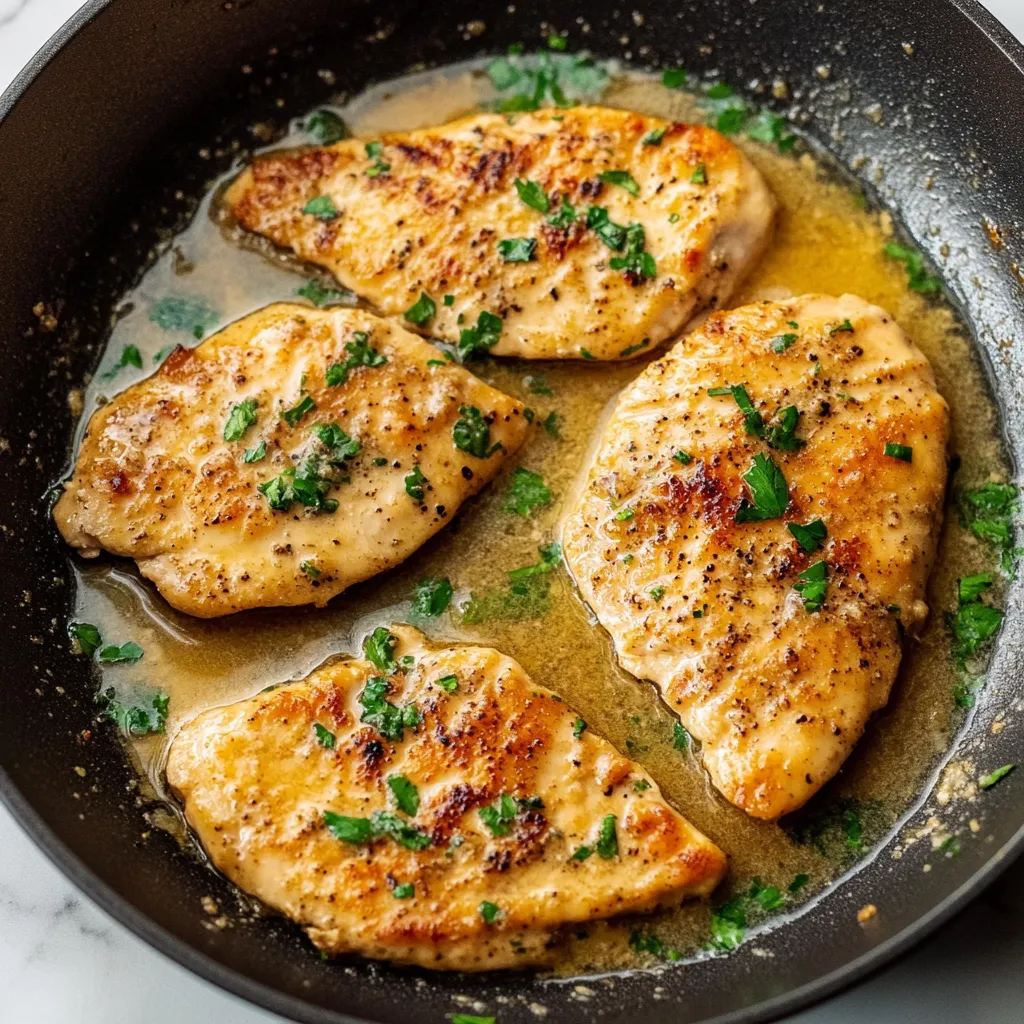
- Heat a large skillet over medium-high heat. Add the olive oil and 1 tablespoon of butter, swirling to coat the pan as the butter melts. The pan should be genuinely hot before adding chicken—the butter should foam but not brown. Carefully place two of the floured cutlets in the pan without overlapping. Cook undisturbed for about 3 to 4 minutes until the bottom develops golden-brown color and the chicken releases easily from the pan. Flip and cook the other side for another 3 to 4 minutes until golden brown and the chicken reaches 165°F internal temperature when tested with an instant-read thermometer. Transfer the cooked cutlets to a plate and tent loosely with foil to keep warm. Add another tablespoon of butter to the pan and repeat with the remaining two cutlets. Transfer them to the plate with the first batch.
- Make the lemon butter sauce:
- With all the chicken cooked and set aside, keep the skillet over medium heat. Pour in the white wine and fresh lemon juice. Use a wooden spoon to scrape up all the browned bits stuck to the bottom of the pan—these fond bits are packed with flavor and will enrich your sauce. Let the wine-lemon mixture simmer for about 3 to 5 minutes, stirring occasionally, until it reduces by roughly half and becomes slightly thickened and concentrated. The bubbling should be active but not violent. Remove the pan from heat—this is important for the next step.
- Finish the sauce with butter:
- Off heat, add the remaining 2 tablespoons of cold butter to the reduced sauce. Swirl the pan or stir vigorously until the butter melts completely and emulsifies into the sauce, creating a glossy, silky texture. The butter should incorporate smoothly rather than separating into greasy pools—removing the pan from heat before adding it prevents the sauce from breaking. Taste and adjust seasoning with salt and pepper as needed. The sauce should taste bright and tangy with rich butteriness.
- Return chicken and serve:
- Return all the cooked chicken cutlets to the skillet with the sauce, turning them to coat with the lemon butter. Spoon sauce over the top of each piece. Sprinkle the chopped fresh parsley over everything for color and freshness. If desired, grate fresh Parmesan cheese over the top using a microplane. Serve immediately while hot, with the sauce spooned generously over each portion. The chicken should be incredibly tender with golden exterior and bright, flavorful sauce coating every bite.
 Pin it
The technique that improved my chicken scallopini most dramatically was learning to actually pound the chicken uniformly thin rather than just giving it a few halfhearted whacks. My early attempts produced chicken that was thin in some spots and thick in others, which meant the thin parts dried out before the thick parts finished cooking. Once I learned to place the chicken between plastic wrap and systematically pound from the center outward using even strokes until the entire cutlet was uniformly ¼ inch thick, my results transformed completely. The chicken cooked evenly, stayed incredibly tender throughout, and developed perfect golden color in the brief cooking time. Now I'm meticulous about that pounding step, taking the extra minute to ensure genuine uniformity, because I know it's what makes the difference between mediocre chicken with dry spots and genuinely excellent scallopini that's tender throughout.
Understanding Scallopini Technique
Scallopini or scaloppine refers to the Italian technique of pounding meat very thin, then quickly pan-frying it until just cooked through. This method works beautifully for naturally tender cuts like chicken breast, veal, or pork tenderloin that can dry out with prolonged cooking. Pounding the meat thin serves multiple purposes beyond just reducing thickness. It tenderizes by breaking down muscle fibers and connective tissue, making the meat more tender than it would be unpounded.
The thin profile created by pounding also ensures incredibly fast cooking—these cutlets need just 3 to 4 minutes per side compared to 6 to 8 minutes for unpounded breasts. This speed prevents moisture loss and overcooking that would create dry, tough chicken. The large, flat surface area also develops more golden-brown crust during the brief cooking time, creating better flavor through the Maillard reaction. Uniform thickness across the entire cutlet ensures every part cooks at the same rate, preventing the thin ends from drying out while the thick center finishes.
The flour coating enhances browning while creating texture that helps sauce adhere rather than sliding off. It also prevents the chicken from sticking to the pan during the initial contact with hot oil. The light coating browns quickly and creates appealing golden color that makes the dish look restaurant-quality. This coating is lighter than breading and allows the chicken's natural flavor to shine while still providing structure.
Building Pan Sauce Fundamentals
The lemon butter sauce demonstrates fundamental pan sauce technique that applies to countless other dishes once you understand the principles. After removing the protein from the pan, liquid gets added to deglaze—meaning it dissolves and incorporates all those flavorful browned bits (fond) stuck to the pan bottom from cooking. This fond contains concentrated flavor from the Maillard reaction and would be wasted if you just washed the pan. The scraping and stirring during deglazing is what creates deeply flavored sauce from simple ingredients.
The liquid then reduces through simmering, which evaporates water and concentrates flavors while the natural sugars and proteins thicken it slightly. Reduction is what transforms thin, watery wine into complex, concentrated sauce base. The amount of reduction determines final flavor intensity—more reduction creates stronger, more concentrated taste. For this recipe, reducing by half creates balanced flavor that's bright without being harsh.
Finishing the sauce with cold butter off heat is a French technique called monter au beurre (mounting with butter) that creates luxurious, glossy texture through emulsification. The butter must be cold and the pan must be off heat because too much heat causes the butterfat to separate rather than emulsifying smoothly. The vigorous swirling or whisking helps the butter particles disperse evenly throughout the sauce, creating that characteristic silky, coating texture. This technique transforms simple pan drippings into restaurant-quality sauce.
Variations and Flavor Additions
While the classic lemon butter version is wonderful, the basic scallopini technique welcomes numerous variations that create different flavor profiles. Chicken piccata adds capers—about 2 tablespoons drained—to the sauce for briny, tangy pops that complement the lemon beautifully. The capers go in with the wine and lemon juice during deglazing. This creates the iconic Italian-American piccata flavor.
Marsala scallopini substitutes Marsala wine for the white wine and often includes sautéed mushrooms added to the sauce. The sweet Marsala creates richer, deeper flavor compared to the bright lemon version. Mushroom cream sauce variation uses chicken broth instead of wine and finishes with heavy cream along with the butter, creating something closer to comfort food. Sautéed mushrooms cooked before the chicken add earthy richness.
For extra lemon flavor, add the zest of half to one lemon along with the juice—the oils in lemon zest contribute aromatic complexity that juice alone can't provide. Fresh thyme or oregano can supplement or replace the parsley for different herbal notes. A splash of heavy cream swirled into the finished sauce creates richer, more luxurious texture for special occasions. Crushed red pepper flakes add gentle heat that pairs beautifully with lemon.
 Pin it
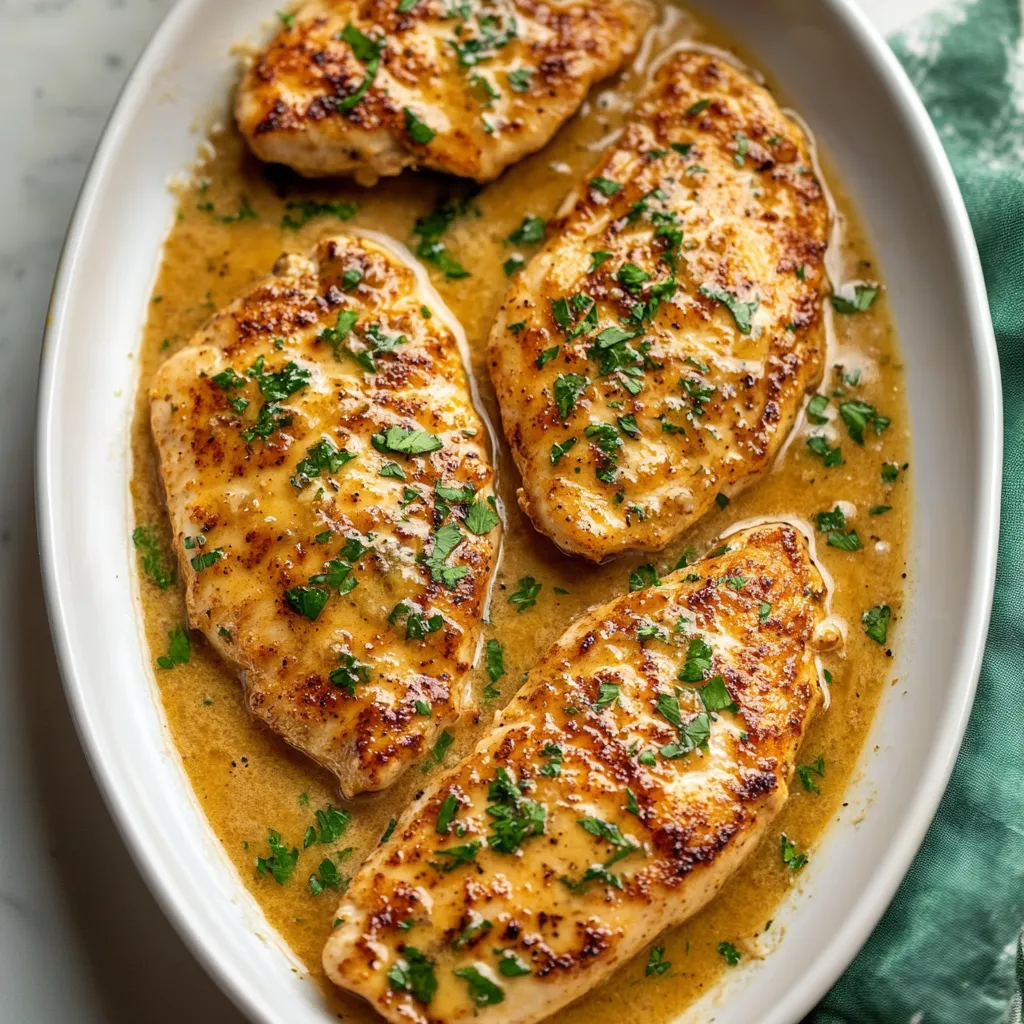
This lemon butter chicken scallopini has become my go-to weeknight dinner when I want something that feels special and restaurant-quality without requiring significant time or complicated technique. The bright lemon sauce never fails to make the meal feel elegant and impressive, while the tender chicken with golden crust satisfies completely. I love that it comes together in just over 30 minutes while teaching fundamental techniques like pounding meat, pan-frying, and making pan sauces that apply to countless other recipes. The fact that guests consistently rave about it and assume I've spent hours cooking when the actual hands-on time is minimal makes it perfect for entertaining without stress. Once you taste how pounding the chicken thin creates impossibly tender texture, and how the simple lemon butter sauce tastes like something from an upscale Italian restaurant despite taking minutes to make, you'll understand why this recipe has earned permanent status in my dinner rotation and why I've made it hundreds of times without ever getting tired of the bright, satisfying flavors.
Frequently Asked Questions
- → Can I use chicken thighs instead of breasts?
- Yes, boneless skinless chicken thighs work great. Just pound them to even thickness and adjust cooking time as needed since thighs can be a bit thicker.
- → What can I substitute for white wine?
- Chicken broth or stock works perfectly. You'll still get a delicious sauce, just without the wine's depth. Add a splash of extra lemon juice if you want more tang.
- → How do I know when the chicken is done?
- The internal temperature should reach 165°F on a meat thermometer. The chicken will also feel firm to the touch and the juices will run clear when pierced.
- → Can I make this ahead of time?
- This dish is best served fresh. However, you can pound and season the chicken a few hours ahead and keep it covered in the fridge until you're ready to cook.
- → What should I serve with chicken scallopini?
- Pasta, mashed potatoes, or rice are perfect for soaking up the sauce. A simple green salad or steamed vegetables round out the meal nicely.
- → Why is my chicken tough or dry?
- Overcooking is usually the culprit. Since the cutlets are thin, they cook fast. Use a thermometer and pull them off heat right at 165°F to keep them juicy.