
 Pin it
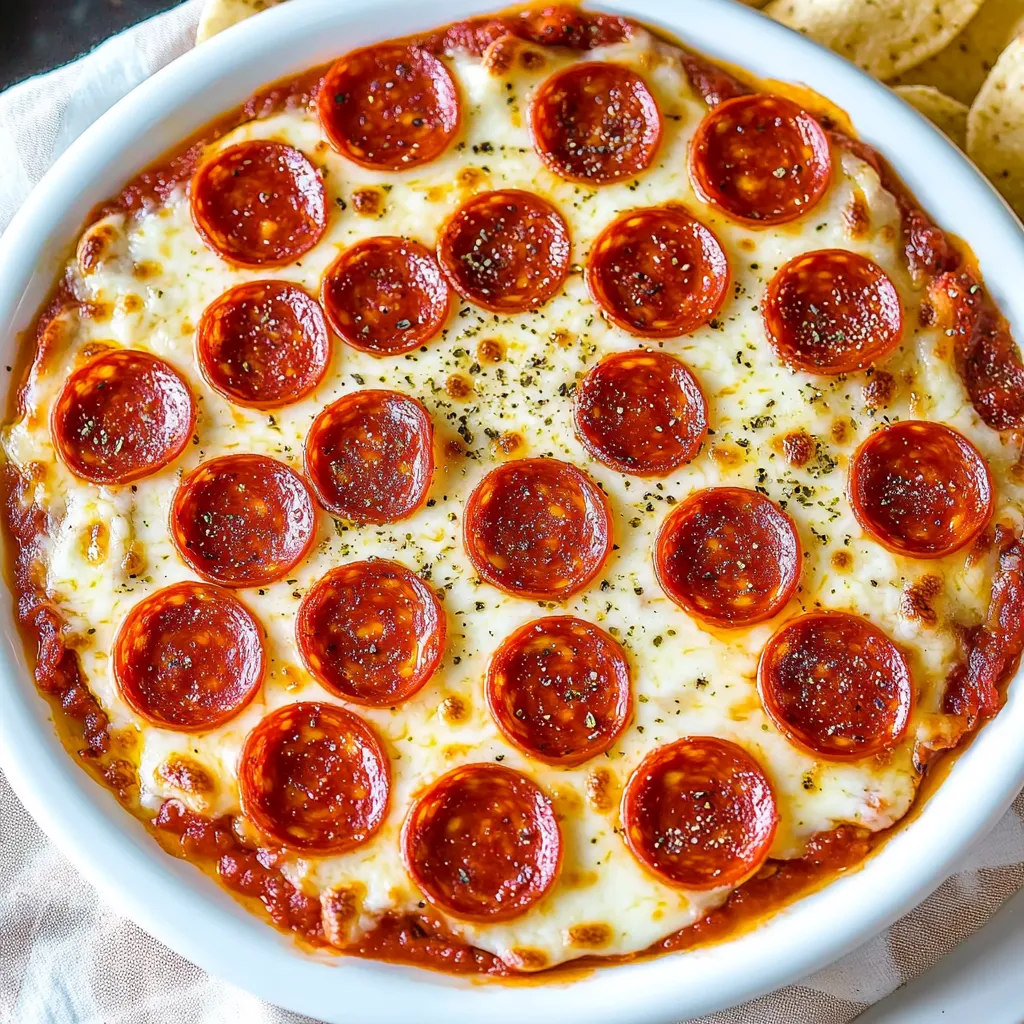
This pepperoni pizza dip transforms everything you love about pizza into a warm, gooey, scoopable form that's dangerously addictive at parties. Layers of tangy cream cheese, savory pepperoni, rich marinara sauce, and melted mozzarella come together in a baking dish to create something that tastes exactly like your favorite pizza but in dip form. The edges get bubbly and slightly caramelized while the center stays creamy and luxurious, and those pepperoni slices on top curl up into crispy little cups that catch pools of melted cheese. Serve this at any gathering and watch it disappear within minutes as people keep returning for just one more scoop, unable to resist the combination of flavors and textures that hit all the comfort food notes perfectly.
I made this dip somewhat skeptically the first time, thinking it sounded good in theory but might be too rich or heavy in practice. My husband took one bite and immediately went back for more, eating nearly a quarter of the entire dish while it was still warm from the oven and declaring it one of the best things I'd ever made. His enthusiasm was so genuine that I found myself standing next to him at the counter, scooping up this cheesy dip with crackers like I hadn't eaten in days. We've since brought it to game day parties, family gatherings, and casual dinners with friends, and the reaction is always the same—people hover around the dish, unable to stop dipping until it's completely gone. I now make a double batch anytime I know there will be more than four people because a single recipe never lasts as long as I think it will.
Ingredients and What Makes Them Essential
- Cream cheese (8 ounces, full-fat): This creates the rich, tangy base layer that gives the dip its characteristic creamy texture and provides a flavor foundation that balances the acidity of the marinara. Full-fat cream cheese is essential here—don't substitute low-fat or fat-free versions, which have different moisture content and won't spread as smoothly or taste as luxurious. Choose a quality brand like Philadelphia that's known for smooth, creamy texture. The cream cheese needs to come to room temperature before using, which takes at least 30 minutes sitting on your counter, or you won't be able to spread it evenly without tearing.
- Pepperoni (4 to 6 ounces, thinly sliced): This provides the signature pizza flavor and adds savory, slightly spicy, meaty richness throughout the dip. Look for pre-sliced pepperoni that's cut as thin as possible, which crisps up nicely during baking and distributes flavor more evenly than thick slices. Uncured pepperoni made without nitrates is a healthier choice if you're concerned about additives, though traditional cured pepperoni has that classic flavor many people prefer. The pepperoni goes in two places—some layered in the middle and more on top where it curls into crispy cups as it bakes.
- Marinara sauce (24-ounce jar): This brings the essential tomato element that makes the dip taste unmistakably like pizza. Any good-quality marinara or pizza sauce works here, and using a jarred product keeps the recipe simple without requiring you to make sauce from scratch. Look for marinara with minimal added sugar and recognizable ingredients—tomatoes, garlic, herbs, and olive oil should be the main components. The full jar creates a generous sauce layer that keeps the dip from being too heavy or cheese-forward, providing balance and moisture.
- Shredded mozzarella cheese (2 cups): Mozzarella delivers that classic pizza cheese experience with its mild flavor and excellent melting properties that create stretchy, gooey pulls. Pre-shredded mozzarella is convenient and works perfectly fine here, or you can shred your own from a block for slightly better melting quality. Whole milk mozzarella gives you the richest flavor and best texture, though part-skim works if that's what you have. The cheese creates the top layer that browns and bubbles in the oven, forming that irresistible golden crust.
- Dried oregano and basil (1 teaspoon each): These classic Italian herbs provide the aromatic, slightly bitter, earthy notes that define pizza seasoning. Dried herbs work better than fresh in this application because they're more concentrated and won't release excess moisture into the dip. You can substitute Italian seasoning blend if that's what you have available, which typically contains oregano, basil, thyme, and sometimes marjoram—all complementary flavors. Some cooks like adding thyme or marjoram separately for more complex herbal notes.
Step-by-Step Instructions
- Bring cream cheese to room temperature:
- This is a crucial preparatory step that cannot be skipped or rushed without affecting your results. Take your cream cheese out of the refrigerator at least 30 minutes before you plan to start assembling the dip, or even longer if your kitchen is particularly cold. The cream cheese needs to soften completely until it yields easily when you press your finger into it, which makes it spreadable without tearing or clumping. Cold cream cheese is nearly impossible to spread in an even layer and will create a lumpy, uneven base that affects the entire dip. If you forget to take it out ahead of time, you can carefully microwave the cream cheese in 10-second intervals, checking between each burst, but room-temperature softening gives you better texture.
- Preheat oven and prepare your dish:
- Turn your oven to 350°F and let it preheat fully while you assemble the dip, which ensures even cooking from the moment the dish goes in. Get out a 9-inch pie plate or similar shallow baking dish that holds about 6 cups—the shallow shape is important because it allows the cheese to brown nicely on top and ensures everything heats through evenly. If your dish is too deep, the top will brown before the center heats properly. Lightly spray or grease the baking dish to prevent sticking, though this isn't strictly necessary since the cream cheese provides enough fat. Have a rubber spatula ready for spreading the cream cheese smoothly.
- Spread the cream cheese base:
- Scoop your softened cream cheese into the prepared baking dish and use your rubber spatula to spread it across the entire bottom in an even layer. Work from the center outward, using smooth spreading motions rather than pressing down hard, which can create uneven spots. The cream cheese layer should extend all the way to the edges of the dish without any gaps, and it should be roughly the same thickness everywhere—about a quarter-inch thick. Take your time with this step because an uneven base layer affects how the other ingredients sit on top. If the cream cheese resists spreading smoothly, it's not soft enough yet and needs more time at room temperature.
- Layer the first pepperoni and herbs:
- Take some of your pepperoni slices and arrange them over the cream cheese layer. You have flexibility here depending on how much pepperoni flavor you want—you could use just seven slices distributed evenly across the surface, or you could cover the entire cream cheese layer with slightly overlapping slices for maximum pepperoni impact. Laying them flat in a single layer works best at this stage so they embed slightly into the cream cheese. Once your pepperoni is arranged, take half of your dried oregano and basil—about half a teaspoon of each—and sprinkle it evenly over the pepperoni layer. The herbs will stick to the pepperoni and cream cheese, seasoning this layer and beginning to build those classic pizza flavors.
- Add the marinara sauce layer:
- Open your jar of marinara sauce and give it a good stir to incorporate any separated liquid or settled solids. Pour the entire jar slowly over the pepperoni and herb layer, starting from the center and working outward. Use a spoon to spread the sauce gently if needed, making sure it covers the entire surface and reaches all the edges of the dish. The sauce layer should be generous and even, creating a barrier between the bottom layers and the cheese that will go on top. Don't worry if some of the sauce pools slightly in spots—it will even out during baking. Make sure your baking dish is large enough to accommodate all this sauce without overflowing, which is why a 9-inch pie plate or similar size works well.
- Add cheese and remaining herbs:
- Take your shredded mozzarella cheese and sprinkle it evenly over the entire surface of the marinara sauce, creating a complete coverage that goes edge to edge. You want a generous layer—about two cups total—that will melt into that characteristic stretchy, golden-brown pizza cheese topping. Make sure the cheese distribution is relatively even so every portion of the finished dip has the same amount of melted cheese. Once the cheese is in place, sprinkle the remaining oregano and basil over the top—the other half teaspoon of each. The herbs will sit on the cheese surface and infuse their flavor as everything bakes together.
- Top with final pepperoni layer:
- Take your remaining pepperoni slices and arrange them decoratively over the cheese layer. Unlike the bottom layer where they laid flat, these top slices can be placed however you like since they'll be visible in the finished dish. You could arrange them in concentric circles, scatter them randomly, or create any pattern that appeals to you. During baking, these pepperoni slices will curl up at the edges, forming little cups that catch melted cheese and create appealing visual interest. Use as many or as few slices as you prefer—some people like a lot of pepperoni on top while others prefer a lighter touch. If you enjoy spicy food, this is the moment to sprinkle red pepper flakes over the entire surface before baking.
- Bake until bubbly and perfect:
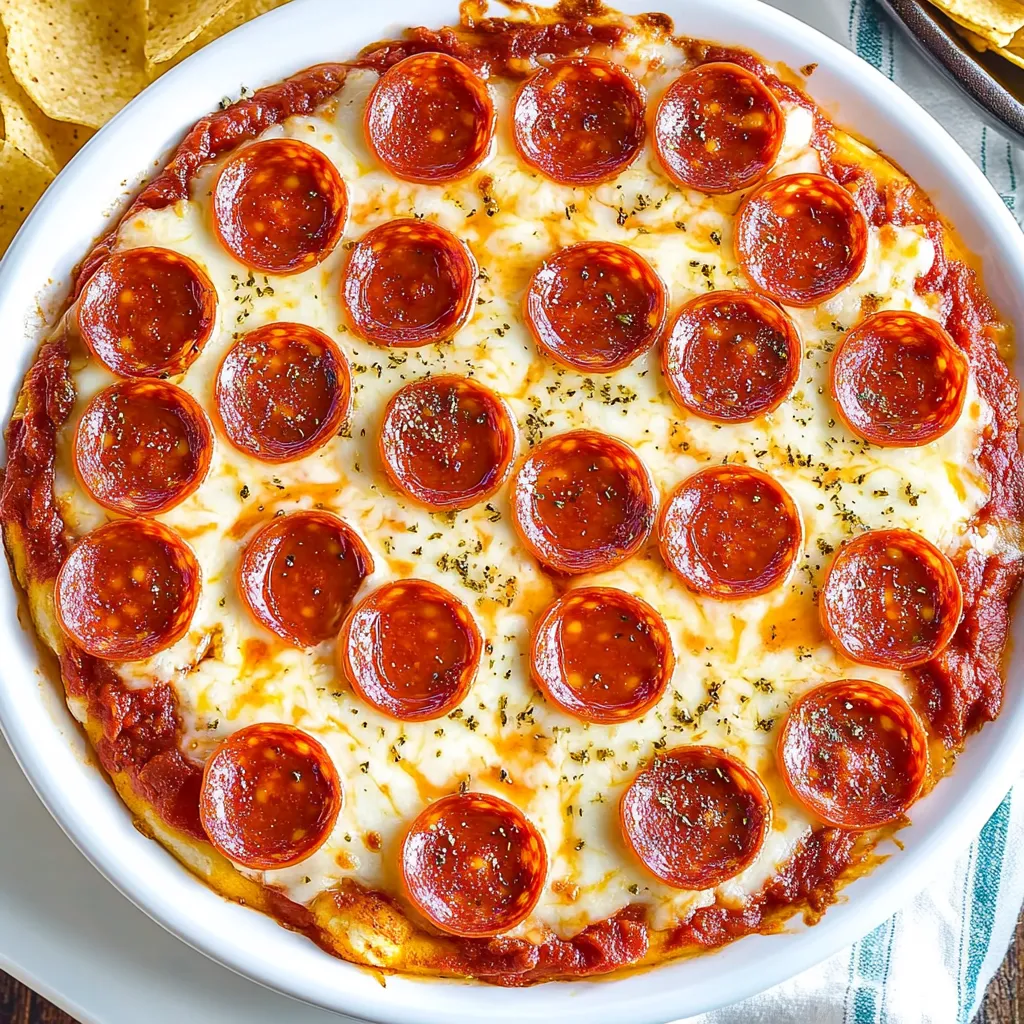
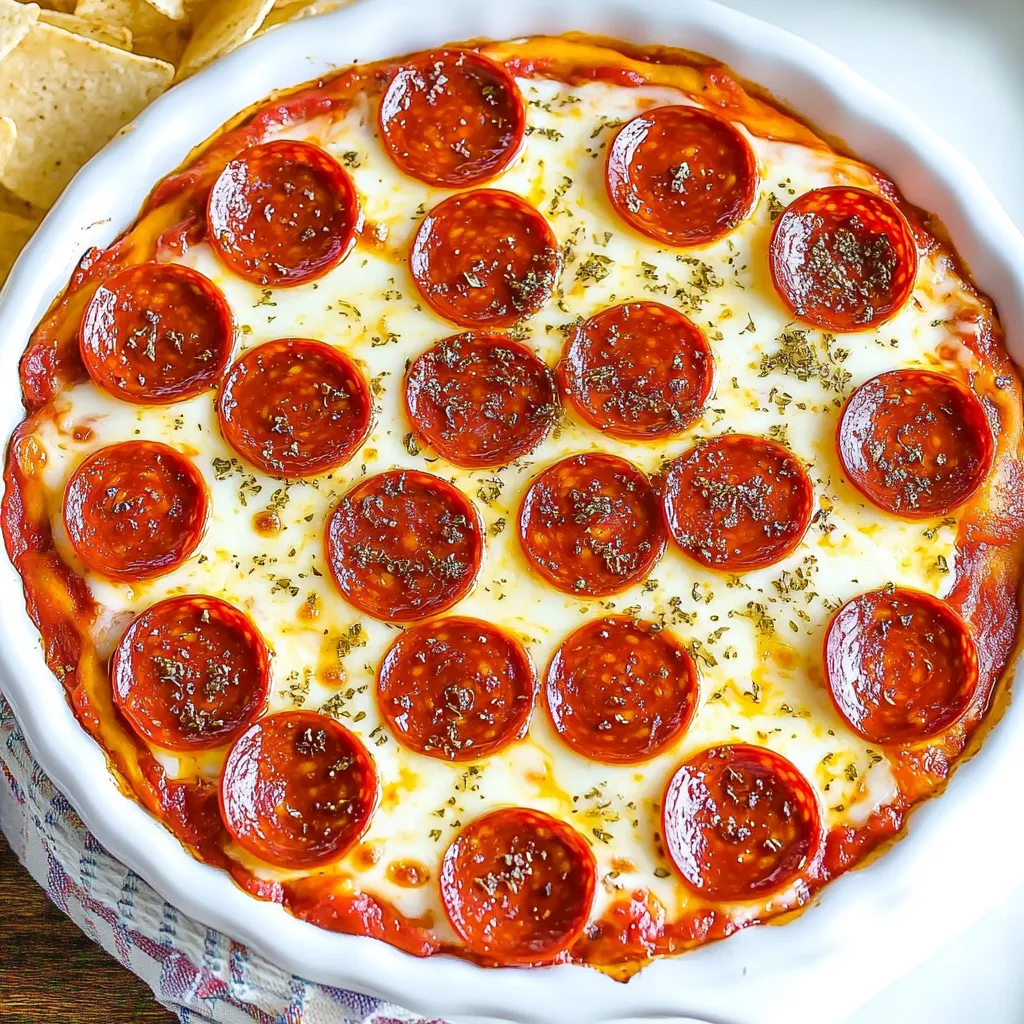
- Carefully transfer your assembled dip to the preheated 350°F oven, placing it on the center rack for even heat circulation. Set a timer for 15 minutes, then start checking on it. You're looking for several visual cues that tell you it's done: the cheese should be fully melted and bubbling actively across the entire surface, the edges should be browning slightly and pulling away from the sides of the dish, and the pepperoni on top should have curled up with crispy edges. This usually takes 15 to 20 minutes total, but ovens vary, so rely on visual cues rather than just timing. If you prefer more browning on the cheese, you can run it under the broiler for an additional minute or two at the end, watching constantly to prevent burning. When it's done, the dip should be bubbling enthusiastically and smell incredibly fragrant with pizza aromas.
- Cool briefly before serving:
- Remove the hot dip from the oven using oven mitts and set it on a heat-safe surface or trivet. Let it cool for about 5 minutes before serving—this allows the cheese to set slightly so it's less liquidy and dangerous, and it brings the temperature down to something that won't burn mouths. The dip is best served warm when everything is still melty and fluid, but it's also delicious at room temperature. Set out an assortment of dippers around the dish—corn chips, pita chips, crackers, bread sticks, or sliced baguette all work beautifully. Provide small plates and napkins since this is a messy, indulgent dip that tends to drip. Keep a serving spoon nearby for scooping, and be prepared for people to hover around the dish throughout your entire event.
 Pin it
The ingredient I'm most particular about in this recipe is definitely the marinara sauce, and I've learned that quality matters more than I initially thought. The first time I made this dip, I used whatever jar was cheapest at the grocery store without paying attention to the ingredient list, and the finished dish tasted overly sweet and one-dimensional. When I switched to a better-quality marinara with real tomatoes, garlic, and herbs as the primary ingredients and minimal added sugar, the entire dip improved dramatically. The tomato flavor was brighter and more authentic, the herbs came through more clearly, and the overall balance was much better without that cloying sweetness covering everything. My husband noticed immediately and commented that it tasted more like actual pizza from our favorite Italian restaurant. Now I specifically look for marinara sauce that lists tomatoes first and doesn't have high-fructose corn syrup or excessive sugar in the ingredients, even if it costs a dollar or two more. The difference in the final dish is completely worth that small extra investment, and it's taught me to pay more attention to jarred sauce quality across all my cooking.
Understanding Layered Dips and Their Appeal
Layered dips have become party staples because they offer visual appeal, textural variety, and complex flavors that unfold as you eat through the different strata. Unlike uniform dips where everything is mixed together, layered dips let you taste each component individually while also experiencing how they work together. The architecture of distinct layers creates anticipation as people scoop down through the levels, and it allows guests to control how much of each element they get on their chip or cracker. This pizza dip specifically mimics the structure of an actual pizza turned on its side—crust becomes cream cheese, sauce stays sauce, cheese remains cheese, and toppings sit on top exactly where they belong.
The order of layers in this dip isn't arbitrary but follows principles that ensure the best possible texture and flavor distribution. The cream cheese goes on the bottom because it's the densest, most stable component that won't shift or run during baking. It creates a sturdy foundation that prevents the other ingredients from sinking to the bottom of the dish. The pepperoni and herbs come next, positioned where they can infuse flavor into both the cream cheese below and the marinara above. The sauce layer sits in the middle where it acts as a moisture barrier and flavor bridge between the rich dairy components and the toppings. The mozzarella goes on top where it can brown and bubble, creating that appealing visual presentation and textural contrast between crispy edges and gooey center.
Temperature management matters significantly in layered dips because you need everything to heat through evenly without overcooking the top or leaving the center cold. Baking at 350°F rather than higher temperatures gives the heat time to penetrate through all the layers without browning the cheese too quickly or drying out the edges. Starting with room-temperature cream cheese helps ensure even heating since cold cream cheese in the center would take much longer to warm up, potentially causing the top to burn before the bottom reaches the right temperature. The relatively short baking time of 15 to 20 minutes is sufficient because nothing needs to actually cook—you're just melting cheese and heating pre-cooked or ready-to-eat ingredients.
Make-Ahead and Storage Strategies
This pizza dip is an ideal make-ahead appetizer because you can assemble it completely hours or even a day before serving, then bake it fresh when guests arrive. To prep ahead, layer all the ingredients in your baking dish exactly as described, cover the dish tightly with plastic wrap or aluminum foil, and refrigerate for up to 24 hours. When you're ready to serve, remove the cold dip from the refrigerator and let it sit at room temperature for about 15 minutes to take the chill off, then bake as directed. You may need to add 5 extra minutes to the baking time since you're starting from a colder temperature, so watch for those bubbling, browning indicators rather than relying strictly on timing.
Leftover dip keeps remarkably well in the refrigerator for up to a week when stored in an airtight container, which makes it useful beyond just party food. You can reheat individual portions in the microwave for quick snacks, though the texture won't be quite as appealing as freshly baked—the cream cheese layer can separate slightly and the pepperoni won't be as crispy. A better reheating method is spreading the leftover dip in a shallow oven-safe dish and warming it at 325°F for 10 to 15 minutes until heated through and bubbly again. One clever way to use leftover dip is as a sauce for pasta—cook some penne or rigatoni, then toss it with scoops of the pizza dip for an incredibly rich, flavorful pasta dish that tastes like deconstructed pizza.
While you technically can freeze this dip, the results are less than ideal due to the cream cheese, which tends to separate and become grainy when frozen and thawed. If you do need to freeze it, do so before baking rather than after, and be prepared for some textural changes. Wrap the unbaked dip very tightly in plastic wrap and foil, freeze for up to two months, then thaw completely in the refrigerator overnight before baking. The cheese might appear slightly separated or watery after thawing, but once it bakes and everything melts together, the texture improves significantly even if it's not quite as smooth as a fresh batch.
Customization and Variation Ideas
The basic formula of this pizza dip is endlessly adaptable to different flavor preferences and dietary needs, making it a template you can modify based on what you have available or what your crowd prefers. For a supreme pizza version, add layers of diced bell peppers, sliced black olives, and sliced mushrooms between the sauce and cheese layers. These vegetables add nutrition, color, and varied textures while maintaining the pizza theme. If you're feeding Italian sausage lovers, brown and crumble some Italian sausage and layer it along with or instead of some of the pepperoni for a heartier, more substantial dip.
Vegetarian guests will appreciate a meatless version that skips the pepperoni entirely and focuses on vegetables and cheese. Try layering in roasted red peppers, sautéed spinach, or sun-dried tomatoes for robust flavor without meat. You could also add a layer of pesto between the cream cheese and marinara for aromatic, herby complexity that makes the dip feel more gourmet. For an even richer version, mix some ricotta cheese with the cream cheese base—about half and half—which creates a texture more like stuffed pizza or lasagna.
The cheese topping offers room for experimentation beyond standard mozzarella. Mixing in some sharp provolone adds tangy bite, while a handful of grated Parmesan creates nutty depth and helps the top brown more appealingly. For maximum indulgence, try a blend of mozzarella, provolone, and fontina, which melts into an incredibly creamy, stretchy combination with complex flavor. If serving this at a gathering with varied tastes, you could even make two smaller dishes with different toppings—one classic pepperoni and one loaded with vegetables—so everyone finds something they love.
Serving Suggestions and Pairing Ideas
While the dip itself is the star, choosing the right accompaniments enhances the experience and ensures guests can actually enjoy it without making a mess. Sturdy corn tortilla chips are ideal because they hold up to the weight of the dip without breaking, and their slight saltiness complements the rich, savory flavors. Pita chips offer a similar sturdiness with a different flavor profile, and their irregular shapes make scooping easier. Regular crackers work but should be thick, sturdy varieties like Wheat Thins or Triscuits rather than delicate water crackers that snap under the dip's weight.
Breadsticks, whether soft or crispy, make excellent dippers that feel especially appropriate given the pizza theme. You could even make or buy fresh pizza dough, cut it into strips, brush with garlic butter, bake until golden, and serve those alongside the dip for maximum thematic consistency. Sliced baguette or Italian bread, lightly toasted, provides a more substantial vehicle that can hold generous amounts of the dip and creates something closer to actual pizza when loaded up. Vegetables like bell pepper strips, celery sticks, or carrot sticks offer a lighter option for health-conscious guests, though they're admittedly less fun than carbs for this indulgent dip.
This dip works beautifully as part of a larger appetizer spread rather than being the sole offering. Pair it with lighter options like a fresh vegetable platter with ranch dip, a fruit and cheese board, or a simple green salad so guests have variety and can balance the richness of the pizza dip. For beverages, the robust flavors pair well with cold beer, especially lagers or pilsners that cut through the cheese, or with Italian red wines like Chianti that complement the tomato and herb flavors. For non-alcoholic options, sparkling water with lemon or a crisp, cold cola both work nicely.
 Pin it
This pepperoni pizza dip has become my secret weapon for entertaining because it delivers maximum impact with minimal effort and never fails to impress guests who think I've done something far more complicated than I actually have. The combination of familiar pizza flavors in an unexpected dip format creates conversation and excitement, while the make-ahead capability means I'm never stressed or scrambling when people arrive. I've served this at Super Bowl parties, casual backyard gatherings, holiday appetizer spreads, and date nights at home, and it's been a hit every single time regardless of the crowd. The recipe is so forgiving that even when I've accidentally used slightly different amounts of ingredients or baked it a few minutes longer than intended, it still turns out delicious. Once you've made this dip a couple of times and seen how enthusiastically people respond to it, you'll understand why it's earned a permanent place in my entertaining repertoire and why I always keep the ingredients on hand just in case I need an impressive appetizer on short notice.
Frequently Asked Questions
- → Can I make this pizza dip ahead of time?
- Yes! Assemble the dip, cover it, and refrigerate for up to 24 hours. When ready to serve, let it sit at room temperature for 15 minutes, then bake as directed.
- → What should I serve with pepperoni pizza dip?
- Tortilla chips, pita chips, crackers, sliced baguette, or breadsticks all work great. You can even use veggie sticks if you want something lighter.
- → Can I use pizza sauce instead of marinara?
- Absolutely! Pizza sauce works just as well as marinara. Use whichever one you have on hand or prefer.
- → How do I store leftover pizza dip?
- Store leftovers in an airtight container in the fridge for up to a week. Reheat in the microwave or oven until warmed through.
- → Can I add other toppings to this dip?
- Sure! Try adding sliced olives, bell peppers, mushrooms, or Italian sausage. Just layer them in with the other ingredients before baking.
- → Do I have to use full-fat cream cheese?
- Full-fat cream cheese gives the best texture and flavor, but you can use reduced-fat if you prefer. Just know it might be a bit less creamy.
- → How do I know when the dip is done?
- The dip is ready when the cheese is melted and bubbly, and everything is heated through. This usually takes about 20 minutes at 350°F.