
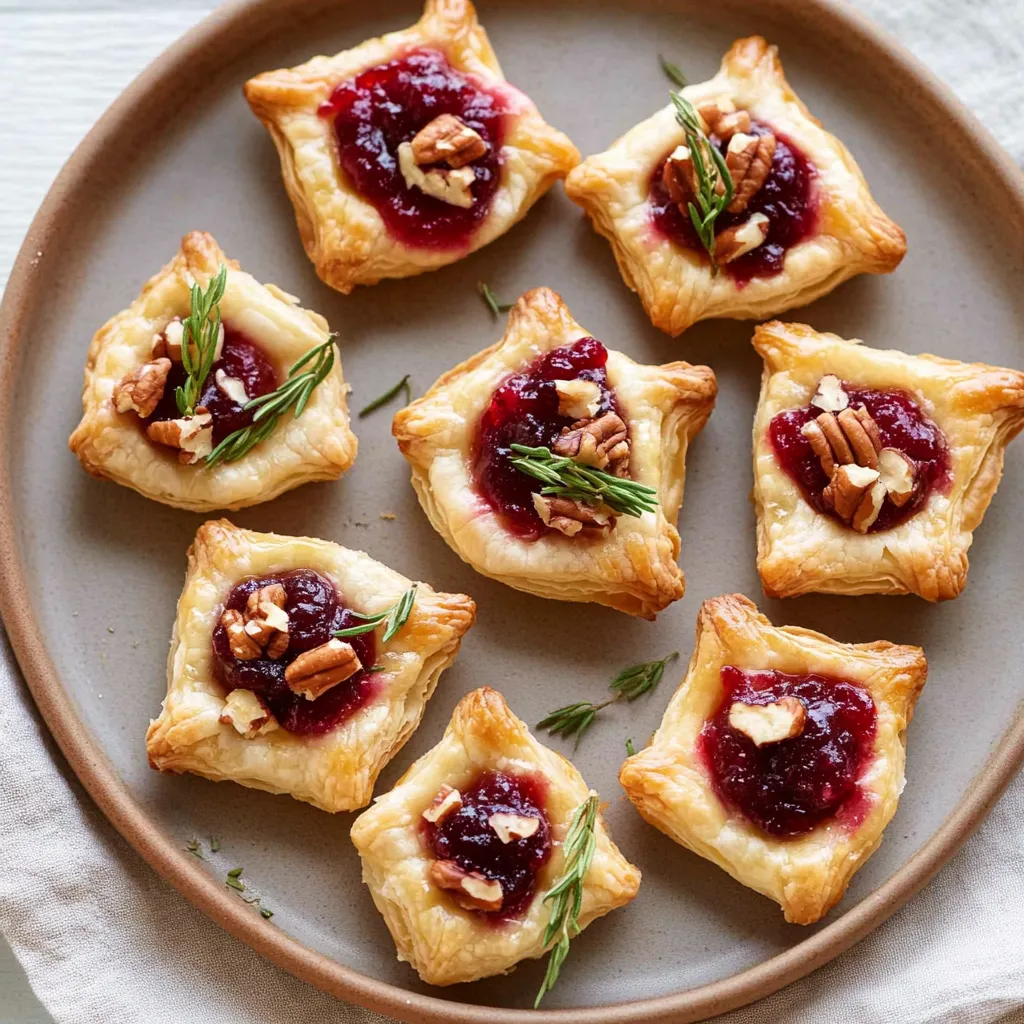
 Pin it
Cranberry brie bites are one of those appetizers that look fancy and complicated but are actually laughably easy - puff pastry squares pressed into muffin tins, topped with a cube of brie and spoonful of cranberry sauce, then baked until the pastry puffs and the cheese melts into gooey perfection. The combination of buttery, flaky pastry, creamy melted brie, tart-sweet cranberry, and crunchy pecans creates this perfect balance of flavors and textures that makes them genuinely addictive rather than just pretty finger food. What makes these particularly appealing for entertaining is how they use store-bought puff pastry which eliminates any intimidation factor, and how they can be assembled hours ahead and baked right before guests arrive so you're not stuck in the kitchen during your own party. The fact that they disappear in literally two bites means you should probably make a double batch because people will eat way more than you think.
I started making cranberry brie bites about eight years ago after eating something similar at a holiday party and being shocked when the host told me they took ten minutes to assemble. The first batch I made used way too much cranberry sauce which leaked everywhere during baking and made the pastry soggy. After learning that a small spoonful is sufficient and that pressing the pastry firmly into the muffin cups prevents leaking, they became foolproof. Now I make them for every holiday gathering because they're one of those appetizers that people assume required effort when they actually didn't, and because I personally eat about six of them before guests even arrive.
Ingredients and What Makes Them Essential
- Frozen Puff Pastry (1 sheet from a 17.3-ounce package): Puff pastry is laminated dough with hundreds of butter layers that puff dramatically when baked, creating flaky texture. Buy frozen puff pastry sheets (Pepperidge Farm is the most common brand in the US). Thaw according to package directions - usually 40 minutes at room temperature - but don't let it get too warm or it becomes difficult to work with.
- Brie Cheese (8 ounces, cut into small cubes): Brie is a soft French cheese with edible white rind and creamy interior that melts beautifully. Use full-rind brie from the cheese section, not spreadable brie from a container. Cut it into ½-inch cubes while cold - it's much easier to cut cleanly when cold than when room temperature. You can substitute goat cheese, camembert, or taleggio if preferred.
- Cranberry Sauce (¾ cup, homemade or canned): Cranberry sauce provides tart-sweet contrast to the rich cheese and buttery pastry. Homemade cranberry sauce with orange zest tastes fresher, but canned whole berry or jellied cranberry sauce works perfectly well. The sauce should be thick, not runny - if using very loose sauce, drain excess liquid or it will make pastry soggy.
- Pecans (½ cup, chopped): Pecans add buttery crunch and nutty flavor. Use raw pecans rather than roasted/salted which would be too salty. Chop them into small pieces - about ¼-inch - so they distribute evenly. You can substitute walnuts or omit nuts entirely for nut-free version.
- Fresh Rosemary or Thyme (2 teaspoons, finely chopped): Fresh herbs add aromatic, savory notes that balance the sweetness. Rosemary is traditional and provides piney flavor, while thyme is more delicate. Use fresh, not dried, which doesn't have the same impact. Chop very finely so each bite gets a little herb flavor.
- All-Purpose Flour (for dusting surface): Just enough flour to prevent pastry from sticking during rolling and cutting.
Optional:
- Honey or Balsamic Glaze (for drizzling): A small drizzle after baking adds extra sweetness or tang.
Step-by-Step Instructions
- Prepare Your Pan and Pastry:
- Preheat your oven to 375°F and position a rack in the center. Generously spray a 24-cup mini muffin tin with nonstick cooking spray - be thorough because puff pastry sticks stubbornly if the pan isn't well-greased. Remove one sheet of puff pastry from the freezer and let it thaw at room temperature for about 40 minutes, or according to package directions. The pastry is ready when it's pliable but still cold. If it gets too warm and soft, pop it in the refrigerator for 10 minutes to firm up.
- Roll and Cut:
- Lightly flour your work surface and rolling pin. Unfold the thawed puff pastry sheet and roll it out very gently to smooth any creases and make it slightly larger - you want roughly a 10x12-inch rectangle. Don't roll it too thin or the pastry won't puff properly. Use a sharp knife or pizza cutter to cut the pastry into 24 squares. The easiest way is to cut it into 4 rows lengthwise and 6 rows crosswise, creating 24 roughly equal squares about 2 inches each. They don't need to be perfectly precise.
- Form Cups:
- Take each pastry square and press it gently but firmly into a mini muffin cup. The pastry should line the bottom and come up the sides, creating a small cup. Press firmly into the corners and up the sides to ensure good contact - this prevents the pastry from shrinking away during baking. The pastry will overlap the top of the muffin cup slightly, which is fine. Repeat with all 24 squares until every muffin cup has a pastry liner. If the pastry is becoming too soft and difficult to work with, refrigerate the filled muffin tin for 10 minutes to firm it up.
- Add Cheese:
- Cut your brie into small cubes about ½ inch - you need 24 pieces total. Place one cube of brie in the center of each pastry cup. Don't use too much cheese - one small cube is sufficient and will melt perfectly. Too much cheese overflows during baking and makes a mess.
- Add Cranberry Sauce:
- Spoon a small amount of cranberry sauce on top of each piece of brie - about 1 teaspoon per bite. This seems like not much, but cranberry sauce is concentrated and a little goes a long way. Too much makes the pastry soggy and causes leaking. Use the back of the spoon to spread it slightly over the cheese if needed.
- Add Toppings:
- Sprinkle a small amount of chopped pecans over each bite - maybe 4 to 5 pecan pieces per cup. Finally, sprinkle a tiny pinch of finely chopped fresh rosemary or thyme over each one. You want just a hint of herb, not a mouthful, so use a light hand.
- Bake:
- Place the filled muffin tin in the preheated 375°F oven. Bake for 15 to 18 minutes until the puff pastry is deeply golden brown and puffed up around the edges, and the cheese is melted and bubbly. The pastry should look crisp and flaky, not pale and doughy. The exact timing depends on your oven - start checking at 15 minutes.
- Cool and Serve:
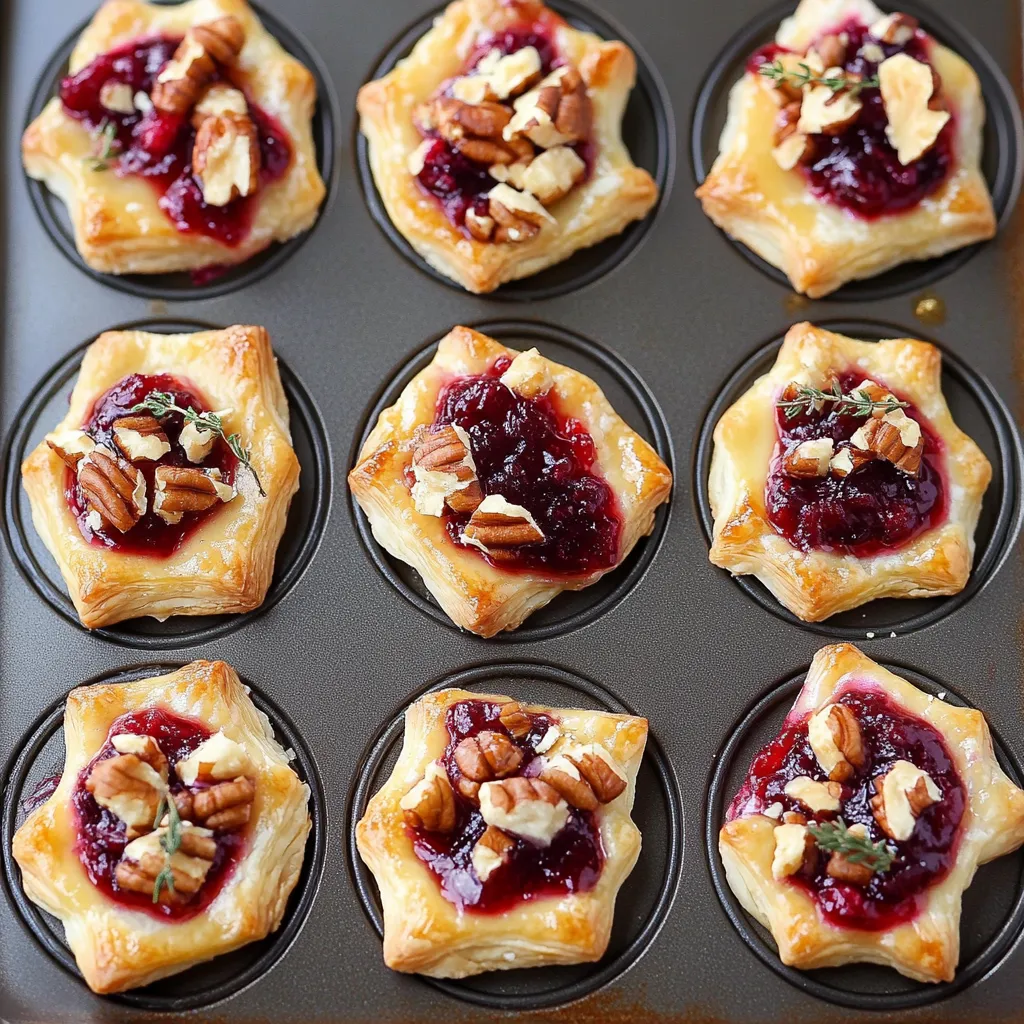
- Remove the muffin tin from the oven and let the bites cool in the pan for about 5 minutes. This cooling time allows them to set slightly and makes them easier to remove. Use a small offset spatula or butter knife to gently pop each bite out of the muffin cup - they should release easily if you greased well. Transfer to a serving platter. If desired, drizzle with honey or balsamic glaze for extra flavor. Serve warm. These are best eaten within an hour of baking while the pastry is still crisp.
 Pin it
My mother-in-law is an accomplished cook who makes everything from scratch and was openly skeptical when I told her these impressive-looking appetizers used frozen puff pastry and took ten minutes to assemble. She watched me make them with visible doubt, clearly expecting them to be mediocre shortcuts. After tasting one hot from the oven, she ate three more and grudgingly admitted they were "actually quite good" and that maybe store-bought pastry had its place. Getting the from-scratch purist to acknowledge convenience products can produce excellent results felt like winning an argument.
Understanding Puff Pastry and How It Works
Puff pastry is one of the most magical things in baking - hundreds of paper-thin layers of dough and butter that puff dramatically when heated, creating flaky, crispy texture. Traditional puff pastry requires hours of work - making dough, rolling butter into it, folding it multiple times, chilling between folds - which is why most home cooks use frozen store-bought versions. When puff pastry bakes, the butter melts and creates steam, which pushes the layers apart, causing the pastry to puff up to several times its original thickness. This only works if the pastry is cold when it goes into a hot oven - if the butter melts before baking, you lose the layering effect. Store-bought puff pastry is typically made with vegetable shortening rather than all butter, which is less flavorful but more stable. It comes frozen in sheets that you thaw before using. The key to working with it is keeping it cold but pliable - too cold and it cracks when you try to work with it, too warm and it becomes sticky and difficult to handle.
Why Brie Works So Well
Brie is ideal for these bites because of its specific melting properties and flavor profile. Brie is a soft-ripened cheese with high fat content (about 60%) which means it melts smoothly into creamy richness without becoming grainy or separating. The edible white rind (created by beneficial mold) adds subtle earthy, mushroomy flavor that complements rather than overwhelms. Brie's mild, slightly sweet, buttery flavor pairs beautifully with tart cranberry and doesn't compete with the delicate pastry. As it melts, it stays contained within the pastry cup rather than running everywhere. The texture is luxurious and creamy. You want to use actual brie wheels with rind, not spreadable brie from containers which has different consistency. Young brie (firmer, whiter) holds shape better during assembly, while ripe brie (softer, more yellow) has more developed flavor but is harder to cut cleanly. Either works, though slightly firmer brie is easier to handle.
The Importance of Proper Muffin Tin Greasing
Greasing the mini muffin tin thoroughly is genuinely crucial and not just a suggestion. Puff pastry contains butter that melts during baking, and this butter combined with the pastry's starch creates a surface that sticks incredibly stubbornly to metal. If you don't grease adequately - every surface that will touch pastry including the bottom, sides, and rim of each cup - the baked bites will refuse to release and you'll tear apart the flaky pastry trying to remove them, ruining your presentation. Use nonstick cooking spray and be generous, making sure to spray the entire interior of each cup. Alternatively, you can use butter to grease, though this requires more effort. The investment of thirty seconds spraying thoroughly saves you from the frustration of destroyed appetizers. This is one of those steps that seems minor but makes the difference between success and failure.
Assembling Ahead for Stress-Free Entertaining
One of the best features of these bites is how well they accommodate advance preparation, which removes stress from entertaining. You can assemble them completely - pastry pressed into cups, cheese added, cranberry sauce spooned, toppings sprinkled - up to 4 hours in advance. Cover the filled muffin tin tightly with plastic wrap and refrigerate. When ready to bake, remove from refrigerator and let sit at room temperature for about 10 minutes while the oven preheats, then bake as directed. They may need an extra minute or two of baking time since they're starting cold. Don't assemble more than 4 hours ahead because the moisture from cranberry sauce will start making the pastry soggy. You can also prepare all the components separately - cut pastry squares and store covered in the refrigerator, cube cheese and refrigerate, have cranberry sauce and pecans ready - then do final assembly in 5 minutes right before baking. This flexibility means you can prepare during the day and bake when guests arrive.
Flavor Variations and Customization Ideas
While the classic cranberry-brie combination is perfect, you can create variations for different occasions or preferences. For fig and blue cheese bites, substitute fig jam for cranberry and blue cheese for brie. For apple brie bites, use apple butter or apple pie filling instead of cranberry. For savory mushroom bites, sauté minced mushrooms and shallots and use gruyere instead of brie. For holiday spiced bites, add a tiny pinch of cinnamon or nutmeg to the cranberry. For bacon bites, add a small piece of cooked crumbled bacon with the pecans. For different nuts, try walnuts, almonds, or pistachios instead of pecans. For cherry bites, use cherry preserves instead of cranberry. For different herbs, try fresh thyme instead of rosemary for more delicate flavor. For honey bites, drizzle honey over the tops after baking. Each variation maintains the puff pastry cup structure while creating different flavor profiles for various occasions.
Storage, Reheating, and Make-Ahead
These bites are definitely best served fresh from the oven when the pastry is at peak crispness and the cheese is molten, but you can handle leftovers if needed. Let leftover bites cool completely, then store in an airtight container in the refrigerator for up to 2 days. To reheat, place on a baking sheet and warm in a 350°F oven for about 5 to 7 minutes until heated through and the pastry crisps up slightly. Don't microwave them - this makes the pastry soggy and chewy rather than crisp. The pastry will never be quite as flaky as when first baked, but reheating in the oven restores decent texture. For freezing, you can freeze the unbaked assembled bites - arrange in the muffin tin, freeze until solid, pop out and store in a freezer bag for up to 1 month. Bake from frozen, adding 3 to 5 minutes to the baking time. The texture isn't quite as perfect as fresh, but it's acceptable for convenience.
Troubleshooting Common Problems
When cranberry brie bites don't turn out right, there's usually a fixable cause. If the pastry is soggy, you used too much cranberry sauce or sauce that was too thin - use only 1 teaspoon per bite and drain excess liquid from sauce. If they stick to the pan, you didn't grease thoroughly enough - spray every surface generously. If the pastry didn't puff, it was too warm before baking or the oven wasn't hot enough - keep pastry cold and verify oven temperature. If cheese leaked everywhere, you used too much or didn't press pastry firmly into cups - use just one small cube and press pastry well. If they're pale and doughy, you underbaked them - bake until deeply golden and crisp. If the filling bubbled over, you overfilled - use less cranberry sauce. If they're too salty, you used salted/roasted nuts or salted butter in the pastry - use unsalted ingredients. Most issues relate to filling amounts, pan preparation, or baking time.
Serving Suggestions and Party Planning
Cranberry brie bites work beautifully for various entertaining contexts. For holiday parties, serve alongside other appetizers like cheese boards, crudités, or meatballs. For cocktail parties, pass them on trays while still warm from the oven. For dinner parties, serve as an elegant first course with mixed greens salad. For calculation purposes, plan on 2 to 3 bites per person if serving multiple appetizers, or 4 to 5 per person if these are the main appetizer. The recipe makes 24 bites, which serves 8 to 12 people depending on your menu. For larger crowds, make multiple batches - the recipe doubles easily. For wine pairing, serve with sparkling wine, Chardonnay, or Pinot Noir, all of which complement brie and cranberry. For presentation, arrange on a platter garnished with fresh rosemary sprigs and whole cranberries for festive appearance.
 Pin it
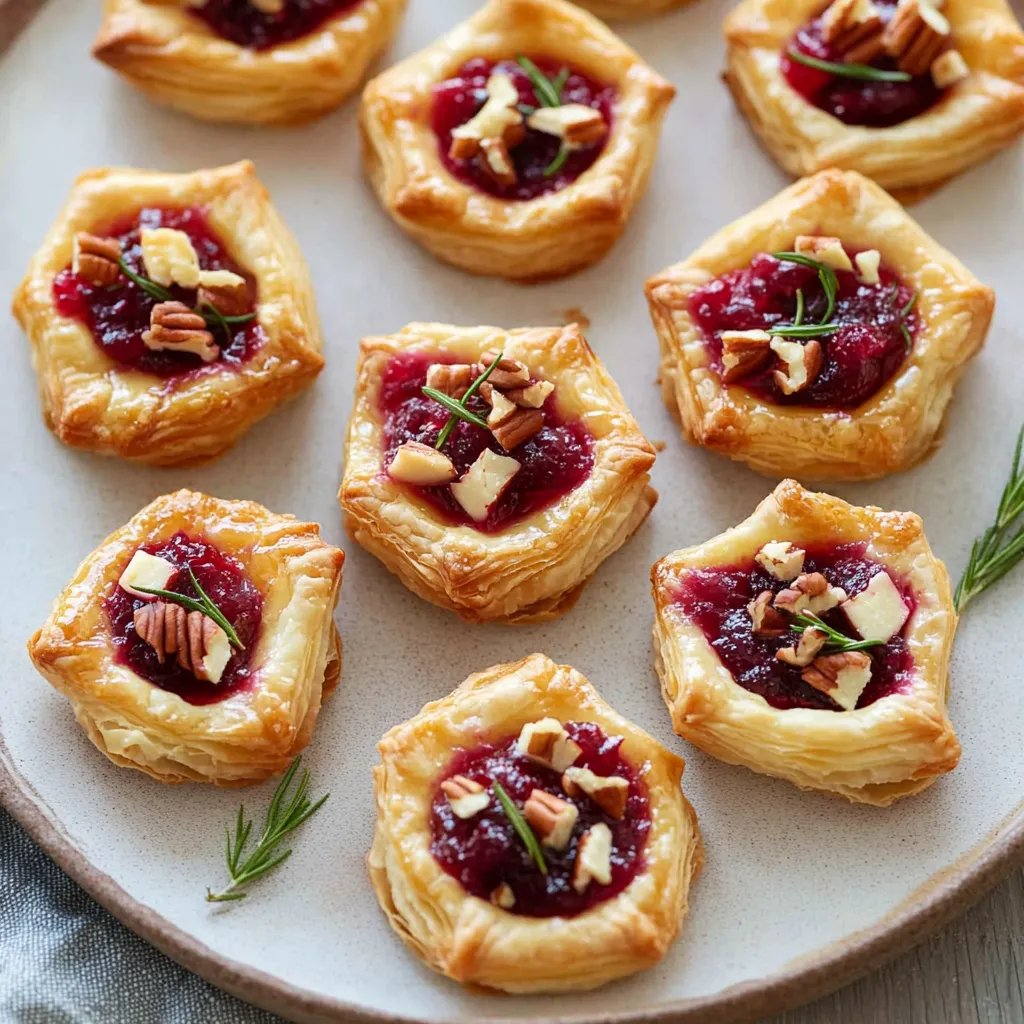
After making cranberry brie bites probably a hundred times over the past eight years for various holiday gatherings and parties, they've become my most reliable impressive appetizer because they consistently wow people while requiring minimal actual skill or effort. I appreciate how store-bought puff pastry eliminates all the intimidation while still creating bakery-quality results, and how the classic flavor combination of brie, cranberry, and pecans pleases virtually everyone regardless of their usual food preferences. The ability to assemble them hours ahead and bake right before serving removes the stress of last-minute appetizer preparation. Knowing the simple secrets - keep pastry cold, press firmly into cups, grease thoroughly, don't overfill - transforms something that looks complicated into something genuinely foolproof. These represent exactly what entertaining food should be - impressive enough that people think you're talented, delicious enough that they disappear immediately, and simple enough that you're not stressed making them.
Frequently Asked Questions
- → Can I make these ahead of time?
- Yes, you can assemble the bites and keep them in the fridge for up to 4 hours before baking. Just add a couple extra minutes to the baking time if they're cold.
- → What kind of cranberry sauce works best?
- Both homemade and canned cranberry sauce work fine. Whole berry cranberry sauce gives a better texture than the jellied kind.
- → Can I skip the pecans?
- Sure. The pecans add crunch but you can leave them out or swap them for walnuts or almonds if you prefer.
- → Why is my brie melting everywhere?
- Make sure to use brie with the rind still on. Cut it so each cube has rind on top and bottom. This keeps the cheese from spreading too much.
- → How do I reheat leftovers?
- Put them in a 350°F oven or toaster oven for 5-7 minutes. The microwave makes the pastry soggy, so avoid that.
- → Can I freeze these bites?
- Not recommended. The puff pastry gets soggy when frozen and reheated. They're best eaten within a few days.